On this page
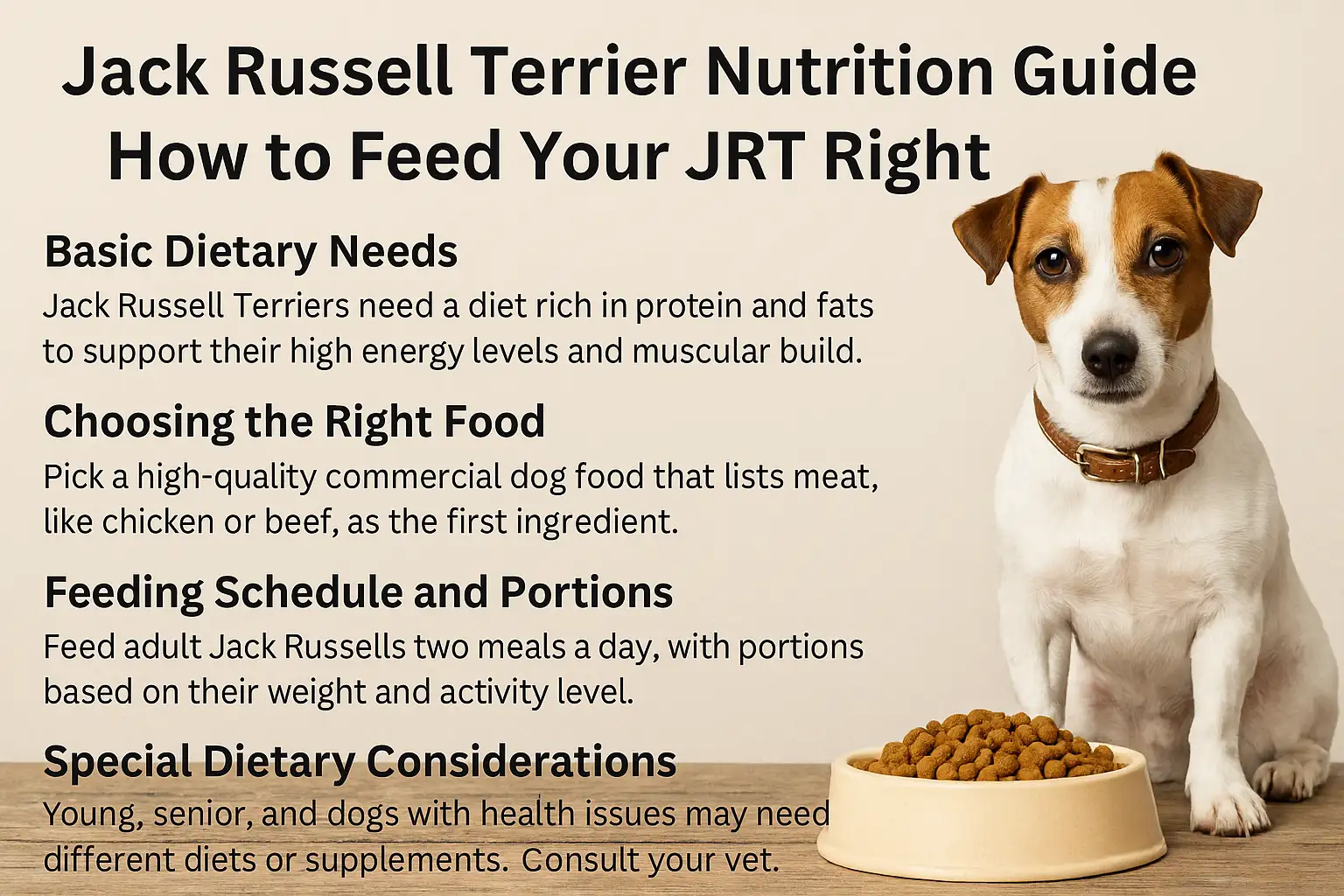
Jack Russell Terriers are small, athletic, high-energy dogs, so their feeding needs can be different from calmer breeds of the same size. A healthy adult Jack Russell usually needs 1 to 1.5 cups of food per day, split into 2 meals, but the exact amount depends on weight, age, activity level, body condition, and the calories in the food.
This Jack Russell feeding chart and schedule guide helps you understand how much to feed a Jack Russell Terrier from puppy to senior age. You’ll find daily food amounts, calorie ranges, meal frequency, wet food guidance, safe foods, and nutrition tips to help your dog stay lean, active, and healthy.
Quick Answer: Jack Russell Feeding Chart Summary
Most adult Jack Russell Terriers eat 1 to 1.5 cups per day, split into 2 meals. A 13-15 lb Jack Russell with normal activity often needs about 380-480 calories per day. Very active Jack Russells may need more, while seniors or less active dogs may need slightly less.
| Life Stage | Meals Per Day | Typical Daily Amount | Feeding Note |
|---|---|---|---|
| Puppy | 3-4 meals | Smaller portions spread through the day | Needs steady energy for growth |
| Adult | 2 meals | 1-1.5 cups per day | Best for digestion, energy, and routine |
| Senior | 2 smaller meals | Often slightly less than adult amount | Adjust for weight and activity level |
Can a Jack Russell Terrier be fed once daily?
Most adult Jack Russell Terriers do better with two meals a day instead of one. Feeding twice daily helps control hunger, supports digestion, keeps energy more stable, and may reduce begging. Once-a-day feeding may work for some healthy adult dogs, but it is not the best routine for most active Jack Russells.
How much should a Jack Russell eat per day?
A normal adult Jack Russell usually eats 1 to 1.5 cups of dry food per day. This should be adjusted based on the food’s calories per cup, your dog’s weight, and daily activity. A very active Jack Russell may need closer to 1.5-2 cups, while a less active or senior dog may need closer to ¾-1 cup.
How many calories does a Jack Russell need?
A 13-15 lb adult Jack Russell often needs around 380-480 calories per day with normal activity. Highly active dogs may need more calories, while overweight or senior dogs may need fewer calories. Always use body condition as the final guide.
Use this guide as a starting point, then adjust your Jack Russell’s food amount based on their waistline, ribs, energy level, stool quality, and weight changes. If you also want to compare your dog’s age with their life stage, use the Jack Russell Terrier Age Calculator.
Jack Russell Terrier Basics: Size, Weight, Energy & Lifespan
Before choosing a feeding schedule, it helps to understand the Jack Russell Terrier’s size, weight, energy level, and lifespan. This breed is small, but it is not low-energy. Jack Russells were originally bred as working terriers, which means many of them burn calories quickly and need carefully measured portions.
Size and Weight Basics
Most Jack Russell Terriers are compact, muscular, and built for movement. Their healthy weight depends on height, build, and body condition.
Jack Russell Size & Weight Chart
| Type of Jack Russell | Typical Height | Healthy Weight Range |
|---|---|---|
| Standard Jack Russell Terrier | 10-15 inches | 13-17 lbs |
| Shorty Jack / Puddin’ Type | 10-12 inches | 14-18 lbs |
| Tall or Long-Legged Type | 14-15 inches | 15-20 lbs |
If your Jack Russell weighs more than the normal range for their frame, they may be overweight. Extra weight can affect their joints, breathing, energy, and long-term health. If they weigh less than expected and their ribs are too visible, they may need more calories or a vet check.
Body Condition: Is Your Jack Russell at a Healthy Weight?
The best way to decide how much to feed a Jack Russell is not just the number on the food bag. Use body condition as your real-world check.
- You should be able to feel the ribs without pressing hard.
- Your dog should have a visible waist when viewed from above.
- The stomach should tuck up slightly when viewed from the side.
If the ribs are hard to feel, reduce food slightly and limit treats. If the ribs are clearly visible and your dog is losing weight, increase food carefully and speak with your vet if the change continues.
Energy Level and Feeding Needs
Jack Russells are usually fast, alert, playful, and highly active. Many need more than a short walk to stay satisfied. Running, chasing games, training, and mental enrichment can increase their daily calorie needs.
This is why a Jack Russell feeding guide should not give one fixed amount for every dog. A calm senior and a young active adult may weigh the same, but they can need very different daily portions.
Lifespan of a Jack Russell Terrier
Jack Russells are known for long, active lives. Many live well into their teens when they stay lean, exercised, and properly fed. Good nutrition supports healthy weight, strong muscles, digestion, skin, coat, and joint comfort as they age.
Jack Russell Lifespan and Weight Table
| Condition | Common Lifespan Pattern | Feeding Focus |
|---|---|---|
| Healthy weight and active lifestyle | Often lives well into the teen years | Measured meals, lean body condition, controlled treats |
| Slightly overweight | May face earlier joint and energy issues | Reduce treats, measure food, increase activity |
| Obese or chronically inactive | Higher risk of health problems | Vet-guided weight plan and calorie control |
Feeding your Jack Russell the right amount every day is one of the simplest ways to support a longer, healthier life. Small choices – like measuring food, splitting meals, and limiting treats – can make a real difference over time.
For a complete breed overview, visit the Jack Russell Terrier Dog Full Guide. For age and life-stage comparison, use the Jack Russell Terrier Age Calculator.
Core Nutrition Needs of a Jack Russell Terrier
A good Jack Russell Terrier diet should support energy, muscle, digestion, skin, coat, and healthy weight. This breed usually does best with balanced food that has quality protein, healthy fats, digestible carbohydrates, fiber, vitamins, and minerals.
Protein for Muscle and Energy
Protein is important for Jack Russells because they are active, muscular dogs. Quality protein helps maintain lean muscle, supports recovery after exercise, and keeps the body strong. Good protein sources include chicken, turkey, fish, beef, lamb, and eggs.
Healthy Fats for Steady Fuel
Healthy fats give Jack Russells concentrated energy. They also support skin, coat, brain health, and joint comfort. Active dogs may need moderate fat levels, while seniors or overweight dogs may need a lower-fat diet to avoid weight gain.
Carbs, Fiber, and Digestion
Digestible carbohydrates can provide useful energy, while fiber helps stool quality and fullness. Common options include sweet potato, brown rice, oats, pumpkin, and vegetables. Avoid relying on foods that are mostly low-quality fillers, especially if your dog has stomach sensitivity.
Vitamins and Minerals
Vitamins and minerals support bones, teeth, immunity, eyesight, and normal body function. Most complete dog foods already include these nutrients, so extra supplements are usually not needed unless your vet recommends them.
Nutrition Needs by Life Stage
Puppies, adults, and seniors need different feeding routines. A puppy needs more frequent meals for growth, an adult needs balanced maintenance food, and a senior may need easier digestion and weight control.
Jack Russell Nutrition by Life Stage
| Life Stage | Main Nutrition Need | Meal Frequency | Feeding Focus |
|---|---|---|---|
| Puppy | Higher protein and calories for growth | 3-4 meals per day | Small meals, steady energy, puppy-formulated food |
| Adult | Balanced protein, fat, and calories | 2 meals per day | Maintain lean weight and stable energy |
| Senior | Easy digestion and controlled calories | 2 smaller meals per day | Weight control, joint support, gentle ingredients |
Helpful Nutrients for Common Jack Russell Issues
Some Jack Russells may develop itchy skin, sensitive stomachs, weight gain, or joint stiffness. The right diet can help support these issues, but ongoing symptoms should always be discussed with a vet.
Health Support Nutrition Table
| Concern | Helpful Nutrition Focus | What to Watch |
|---|---|---|
| Itchy skin or allergies | Omega-3s, fish-based food, limited-ingredient diets | Scratching, paw licking, ear issues |
| Sensitive stomach | Easy-to-digest protein, pumpkin, probiotics | Loose stool, vomiting, gas |
| Joint stiffness or aging | Omega-3s, glucosamine, chondroitin | Slower movement, stiffness after rest |
| Weight gain | Lean protein, higher fiber, controlled treats | Ribs hard to feel, missing waistline |
The best feeding plan is simple: choose a complete food for your Jack Russell’s life stage, measure the daily portion, split it into the right number of meals, and adjust based on body condition.
How Much to Feed a Jack Russell Terrier: Feeding Chart, Calories & Schedule
Direct Answer: Most adult Jack Russell Terriers eat 1 to 1.5 cups of dry food per day, split into 2 meals. A 13-15 lb Jack Russell with normal activity usually needs about 380-480 calories per day. Very active dogs may need more, while seniors or less active dogs may need less. Use the feeding chart below as a starting point, then adjust based on body condition.
The right amount of food depends on your Jack Russell’s weight, age, activity level, body condition, and the calories in the food. A dog that runs, trains, or plays hard every day may need more calories than a calm indoor dog of the same weight. This is why a proper Jack Russell feeding chart should include both cups and calories, not just one fixed amount.
Use the tables below to estimate your Jack Russell’s daily food amount. Then check your dog’s ribs, waistline, energy, and weight every 1-2 weeks and adjust slightly if needed.
Jack Russell Daily Calorie Needs by Weight and Activity
Calories are the most accurate way to decide how much to feed a Jack Russell. Cups can vary because every dog food has a different calorie density. Always check the food label for “kcal per cup” and match it to your dog’s daily calorie target.
Jack Russell Calorie Chart
| Jack Russell Weight | Low Activity | Normal Activity | High Activity |
|---|---|---|---|
| 10 lbs | 280-320 calories/day | 330-380 calories/day | 400-450 calories/day |
| 13 lbs | 320-360 calories/day | 380-430 calories/day | 450-500 calories/day |
| 15 lbs | 350-400 calories/day | 420-480 calories/day | 500-560 calories/day |
| 17 lbs | 380-430 calories/day | 460-520 calories/day | 550-620 calories/day |
Activity guide: Low activity means short walks and mostly indoor rest. Normal activity means daily walks plus play. High activity means running, agility, long play sessions, hunting background, or regular training.
Jack Russell Feeding Chart: Cups, Calories and Grams Per Day
This Jack Russell feeding chart gives a practical starting point for daily food portions. The grams are only estimates because kibble weight changes by brand, shape, and density. For best accuracy, use calories first, then measure the food with a kitchen scale.
Jack Russell Feeding Chart by Weight
| Weight | Daily Calories | Approx. Cups Per Day | Approx. Grams Per Day | Meals Per Day |
|---|---|---|---|---|
| 10 lbs | 330-380 | ¾-1¼ cups | 75-120 g | 2 meals |
| 13 lbs | 380-430 | 1-1½ cups | 100-145 g | 2 meals |
| 15 lbs | 420-480 | 1¼-1¾ cups | 120-165 g | 2 meals |
| 17 lbs | 460-520 | 1½-2 cups | 145-190 g | 2 meals |
Important: These amounts are based on normal activity and average dry food. If your dog food is very calorie-dense, your Jack Russell may need fewer cups. If the food is lower in calories, they may need slightly more volume.
How Much Should a Jack Russell Eat Per Day?
A healthy adult Jack Russell usually eats 1 to 1.5 cups per day, split into morning and evening meals. Smaller or less active dogs may only need around ¾-1 cup per day, while very active Jack Russells may need 1.5-2 cups per day. The safest method is to match the portion to calories, then adjust by body condition.
Simple daily portion examples:
| Dog Type | Typical Amount Per Day | Best Meal Split |
|---|---|---|
| Jack Russell puppy | Small age-based portions | 3-4 meals per day |
| Normal adult Jack Russell | 1-1.5 cups per day | 2 meals per day |
| Very active adult | 1.5-2 cups per day | 2 meals per day |
| Senior Jack Russell | ¾-1¼ cups per day | 2 smaller meals per day |
If your Jack Russell is gaining weight, reduce the daily amount slightly and limit treats. If your dog is losing weight, seems weak, or has ribs that are too visible, increase the amount carefully and speak with your vet if the change continues.
Jack Russell Puppy Feeding Chart
Jack Russell puppies need smaller, more frequent meals because they are growing quickly and have small stomachs. A puppy feeding chart should be based on age, weight, growth rate, and the puppy food’s calories.
Jack Russell Puppy Feeding Schedule by Age
| Puppy Age | Meals Per Day | Feeding Focus | Notes |
|---|---|---|---|
| 8-12 weeks | 4 meals | Small, frequent meals | Use puppy-formulated food |
| 3-6 months | 3 meals | Steady growth and energy | Adjust as weight increases |
| 6-12 months | 2-3 meals | Controlled portions | Begin moving toward adult routine |
| 12+ months | 2 meals | Adult feeding schedule | Transition to adult food when appropriate |
Most Jack Russell puppies should not be fed once daily. They need steady energy throughout the day. If your puppy seems hungry all the time, is gaining weight too quickly, or has loose stool, review the portion size and feeding schedule.
How Much Wet Food Should a Jack Russell Eat?
How much wet food a Jack Russell should eat depends on the calories per can, tray, or pouch. Wet food contains more water than dry kibble, so the serving size often looks larger. Always check the label for calories and keep the total daily calories within your dog’s target range.
Wet Food Portion Example
| Daily Calorie Need | If Can Has 250 Calories | If Can Has 320 Calories | If Can Has 400 Calories |
|---|---|---|---|
| 350 calories/day | About 1.4 cans/day | About 1.1 cans/day | About ⅞ can/day |
| 400 calories/day | About 1.6 cans/day | About 1¼ cans/day | About 1 can/day |
| 480 calories/day | About 1.9 cans/day | About 1½ cans/day | About 1.2 cans/day |
| 560 calories/day | About 2.2 cans/day | About 1¾ cans/day | About 1.4 cans/day |
If you mix wet and dry food, do not feed a full portion of both. Count the calories from each food together. For example, if your Jack Russell needs 400 calories per day and gets 200 calories from wet food, the dry food should only provide about 200 calories more.
Feeding Schedule for Jack Russells
Most adult Jack Russell Terriers should eat twice a day, usually once in the morning and once in the evening. This routine helps keep energy steady, supports digestion, and reduces hunger-driven begging.
Jack Russell Feeding Schedule
| Life Stage | Meals Per Day | Best Routine | Why It Helps |
|---|---|---|---|
| Puppy | 3-4 meals | Morning, midday, afternoon, evening | Supports growth and steady energy |
| Adult | 2 meals | Morning and evening | Supports digestion and behavior |
| Senior | 2 smaller meals | Morning and evening | Helps with digestion and weight control |
Try to feed within the same 1-2 hour window each day. A consistent routine helps your dog know when to expect food and makes appetite or digestion changes easier to notice.
Use Body Condition, Not Just the Bag
Feeding guides on dog food bags are only general starting points. Your Jack Russell’s body condition is more important than the exact number printed on the bag.
- Ribs should be easy to feel without pressing hard.
- The waist should curve inward when viewed from above.
- The stomach should tuck up slightly from the side.
If your Jack Russell looks round or loses their waistline, reduce food and treats slightly. If ribs are too visible or your dog is losing weight, increase portions carefully. Good feeding habits help your Jack Russell stay lean, active, and healthy for many years.
To match feeding with your dog’s life stage, you can also compare their age using the Jack Russell Terrier Age Calculator.
What to Feed a Jack Russell Terrier: Best Foods, Treats & Safe Human Foods
The best food for a Jack Russell Terrier is a complete, balanced diet that matches their age, activity level, weight, and health needs. Most Jack Russells do well on quality dry food, wet food, fresh food, or a carefully balanced home-cooked plan. The goal is to support lean muscle, steady energy, healthy digestion, and a healthy coat.
Best Types of Food for Jack Russells
There is no single best food for every Jack Russell. A young active adult, a growing puppy, an overweight dog, and a senior dog may all need different feeding choices.
Food Type Comparison Table
| Food Type | Best For | Watch Out For |
|---|---|---|
| Dry kibble | Easy measuring, daily routine, dental crunch | Calories vary by brand; avoid low-quality fillers |
| Wet food | Picky eaters, seniors, extra moisture | Must count calories per can or pouch |
| Fresh food | Dogs needing softer, less processed meals | Can be expensive and calorie-dense |
| Freeze-dried food | High-protein feeding and convenience | Often costly; may need water added |
| Home-cooked food | Dogs needing custom ingredients | Must be balanced properly to avoid nutrient gaps |
| Raw diet | Owners experienced with raw feeding | Food safety and balance risks if not handled correctly |
For most owners, a complete dog food with real animal protein, moderate fat, digestible carbs, and controlled calories is the safest daily option. Avoid choosing food only because it says “small breed” on the label. Match the food to your Jack Russell’s real activity level and body condition.
What Is the Best Food for a Jack Russell Terrier?
The best food for a Jack Russell Terrier usually has real meat or fish as the first ingredient, balanced protein and fat, enough calories for their activity level, and limited unnecessary fillers. Puppies should eat puppy-formulated food, adults should eat maintenance food, and seniors may need easier digestion with controlled calories.
- Very active adults: choose higher-protein food with healthy fats for steady energy.
- Puppies: choose puppy-formulated food for growth and development.
- Seniors: choose moderate calories, digestible ingredients, and joint-support nutrients.
- Sensitive stomachs: consider simple ingredients, fish-based food, or gentle formulas.
- Overweight dogs: focus on lean protein, fiber, and measured portions.
Avoid overfeeding even if the food quality is good. For Jack Russells, the best diet is not only about ingredients; it is also about correct portions, meal timing, and treat control.
Homemade Food for Jack Russell Terriers
Homemade food can work for a Jack Russell Terrier, but it must be balanced carefully. A healthy homemade meal usually includes a suitable protein source, safe carbohydrates, vegetables, and the right vitamins and minerals. Feeding random leftovers is not the same as feeding a balanced homemade diet.
Safe homemade ingredients may include cooked chicken, turkey, fish, eggs, rice, oats, pumpkin, carrots, green beans, and sweet potato. Avoid seasoning, onions, garlic, cooked bones, excess fat, and sugary foods. If homemade food becomes your dog’s main diet, ask your vet or a qualified pet nutrition professional to help balance it.
Safe Human Foods Your Jack Russell Can Eat
Some human foods are safe for Jack Russells in small amounts. These should be used as treats or meal toppers, not as the full diet unless the meal plan is properly balanced.
Safe Foods for Jack Russells
- Cooked chicken or turkey
- Cooked salmon or sardines with no bones
- Eggs
- Carrots
- Blueberries
- Plain pumpkin
- Green beans
- Apple slices with no seeds
- Plain rice or oats
- Sweet potato
Keep human foods plain and portion-controlled. Even safe foods can cause weight gain or stomach upset if given too often.
What Can Jack Russells Not Eat?
Jack Russells should not eat foods that are toxic, heavily seasoned, too fatty, or unsafe for digestion. Some dangerous foods can cause vomiting, diarrhea, poisoning, choking, or serious organ problems.
Safe vs Unsafe Foods Table
| Safe in Small Amounts | Do Not Feed |
|---|---|
| Cooked chicken | Chocolate |
| Plain pumpkin | Grapes and raisins |
| Blueberries | Onions and garlic |
| Carrots | Xylitol or sugar-free gum |
| Plain rice | Alcohol |
| Green beans | Cooked bones |
| Eggs | Very fatty or heavily seasoned foods |
If your Jack Russell eats something toxic, contact your vet immediately. Do not wait for symptoms if the food is known to be dangerous.
Treat Guidelines for Jack Russells
Treats are useful for training, but they can quickly add extra calories. For Jack Russells, treats should usually stay below 10% of daily calories. If your dog needs 400 calories per day, treats should usually stay under about 40 calories.
Treat Calorie Examples
| Treat Type | Approx. Calories | Best Use |
|---|---|---|
| Small biscuit treat | 5-15 calories | Occasional reward |
| Small training treat | 2-5 calories | Training sessions |
| Apple slice | 2-3 calories | Low-calorie snack |
| Carrot piece | 3-4 calories | Crunchy low-calorie treat |
Use tiny pieces during training. Jack Russells are smart and food-motivated, so they usually do not need large treats to stay focused.
Switching Foods Safely
Do not change your Jack Russell’s food suddenly unless your vet tells you to. A fast change can cause loose stool, vomiting, gas, or refusal to eat. A slow switch gives the stomach time to adjust.
7-Day Food Transition Plan
- Days 1-2: 75% old food + 25% new food
- Days 3-4: 50% old food + 50% new food
- Days 5-6: 25% old food + 75% new food
- Day 7: 100% new food
If your dog has a sensitive stomach, make the transition slower. The right food should support steady energy, normal stool, a healthy coat, and a lean body condition.
Special Diets, Health Issues & Common Feeding Problems in Jack Russells
Jack Russell Terriers are active and tough, but they can still have food-related problems such as allergies, sensitive stomachs, weight gain, picky eating, fast eating, or senior digestion changes. The best approach is to keep meals measured, watch body condition, and choose food based on your dog’s actual needs.
Diets for Common Health Problems
Some Jack Russells need a more careful diet because of skin, stomach, joint, or weight issues. Diet can help support these problems, but ongoing symptoms should be checked by a vet.
Condition and Diet Support Table
| Health Issue | Helpful Diet Focus | Common Signs |
|---|---|---|
| Food allergies or itchy skin | Limited-ingredient food, fish-based protein, omega-3s | Scratching, paw licking, ear issues |
| Sensitive stomach | Easy-to-digest proteins, pumpkin, probiotics | Loose stool, gas, vomiting |
| Joint stiffness or senior age | Omega-3s, glucosamine, controlled weight | Stiffness, slower movement, trouble jumping |
| Weight gain | Lean protein, higher fiber, fewer treats | Ribs hard to feel, no visible waist |
| Low energy | Quality protein, enough calories, healthy fats | Tiredness, poor stamina, low interest in activity |
If your Jack Russell scratches often, vomits, has soft stool, gains weight quickly, or loses interest in food, the diet may need adjusting. Do not keep switching foods randomly. Track symptoms, portions, treats, and stool quality so you can identify patterns.
Jack Russell Terrier Eating Habits
Jack Russell Terriers often have strong food motivation. Some eat quickly, beg often, act hungry after meals, or become picky if they receive too many treats. A consistent feeding routine is usually better than free-feeding.
The best routine is measured meals, limited treats, clean water, and no constant grazing. This makes it easier to control calories and notice changes in appetite.
Feeding Problems and Easy Solutions
Many Jack Russell feeding problems can be improved with better routine, portion control, and slower eating habits.
Feeding Problem and Solution Table
| Problem | Likely Cause | Simple Fix |
|---|---|---|
| Picky eating | Too many treats or frequent food changes | Use scheduled meals and avoid constant extras |
| Always hungry | High activity, low fiber, or habit begging | Measure food, add safe low-calorie vegetables, use training control |
| Eats too fast | Excitement or food motivation | Use a slow-feeder bowl or puzzle feeder |
| Loose stool after new food | Food changed too quickly | Switch slowly over 7-10 days |
| Hyper after meals | Overexcitement or poor routine | Use calm feeding times and avoid sugary treats |
| Overweight | Too many calories or treats | Reduce treats, measure meals, increase safe activity |
Senior Jack Russells and Diet
Senior Jack Russells may need fewer calories than younger adults, especially if they move less. They may also benefit from softer food, added moisture, controlled fat, and ingredients that support joints and digestion.
- Use 2 smaller meals per day instead of one large meal.
- Choose moderate protein and controlled calories.
- Add warm water to kibble if chewing becomes harder.
- Watch weight closely because activity often drops with age.
Senior feeding should focus on comfort, digestion, healthy weight, and steady energy.
Working or Very Active Jack Russells
Some Jack Russells burn far more calories because they run, jump, train, hike, or play intensely every day. These dogs may need more calories than a typical indoor Jack Russell of the same weight.
- Use quality protein to support lean muscle.
- Use healthy fats for longer-lasting energy.
- Split food into 2 meals to avoid one heavy feeding.
- Increase portions gradually if weight drops or ribs become too visible.
Very active Jack Russells should not be placed on low-calorie diets unless your vet recommends it.
When to Ask Your Vet for Help
Talk to your vet if your Jack Russell has sudden weight loss, fast weight gain, ongoing diarrhea, repeated vomiting, itchy skin, ear problems, low energy, or refusal to eat. These signs may be related to diet, but they can also point to health problems that need proper care.
Quick action helps prevent small feeding issues from becoming bigger health problems. With measured portions, the right diet, and a steady routine, most Jack Russells can stay lean, active, and healthy for many years.
Jack Russell Terrier Feeding and Nutrition FAQs
These FAQs answer the most common Jack Russell feeding questions, including daily food amount, calories, wet food, puppy feeding, safe foods, and meal schedule.
What is the best food for a Jack Russell Terrier?
The best food for a Jack Russell Terrier is a complete diet with real meat or fish as the first ingredient, balanced protein and fat, digestible ingredients, and calories that match the dog’s activity level. Puppies need puppy-formulated food, adults need balanced maintenance food, and seniors may need controlled calories with easier digestion.
How much should a Jack Russell Terrier eat per day?
Most adult Jack Russell Terriers eat 1 to 1.5 cups of dry food per day, split into 2 meals. A 13-15 lb Jack Russell with normal activity often needs about 380-480 calories per day. Very active dogs may need more, while seniors or overweight dogs may need less.
How much should a Jack Russell eat per day in grams?
A normal adult Jack Russell often eats about 100-165 grams of dry food per day, depending on weight, activity, and the kibble’s calorie density. Smaller or less active dogs may need closer to 75-120 grams, while very active dogs may need more. Always check the food label because grams per cup vary by brand.
How many calories does a Jack Russell Terrier need per day?
Most Jack Russell Terriers need about 280-620 calories per day, depending on weight and activity. A 13-15 lb adult with normal activity usually needs around 380-480 calories per day. Very active dogs may need more, while senior or overweight dogs may need fewer calories.
How much wet food should a Jack Russell eat?
A Jack Russell’s wet food amount depends on calories per can or pouch. If your dog needs 400 calories per day and the wet food has 320 calories per can, they need about 1¼ cans per day, split into meals. If you mix wet and dry food, count both foods together so you do not overfeed.
How much should a Jack Russell puppy eat?
A Jack Russell puppy should eat small portions spread across 3-4 meals per day, depending on age. Puppies 8-12 weeks usually need 4 meals daily, 3-6 month puppies usually need 3 meals, and older puppies can slowly move toward 2 meals per day as they approach adulthood.
How many times a day should a Jack Russell eat?
Adult Jack Russell Terriers usually do best with 2 meals per day. Puppies need 3-4 meals per day, and seniors often do best with 2 smaller meals. Feeding twice daily helps support digestion, steady energy, and better appetite control.
Can I feed my Jack Russell Terrier once a day?
Some healthy adult Jack Russells can eat once daily, but most do better with two meals per day. Once-daily feeding can lead to hunger, begging, stomach upset, or overeating in one sitting. Puppies, seniors, very active dogs, and dogs with sensitive stomachs should usually not be fed once daily.
What can Jack Russells not eat?
Jack Russells should not eat chocolate, grapes, raisins, onions, garlic, xylitol, alcohol, cooked bones, heavily seasoned foods, or very fatty scraps. These foods can be toxic or unsafe. Contact your vet immediately if your dog eats something dangerous.
Can Jack Russells eat homemade food?
Yes, Jack Russells can eat homemade food if it is properly balanced. Safe ingredients may include cooked lean meat, eggs, rice, oats, pumpkin, carrots, green beans, and sweet potato. Homemade meals should not be random leftovers, and long-term homemade diets should be checked for nutrient balance.
What is a healthy weight for a Jack Russell Terrier?
A healthy Jack Russell Terrier usually weighs around 13-17 pounds, but the ideal weight depends on height, build, and body condition. You should be able to feel the ribs without pressing hard, see a waist from above, and notice a slight stomach tuck from the side.
Are Jack Russells picky eaters?
Some Jack Russells are picky, especially if they receive too many treats or frequent food changes. Use scheduled meals, avoid constant snacks, and keep food changes gradual. Warming the food slightly or adding a small amount of wet food can help, but do not reward picky eating with too many extras.
Can Jack Russells be allergic to certain foods?
Yes. Some Jack Russells may react to ingredients such as chicken, beef, dairy, wheat, or other common proteins and grains. Signs can include scratching, paw licking, ear problems, red skin, vomiting, or loose stool. A limited-ingredient diet may help, but ongoing symptoms should be discussed with a vet.
How do I switch my Jack Russell to a new food?
Switch your Jack Russell to a new food slowly over 7-10 days. Start with mostly old food and a small amount of new food, then gradually increase the new food. A slow transition helps reduce stomach upset, loose stool, and food refusal.
Can diet help my Jack Russell live longer?
Diet can support a longer, healthier life by helping your Jack Russell stay lean, active, and well-nourished. Measured meals, controlled treats, quality food, and regular activity all help reduce weight-related stress on the body.
For more breed information, visit the Jack Russell Terrier Dog Full Guide. To compare your dog’s age with their life stage, use the Jack Russell Terrier Age Calculator. You may also find the Jack Russell Terrier Age Chart, Jack Russell Terrier Training Guide, Jack Russell Terrier Grooming Basics, and Jack Russell Terrier Cost Guide helpful.

Ata Ur Rehman is the founder of Pet Age in Human Years Calculator, an educational platform that provides age conversion charts and lifespan guides for dogs, cats, birds, and other companion animals. His work focuses on helping pet owners understand how animal ages translate into human years using commonly accepted age conversion formulas and published lifespan averages.
The website compiles breed and species lifespan data from kennel clubs, breed organizations, and general animal lifespan studies to present simple and easy-to-understand guides for pet owners worldwide.
This website was created to centralize animal age conversion charts into one easy reference platform for pet owners.
This article is for general education. For symptoms, medication, diet changes, or health concerns, use a qualified veterinarian who can assess your individual pet.