On this page
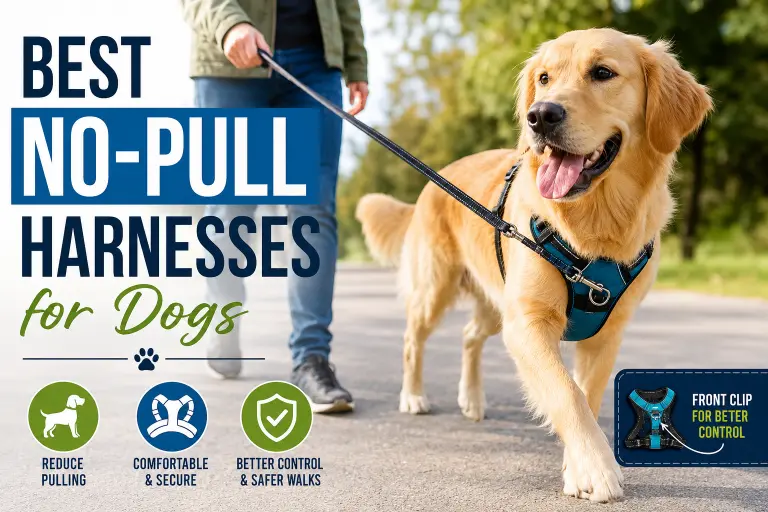
Before diving into individual products, here’s the short answer: the best no-pull harness for dogs is usually a front clip harness that gently redirects your dog when they pull instead of allowing them to put their full weight into the leash. The right harness can make walks more manageable, improve control, and support your training efforts without causing discomfort.
Not every dog needs the same harness, though. A strong Labrador, a reactive rescue dog, and a small puppy all have different needs. In this guide, you’ll find the best no-pull dog harnesses for different situations, learn how they work, and discover which option is most likely to make your daily walks easier.
The Best No-Pull Harnesses for Dogs (Quick Recommendations)
If you’re looking for the best no-pull harness for dogs without reading dozens of reviews, start with these recommendations.
Best Overall No-Pull Harness: Ruffwear Front Range Harness
The Ruffwear Front Range combines comfort, durability, and everyday usability. While it includes both front and back leash attachment points, the front clip provides added control for dogs that tend to pull.
Why it stands out:
- Comfortable padding for daily use
- Multiple adjustment points for a secure fit
- Durable materials for active dogs
- Suitable for small, medium, and large breeds
This is an excellent choice for owners who want one harness that works for both training and regular walks.
Best Budget No-Pull Harness: PetSafe Easy Walk Harness
The Easy Walk Harness remains one of the most popular no-pull dog harnesses for a reason. Its simple design focuses specifically on reducing pulling behavior.
Why it stands out:
- Affordable compared to premium options
- Lightweight and easy to fit
- Front chest attachment helps redirect pulling
- Proven design used by trainers for years
It’s particularly useful for dogs that pull consistently but don’t need a heavily padded harness.
Best Front Clip Harness for Strong Pullers: Blue-9 Balance Harness
Strong dogs often need more than basic control. The Blue-9 Balance Harness offers excellent adjustability and a balanced fit that helps owners maintain control without restricting movement.
Why it stands out:
- Highly adjustable fit
- Front clip leash attachment
- Designed with training in mind
- Allows natural shoulder movement
For owners working on leash manners with powerful dogs, this is one of the strongest options available.
Best Easy Walk Harness Alternative: Rabbitgoo No-Pull Dog Harness
The Rabbitgoo harness has become a popular alternative for owners who want more padding and additional features than the traditional Easy Walk design.
Why it stands out:
- Front and back leash attachment points
- Easy-to-use handle on the back
- Reflective materials for visibility
- Comfortable padded construction
It works well for everyday walking and basic leash training.
Best No-Pull Harness for Large Dogs: Kurgo Tru-Fit Smart Harness
Large breeds can generate significant pulling force, so durability matters. The Kurgo Tru-Fit Smart Harness is built with strong materials and secure adjustment points.
Why it stands out:
- Heavy-duty construction
- Multiple adjustment points
- Comfortable for larger breeds
- Reliable control during walks
This is a strong option for owners of large dogs that still need leash-training support.
Best No-Pull Harness for Small Dogs: Puppia Soft Dog Harness
Small dogs need a harness that controls pulling without adding unnecessary bulk. The Puppia Soft Harness provides a lightweight, comfortable fit that works well for smaller breeds.
Why it stands out:
- Lightweight design
- Soft, breathable materials
- Comfortable for toy and small breeds
- Easy to put on and remove
While not as training-focused as some front clip harnesses, it provides a safer and more comfortable alternative to collar-based walking for small dogs.
How No-Pull Dog Harnesses Work
A no-pull dog harness doesn’t magically teach a dog to walk politely. What it does is change the mechanics of pulling so the dog gains less advantage when they lunge forward.
The most effective designs use a front clip harness configuration. Instead of attaching the leash on the dog’s back, the leash connects at the chest. When the dog pulls forward, the harness gently redirects their body to the side rather than allowing them to continue driving straight ahead.
This interruption makes pulling less rewarding and gives the handler more control.
How a Front Clip Harness Redirects Movement
With a traditional back-clip harness, many dogs can lean into the leash and use their full body strength to pull. In some cases, this can feel similar to how sled dogs are trained to pull loads.
A front clip harness changes that dynamic.
When tension builds on the leash:
- The dog’s chest is redirected sideways.
- Forward momentum is interrupted.
- The dog naturally turns back toward the handler.
- The owner regains control without excessive force.
This redirection is why many trainers recommend front-clip designs for dogs that pull regularly.
Front Clip vs Back Clip Attachment Points
Both attachment styles have their place, but they serve different purposes.
Front Clip Harness
Best for:
- Dogs that pull during walks
- Leash training
- Improving handler control
- Strong or reactive dogs
Back Clip Harness
Best for:
- Well-trained dogs that don’t pull
- Casual walks
- Running or hiking with reliable leash manners
Many modern harnesses include both attachment points, allowing owners to use the front clip during training and switch to the back clip once leash manners improve.
One important thing to remember: even the best no-pull harness for dogs works best when combined with consistent training. The harness helps manage pulling, but good leash behavior still develops through repetition, guidance, and rewards.
How to Choose the Best No-Pull Harness for Your Dog
The best no-pull harness isn’t necessarily the highest-rated one—it’s the one that fits your dog properly and addresses the specific challenges you face on walks.
Before buying, consider your dog’s size, strength, walking habits, and comfort requirements.
Choosing by Dog Size
A harness that fits poorly won’t perform as intended, regardless of how highly it’s rated.
For small dogs, look for:
- Lightweight materials
- Narrower straps
- Minimal bulk around the chest
- Easy adjustment points
For medium and large dogs, prioritize:
- Durable hardware
- Reinforced stitching
- Wider straps that distribute pressure evenly
- Secure buckles that won’t loosen during walks
Always measure your dog’s chest according to the manufacturer’s sizing guide rather than relying solely on breed recommendations.
Choosing by Pulling Strength
Not all pulling behaviors are the same.
If your dog occasionally pulls when excited, a standard front clip harness may be enough.
If your dog consistently lunges toward people, other dogs, squirrels, or distractions, choose a harness with:
- A dedicated front clip attachment
- Multiple adjustment points
- A secure, escape-resistant design
- Strong leash connection hardware
For heavy pullers, control and fit matter more than extra features.
Comfort, Adjustability, and Fit
A no-pull harness should help control pulling without restricting natural movement.
Look for:
- Adjustable neck and chest straps
- Padding in high-contact areas
- Materials that won’t cause rubbing
- Freedom of shoulder movement
A properly fitted harness should sit snugly against the body without digging into the skin. As a general guideline, you should be able to fit two fingers between the harness and your dog’s body.
Watch for signs of poor fit, including:
- Chafing under the legs
- Hair loss around strap areas
- Twisting during walks
- Frequent slipping or shifting
Even the best no-pull dog harness can become ineffective if the fit isn’t correct.
Detailed Reviews of the Top No-Pull Harnesses
Ruffwear Front Range Harness
The Ruffwear Front Range is one of the most balanced options on the market because it combines comfort, durability, and practical everyday use.
Unlike some training-focused harnesses that prioritize control at the expense of comfort, the Front Range is designed to be worn for longer walks, hikes, and daily outings.
Best for: Everyday use and active dogs
Key strengths:
- Comfortable foam-padded construction
- Durable enough for regular outdoor use
- Front and back leash attachment points
- Easy identification attachment pocket
Potential drawback:
- More expensive than entry-level options
For owners who want one harness that can handle both leash training and everyday adventures, this is often the safest recommendation.
PetSafe Easy Walk Harness
The Easy Walk Harness helped popularize the front clip harness design and remains a favorite among dog trainers.
Its simplicity is its biggest advantage. There is very little extra padding or unnecessary hardware, allowing the harness to focus on its primary purpose: reducing pulling.
Best for: Dogs that need straightforward pull-management
Key strengths:
- Proven front-clip design
- Affordable price point
- Lightweight construction
- Easy to fit once adjusted correctly
Potential drawback:
- Less padding than premium harnesses
If your main goal is reducing pulling rather than adding comfort features, the Easy Walk Harness continues to be one of the strongest values available.
Blue-9 Balance Harness
The Blue-9 Balance Harness is frequently recommended by professional trainers because of its exceptional adjustability and movement-friendly design.
Many harnesses unintentionally restrict shoulder motion. The Balance Harness is designed to avoid that issue while still providing effective leash control.
Best for: Strong pullers and training-focused owners
Key strengths:
- Six-point adjustability
- Excellent fit customization
- Front leash attachment
- Encourages natural movement
Potential drawback:
- Setup can take longer than simpler harnesses
For dogs that have struggled with fit issues in other harnesses, the Balance Harness is often worth the extra adjustment effort.
Rabbitgoo No-Pull Dog Harness
The Rabbitgoo harness has become popular because it combines training features with owner-friendly convenience.
Its back handle provides extra control when navigating crowded areas, crossing streets, or helping a dog into a vehicle.
Best for: Everyday walking and general leash training
Key strengths:
- Front and back leash clips
- Comfortable padding
- Reflective safety features
- Convenient control handle
Potential drawback:
- Bulkier than minimalist harnesses
For many dog owners, it offers a practical balance between comfort, control, and affordability.
Kurgo Tru-Fit Smart Harness
Large, powerful dogs place greater demands on their equipment. The Kurgo Tru-Fit Smart Harness is built to handle those demands.
Its sturdy construction and secure adjustment system make it a reliable choice for owners who need confidence that their equipment can withstand regular use.
Best for: Large breeds and powerful dogs
Key strengths:
- Heavy-duty hardware
- Strong construction
- Secure fit
- Good control during walks
Potential drawback:
- Heavier than some alternatives
If durability is your top priority, the Kurgo Tru-Fit deserves serious consideration.
Puppia Soft Dog Harness
Small dogs often don’t need the same level of pull-management equipment as larger breeds. Comfort and fit become more important.
The Puppia Soft Harness focuses on lightweight comfort while providing better pressure distribution than a standard collar.
Best for: Small and toy breeds
Key strengths:
- Soft mesh construction
- Lightweight feel
- Breathable design
- Easy daily use
Potential drawback:
- Not specifically designed for severe pullers
For small dogs that need a comfortable walking harness, the Puppia remains one of the most trusted options available.
Which No-Pull Harness Is Best for Different Types of Dogs?
Choosing the best no-pull harness often comes down to your dog’s behavior and walking habits. Here’s a quick guide to help narrow down the right option.
For Strong Pullers
Dogs that regularly pull with significant force need a harness that prioritizes control and fit.
Top picks:
- Blue-9 Balance Harness
- Kurgo Tru-Fit Smart Harness
- PetSafe Easy Walk Harness
Look for a front clip harness with secure adjustment points. A loose-fitting harness can reduce effectiveness and make control more difficult.
For Puppies
Puppies benefit from early leash training, but comfort is just as important as control.
Top picks:
- Ruffwear Front Range Harness
- Puppia Soft Harness (for small breeds)
Focus on:
- Lightweight materials
- Adjustable sizing
- Comfortable padding
- Freedom of movement
Since puppies grow quickly, check fit regularly and be prepared to size up when needed.
For Everyday Walks
If your dog pulls occasionally but is generally manageable, a versatile harness often makes the most sense.
Top picks:
- Ruffwear Front Range Harness
- Rabbitgoo No-Pull Dog Harness
These models balance comfort, durability, and control, making them suitable for daily use without feeling overly restrictive.
For Escape Artists
Some dogs can back out of poorly fitted harnesses, especially when startled or anxious.
Top picks:
- Blue-9 Balance Harness
- Kurgo Tru-Fit Smart Harness
In these cases, proper sizing is critical. A highly adjustable harness that fits securely around both the neck and chest can significantly reduce the risk of escape.
Final Recommendation
If you’re looking for the best no-pull harness for dogs overall, the Ruffwear Front Range Harness is the strongest all-around choice. It offers a comfortable fit, durable construction, and front-clip functionality that works well for most dogs and owners.
If your primary goal is stopping pulling during training, the PetSafe Easy Walk Harness remains one of the most effective and affordable options available.
For strong pullers that need maximum adjustability and control, the Blue-9 Balance Harness stands out as one of the best training-focused choices.
The right harness won’t completely eliminate pulling on its own, but it can make walks more manageable and support better leash habits. Pair a properly fitted no-pull harness with consistent training, and you’ll give both yourself and your dog a much more enjoyable walking experience.
Frequently Asked Questions
Do no-pull harnesses actually stop dogs from pulling?
They can significantly reduce pulling by changing how the dog’s body responds to leash pressure. However, the best results come when the harness is combined with consistent leash training and positive reinforcement.
Is a front clip harness better than a back clip harness for pulling?
For most dogs that pull, yes. A front clip harness redirects the dog’s movement when they pull forward, making it easier to regain control. Back clip harnesses are generally better suited to dogs that already have good leash manners.
What is the best no-pull harness for a strong dog?
The Blue-9 Balance Harness and Kurgo Tru-Fit Smart Harness are excellent choices for strong dogs because they offer secure fits, durable construction, and better control during walks.
Can puppies use a no-pull dog harness?
Yes. Many puppies can safely use a no-pull harness as long as it fits correctly and doesn’t restrict movement. Adjustable models are especially helpful because puppies grow quickly.
How should a no-pull harness fit?
A harness should fit snugly without being tight. You should be able to fit two fingers between the straps and your dog’s body. It should stay in place during movement without rubbing, twisting, or restricting the shoulders.

Ata Ur Rehman is the founder of Pet Age in Human Years Calculator, an educational platform that provides age conversion charts and lifespan guides for dogs, cats, birds, and other companion animals. His work focuses on helping pet owners understand how animal ages translate into human years using commonly accepted age conversion formulas and published lifespan averages.
The website compiles breed and species lifespan data from kennel clubs, breed organizations, and general animal lifespan studies to present simple and easy-to-understand guides for pet owners worldwide.
This website was created to centralize animal age conversion charts into one easy reference platform for pet owners.
This article is for general education. For symptoms, medication, diet changes, or health concerns, use a qualified veterinarian who can assess your individual pet.