On this page
A Bernese Mountain Dog and Golden Retriever mix, often called a Golden Mountain Dog, is usually a large, people-oriented cross with a thick double coat and a strong need for family involvement. The appeal is easy to understand: both parent breeds are known for affectionate temperaments and a history of working closely with people.
The important reality is that a mixed-breed puppy is not a pre-set blend. One dog may be more outgoing and athletic like a Golden Retriever, another may be calmer and heavier like a Bernese Mountain Dog, and littermates can differ in size, coat color, confidence, energy, and health.
Key Takeaways
- Golden Mountain Dog is a common informal name for the Bernese Mountain Dog and Golden Retriever mix.
- Both parent breeds are large, social, double-coated dogs, so owners should plan for size, shedding, grooming, and daily interaction.
- The mix can make a loving family companion, but no designer-breed label guarantees temperament around children, strangers, dogs, or cats.
- Early leash training, calm greetings, handling practice, and socialization matter because a friendly adolescent can still be physically difficult to manage.
- Health screening should cover risks from both Golden Retriever and Bernese Mountain Dog lines.
- Crossbreeding does not automatically guarantee better health or a longer lifespan.
- This is generally a better match for families who want an involved companion than for homes where the dog will spend long periods alone.
What is a Bernese Mountain Dog and Golden Retriever mix?
It is a cross involving a Bernese Mountain Dog and a Golden Retriever.
The Bernese Mountain Dog is a large Swiss working breed developed for farm jobs, including draft work. The Golden Retriever is a Scottish sporting breed developed to retrieve game and work cooperatively with people.
Common informal names for the mix include:
- Golden Mountain Dog
- Golden Bernese
- Berner Golden mix
- Bernese Golden Retriever mix
These names are not official breed standards. A seller should be able to tell you the actual parentage rather than relying on the marketing name.
Parent breed comparison
| Trait | Bernese Mountain Dog | Golden Retriever |
|---|---|---|
| Typical adult weight | 70–115 lb | 55–75 lb |
| Typical height | 23–27.5 in | 21.5–24 in |
| Life expectancy reference | 7–10 years | 10–12 years |
| Traditional role | Farm and draft work | Retrieving/sporting work |
| Coat | Thick, moderately long double coat | Medium-length double coat |
| Common style | Calm, affectionate, sensitive | Outgoing, eager, playful |
This table describes the parent breeds, not guaranteed values for the cross.
What is the temperament of a Bernese Golden mix?
Many prospective owners are drawn to this cross because both parents have reputations for being affectionate and cooperative.
A mixed dog may be:
- deeply attached to family
- friendly and social
- playful
- eager to learn
- sensitive to harsh handling
- enthusiastic around visitors
- somewhat reserved with strangers
- calm indoors after adequate activity
- highly motivated by food, toys, or attention
The key word is may.
Temperament comes from multiple genes plus early environment, maternal behavior, puppy socialization, training, health, and life experience. A friendly breed reputation does not remove the need to meet the parents and evaluate the individual dog.
Are Golden Mountain Dogs good family dogs?
They can be excellent family companions when their needs match the household.
A good family fit usually includes:
- enough time for daily interaction
- willingness to train a large dog
- tolerance for shedding
- supervised contact with young children
- a predictable routine
- room in the budget for large-dog veterinary care
- exercise and mental enrichment
Families should think beyond the puppy stage. A fluffy 15-pound puppy can become a powerful adult that takes up significant space in a car, hallway, kitchen, and living room.
Are they good with children?
Potentially, yes, but size and manners matter.
A friendly large dog can accidentally knock over a toddler, steal food from a child’s hand, or become overexcited during running games.
Teach the dog:
- four paws on the floor
- a reliable settle
- leave it
- drop it
- recall
- loose-leash walking
- calm door manners
Teach children:
- not to climb on the dog
- not to disturb sleep
- not to take food or chews
- not to corner the dog
- to give the dog a quiet retreat
Supervision is important even with a gentle individual.
What about cats and other dogs?
Many Golden Retrievers and Bernese Mountain Dogs live successfully with other pets, so the cross can also do well in multi-pet homes.
Success depends on:
- the individual dog’s social history
- prey/chase behavior
- introductions
- resource management
- the other pet’s temperament
Introduce cats gradually and prevent repeated chasing. Use gates or elevated safe spaces. With dogs, focus on calm, compatible interactions rather than assuming every dog should enjoy rough group play.
How big does a Bernese Mountain Dog and Golden Retriever mix get?
Most owners should prepare for a large adult dog.
The parent breeds span roughly 55–115 pounds and 21.5–27.5 inches at the shoulder. A mixed dog may fall somewhere in that broad envelope, but there is no official range.
Adult size is influenced by:
- sex
- the actual size of both parents
- family lines
- inherited build
- nutrition
- body condition
If your lease has a weight limit or you need to lift the dog regularly, this uncertainty matters.
What does a full-grown Golden Mountain Dog look like?
Possible features include:
- broad or moderately broad head
- sturdy body
- feathering on the chest, legs, and tail
- black, white, rust, cream, gold, or mixed coloring
- a straight or slightly wavy coat
- drop ears
- brown eyes
- heavy seasonal undercoat
Some look very Bernese with lighter patches. Others resemble large, dark Golden Retrievers. Siblings can look surprisingly different.
Golden Retriever Bernese Mountain Dog puppy: what to expect
Puppies from this cross are often appealing because they are fluffy, social-looking, and relatively easy to handle when small. The adolescent stage is more revealing.
Between puppyhood and adulthood, owners may face:
- rapid physical growth
- jumping
- leash pulling
- exuberant greetings
- chewing
- counter surfing
- selective listening outdoors
- increased strength
- heavy coat changes
Training should begin before these behaviors are attached to an 80-pound body.
Exercise needs
Most healthy adults need daily physical activity, but the exact amount varies.
Possible activities include:
- walks
- hiking in cool weather
- retrieving games
- swimming if the dog enjoys it
- scent work
- obedience
- rally
- food puzzles
- structured family play
A dog that inherits more Golden Retriever drive may need more sustained activity than one that leans toward the calmer Bernese side.
Do not push a growing large-breed puppy through repetitive jumping or long forced runs. Ask your veterinarian about age-appropriate exercise.
Training priorities
Large social dogs benefit enormously from practical manners.
Focus on:
- recall
- loose-leash walking
- calm greetings
- waiting at doors
- leave it and drop it
- settling around visitors
- comfortable grooming
- veterinary handling
- safe car travel
- being relaxed alone for reasonable periods
Reward-based methods are a good fit for dogs that are people-oriented and sensitive. Harsh corrections can damage trust and create avoidance or defensive behavior.
Grooming and shedding
Prepare for hair.
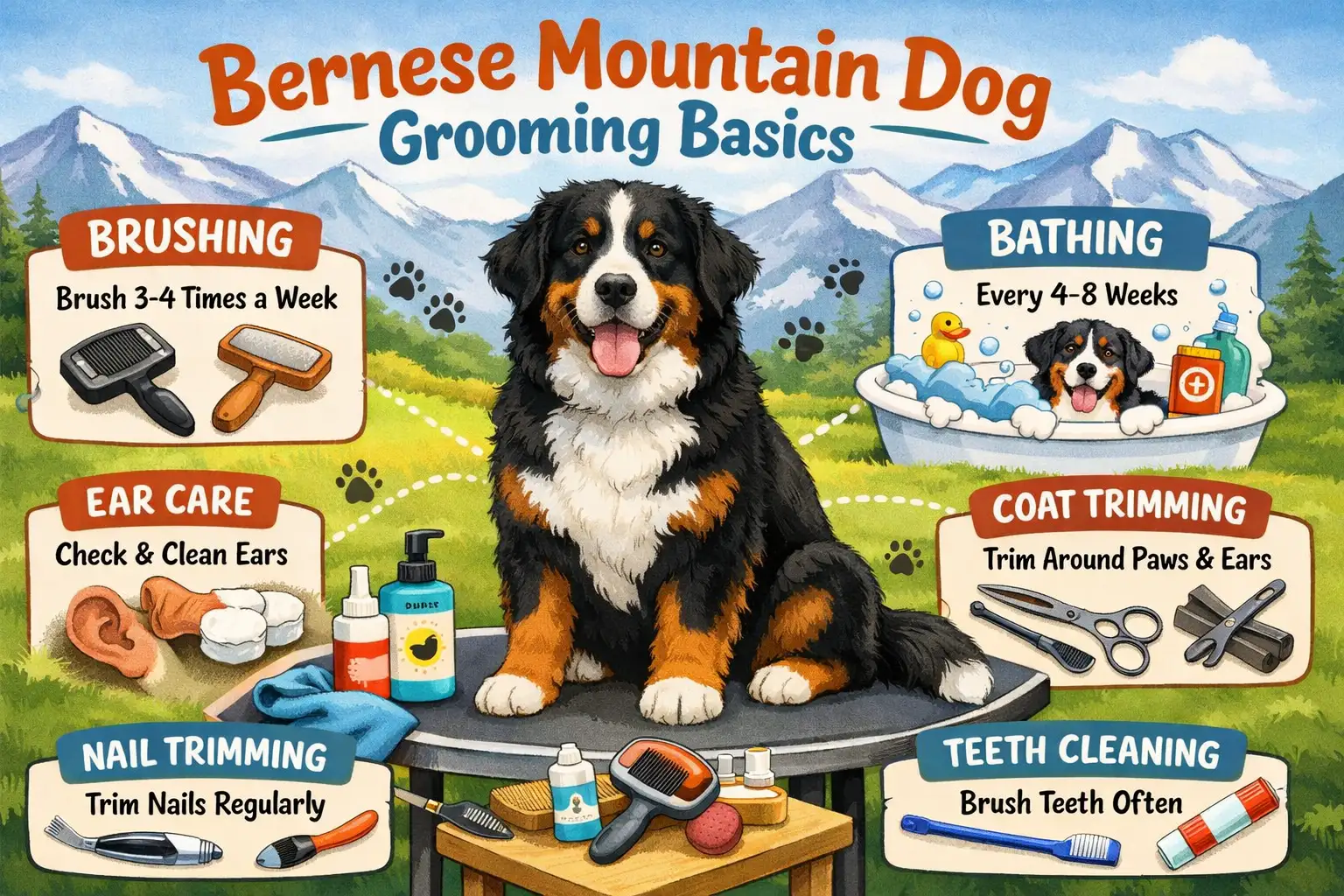
Both parent breeds have double coats. Most crosses need brushing several times a week and more frequent care during seasonal shedding.
Grooming includes:
- brushing the body and feathering
- checking behind ears for mats
- trimming nails
- routine ear care
- dental care
- bathing as needed
- drying the thick coat thoroughly
A professional groomer can help with undercoat removal, but grooming does not eliminate shedding.
Are Golden Mountain Dogs hypoallergenic?
No.
Neither parent breed is a low-shedding dog, and the cross should not be marketed as reliably hypoallergenic. Dog allergies are complex and can involve proteins from dander, saliva, and other sources—not simply hair length.
If a household member has significant dog allergies, spend time around the individual dog before making a commitment and discuss medical concerns with the person’s healthcare professional.
Health risks to understand
Crossbreeding does not erase inherited risk.
Both parent breeds can be affected by orthopedic disease such as hip and elbow dysplasia. Breeding programs also use eye and heart screening. Bernese Mountain Dogs carry a significant cancer burden, and Golden Retrievers also have important cancer concerns in the breed.
Before buying a puppy, ask for specific, verifiable health records.
Questions include:
- Were hips and elbows evaluated?
- Were eye examinations completed where recommended?
- Was cardiac screening completed?
- What breed-specific genetic testing was done?
- What cancers occurred in close relatives?
- How long did parents, grandparents, and siblings live?
- Can you verify results independently?
A routine veterinary wellness exam is valuable, but it is not the same as breeding-health clearances.
Does “hybrid vigor” mean the mix will be healthier?
No guarantee exists.
Increased genetic diversity can reduce risk for some recessive conditions when the parents do not share the same disease-causing variants. However, both breeds can contribute problems affecting:
- hips
- elbows
- eyes
- heart
- cancer risk
- skin
- other inherited systems
Responsible crossbreeding still requires careful selection.
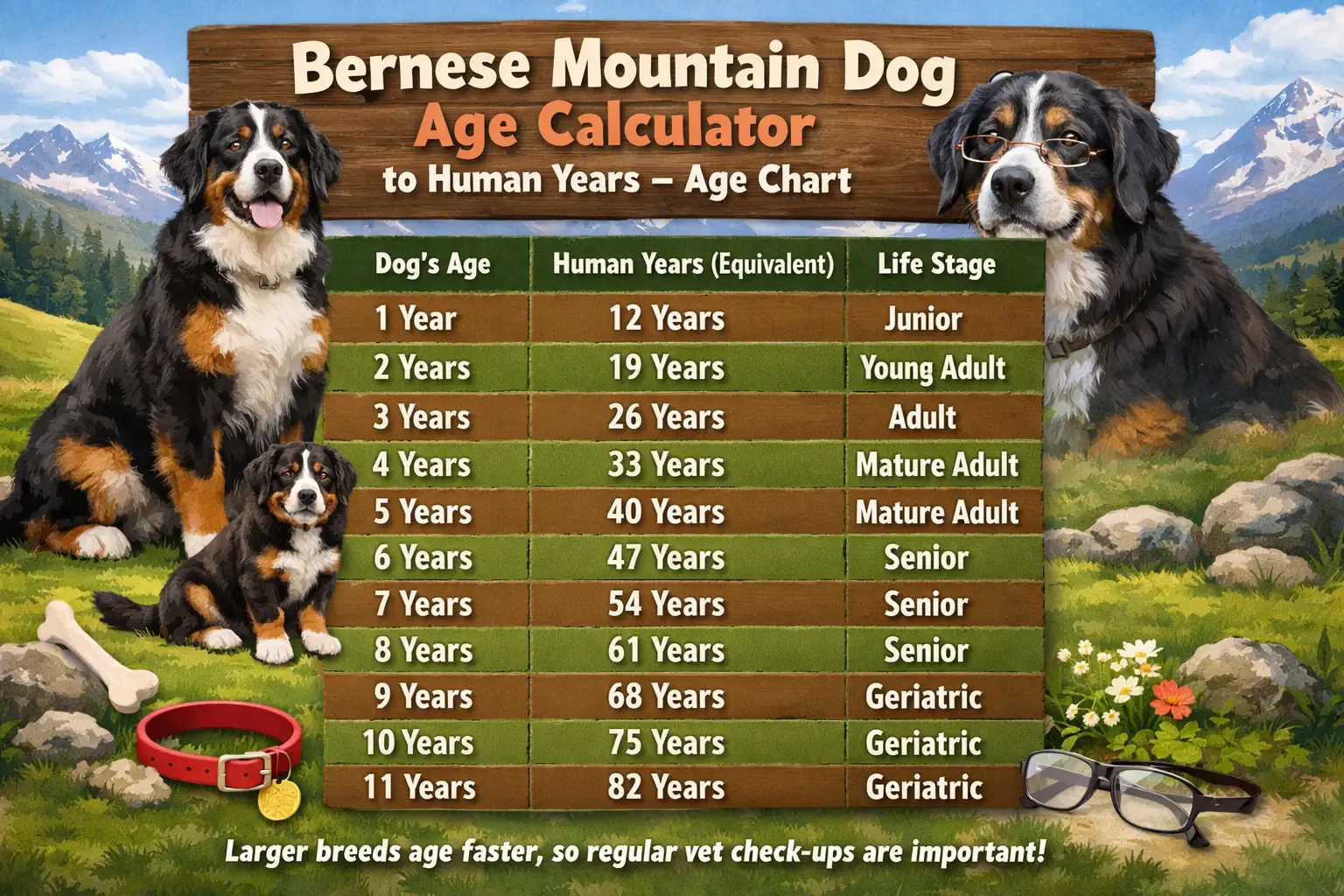
Lifespan and aging
There is no authoritative lifespan statistic for every Golden Mountain Dog.
Parent-breed references are approximately:
- Bernese Mountain Dog: 7–10 years
- Golden Retriever: 10–12 years
A mixed dog’s lifespan may fall inside, below, or above those ranges. Health testing, inherited risk, body condition, cancer, accidents, preventive care, and individual genetics matter.
As your dog matures, you can see your dog’s age in human years for general life-stage context. Do not use that conversion as a lifespan prediction; a veterinarian and the dog’s actual health provide far more meaningful information.
Feeding and weight management
Feed a complete diet appropriate for life stage and expected adult size.
Large-breed puppies benefit from controlled growth rather than rapid growth. Ask your veterinarian which puppy formulation is appropriate.
For adults:
- measure meals
- count treats
- monitor body condition
- keep a visible waist
- adjust calories when activity changes
Extra body weight increases stress on joints and can make mobility harder as the dog ages.
Hot weather considerations
A thick double coat and large body can make heat management important.
In warm weather:
- exercise at cooler times
- provide shade and water
- use indoor cooling
- avoid hot pavement
- shorten intense play
- never leave the dog in a vehicle
Weakness, confusion, extreme panting, vomiting, or collapse after heat exposure is an emergency.
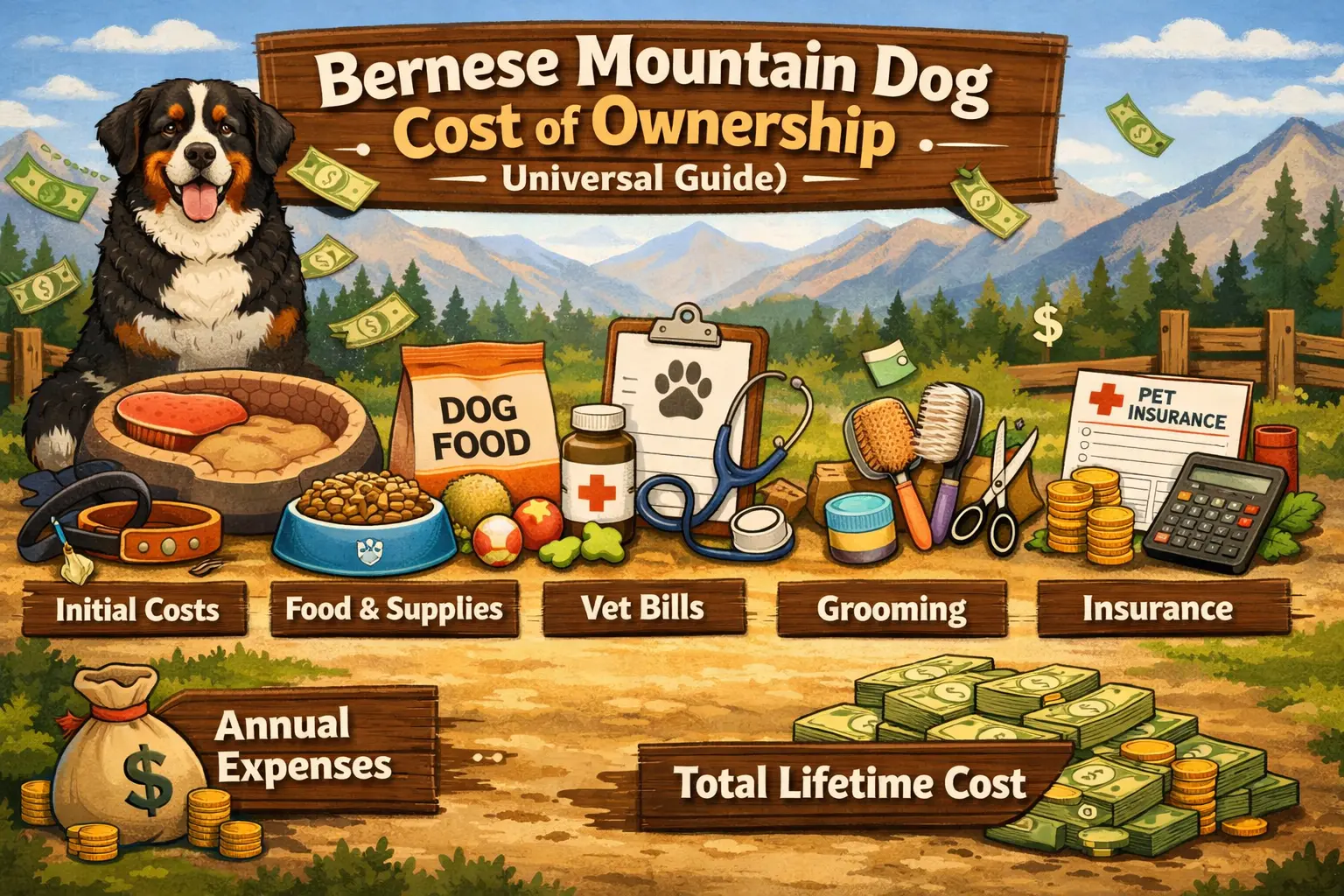
What does it cost to own this mix?
Large dogs can cost more in several categories.
Plan for:
- more food
- larger medication doses
- parasite prevention based on weight
- big beds and crates
- grooming supplies
- training
- boarding
- routine veterinary care
- emergency care
- orthopedic diagnostics or treatment if needed
The puppy price is only one part of the financial commitment.
Finding a responsible breeder or rescue
If buying a puppy, look beyond photographs and designer names.
Ask the breeder:
- why the pairing was chosen
- what health tests were done
- what the parents are like in everyday life
- how puppies are socialized
- where puppies are raised
- whether you can meet the mother
- what the return policy is
- what support is offered after purchase
Avoid breeders who guarantee adult weight, exact temperament, perfect health, or a specific lifespan.
Rescue is another option. Mixed-breed dogs are sometimes surrendered when owners underestimate adult size, grooming, or activity needs.
Is this mix right for you?
A Bernese Mountain Dog and Golden Retriever mix may be a good choice if you want:
- a large companion
- an involved family dog
- a dog that enjoys training
- regular walks and outdoor activity
- an affectionate pet
- a dog you are willing to groom
It may be a poor fit if you want:
- very low shedding
- minimal training
- a reliably small adult
- a dog that stays alone for long periods
- low veterinary and grooming costs
- a dog that thrives in intense heat
Frequently asked questions
What is a Bernese Mountain Dog and Golden Retriever mix called?
Golden Mountain Dog is the most common informal name.
How big is a Bernese Mountain Dog Golden Retriever mix?
There is no standard. Parent breeds span roughly 55–115 pounds, so a large adult should be expected.
Do Golden Mountain Dogs shed?
Yes. Both parent breeds have double coats and shed, often heavily during seasonal coat changes.
Are Golden Mountain Dogs easy to train?
Many are intelligent and eager to work with people. Consistent reward-based training from puppyhood is still necessary.
Are they good apartment dogs?
Some can adapt if exercise, training, noise, and space needs are fully met, but their adult size can make a small apartment challenging.
How long does a Golden Mountain Dog live?
There is no reliable breed-specific statistic. Parent-breed life expectancy is roughly 7–10 years for Bernese Mountain Dogs and 10–12 years for Golden Retrievers.
Are Golden Mountain Dogs good with cats?
Many can live with cats when introduced and managed appropriately, but individual chase drive and social history matter.
A note on sources and method
This profile uses current American Kennel Club information for Golden Retriever and Bernese Mountain Dog size, lifespan, coat, exercise, and broad breed traits, together with parent-breed health-screening principles. Because the cross has no official standard, mixed-breed characteristics are framed as possibilities rather than guarantees. No individual dog or breeder is endorsed.

Ata Ur Rehman is the founder of Pet Age in Human Years Calculator, an educational platform that provides age conversion charts and lifespan guides for dogs, cats, birds, and other companion animals. His work focuses on helping pet owners understand how animal ages translate into human years using commonly accepted age conversion formulas and published lifespan averages.
The website compiles breed and species lifespan data from kennel clubs, breed organizations, and general animal lifespan studies to present simple and easy-to-understand guides for pet owners worldwide.
This website was created to centralize animal age conversion charts into one easy reference platform for pet owners.
This article is for general education. For symptoms, medication, diet changes, or health concerns, use a qualified veterinarian who can assess your individual pet.