On this page
If you’ve ever wondered “How old is my Miniature Schnauzer in human years?”, this age chart will help you find the answer quickly. A Miniature Schnauzer age chart, sometimes searched for as a Mini Schnauzer age chart, shows your dog’s age in dog years, the estimated human age equivalent, and the life stage they are likely in.
Miniature Schnauzers do not age the same way humans do. They grow quickly during puppyhood, reach adulthood faster than people, and then age more slowly during their adult years. This is why the old idea that one dog year equals seven human years is not accurate for Miniature Schnauzers.
This page is focused on the Miniature Schnauzer age chart. If you want an instant result instead of checking the table manually, use our Miniature Schnauzer Age Calculator.
- See your Miniature Schnauzer’s age in human years
- Understand whether your dog is a puppy, young adult, adult, mature adult, or senior
- Compare dog years to human years without relying on the outdated 7-year rule
The goal is not just to get a number. It is to understand your Miniature Schnauzer’s life stage, care needs, and what to expect as they grow older.
How old is a Miniature Schnauzer in human years?
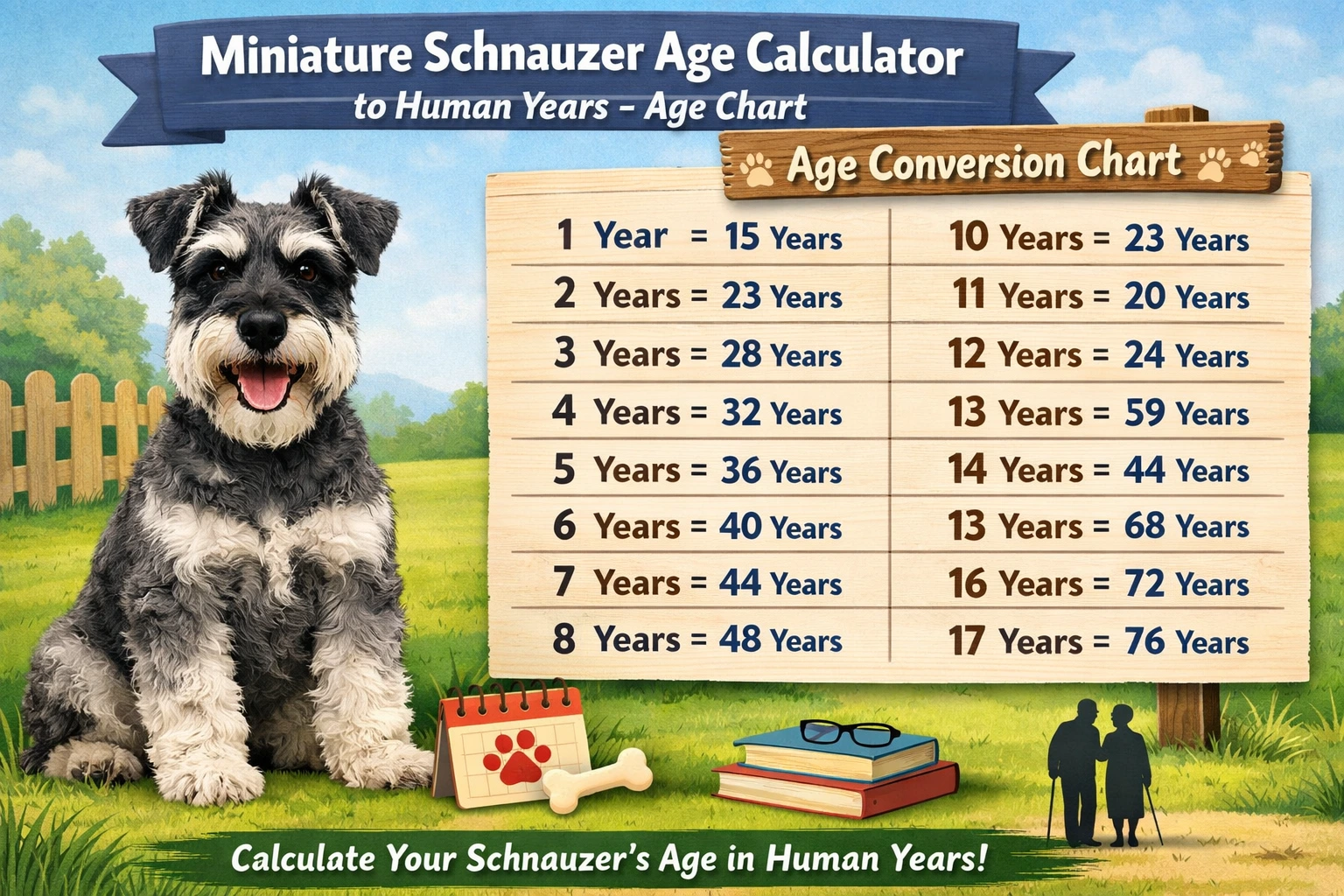
A 1-year-old Miniature Schnauzer is about 15 human years old, and a 2-year-old Miniature Schnauzer is about 24 human years old. After the first two years, each additional dog year adds roughly 4 human years. Use the chart below to find your dog’s estimated human age.
This chart is made for Miniature Schnauzers. Standard Schnauzers and Giant Schnauzers may age differently because they are larger dogs.
Miniature Schnauzer Age Chart Quick Examples
Here are a few quick examples of Miniature Schnauzer dog years to human years. For the complete 1 to 15 year chart, scroll to the full age chart below.
| Miniature Schnauzer Age | Human Age Equivalent | Life Stage |
|---|---|---|
| 1 year | About 15 human years | Puppy |
| 2 years | About 24 human years | Young Adult |
| 5 years | About 36 human years | Adult |
| 8 years | About 48 human years | Mature Adult |
| 12 years | About 64 human years | Senior |
Quick answer: 1 Miniature Schnauzer year is about 15 human years, 2 years is about 24 human years, 5 years is about 36 human years, and 10 years is about 56 human years.
These values are based on a small-breed aging model rather than the outdated 7-year rule. Miniature Schnauzers age quickly at first, then enjoy many steady adult years before moving into their senior stage.
Miniature Schnauzer Age Chart: Dog Years to Human Years
This Miniature Schnauzer age chart shows how dog years compare to human years. You can scan the table, find your dog’s current age, and see the estimated human age equivalent and life stage.
Full Miniature Schnauzer Age Chart
| Miniature Schnauzer Age | Human Age Equivalent | Life Stage |
|---|---|---|
| 1 year | About 15 years | Puppy |
| 2 years | About 24 years | Young Adult |
| 3 years | About 28 years | Adult |
| 4 years | About 32 years | Adult |
| 5 years | About 36 years | Adult |
| 6 years | About 40 years | Adult |
| 7 years | About 44 years | Mature Adult |
| 8 years | About 48 years | Mature Adult |
| 9 years | About 52 years | Mature Adult |
| 10 years | About 56 years | Senior |
| 11 years | About 60 years | Senior |
| 12 years | About 64 years | Senior |
| 13 years | About 68 years | Senior |
| 14 years | About 72 years | Senior |
| 15 years | About 76 years | Senior |
How old is a 13-year-old Miniature Schnauzer in human years? A 13-year-old Miniature Schnauzer is about 68 human years old. At this age, a Miniature Schnauzer is considered a senior, although individual health, activity level, and aging can vary.
How to Read This Miniature Schnauzer Age Chart
- Miniature Schnauzers age quickly during the first two years
- After age 2, each dog year adds about 4 human years in this simple small-breed model
- Many Miniature Schnauzers begin entering their senior years around 10 years old, although the timing can vary
To use the chart, find your Miniature Schnauzer’s age in dog years, then look across to see the estimated human age and life stage. This helps you understand whether your dog is still young, fully adult, mature, or entering their senior years.
This chart is a helpful guide, not an exact medical rule. Every Miniature Schnauzer is different. Genetics, diet, exercise, weight, and regular veterinary care can all affect how your dog ages.
If your dog seems younger or older than the chart suggests, that can be normal. The chart gives an average estimate, not a diagnosis.
Miniature Schnauzer Age Chart vs Age Calculator
The age chart and calculator both help you understand your Miniature Schnauzer’s age in human years, but they serve different search needs. This article is the full reference chart and life-stage guide, while the calculator page is designed for an instant conversion based on the age you enter.
| Use the Age Chart If | Use the Age Calculator If |
|---|---|
| You want to quickly scan ages 1 to 15 | You want an instant result for your dog’s exact age |
| You want to understand general life stages | You want a faster dog years to human years conversion |
| You prefer a simple reference table | You do not want to check the chart manually |
Why Miniature Schnauzers Age Differently Than Humans
Many people still believe that 1 dog year equals 7 human years, but this rule is too simple. Miniature Schnauzers age faster during their early years and more slowly after reaching adulthood.
Because Miniature Schnauzers are small dogs, they often have a longer adult period than many larger breeds. Their aging pattern is also different from larger Schnauzer types, especially Giant Schnauzers.
Here is why Miniature Schnauzer aging is different:
- Puppies grow quickly in the first 12 to 24 months
- Adult years are usually longer and more stable
- Senior changes tend to happen more gradually than the old 7-year rule suggests
- Breed size, genetics, body condition, activity, and health can influence how an individual dog ages
Why the 7-Year Rule Does Not Work
The 7-year rule assumes dogs age at the same speed every year. In real life, dog aging is not linear. The first two years count much more, and later adult years add less.
This table shows why the 7-year rule can be misleading for Miniature Schnauzers.
| Dog Age | 7-Year Rule | Small-Breed Age Chart |
|---|---|---|
| 1 year | 7 human years | About 15 human years |
| 2 years | 14 human years | About 24 human years |
| 5 years | 35 human years | About 36 human years |
| 10 years | 70 human years | About 56 human years |
As you can see, the 7-year rule can underestimate puppy age and overestimate senior age. That is why a Miniature Schnauzer age chart gives a more useful dog years to human years estimate.
Miniature Schnauzer Life Stages by Age
Knowing your Miniature Schnauzer’s life stage helps you understand behavior, energy level, and care needs. A puppy, adult dog, and senior dog will not age or act the same way. For a broader overview of temperament, size, lifespan, and general care, read the Miniature Schnauzer dog breed guide.
Miniature Schnauzers can be grouped into four helpful age stages: puppy, young adult, adult, and senior. These stages match the age chart above and make it easier to understand what your dog may need at each age.
Miniature Schnauzer Life Stages at a Glance
| Life Stage | Miniature Schnauzer Age | Human Age Equivalent | What You May Notice |
|---|---|---|---|
| Puppy | Birth to 1 year | Up to about 15 human years | Fast growth, high energy, learning basic skills |
| Young Adult | 2 years | About 24 human years | More maturity, strong energy, playful behavior |
| Adult | 3 to 9 years | About 28 to 52 human years | Steady energy, stable routine, active personality |
| Senior | 10 years and older | About 56+ human years | Slower movement, more rest, possible age-related changes |
Puppy Stage: Birth to 1 Year
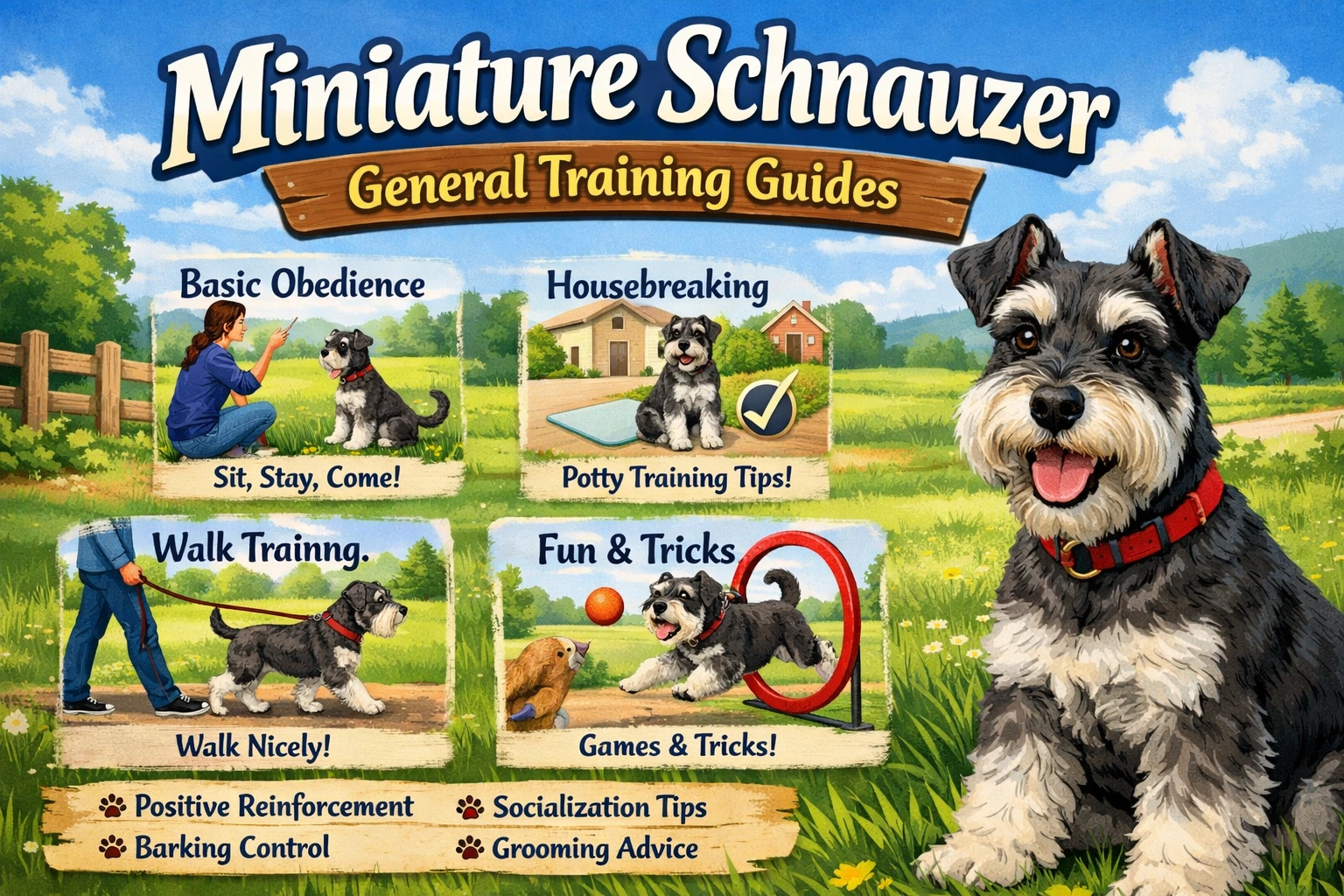
Miniature Schnauzer puppies grow quickly during their first year. They learn how to walk, play, listen, and respond to routines. This stage is important for basic training, social time, veterinary visits, and healthy habits. If you are working on obedience, house training, barking, or recall, the Miniature Schnauzer training guide covers those topics in more detail.
In human years, a 1-year-old Miniature Schnauzer is already about 15 years old. That is why puppyhood can feel short even though it is one of the most important stages of your dog’s life.
Young Adult Stage: Around 2 Years
At 2 years old, a Miniature Schnauzer is usually considered a young adult. In human years, this is about 24 years old. Your dog may still be playful and energetic, but they are usually more mature than they were as a puppy.
Adult Stage: 3 to 9 Years
This is often the longest and most stable stage of a Miniature Schnauzer’s life. Adult Miniature Schnauzers are usually active, alert, and playful. Their human age equivalent during this stage is roughly 28 to 52 years old.
During the adult years, regular exercise, healthy food, weight control, grooming, and routine veterinary care can help support long-term health.
Senior Stage: 10 Years and Older
Many Miniature Schnauzers begin entering their senior years around 10 years old, depending on health, weight, activity level, and overall care. In the age chart, a 10-year-old Miniature Schnauzer is about 56 human years old.
As your Miniature Schnauzer gets older, you may notice slower walks, more sleeping, stiffness, weight changes, or changes in hearing and vision. This stage is about comfort, routine, gentle care, and regular health checks.
Every dog ages in their own way. Some Miniature Schnauzers stay active for many years, while others slow down earlier. The age chart gives a helpful estimate, but your dog’s daily behavior and health are just as important.
How to Help Your Miniature Schnauzer Age Well
A Miniature Schnauzer can live a long and happy life with thoughtful care. Small daily habits can make a big difference as your dog moves from puppyhood to adulthood and then into the senior years.
Use the age chart as a guide, but also pay attention to your dog’s energy, appetite, weight, movement, and behavior. These signs can help you understand how your Miniature Schnauzer is aging in real life.
Feed the Right Food and Manage Weight
Good food helps support your dog’s body, teeth, joints, and energy. Extra weight can make aging harder, especially for a small dog. Measure meals, limit treats, and adjust food as your Miniature Schnauzer moves through different life stages. For detailed portions and feeding schedules, use the Miniature Schnauzer nutrition and feeding guide.
Keep Regular Exercise and Play
Miniature Schnauzers usually enjoy daily walks and playtime. Exercise helps keep muscles strong, supports a healthy weight, and gives your dog mental stimulation. Senior dogs may still need movement, but at a slower and gentler pace.
Keep Up With Grooming
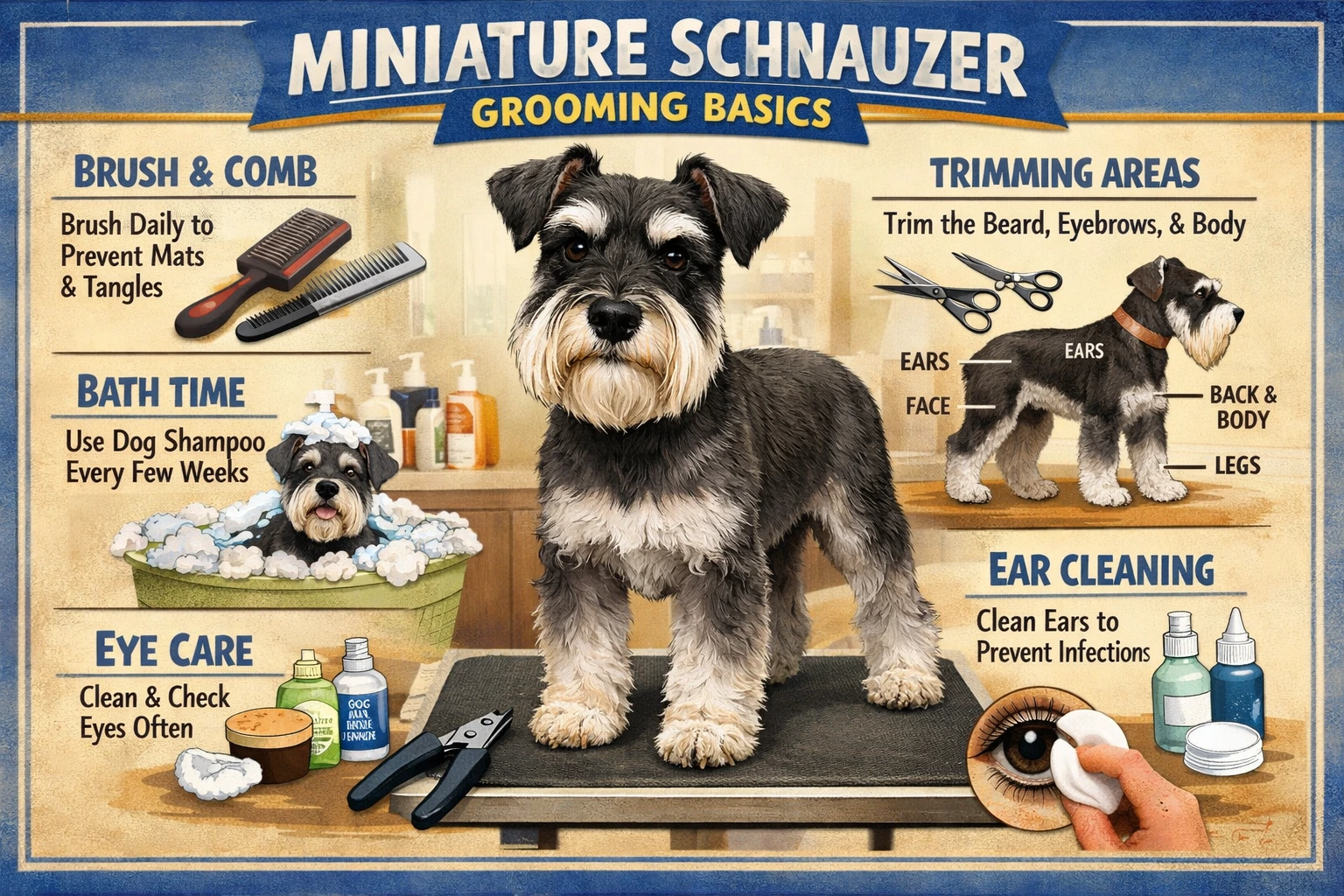
Coat, beard, nail, ear, and dental care remain important throughout life. Older dogs may need shorter or gentler grooming sessions if standing for long periods becomes uncomfortable. The Miniature Schnauzer grooming basics guide explains the breed’s routine coat care in more detail.
Visit the Vet on Schedule
Regular veterinary checkups help catch problems early. Puppies need vaccines and growth checks, adult dogs need routine exams, and senior Miniature Schnauzers may need more frequent health checks as they age.
Watch for Signs of Aging
As your Miniature Schnauzer gets older, look for changes like:
- Slower movement
- Trouble jumping or climbing
- Weight loss or weight gain
- More sleeping than usual
- Changes in behavior, appetite, hearing, or vision
If you notice sudden or serious changes, talk to your veterinarian. Early evaluation can help identify whether a change is part of normal aging or needs medical attention.
Give Extra Comfort to Senior Dogs
Older Miniature Schnauzers may need soft bedding, shorter walks, easy access to food and water, and a calm routine. Small changes can help your senior dog feel safer and more comfortable.
Miniature Schnauzer Age FAQs
How old is a Miniature Schnauzer in human years?
A Miniature Schnauzer’s human age depends on their dog age. As a general guide, 1 year is about 15 human years and 2 years is about 24 human years. After that, each additional dog year adds roughly 4 human years. Use the age chart above for a quick reference.
How old is my Miniature Schnauzer in human years?
Find your Miniature Schnauzer’s age in the chart, then look across to see the estimated human age equivalent. For example, a 5-year-old Miniature Schnauzer is about 36 in human years, while a 10-year-old Miniature Schnauzer is about 56 in human years.
When is a Miniature Schnauzer considered a senior?
Many Miniature Schnauzers begin entering their senior years at around 10 years old, although some may show age-related changes earlier or later depending on health, body condition, activity level, and individual aging.
Is the 7-year rule accurate for Miniature Schnauzers?
No. The 7-year rule is too simple for Miniature Schnauzers because dogs age much faster in their early years and more gradually later in life. A small-breed age chart gives a more useful human-years estimate.
Should I use a Miniature Schnauzer age chart or age calculator?
Use the age chart if you want a simple year-by-year reference table and life-stage explanation. Use the calculator when you want an instant conversion for the specific age you enter.
How long do Mini Schnauzers live in human years?
Human years describe a dog’s age equivalent rather than its actual lifespan. For example, a 10-year-old Miniature Schnauzer is about 56 in human years, while a 15-year-old Miniature Schnauzer is about 76 in human years. Use the chart above to convert your dog’s actual age into a human-age estimate.
Related Miniature Schnauzer Guides
Continue with the supporting Miniature Schnauzer guides for topics that are intentionally kept separate from this age-chart page:
- Miniature Schnauzer Dog Breed Guide
- Miniature Schnauzer Training Guide
- Miniature Schnauzer Grooming Basics
- Miniature Schnauzer Nutrition and Feeding Guide
- Miniature Schnauzer Cost of Ownership

Ata Ur Rehman is the founder of Pet Age in Human Years Calculator, an educational platform that provides age conversion charts and lifespan guides for dogs, cats, birds, and other companion animals. His work focuses on helping pet owners understand how animal ages translate into human years using commonly accepted age conversion formulas and published lifespan averages.
The website compiles breed and species lifespan data from kennel clubs, breed organizations, and general animal lifespan studies to present simple and easy-to-understand guides for pet owners worldwide.
This website was created to centralize animal age conversion charts into one easy reference platform for pet owners.
This article is for general education. For symptoms, medication, diet changes, or health concerns, use a qualified veterinarian who can assess your individual pet.