On this page
Boston Terrier Nutrition and Feeding Guide
This Boston Terrier nutrition and feeding guide is designed to help owners choose the right food, understand daily feeding amounts, and build a healthy meal routine for puppies, adults, and senior Boston Terriers. Because this breed is small, muscular, food-motivated, and prone to weight gain, portion control matters just as much as food quality.
A healthy Boston Terrier diet should support steady energy, lean muscle, easy digestion, skin and coat health, and long-term weight control. Instead of following food trends or guessing bowl sizes, the goal is to feed your Boston Terrier based on age, weight, activity level, body condition, and digestive tolerance.
In this guide, you’ll learn what Boston Terriers should eat, how much to feed a Boston Terrier, how often to feed them, which foods are safe or unsafe, and how to avoid common feeding mistakes that can lead to gas, loose stools, obesity, or poor nutrition.
How nutrition affects Boston Terrier health, energy, and lifespan
Boston Terriers have breed-specific needs that make nutrition especially important. They are compact, muscular dogs with moderate energy needs, but they can gain weight quickly when meals, treats, and table scraps are not measured carefully.
Weight management is one of the biggest nutrition priorities for this breed. Extra body fat can place more strain on the joints, reduce stamina, and make breathing feel harder for a brachycephalic dog. Even a small amount of overfeeding can make a noticeable difference in a Boston Terrier’s body condition.
Digestive sensitivity is also common. Gas, loose stool, vomiting, or food intolerance may be linked to sudden diet changes, high-fat meals, low-quality ingredients, or eating too quickly. A consistent feeding schedule and easy-to-digest food can help improve comfort and stool quality.
Because Boston Terriers have a short muzzle, some dogs gulp food or swallow air while eating. Meal texture, portion size, feeding speed, and bowl setup can all affect digestion and comfort after meals.
When nutrition is managed correctly, Boston Terriers often show better energy, healthier skin and coat, steadier digestion, easier weight control, and improved quality of life as they age.
Core Principles of Boston Terrier Nutrition
Understanding basic nutritional needs of Boston Terriers
Boston Terriers are small dogs, but they are not fragile toy breeds. They need a balanced diet that supports lean muscle without adding unnecessary calories. Most adults do best with measured meals, moderate fat levels, digestible protein, and a feeding routine that prevents overeating.
For most Boston Terriers, the best diet is a complete and balanced dog food made for small or small-to-medium breeds. The food should match the dog’s life stage, whether puppy, adult, or senior, and should be adjusted based on body condition rather than appetite alone.
The goal is simple: feed enough to maintain healthy energy and muscle, but not so much that your Boston Terrier gains excess weight or develops digestive problems.
Macronutrients Boston Terriers need: protein, fat, and carbohydrates
Macronutrients are the main nutrients that provide energy and support the body. For Boston Terriers, the most important balance is enough protein for lean muscle, controlled fat for healthy energy, and digestible carbohydrates for stool quality and daily fuel.
Recommended macronutrient ranges for Boston Terriers
| Nutrient | Good Range | Why it matters |
|---|---|---|
| Protein | 22-28% | Supports lean muscle, repair, and daily energy |
| Fat | 10-15% | Provides energy while helping reduce excess weight gain |
| Carbohydrates | Moderate | Supports digestion, stool quality, and steady energy |
Protein should come from clear animal sources such as chicken, turkey, fish, lamb, beef, or egg. Fat should be controlled because too much can contribute to weight gain, gas, or loose stool. Carbohydrates are not automatically bad for Boston Terriers, but they should come from digestible sources such as rice, oats, barley, pumpkin, or sweet potato.
Micronutrients, supplements, and breed considerations
Micronutrients include vitamins and minerals. Most complete and balanced dog foods already contain the vitamins and minerals a Boston Terrier needs, so supplements are usually unnecessary unless there is a specific health reason.
Common supplements for Boston Terriers: needed vs usually unnecessary
| Supplement | Needed? | Simple explanation |
|---|---|---|
| Omega-3 oils | Sometimes | May support skin, coat, and mild inflammation |
| Probiotics | Situational | May help some dogs with gas or sensitive stomachs |
| Calcium | Rarely | Extra calcium can be harmful if not needed |
| Multivitamins | Usually no | Complete dog food should already provide core nutrients |
Never add supplements just because they sound healthy. For small breeds like Boston Terriers, unnecessary supplements can create nutrient imbalances, especially when the dog already eats a complete diet.
How to read dog food labels for Boston Terriers
Dog food labels can be confusing, but Boston Terrier owners only need to focus on a few important signals: life-stage suitability, clear protein sources, calorie density, fat level, and whether the food is complete and balanced.
Dog food label cheat sheet for Boston Terriers
| Label term | What it means for your Boston Terrier |
|---|---|
| Complete & balanced | The food is intended to meet core nutrition needs |
| Crude protein | The minimum protein level listed on the food |
| Crude fat | The minimum fat level, important for weight control |
| Calories per cup | Helps you measure portions more accurately |
| Grain-free | Not automatically better unless your dog has a specific need |
| Life stage | Shows whether the food is for puppies, adults, seniors, or all life stages |
Ignore vague marketing terms like “premium,” “natural,” or “holistic” unless the label also gives useful feeding information. A better Boston Terrier food choice should have clear ingredients, appropriate calories, controlled fat, and a life-stage match for your dog.
How Much to Feed a Boston Terrier and How Often
Boston Terrier Feeding Chart by Weight and Activity Level
How much to feed a Boston Terrier depends on body weight, age, activity level, metabolism, and body condition. Most adult Boston Terriers need measured meals instead of free feeding because this breed can overeat easily and gain weight quickly.
Your Boston Terrier’s daily food amount should be based on total calories, not just cups of food. Different dog foods can have very different calories per cup, so always use the food label as the final guide and adjust based on your dog’s body condition.
How many calories your Boston Terrier needs depends on:
- current body weight
- age and life stage
- daily activity level
- spay or neuter status
- body condition and weight trend
Daily calorie needs for Boston Terriers
| Boston Terrier Weight | Low Activity | Moderate Activity |
|---|---|---|
| 10 lbs | 220-260 calories daily | 260-300 calories daily |
| 15 lbs | 300-340 calories daily | 340-390 calories daily |
| 20 lbs | 380-420 calories daily | 420-480 calories daily |
| 25 lbs | 450-500 calories daily | 500-560 calories daily |
These calorie ranges include meals and treats combined. Boston Terriers gain weight easily, so small overfeeding habits can quickly increase body fat. If your dog starts gaining weight, reduce portions slightly and monitor body condition over several weeks instead of making sudden changes.
If your Boston Terrier seems low on energy, loses weight unexpectedly, or stays very active throughout the day, a gradual calorie increase may be needed.
Using body condition score in daily life
The scale alone does not tell you if your Boston Terrier is healthy. Body condition matters more than weight by itself.
Boston Terrier body condition quick check
| Body Area | Healthy Sign | Overweight Sign |
|---|---|---|
| Ribs | Easy to feel with light pressure | Hard to feel through fat |
| Waist | Visible waist behind ribs | Little or no waist shape |
| Belly | Slight upward tuck | Flat or hanging belly |
You should be able to feel your Boston Terrier’s ribs without pressing hard. If the ribs are difficult to feel, meal portions or treats may need adjustment.
Feeding frequency by life stage
Boston Terriers usually do better with scheduled meals instead of free feeding. Regular feeding times help support digestion, appetite control, and healthy weight management.
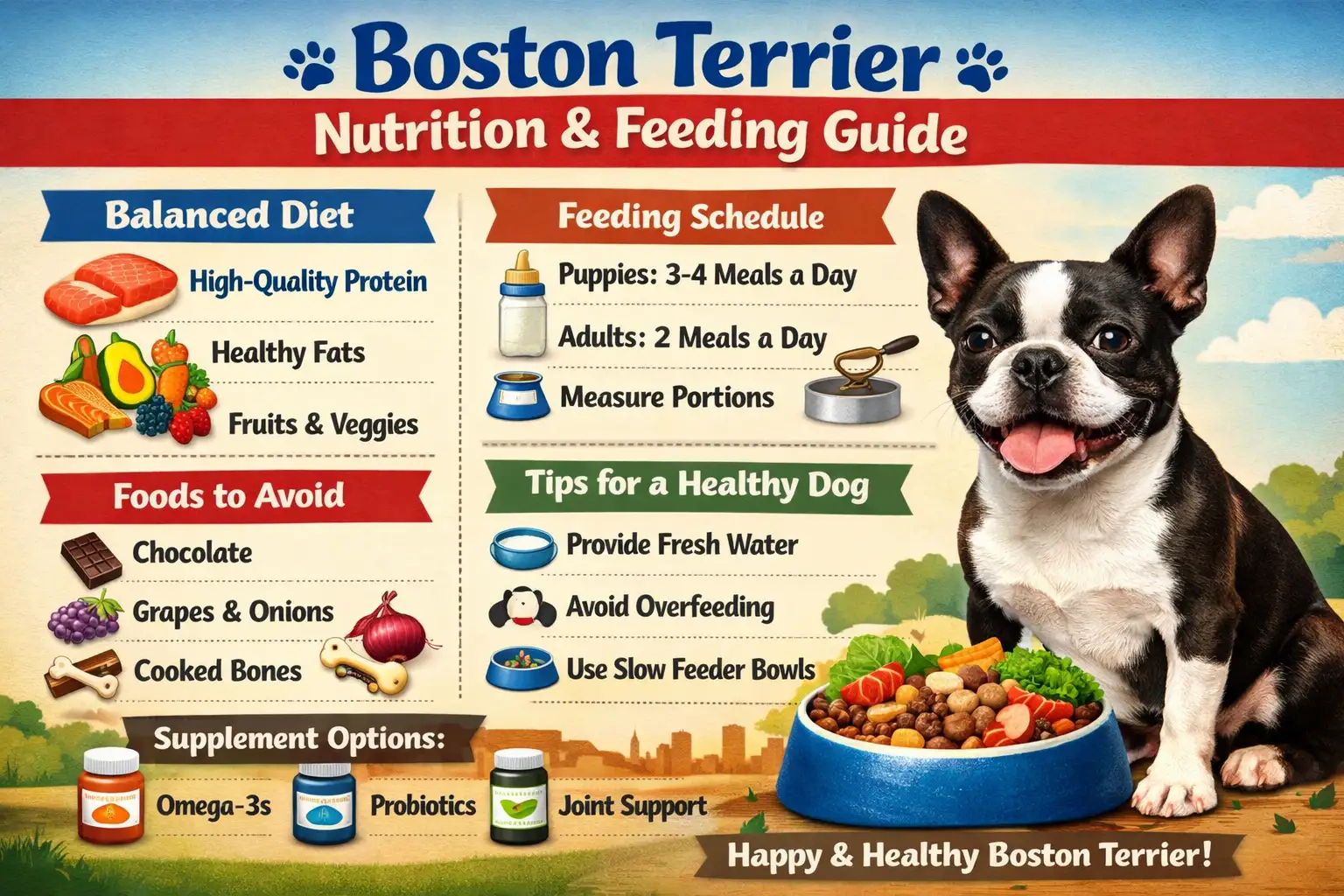
Boston Terrier feeding schedule by age
| Life Stage | Meals Per Day | Feeding Goal |
|---|---|---|
| Puppy (up to 6 months) | 3-4 meals | Supports steady growth and digestion |
| Adult | 2 meals | Helps maintain healthy weight |
| Senior | 2 smaller meals | Supports easier digestion and comfort |
Feeding schedules should stay consistent each day. Boston Terriers often become food-focused when meals are unpredictable.
Feeding by size and body type within the breed
Not all Boston Terriers have the same build. Some are lean and athletic, while others are naturally stockier and more prone to gaining weight.
Lean or highly active Boston Terriers may need:
- slightly larger meal portions
- higher protein intake
- closer calorie monitoring
Stockier or lower-activity Boston Terriers may need:
- smaller portions
- lower-fat food options
- fewer calorie-dense treats
Always adjust feeding amounts slowly and monitor body shape over time instead of reacting to appetite alone.
Types of Dog Food and What to Put in the Bowl
Overview of food types for Boston Terriers
Boston Terriers can do well on several types of dog food when the diet is balanced, portion-controlled, and easy to digest. The best option depends on your dog’s digestion, activity level, chewing habits, and feeding routine.
Dog food types for Boston Terriers at a glance
| Food Type | Best For | Things to Watch |
|---|---|---|
| Dry food (kibble) | Daily feeding and portion control | Easy to overfeed |
| Wet food | Picky eaters and hydration support | Often higher in calories |
| Fresh food | Digestive support and taste | Higher cost |
| Freeze-dried | Travel and food mixing | Needs proper rehydration |
| Raw diet | Experienced owners only | Nutritional balance and safety risks |
| Homemade meals | Ingredient control | Requires careful nutrient balance |
Most Boston Terriers do well with high-quality kibble combined with measured portions and occasional wet or fresh food for variety.
Pros and cons of each food type
Dry food is popular because it is easy to measure, store, and portion correctly. It can also help slow eating when used with puzzle bowls or slow feeders.
Wet food may help picky Boston Terriers eat more consistently, but calorie levels should still be measured carefully.
Fresh and gently cooked diets may work well for dogs with mild digestive sensitivity when the meals are balanced properly.
Raw and homemade diets require extra caution because nutrient deficiencies or excesses are easier to create accidentally in small breeds.
Foods Boston Terriers can eat vs foods to avoid
Some human foods are safe for Boston Terriers in moderation, while others can be dangerous even in small amounts.
Safe and unsafe foods for Boston Terriers
| Safe Foods | Foods to Avoid |
|---|---|
| Plain cooked chicken | Chocolate |
| Cooked rice | Grapes and raisins |
| Carrots | Onions and garlic |
| Apples without seeds | Xylitol products |
| Plain yogurt | Alcohol |
Human foods should stay as occasional additions only. A complete dog food should remain the foundation of your Boston Terrier’s diet.
Treat and snack guidelines
Treats should support training and behavior, not replace balanced meals.
Boston Terrier treat guidelines
| Rule | Why It Matters |
|---|---|
| Treats under 10% of daily calories | Helps prevent excess weight gain |
| Small treat sizes | Supports easier digestion |
| Soft or manageable textures | Safer for flat-faced breeds |
| Count treats within total calories | Prevents hidden overfeeding |
Many Boston Terriers act hungry frequently, but appetite alone should not decide meal size.
Special Diets, Common Problems, and Real-Life Boston Terrier Scenarios
Special diets for Boston Terriers
Some Boston Terriers benefit from special feeding approaches based on digestion, allergies, body condition, or activity level.
Boston Terriers with food sensitivities may do better on limited-ingredient diets with fewer protein and carbohydrate sources.
Boston Terriers with gas or sensitive stomachs often improve with:
- easy-to-digest proteins
- moderate fat levels
- slow food transitions
- consistent meal schedules
Overweight Boston Terriers usually benefit from:
- calorie reduction
- higher fiber intake
- strict treat control
- measured feeding routines
Very active Boston Terriers may need slightly more calories than indoor or low-activity dogs.
Common feeding mistakes Boston Terrier owners make
Many Boston Terrier nutrition problems happen because food portions slowly increase over time. Extra treats, table scraps, free feeding, and guessing serving sizes can quickly lead to weight gain, gas, loose stool, or poor appetite control.
Common Boston Terrier feeding mistakes and better alternatives
| Feeding Mistake | Why It Causes Problems | Better Alternative |
|---|---|---|
| Free feeding all day | Boston Terriers are often food-motivated and may overeat when food is always available | Feed measured meals at set times |
| Guessing food amounts | Different foods have different calories per cup, so guessing can lead to overfeeding | Measure portions and check calories per cup |
| Too many treats | Small dogs can gain weight from treat calories faster than owners expect | Keep treats under 10% of daily calories |
| Feeding table scraps | Scraps can add fat, salt, and unsafe ingredients | Use only dog-safe foods in small amounts |
| Changing food suddenly | Fast diet changes can trigger gas, vomiting, or loose stool | Transition gradually over several days |
| Ignoring body condition | A Boston Terrier can look sturdy while slowly becoming overweight | Check ribs, waist, and belly shape regularly |
The best feeding routine for a Boston Terrier is simple: measure the food, keep meal times consistent, control treats, and adjust portions based on body condition instead of appetite alone.
Frequently asked Boston Terrier feeding questions
How much should I feed a Boston Terrier each day?
A Boston Terrier usually needs about 220-560 calories per day depending on weight, age, activity level, and body condition. Smaller or less active dogs need the lower end, while larger or more active Boston Terriers may need more.
How often should a Boston Terrier eat?
Most adult Boston Terriers do best with two measured meals per day. Puppies usually need three to four smaller meals daily, while senior dogs may do better with two smaller, easier-to-digest meals.
What is the best diet for a Boston Terrier?
The best Boston Terrier diet is complete, balanced, portion-controlled, and matched to the dog’s life stage. Most dogs do well with digestible protein, moderate fat, controlled calories, and consistent meal timing.
Can Boston Terriers eat human food?
Boston Terriers can eat some plain human foods in small amounts, such as cooked chicken, rice, carrots, apples without seeds, and plain yogurt. Human food should not replace a complete dog food diet.
What foods should Boston Terriers avoid?
Boston Terriers should avoid chocolate, grapes, raisins, onions, garlic, alcohol, xylitol products, and high-fat table scraps. These foods can be dangerous or trigger digestive problems.
Why does my Boston Terrier have gas?
Gas in Boston Terriers is often linked to eating too fast, sudden food changes, high-fat foods, food intolerance, or swallowing air while eating. Slow feeders, gradual food transitions, and simpler diets may help.
Is grain-free food better for Boston Terriers?
Grain-free food is not automatically better for Boston Terriers. Many dogs digest grains well. Grain-free diets should only be used when there is a clear reason, such as a confirmed sensitivity.
How much should a Boston Terrier puppy eat?
A Boston Terrier puppy usually needs smaller meals spread across the day because growth requires steady nutrition. Most puppies do best with three to four meals daily until around six months, then gradually transition toward two meals.
Do senior Boston Terriers need different food?
Senior Boston Terriers may need fewer calories, easier-to-digest meals, and closer weight monitoring. Some seniors benefit from smaller meals and food that supports joint, digestive, and muscle health.
Should I free feed my Boston Terrier?
Free feeding is usually not ideal for Boston Terriers because many are food-motivated and can overeat. Measured meals are better for weight control, digestion, and long-term feeding consistency.
More Boston Terrier Resources
Use these related Boston Terrier resources for topics that are covered in more detail on their dedicated pages:
- Boston Terrier Dog Age Calculator
- Boston Terrier Dog Breed Guide
- Boston Terrier Training Guide
- Boston Terrier Age Chart
- Boston Terrier Grooming Guide
- Boston Terrier Cost of Ownership Guide

Ata Ur Rehman is the founder of Pet Age in Human Years Calculator, an educational platform that provides age conversion charts and lifespan guides for dogs, cats, birds, and other companion animals. His work focuses on helping pet owners understand how animal ages translate into human years using commonly accepted age conversion formulas and published lifespan averages.
The website compiles breed and species lifespan data from kennel clubs, breed organizations, and general animal lifespan studies to present simple and easy-to-understand guides for pet owners worldwide.
This website was created to centralize animal age conversion charts into one easy reference platform for pet owners.
This article is for general education. For symptoms, medication, diet changes, or health concerns, use a qualified veterinarian who can assess your individual pet.