On this page
Proper nutrition plays a major role in a Bichon Frise’s weight, digestion, coat health, dental health, and long-term wellbeing. This Bichon Frise feeding guide explains what to feed, how much to feed, how often to feed, and how to adjust portions for puppies, adults, and senior dogs.
Because Bichon Frises are small dogs with compact bodies, even small portion mistakes can lead to weight gain. A few extra treats, oversized meals, or inconsistent feeding times can affect their body condition faster than many owners expect.
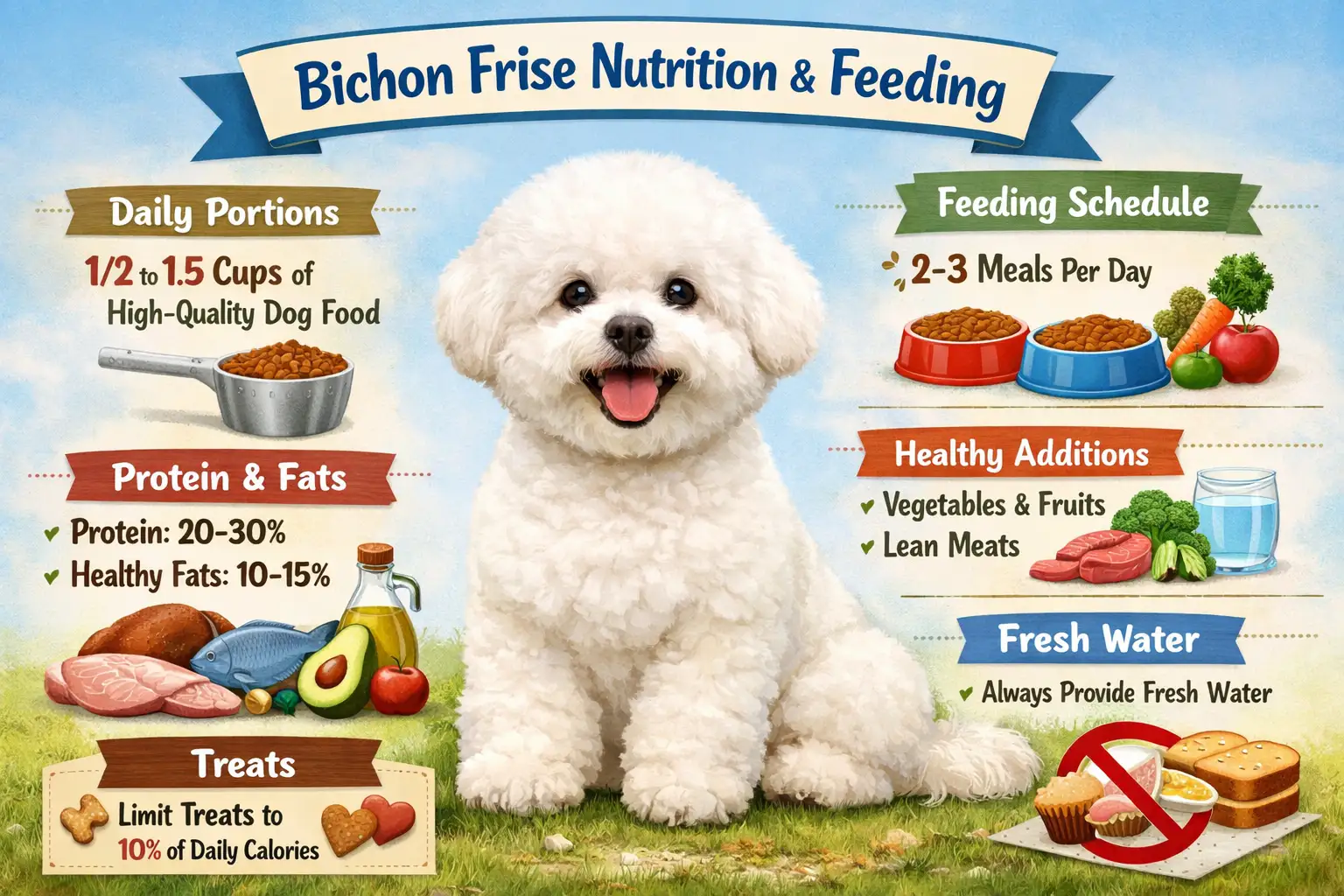
Quick answer: Most adult Bichon Frises do well on a complete and balanced small-breed dog food, divided into two measured meals per day. Depending on weight, age, activity level, and food calorie density, many adult Bichons need about 200-400 calories per day, or roughly ½ to 1¼ cups of dry food daily.
This guide covers Bichon Frise diet recommendations, feeding amounts, safe foods, foods to avoid, sensitive stomach issues, and practical feeding tips for everyday owners.
Bichon Frises are particularly prone to:
- Weight gain from small portion miscalculations
- Food sensitivities and mild allergies
- Dental issues common in small breeds
- Skin and coat problems when nutrition is unbalanced
- Picky eating or begging when feeding routines are inconsistent
A healthy Bichon Frise diet is not about choosing the most expensive food. It is about feeding a balanced diet in the right amount, at the right times, based on your dog’s age, weight, activity level, and body condition.
Bichon Frise Feeding Chart: Cups, Grams, Calories, and Meals
Use this Bichon Frise feeding chart as a starting point. Exact food amounts depend on your dog’s metabolism, activity level, age, and the calorie density of the food. Always check the feeding label on your dog’s food and adjust based on body condition.
| Bichon Frise Weight | Daily Calories | Dry Food Per Day | Approx. Grams Per Day | Meals Per Day |
|---|---|---|---|---|
| 5-7 lbs (2-3 kg) | 200-300 kcal | ½ to 1 cup | 50-100 g | 2 meals |
| 8-10 lbs (3.5-4.5 kg) | 300-400 kcal | ¾ to 1¼ cups | 75-125 g | 2 meals |
| 11-13 lbs (5-6 kg) | 350-500 kcal | 1 to 1½ cups | 100-150 g | 2 meals |
| Puppy | Varies by age and growth | Split into smaller meals | Follow puppy food label | 3-4 meals |
| Senior | Often lower than adult needs | Measure carefully | Adjust by body condition | 2 smaller meals |
Important: Cup and gram estimates vary by food brand. One cup of dry food may contain a different number of calories depending on the formula. For the most accurate feeding amount, use calories first, then convert that amount into cups or grams using your dog food label.
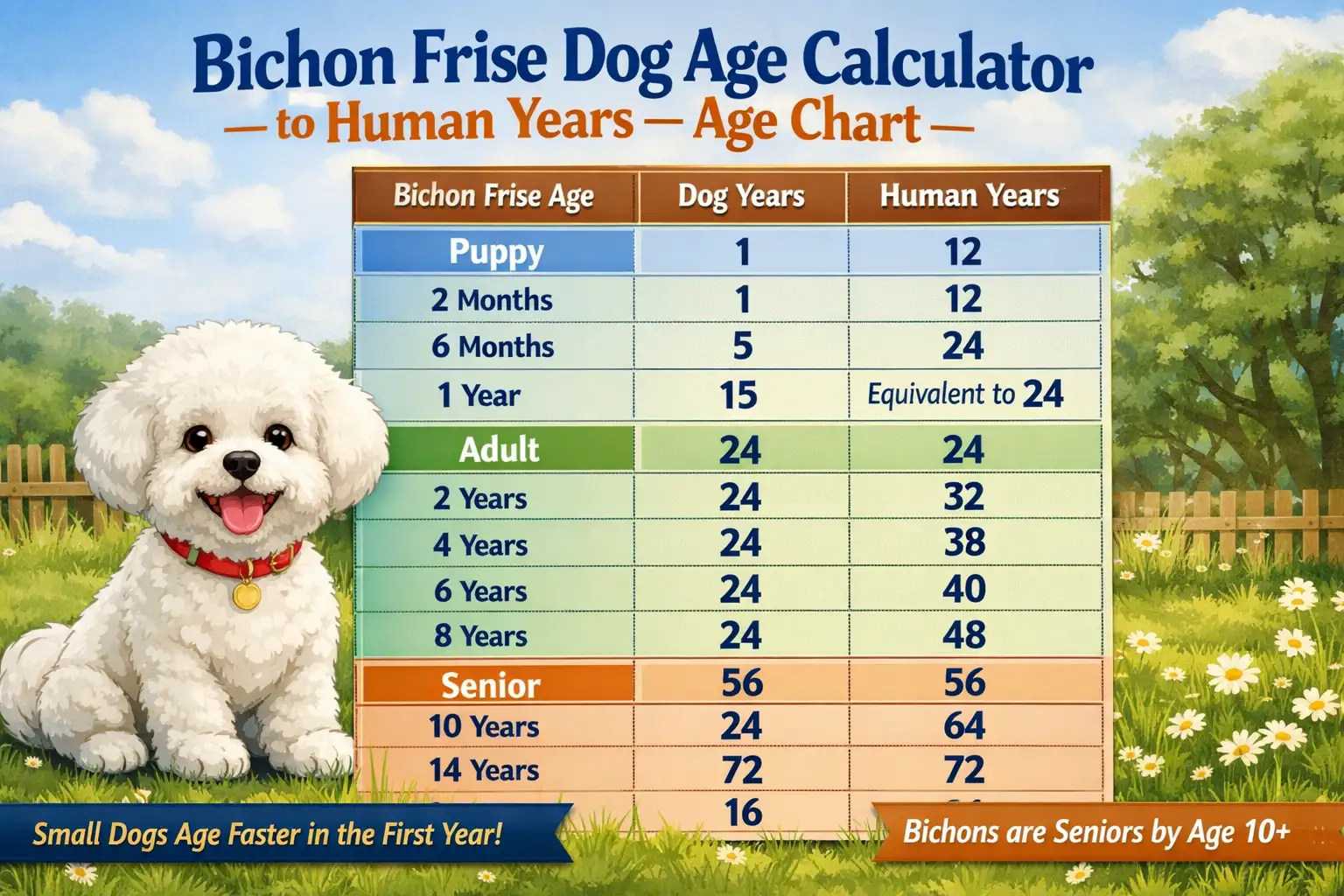
Since feeding needs change with life stage, you can use our Bichon Frise Dog Age Calculator to understand whether your dog is closer to a puppy, adult, or senior stage before adjusting meals.
What Do Bichon Frise Dogs Eat? Nutritional Needs Explained
Bichon Frise dogs eat complete and balanced dog food made for small breeds. Their diet should provide enough protein for muscle support, enough fat for energy and coat health, and controlled calories to prevent weight gain.
A typical Bichon Frise diet includes measured portions of dry kibble, wet food, fresh cooked food, or a carefully balanced homemade diet. Most adult Bichons eat two meals per day, with treats limited and counted as part of daily calories.
A healthy diet for a Bichon Frise should support:
- Steady energy throughout the day
- Healthy digestion and firm stools
- A soft white coat and healthy skin
- Strong teeth and gums
- A lean, healthy body weight
Bichon Frise Dietary Needs: Key Nutrients Explained
Here is a simple breakdown of the most important nutrients in a Bichon Frise diet.
| Nutrient | Why It Matters for Bichon Frises | Simple Owner Tip |
|---|---|---|
| Protein | Supports muscles, immune health, and coat condition | Choose food with a clear meat, poultry, fish, or egg protein source |
| Fat | Provides energy and supports skin and coat health | Use controlled fat levels because Bichons gain weight easily |
| Carbohydrates | Provide energy and can support digestion | Look for digestible sources such as rice, oats, sweet potato, or vegetables |
| Fiber | Helps stool quality and digestive comfort | Useful for dogs with mild sensitive stomach issues |
| Vitamins and Minerals | Support bones, teeth, immunity, and overall health | Should come mainly from complete and balanced dog food |
Protein, Fat, and Carbs in Simple Words
Protein helps your Bichon Frise stay strong, active, and healthy. Most healthy adult Bichons do well with moderate protein from quality animal-based ingredients.
Fat is important for energy and coat condition, but too much fat can quickly lead to weight gain. This is why portion control matters as much as food quality.
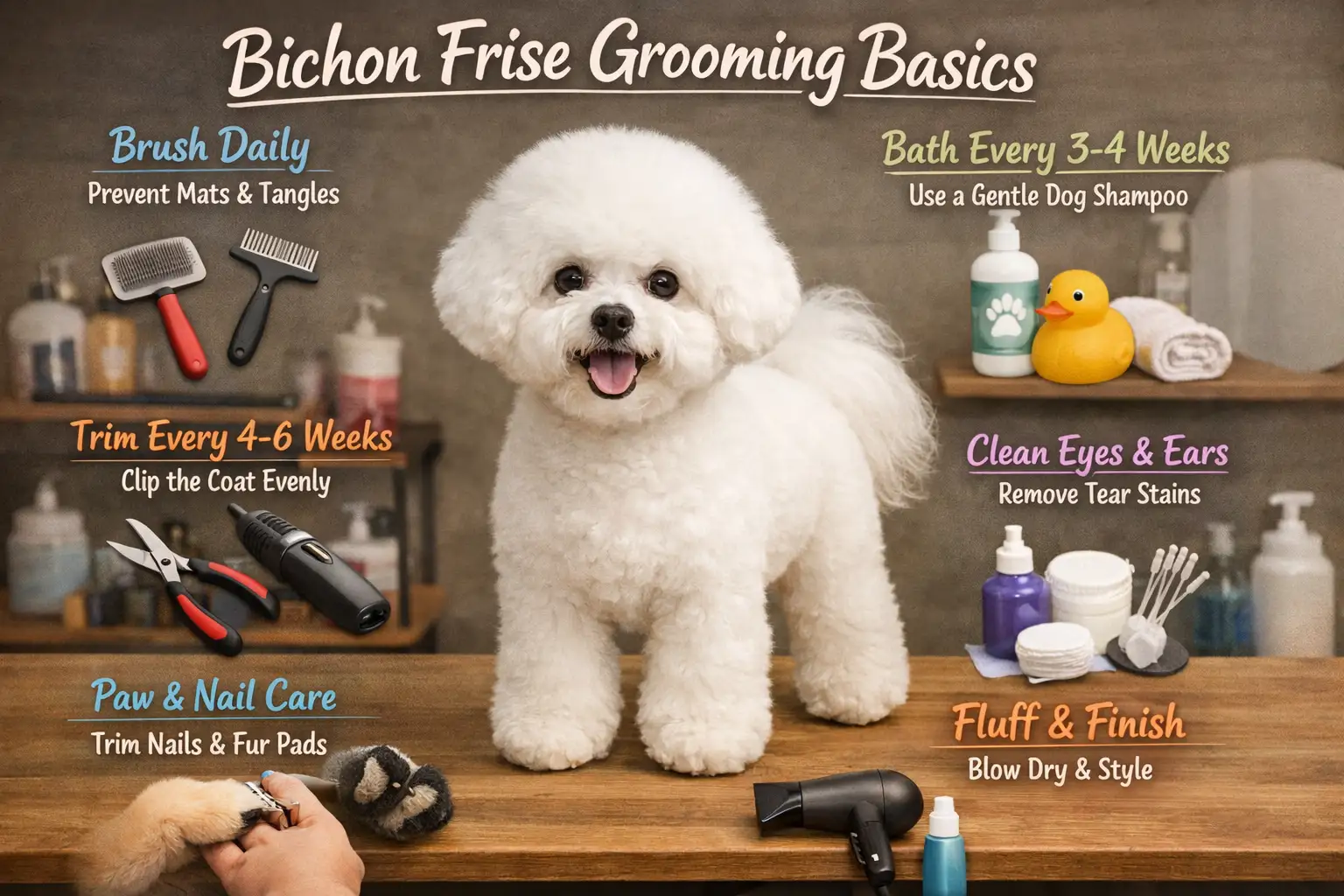
A healthy coat also depends on regular grooming. For brushing, bathing, and coat care advice, see our Bichon Frise grooming guide.
Carbohydrates are not bad for dogs when they come from digestible sources. Rice, oats, sweet potatoes, pumpkin, and vegetables can help provide energy and support digestion.
Vitamins, Minerals, and Supplements
Most complete dog foods already contain the vitamins and minerals your Bichon Frise needs. Extra supplements are usually not needed unless your vet recommends them for a specific issue, such as skin support, joint support, or a diagnosed deficiency.
How to Read a Dog Food Label
When choosing food for a Bichon Frise, focus on the label instead of marketing claims.
- Choose food labeled as complete and balanced
- Look for a clear protein source near the top of the ingredient list
- Check calories per cup or calories per gram
- Avoid vague ingredients and unnecessary artificial colors
- Choose a formula that matches your dog’s age: puppy, adult, or senior
Good dog food should be clear, balanced, and appropriate for your dog’s life stage. Fancy wording matters less than the actual ingredients, calories, and feeding instructions.
How Much Should a Bichon Frise Eat Per Day?
Most adult Bichon Frises eat about ½ to 1¼ cups of dry food per day, divided into two meals. In calories, many adult Bichons need around 200-400 calories daily, depending on weight and activity level.
The best feeding amount depends on:
- Your dog’s current weight
- Body condition and waist shape
- Activity level
- Age and life stage
- Whether your dog is spayed or neutered
- Calories per cup or calories per gram in the food
If your Bichon Frise is gaining weight, reduce the daily portion slightly and limit treats. If your dog is too thin or losing weight without a clear reason, speak with a veterinarian before increasing food heavily.
Daily Feeding Amounts by Weight and Activity
Use the table below as a practical Bichon Frise feeding guide by weight and activity level.
| Bichon Frise Weight | Activity Level | Calories Per Day | Approx. Cups Per Day | Approx. Grams Per Day |
|---|---|---|---|---|
| 5-7 lbs (2-3 kg) | Low activity | 200-250 kcal | ½ to ¾ cup | 50-75 g |
| 5-7 lbs (2-3 kg) | Active | 250-300 kcal | ¾ to 1 cup | 75-100 g |
| 8-10 lbs (3.5-4.5 kg) | Low activity | 300-350 kcal | ¾ to 1 cup | 75-100 g |
| 8-10 lbs (3.5-4.5 kg) | Active | 350-400 kcal | 1 to 1¼ cups | 100-125 g |
| 11-13 lbs (5-6 kg) | Low activity | 350-425 kcal | 1 to 1⅓ cups | 100-135 g |
| 11-13 lbs (5-6 kg) | Active | 425-500 kcal | 1¼ to 1½ cups | 125-150 g |
These are average ranges, not fixed rules. If your dog food is very calorie-dense, your Bichon may need fewer cups or grams than shown above.
How Often to Feed a Bichon Frise
Feeding smaller measured meals helps digestion, energy, and weight control.
| Life Stage | Meals Per Day | Why It Helps |
|---|---|---|
| Puppy up to 6 months | 3-4 meals | Supports growth and helps prevent energy dips |
| Adult | 2 meals | Supports digestion and easier portion control |
| Senior | 2 smaller meals | Easier on digestion and better for slower activity levels |
Avoid free-feeding, which means leaving food out all day. Free-feeding often leads to overeating, especially in small breeds like the Bichon Frise.
Watch Body Condition, Not Just the Bowl
A healthy Bichon Frise should have:
- A visible waist when viewed from above
- Ribs you can feel but not clearly see
- Good energy without getting tired too quickly
- A steady weight without sudden gain or loss
If your dog looks round or feels heavy, reduce food slightly and cut back treats. If the ribs are too easy to see, increase food carefully and monitor weight.
Treats Count as Food
Treats should make up no more than 10% of daily calories. Too many treats are one of the most common reasons Bichon Frises gain weight.
Simple rule: If treats increase, meals should decrease.
Best Food Choices for Bichon Frise Dogs
There is no single best food for every Bichon Frise. The best choice depends on your dog’s age, weight, teeth, digestion, activity level, and sensitivity to certain ingredients. What matters most is that the food is complete, balanced, easy to digest, and fed in the correct amount.
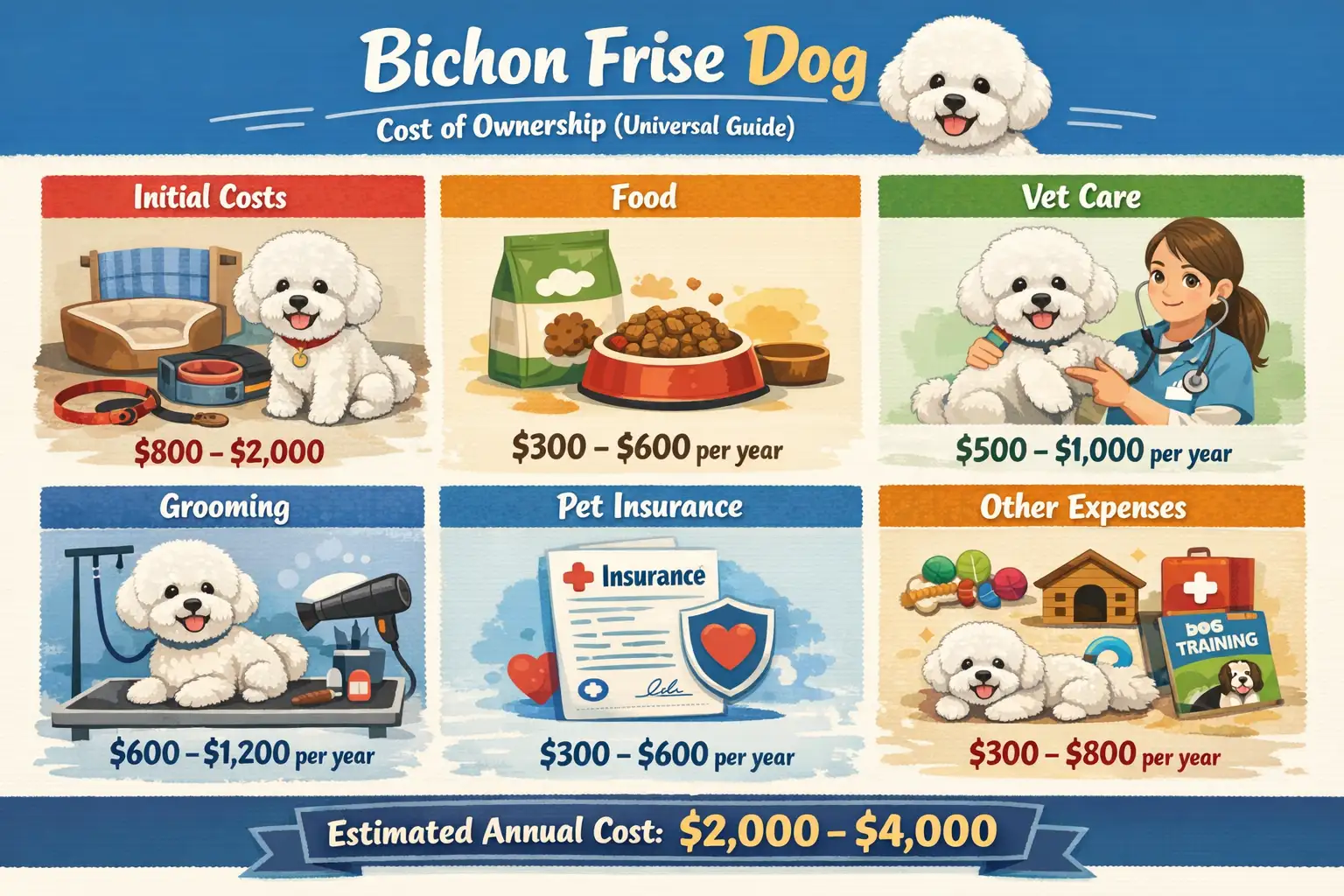
Food quality is also part of long-term breed care and budgeting. If you are planning expenses for this breed, review our Bichon Frise cost of ownership guide.
Below is a simple comparison of common food types for Bichon Frise dogs.
Types of Dog Food and How They Compare
| Food Type | Benefits | Drawbacks | Best For |
|---|---|---|---|
| Dry kibble | Easy to store, convenient, usually cost-effective | Can cause weight gain if overfed | Most adult Bichon Frises |
| Wet food | Tasty and higher in moisture | More expensive and easier to overfeed | Picky eaters and some seniors |
| Fresh cooked food | Often highly palatable and easy to digest | Higher cost and shorter shelf life | Dogs with ingredient sensitivities |
| Freeze-dried food | Nutrient-dense and easy to store | Expensive and often needs rehydration | Owners wanting fresh-style feeding |
| Raw diet | High in animal protein | Hard to balance and carries safety risks | Only with professional guidance |
| Homemade food | Full control over ingredients | High risk of missing nutrients if not balanced | Only with a vet-approved recipe |
Dry kibble works well for many Bichon Frises when portions are measured carefully. Wet or fresh food can be added in small amounts for taste, but the extra calories must be counted.
Safe Human Foods Bichon Frises Can Eat
Some plain human foods are safe for Bichon Frises in small portions. These should be used as occasional snacks, not as the main diet.
| Safe Food | Why It Can Help | Feeding Tip |
|---|---|---|
| Cooked chicken or turkey without skin | Lean protein | Serve plain with no seasoning |
| Plain rice or oats | Easy on digestion | Use small amounts only |
| Carrots or green beans | Low-calorie snacks | Good treat replacement |
| Apple slices without seeds | Fiber and vitamins | Cut into small pieces |
| Plain pumpkin | Digestive support | Use plain pumpkin, not pie filling |
Always keep human food plain. Do not add salt, spices, butter, sauces, or sweeteners.
Foods Bichon Frises Should Avoid
Some foods are unsafe for Bichon Frises and should be avoided completely.
| Unsafe Food | Why It Is Harmful |
|---|---|
| Chocolate | Can be toxic to dogs |
| Grapes and raisins | Can cause serious kidney problems |
| Onions and garlic | Can damage red blood cells |
| Xylitol | Can cause dangerous blood sugar drops |
| Alcohol and caffeine | Can be very dangerous even in small amounts |
| Fatty scraps and cooked bones | Can cause digestive issues, injury, or choking risk |
Never test small amounts of unsafe foods. Keep them away from your Bichon Frise completely.
Treats and Snacks
Treats should be small, simple, and limited. Many store-bought treats are calorie-dense, so break them into tiny pieces and count them as part of your dog’s daily food allowance.
Good rule: treats should stay under 10% of your Bichon Frise’s total daily calories.
Special Diets, Common Feeding Problems, and When to See a Vet
Some Bichon Frise dogs need extra care with food because they can be sensitive, picky, or prone to weight gain. The right feeding routine can help prevent digestive upset, begging, food refusal, and unhealthy weight changes.
Feeding Bichon Frises With Allergies or Sensitive Stomachs
Bichon Frises may develop food sensitivities that affect the skin, ears, digestion, or appetite. Not every reaction is a true food allergy, but recurring symptoms should not be ignored.
Signs of food sensitivity may include:
- Itchy skin, red paws, or frequent scratching
- Red ears or repeated ear irritation
- Loose stool, gas, or stomach upset
- Vomiting or poor appetite
- Dull coat or skin irritation that does not improve
Many sensitive Bichon Frises do better with simple diets that use:
- One main protein source
- Limited ingredients
- No artificial colors or unnecessary fillers
- Digestible carbohydrates such as rice, oats, or sweet potato
- Measured portions to avoid stomach overload
If your Bichon Frise has ongoing itching, vomiting, diarrhea, or ear problems, do not keep changing foods randomly. A veterinarian can help identify whether the problem is food-related, environmental, or caused by another health issue.
Picky Eaters and Food-Obsessed Bichon Frises
Some Bichon Frises refuse meals, while others act hungry all the time. Both problems are often linked to routine, treat habits, boredom, or inconsistent feeding.
Helpful tips for picky eaters:
- Feed meals at the same times each day
- Remove uneaten food after 15-20 minutes
- Avoid changing toppers too often
- Do not reward skipped meals with treats
- Keep table scraps out of the routine
Helpful tips for food-obsessed dogs:
- Measure meals instead of guessing portions
- Use low-calorie snacks like small carrot or green bean pieces
- Break treats into tiny pieces
- Add more walks, play, and training time
- Use slow feeders if your dog eats too quickly
Dogs that seem hungry all the time are often bored, under-stimulated, or used to getting treats. Training and routine can help. For behavior support, see our Bichon Frise training guide.
Weight Gain and Weight Loss Problems
Bichon Frises gain weight easily because they are small dogs. Even a small amount of extra food each day can become a problem over time.
Common causes of weight gain include:
- Too many treats
- Large portion sizes
- Free-feeding throughout the day
- Low activity
- Extra calories from wet food, toppers, or table scraps
To help a Bichon Frise lose weight safely:
- Reduce food slightly, not suddenly
- Measure every meal with the same cup or scale
- Limit treats to less than 10% of daily calories
- Use low-calorie snacks when needed
- Increase daily walks and play gradually
If your Bichon Frise is losing weight without a clear reason, refusing food, or becoming tired quickly, speak with a veterinarian before changing the diet heavily.
Feeding Senior Bichon Frises
Senior Bichon Frises often need more careful feeding because their activity level, digestion, dental health, and calorie needs may change with age.
Older Bichon Frises may:
- Move less and burn fewer calories
- Gain weight more easily
- Have dental pain or chewing difficulty
- Digest food more slowly
- Need softer or more digestible meals
Senior-friendly feeding usually means smaller measured meals, controlled calories, easy-to-chew food, and close weight monitoring. If your older dog’s appetite drops, warming food slightly may improve smell and taste.
To understand where your dog fits by life stage, use the Bichon Frise Dog Age Calculator before making puppy, adult, or senior feeding adjustments.
Switching Dog Food Safely
Always switch dog food slowly. A sudden food change can cause diarrhea, vomiting, gas, or refusal to eat, especially in sensitive Bichon Frises.
Simple 10-day food switch plan:
| Days | Old Food | New Food |
|---|---|---|
| Days 1-3 | 75% | 25% |
| Days 4-6 | 50% | 50% |
| Days 7-9 | 25% | 75% |
| Day 10 | 0% | 100% |
If diarrhea, vomiting, or appetite loss appears, slow the transition and stay longer at the current mix before increasing the new food.
When to See a Veterinarian
Contact a veterinarian if your Bichon Frise:
- Stops eating for more than 24 hours
- Has ongoing vomiting or diarrhea
- Loses or gains weight quickly
- Has skin or ear problems that do not improve
- Seems weak, tired, bloated, or uncomfortable after eating
- Needs a homemade, raw, or medical diet
A veterinarian or veterinary nutrition professional can help create a safe feeding plan if your dog has allergies, digestive problems, weight issues, or medical needs.
Frequently Asked Questions About Bichon Frise Feeding and Diet
What is the best diet for a Bichon Frise?
The best diet for a Bichon Frise is a complete and balanced small-breed dog food with quality protein, controlled fat, digestible carbohydrates, and measured portions. Most adult Bichons do well on dry kibble or a balanced mix of dry and wet food, divided into two meals per day.
How much should a Bichon Frise eat each day?
Most adult Bichon Frises need about 200-400 calories per day, depending on weight, age, activity level, and body condition. This often equals about ½ to 1¼ cups of dry food per day, divided into two meals. Always check your dog food label because calories per cup can vary by brand.
How much should a Bichon Frise eat in grams?
Many adult Bichon Frises eat around 50-125 grams of dry food per day, depending on weight, activity level, and food calorie density. Larger or more active Bichons may need slightly more, while seniors or less active dogs may need less.
What food should I feed my Bichon Frise?
Feed your Bichon Frise a small-breed dog food that is complete, balanced, easy to digest, and suitable for their life stage. Puppies need puppy food, adults need adult maintenance food, and older dogs may do better with senior-friendly formulas if their activity or digestion changes.
Can Bichon Frises eat chicken?
Yes, many Bichon Frises can eat plain cooked chicken in small amounts. It should be boneless, skinless, and unseasoned. Do not feed chicken with sauces, salt, garlic, onion, butter, or cooked bones.
What foods should Bichon Frises avoid?
Bichon Frises should avoid chocolate, grapes, raisins, onions, garlic, xylitol, alcohol, caffeine, cooked bones, fatty scraps, and heavily seasoned foods. These foods can be toxic, dangerous, or difficult for dogs to digest.
Are Bichon Frises prone to food allergies?
Bichon Frises can be prone to food sensitivities or allergy-like symptoms, including itchy skin, red ears, loose stool, gas, or vomiting. A limited-ingredient diet with one main protein source may help some dogs, but ongoing symptoms should be checked by a veterinarian.
Can Bichon Frises eat homemade food?
Bichon Frises can eat homemade food only if it is properly balanced. Homemade meals should include the right amounts of protein, fat, carbohydrates, vitamins, and minerals. Unbalanced homemade diets can cause long-term health problems, so they should be planned with professional guidance.
For more breed-specific care information, visit our Bichon Frise dog guide, or use the Bichon Frise Dog Age Calculator to understand your dog’s life stage and feeding needs.
More Bichon Frise Resources
Use these related Bichon Frise resources for topics that are covered in more detail on their dedicated pages:

Ata Ur Rehman is the founder of Pet Age in Human Years Calculator, an educational platform that provides age conversion charts and lifespan guides for dogs, cats, birds, and other companion animals. His work focuses on helping pet owners understand how animal ages translate into human years using commonly accepted age conversion formulas and published lifespan averages.
The website compiles breed and species lifespan data from kennel clubs, breed organizations, and general animal lifespan studies to present simple and easy-to-understand guides for pet owners worldwide.
This website was created to centralize animal age conversion charts into one easy reference platform for pet owners.
This article is for general education. For symptoms, medication, diet changes, or health concerns, use a qualified veterinarian who can assess your individual pet.