On this page
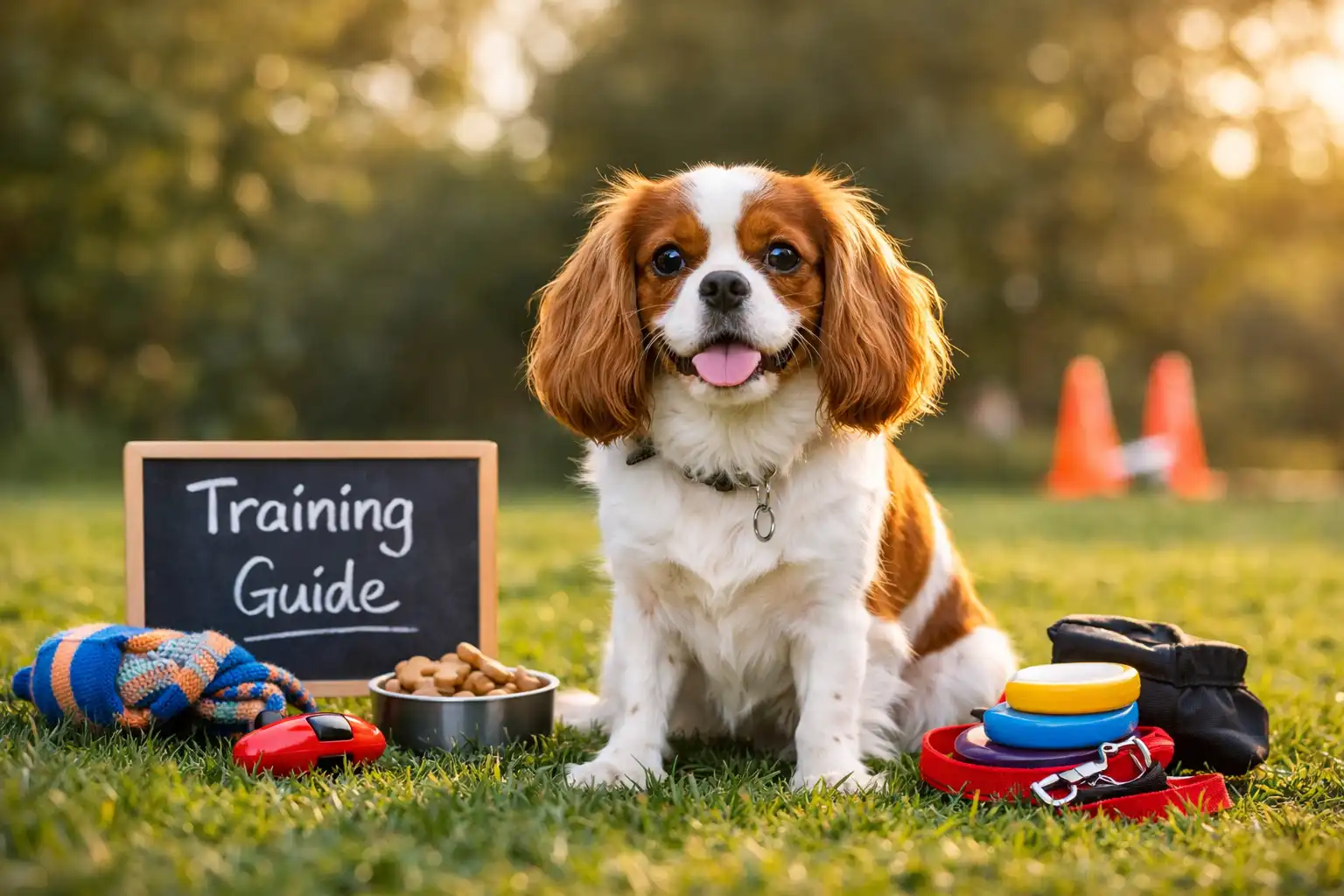
Cavalier King Charles Spaniel training works best when it is gentle, consistent, and reward-based. Cavaliers are affectionate, people-focused dogs, so they usually respond well to praise, treats, play, and short daily lessons. With the right approach, you can teach your Cavalier good manners, puppy basics, potty habits, obedience commands, leash walking, and calm behavior at home.
This Cavalier King Charles Spaniel training guide explains how to train a puppy or adult Cavalier step by step. You’ll learn how to build a simple routine, prevent common behavior problems, and use positive reinforcement without confusing or overwhelming your dog.
Cavaliers are sensitive dogs, so harsh corrections can make them nervous or stubborn. Short sessions of 5 to 10 minutes, repeated consistently, are usually more effective than long training sessions. The goal is to make training feel safe, clear, and rewarding.
Here’s a quick snapshot of what to expect when training a Cavalier King Charles Spaniel:
| Training Factor | What to Expect |
|---|---|
| Breed | Cavalier King Charles Spaniel |
| Training Style | Positive reinforcement, praise, treats, and calm repetition |
| Training Ease | Moderate to easy when sessions are short and consistent |
| Best Starting Point | Name recognition, potty routine, crate comfort, and basic commands |
| Common Challenges | Jumping, barking, chewing, separation anxiety, and distraction |
| Ideal Session Length | 5 to 10 minutes for puppies; 10 to 15 minutes for adult dogs |
This table gives you a quick overview of how Cavaliers learn. For best results, match your dog’s training routine to their age, energy level, and attention span. You can also use your Cavalier’s age stage to plan realistic expectations through the Cavalier Charles Dog Age Calculator.
Why Cavalier King Charles Spaniel Training Matters
Training your Cavalier King Charles Spaniel is important because this breed is loving, social, and eager to be close to people. Without clear guidance, a Cavalier may develop habits like jumping on guests, barking for attention, chewing household items, pulling on the leash, or struggling with potty training.
Early training helps your dog understand household rules before unwanted habits become normal. It also builds confidence, reduces anxiety, and makes daily life easier for both you and your dog. Because Cavaliers are emotionally sensitive, calm correction and reward-based training are much more effective than punishment.
Here are the main benefits of proper Cavalier training:
| Training Benefit | Why It Matters |
|---|---|
| Better manners | Helps prevent jumping, barking, chewing, and begging |
| Safer behavior | Improves recall, leash walking, and response to commands |
| Potty reliability | Builds a predictable bathroom routine and reduces accidents |
| More confidence | Helps your Cavalier stay calm in new places and situations |
| Stronger bond | Builds trust through praise, repetition, and positive interaction |
Consistent training turns your Cavalier into a more confident, obedient, and relaxed companion. The earlier you start, the easier it is to shape good habits, but adult Cavaliers can also learn well with patience and repetition.
Understanding Your Cavalier’s Training Behavior
To train a Cavalier King Charles Spaniel successfully, you need to understand how this breed learns. Cavaliers are usually affectionate, gentle, and eager to please. They enjoy human attention and often learn quickly when training feels like a positive interaction instead of pressure.
Puppies have short attention spans, so they need brief lessons several times a day. Adult Cavaliers may focus for longer, but they may also bring existing habits that need to be corrected slowly. Shy or anxious Cavaliers need extra patience, predictable routines, and calm encouragement.
Your home environment also affects training. A Cavalier living in an apartment may need more structured potty breaks and leash practice. A Cavalier in a busy family home may need extra help with impulse control, jumping, barking, and calm greetings.
Here’s how to adjust training based on your Cavalier’s stage and personality:
| Cavalier Type | Training Need | Best Approach |
|---|---|---|
| Puppy | Short attention span and early habit building | Use 5-minute sessions, potty routines, crate comfort, and simple commands |
| Adult Cavalier | Better focus but possible existing habits | Use consistent rules, longer practice, and gradual correction |
| Shy or anxious Cavalier | Needs confidence and emotional safety | Use gentle praise, quiet spaces, and slow exposure to new situations |
| High-energy Cavalier | May become distracted or overexcited | Use short training games, walks, and calm reward timing |
Understanding your Cavalier’s learning style helps you choose the right training method. When training is calm, consistent, and rewarding, Cavaliers are much more likely to listen, cooperate, and enjoy the process.
Step-by-Step Cavalier King Charles Spaniel Training Methods
Training your Cavalier King Charles Spaniel is easier when you follow a clear step-by-step routine. Start with simple behaviors, reward quickly, and practice in short sessions before adding distractions. Focus first on name recognition, potty training, crate comfort, basic obedience, leash walking, and calm behavior around people.
Cavalier King Charles Spaniel Puppy Training
Cavalier King Charles Spaniel puppy training should start with simple routines, short lessons, and plenty of rewards. Puppies learn best when training feels fun and predictable. Start with name recognition, potty breaks, crate comfort, gentle handling, and basic commands before expecting advanced obedience.
Keep each puppy training session short. Five minutes is enough for most young Cavaliers. Repeat lessons several times a day instead of trying to teach everything in one long session. This helps your puppy stay focused without becoming tired, frustrated, or distracted.
| Puppy Training Skill | What to Teach | Best Method |
|---|---|---|
| Name recognition | Teach your puppy to look at you when called | Say their name, reward eye contact, and repeat often |
| Potty routine | Build regular bathroom habits | Take your puppy out after meals, naps, play, and waking |
| Crate comfort | Help your puppy feel safe in the crate | Use treats, short crate sessions, and calm praise |
| Basic commands | Teach sit, stay, come, and down | Use treats, clear words, and short repetition |
| Gentle handling | Prepare for grooming, vet checks, and daily care | Touch paws, ears, and coat gently while rewarding calm behavior |
The goal of puppy training is not perfection. The goal is to build trust, routine, and clear communication. A Cavalier puppy that learns early rules calmly is more likely to become a confident and well-behaved adult dog.
Cavalier King Charles Spaniel Potty Training
Cavalier King Charles Spaniel potty training works best with a consistent schedule. Cavaliers are smart and eager to please, but puppies have small bladders and need frequent bathroom breaks. Take your dog outside after waking, eating, drinking, playing, and before bedtime.
Choose one potty spot and use the same short phrase each time, such as “go potty.” When your Cavalier finishes outside, reward immediately with praise or a small treat. Timing matters because your dog needs to connect the reward with the correct behavior.
| Potty Training Step | What to Do | Why It Helps |
|---|---|---|
| Use a schedule | Take your Cavalier out at predictable times | Reduces accidents and builds routine |
| Reward outside | Praise and treat immediately after success | Shows your dog exactly what behavior earned the reward |
| Supervise indoors | Watch for sniffing, circling, or restlessness | Helps prevent accidents before they happen |
| Clean accidents properly | Use a pet-safe cleaner for indoor accidents | Removes scent that may attract repeat accidents |
| Avoid punishment | Do not yell after an accident | Prevents fear and confusion during training |
If accidents happen, stay calm and adjust the routine. Most potty training problems come from missed timing, too much freedom indoors, or unclear rewards. Consistency is more important than punishment.
Basic Obedience Commands for Cavaliers
Basic obedience training helps your Cavalier King Charles Spaniel understand everyday rules. Start with simple commands before moving to harder skills. Cavaliers usually learn well when commands are short, rewards are clear, and practice sessions stay positive.
The most useful commands for a Cavalier are sit, stay, come, down, leave it, and heel. These commands help with manners, safety, leash control, and calm behavior around people or other pets.
| Command | Why It Matters | Training Tip |
|---|---|---|
| Sit | Builds impulse control and polite greetings | Hold a treat above the nose, move it back slowly, and reward when your dog sits |
| Stay | Helps your Cavalier wait calmly | Start with one second, reward, then slowly increase time |
| Come | Improves safety and recall | Use a happy voice, reward heavily, and never punish your dog after coming |
| Down | Encourages calm behavior | Guide your dog from sit to down with a treat and reward quickly |
| Leave it | Prevents grabbing unsafe objects | Reward your dog for looking away from the item and back to you |
| Heel | Improves leash manners | Reward your Cavalier for walking beside you without pulling |
Practice each command in a quiet place first. Once your Cavalier understands the command, slowly add distractions such as another room, the yard, visitors, or short walks. This helps your dog learn to listen in real-life situations, not only during training sessions.
Here’s a simple daily Cavalier King Charles Spaniel training plan you can follow for basic commands, potty habits, leash manners, crate comfort, and obedience practice:
| Training Task | Session Length | Frequency | Best Reward |
|---|---|---|---|
| Sit and Stay | 5–10 minutes | 2–3 times daily | Treats and praise |
| Recall / Come | 5–10 minutes | 1–2 times daily | Treats, toys, and excited praise |
| Leash Walking | 10–15 minutes | 1–2 times daily | Praise and calm encouragement |
| Crate Training | 5–10 minutes | 2–3 times daily | Treats and quiet praise |
| Potty Training | Short routine-based sessions | After meals, naps, play, and waking | Immediate praise and treats |
| Calm Greeting Practice | 3–5 minutes | Daily | Praise for four paws on the floor |
Tips for better Cavalier training results:
- Use positive reinforcement every time your Cavalier responds correctly.
- Keep commands simple and consistent, such as “sit,” “stay,” “come,” “down,” and “leave it.”
- Train in short sessions so your Cavalier does not become bored, tired, or distracted.
- Use high-value treats for harder skills like recall, leash focus, and potty training.
- Adjust the pace for puppies, adult Cavaliers, senior dogs, or anxious dogs.
By following a short daily routine, your Cavalier can learn basic obedience, improve behavior, and enjoy training as a positive part of everyday life.
Common Cavalier King Charles Spaniel Training Problems
Even with consistent training, Cavalier King Charles Spaniels can develop unwanted behaviors. The most common issues include barking, jumping, chewing, pulling on the leash, potty accidents, and separation anxiety. These problems usually improve when you respond early, stay calm, and reward the behavior you want instead of only reacting to the behavior you dislike.
Here’s a quick guide to common Cavalier behavior problems and how to correct them:
| Problem | Common Cause | Training Fix |
|---|---|---|
| Barking | Attention, excitement, boredom, or outside triggers | Redirect focus, reward quiet behavior, and avoid rewarding barking with attention |
| Jumping on people | Excitement and greeting habits | Turn away, wait for calm behavior, then reward four paws on the floor |
| Chewing | Teething, boredom, or lack of supervision | Provide chew toys, supervise closely, and redirect before the habit builds |
| Potty accidents | Unclear routine or missed bathroom breaks | Use scheduled potty breaks, praise immediately outside, and clean accidents properly |
| Leash pulling | Excitement or lack of leash focus | Stop when pulling starts, reward walking beside you, and practice in low-distraction areas |
| Separation anxiety | Fear of being alone or overattachment | Build alone time gradually, use crate comfort training, and keep departures calm |
Some behavior problems may need extra support. Contact a certified dog trainer or veterinary behaviorist if you notice:
- Aggression, snapping, or fear-based reactions
- Extreme anxiety, panic, or destructive behavior when left alone
- Persistent barking, chewing, or potty accidents that do not improve with consistent training
- Sudden behavior changes that may be linked to pain, aging, or health concerns
Professional guidance can help keep your Cavalier safe, calm, and well-adjusted while giving you a clear plan for long-term success. For a broader look at this breed’s personality, care needs, and owner expectations, read our Cavalier King Charles Spaniel Dog Guide.

Ata Ur Rehman is the founder of Pet Age in Human Years Calculator, an educational platform that provides age conversion charts and lifespan guides for dogs, cats, birds, and other companion animals. His work focuses on helping pet owners understand how animal ages translate into human years using commonly accepted age conversion formulas and published lifespan averages.
The website compiles breed and species lifespan data from kennel clubs, breed organizations, and general animal lifespan studies to present simple and easy-to-understand guides for pet owners worldwide.
This website was created to centralize animal age conversion charts into one easy reference platform for pet owners.
This article is for general education. For symptoms, medication, diet changes, or health concerns, use a qualified veterinarian who can assess your individual pet.