On this page
Proper nutrition plays a major role in your Bull Terrier’s health, energy levels, muscle development, skin condition, and overall lifespan. Bull Terriers are muscular, athletic dogs with high energy requirements compared to many breeds of similar size. Feeding the right balance of protein, healthy fats, vitamins, and minerals helps maintain a lean body condition while supporting healthy joints, digestion, and immune function.
Whether you own a growing Bull Terrier puppy, an active adult, or a senior companion, understanding their changing nutritional needs is essential. This guide covers everything you need to know about feeding a Bull Terrier, including feeding schedules, portion sizes, safe foods, weight management, common dietary problems, and practical feeding tips.
Understanding Bull Terrier Nutritional Needs
Bull Terriers require a nutrient-dense diet that supports muscle maintenance and sustained energy. Because they are naturally active and muscular, high-quality protein should form the foundation of their diet.
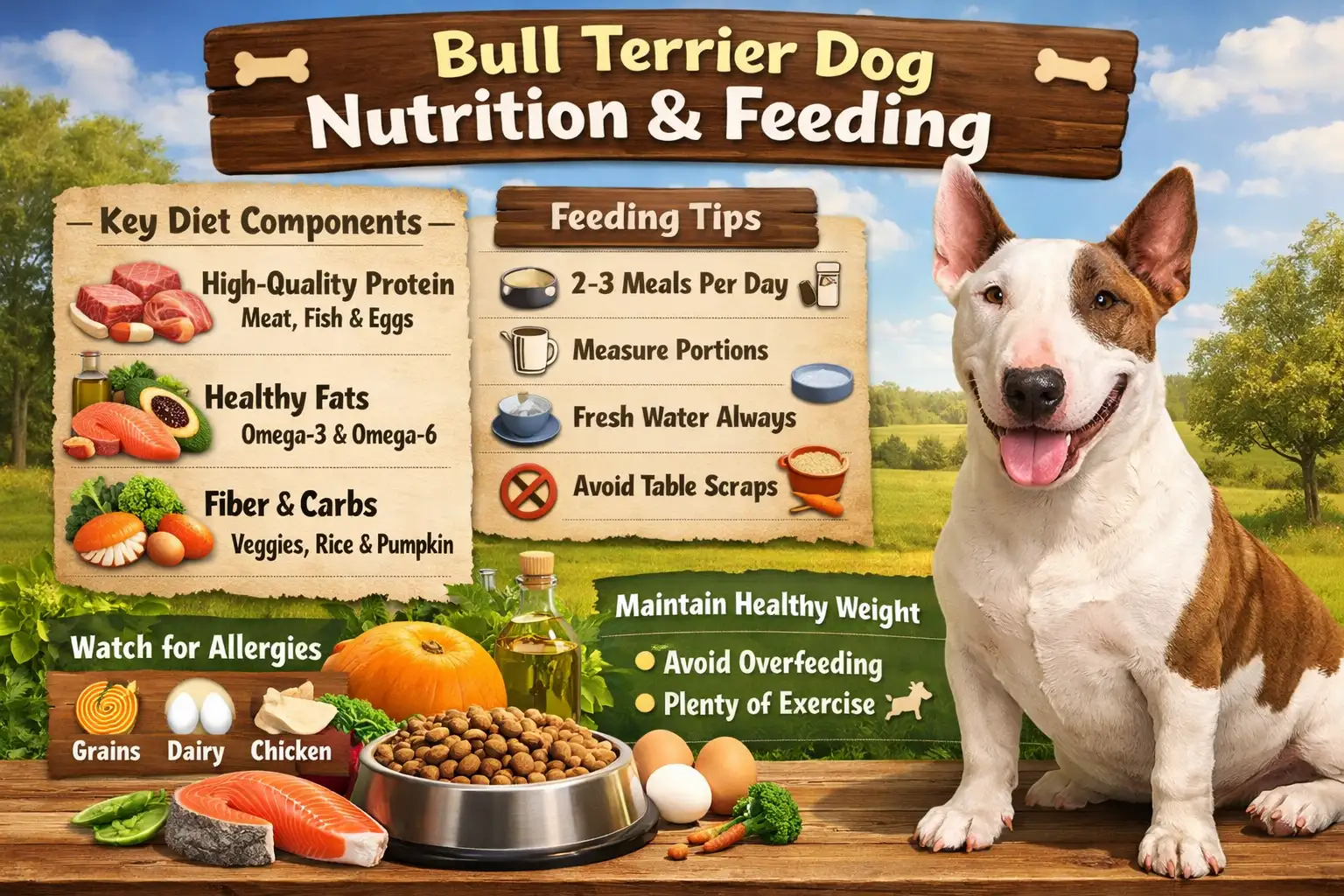
A balanced Bull Terrier diet should include:
- High-quality animal protein for muscle development
- Healthy fats for energy and skin health
- Complex carbohydrates for sustained energy
- Fiber for digestive health
- Essential vitamins and minerals for immune support
- Fresh water available at all times
Nutritional requirements vary according to age, weight, activity level, and overall health condition.
Bull Terrier Nutritional Requirements by Life Stage
Puppy (2–12 Months)
Bull Terrier puppies grow rapidly and need additional calories and protein to support development.
Recommended focus:
- Protein: 25–30%
- Fat: 12–18%
- Multiple small meals daily
- Calcium and phosphorus balance for healthy bone growth
Adult (1–7 Years)
Adult Bull Terriers require a balanced diet that supports muscle maintenance and healthy body weight.
Recommended focus:
- Protein: 20–25%
- Fat: 10–15%
- Consistent feeding schedule
- Weight monitoring
Senior (7+ Years)
Senior Bull Terriers often become less active and may require fewer calories while still receiving adequate protein.
Recommended focus:
- Protein: 18–22%
- Moderate calorie intake
- Joint-supporting nutrients
- Easier-to-digest ingredients
How Much Should a Bull Terrier Eat?
The amount of food your Bull Terrier needs depends on body weight, metabolism, exercise levels, and food quality.
Daily Feeding Guide
20 lbs (9 kg)
- Low Activity: 1–1.25 cups
- Moderate Activity: 1.25–1.5 cups
- High Activity: 1.5–1.75 cups
30 lbs (14 kg)
- Low Activity: 1.5–1.75 cups
- Moderate Activity: 1.75–2 cups
- High Activity: 2–2.25 cups
50 lbs (23 kg)
- Low Activity: 2.25–2.5 cups
- Moderate Activity: 2.5–3 cups
- High Activity: 3–3.25 cups
70 lbs (32 kg)
- Low Activity: 3–3.25 cups
- Moderate Activity: 3.25–3.5 cups
- High Activity: 3.5–4 cups
These amounts are general guidelines and should be adjusted according to your dog’s condition and the calorie density of the food.
Bull Terrier Feeding Schedule
Puppy Feeding Schedule
2–4 Months:
- 4 meals per day
4–6 Months:
- 3 meals per day
6–12 Months:
- 2–3 meals per day
Adult Feeding Schedule
Most adult Bull Terriers thrive on:
- Morning meal
- Evening meal
Splitting food into two meals helps maintain energy levels and may reduce digestive discomfort.
Senior Feeding Schedule
Senior Bull Terriers generally continue doing well with:
- Two meals per day
- Slightly reduced portions if activity decreases
Best Types of Food for Bull Terriers
Dry Dog Food (Kibble)
Advantages:
- Convenient
- Affordable
- Easy storage
- Supports dental health
Disadvantages:
- Quality varies significantly
Wet Dog Food
Advantages:
- Highly palatable
- Increased moisture intake
Disadvantages:
- More expensive
- Shorter shelf life
Fresh Food Diets
Advantages:
- High ingredient quality
- Excellent palatability
Disadvantages:
- Higher cost
- Requires refrigeration
Raw Diets
Advantages:
- High protein content
Disadvantages:
- Food safety concerns
- Nutritional imbalance risk if poorly formulated
Homemade Diets
Advantages:
- Complete ingredient control
Disadvantages:
- Requires careful nutritional planning
What Can Bull Terriers Eat?
Safe foods include:
- Lean chicken
- Turkey
- Beef
- Fish
- Eggs
- Pumpkin
- Green beans
- Carrots
- Sweet potatoes
- Rice
- Oatmeal
- Blueberries
- Apples without seeds
These foods can be offered as part of a balanced diet or as occasional treats.
Foods Bull Terriers Should Never Eat
Avoid feeding:
- Chocolate
- Grapes
- Raisins
- Onions
- Garlic
- Xylitol
- Alcohol
- Caffeine
- Macadamia nuts
- Cooked bones
These foods may cause serious illness and should be kept away from your dog.
Common Bull Terrier Feeding Challenges
Food Allergies and Sensitivities
Bull Terriers can be prone to skin and food sensitivities.
Common triggers include:
- Chicken
- Beef
- Dairy products
- Certain grains
Possible symptoms:
- Itchy skin
- Ear infections
- Excessive licking
- Digestive upset
Weight Gain and Obesity
Bull Terriers can gain weight quickly when overfed.
To prevent obesity:
- Measure food accurately
- Limit treats
- Exercise daily
- Monitor body condition regularly
Picky Eating
Some Bull Terriers become selective eaters.
Helpful strategies include:
- Consistent meal times
- Avoiding excessive treats
- Gradual food transitions
- Limiting table scraps
Bull Terrier Body Condition Score Guide
Ideal Body Condition:
- Visible waist from above
- Tucked abdomen from the side
- Ribs easily felt but not prominently visible
Underweight Signs:
- Visible ribs
- Loss of muscle mass
Overweight Signs:
- No visible waist
- Difficulty feeling ribs
- Reduced activity levels
Transitioning to a New Dog Food
Switch foods gradually over 7–10 days.
Days 1–2:
25% new food, 75% old food
Days 3–4:
50% new food, 50% old food
Days 5–6:
75% new food, 25% old food
Days 7–10:
100% new food
Gradual transitions help reduce digestive upset.
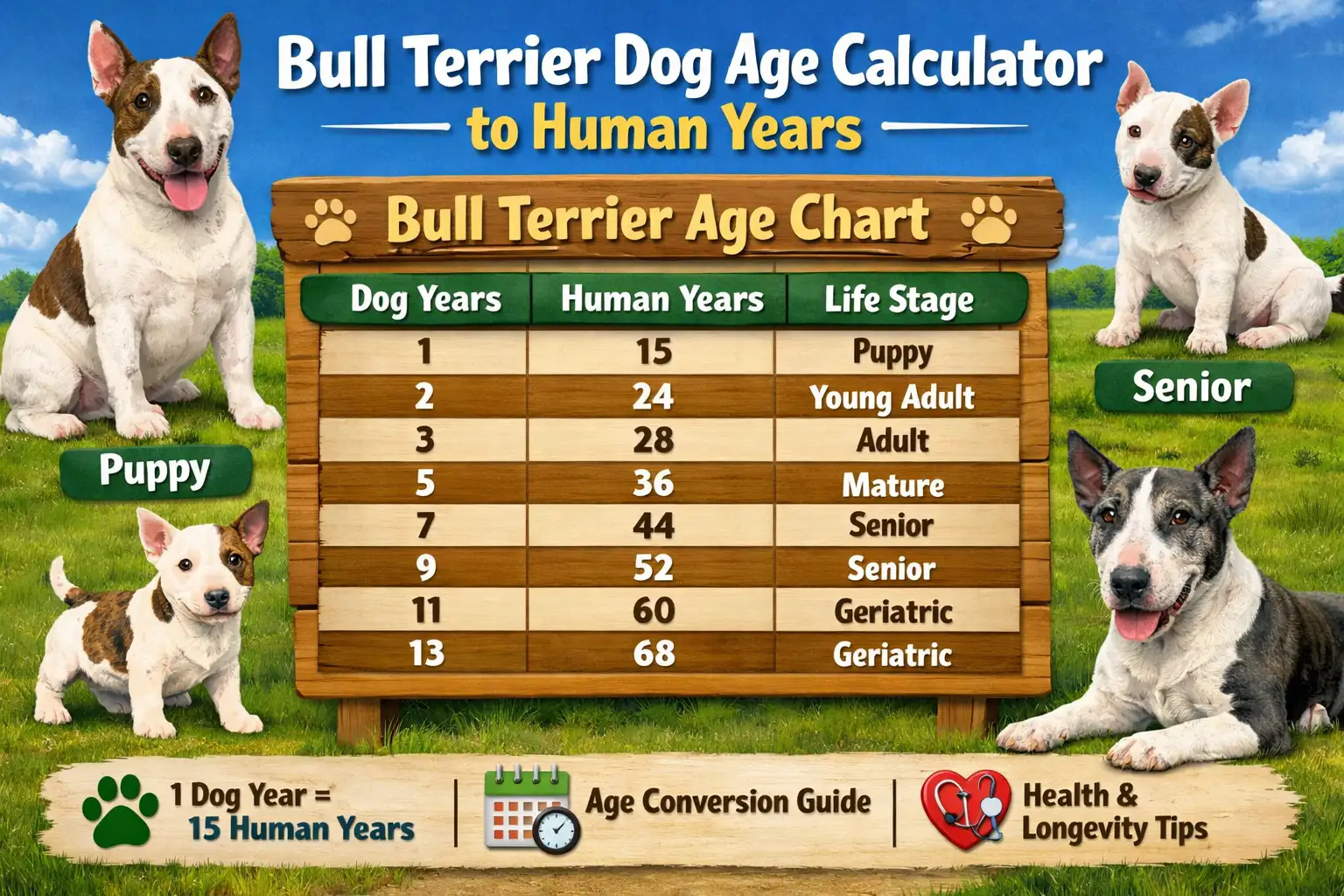
To understand your dog's current life stage, use the Bull Terrier Dog Age Calculator.
For life-stage context, see our Bull Terrier age chart.
Frequently Asked Questions
How often should I feed my Bull Terrier?
Adult Bull Terriers generally do best with two meals per day, while puppies may require three to four meals daily.
What is the best diet for a Bull Terrier?
A balanced diet containing high-quality animal protein, healthy fats, and appropriate vitamins and minerals is generally best.
Can Bull Terriers eat human food?
Some human foods such as carrots, pumpkin, rice, and lean cooked meats are safe. Toxic foods should always be avoided.
How do I know if my Bull Terrier is overweight?
Look for a lack of waist definition, difficulty feeling the ribs, and gradual weight gain.
Are Bull Terriers prone to food allergies?
Yes. Some Bull Terriers experience food sensitivities that may affect their skin, ears, or digestive system.
How many treats can a Bull Terrier have?
Treats should generally make up no more than 10% of daily calorie intake.
Should Bull Terrier puppies eat puppy food?
Yes. Puppy-specific formulas provide nutrients needed for growth and development.
When should I switch my Bull Terrier to senior food?
Most Bull Terriers can transition to senior diets around seven years of age, depending on health and activity levels.
Final Thoughts
Feeding your Bull Terrier properly is one of the most important investments you can make in their long-term health. A balanced diet tailored to your dog’s age, weight, activity level, and health condition can support strong muscles, healthy skin, sustained energy, and a healthy body weight.
Regularly monitor your Bull Terrier’s condition, adjust portions as needed, and maintain a consistent feeding schedule. With the right nutrition plan, your Bull Terrier can enjoy a healthy, active, and happy life for years to come.

Ata Ur Rehman is the founder of Pet Age in Human Years Calculator, an educational platform that provides age conversion charts and lifespan guides for dogs, cats, birds, and other companion animals. His work focuses on helping pet owners understand how animal ages translate into human years using commonly accepted age conversion formulas and published lifespan averages.
The website compiles breed and species lifespan data from kennel clubs, breed organizations, and general animal lifespan studies to present simple and easy-to-understand guides for pet owners worldwide.
This website was created to centralize animal age conversion charts into one easy reference platform for pet owners.
This article is for general education. For symptoms, medication, diet changes, or health concerns, use a qualified veterinarian who can assess your individual pet.