On this page
The Rhodesian Ridgeback is one of the most distinctive dog breeds in the world, recognized for the unique ridge of hair running along its back and its impressive history as a hunting and guardian dog in Southern Africa. Often called the African Lion Hound, the breed was originally developed to track large game and protect farms from predators.
Today, Rhodesian Ridgebacks are admired for their intelligence, athleticism, loyalty, and strong family bonds. They are powerful yet elegant dogs that thrive with active owners who can provide regular exercise, training, and mental stimulation.
One of the most common questions prospective owners ask is: How long do Rhodesian Ridgebacks live? While their lifespan is generally good for a large breed, several factors including genetics, diet, exercise, and healthcare can influence longevity.
Quick Breed Snapshot
| Trait | Details |
|---|---|
| Breed Name | Rhodesian Ridgeback |
| Origin | Southern Africa (Zimbabwe) |
| Breed Group | Hound |
| Size | Large |
| Height | 24–27 inches |
| Weight | 70–85 pounds |
| Coat | Short and dense |
| Colors | Light Wheaten to Red Wheaten |
| Lifespan | 10–12 years |
| Temperament | Loyal, Independent, Protective |
| Exercise Needs | High |
| Grooming Needs | Low |
| Good With Children | Yes, when socialized |
| Good For First-Time Owners | Usually No |
Rhodesian Ridgeback Lifespan
The average Rhodesian Ridgeback lifespan ranges between 10 and 12 years, although some dogs live beyond 13 years with excellent care and genetics.
Compared with many large breeds, Ridgebacks generally enjoy a relatively long life expectancy. Their athletic build and naturally robust genetics contribute to their longevity.
Average Lifespan Table
| Age Stage | Age Range |
|---|---|
| Puppy | 0–12 Months |
| Young Adult | 1–3 Years |
| Adult | 4–7 Years |
| Mature Adult | 8–9 Years |
| Senior | 10+ Years |
Factors That Affect Lifespan
| Factor | Impact |
|---|---|
| Genetics | Very High |
| Diet Quality | High |
| Exercise | High |
| Weight Management | High |
| Veterinary Care | High |
| Mental Stimulation | Moderate |
| Living Environment | Moderate |
How to Help Your Rhodesian Ridgeback Live Longer
- Maintain a healthy body weight.
- Feed a balanced, high-quality diet.
- Schedule annual veterinary exams.
- Keep vaccinations current.
- Provide daily exercise.
- Address joint issues early.
- Monitor thyroid health.
- Practice preventative dental care.
History and Origin
The Rhodesian Ridgeback originated in Southern Africa and was developed by crossing European hunting dogs with native Khoikhoi dogs that carried the characteristic ridge gene.
The breed gained fame for assisting hunters in tracking and cornering lions without directly attacking them. Their bravery, endurance, and intelligence made them invaluable companions for settlers and hunters throughout the region.
The breed was officially standardized in Rhodesia (modern-day Zimbabwe) during the early twentieth century and later gained international recognition.
Appearance, Size and Physical Characteristics
Rhodesian Ridgebacks combine strength, speed, and endurance.
Size Chart
| Feature | Male | Female |
|---|---|---|
| Height | 25–27 inches | 24–26 inches |
| Weight | 85 pounds | 70 pounds |
| Build | Muscular | Athletic |
| Coat Length | Short | Short |
The defining feature of the breed is the ridge of hair growing in the opposite direction along the spine.
Coat Colors
| Accepted Colors |
|---|
| Light Wheaten |
| Red Wheaten |
| Wheaten with Black Mask |
Rhodesian Ridgeback Temperament
Rhodesian Ridgebacks are known for their combination of independence and loyalty.
Personality Traits
| Trait | Rating |
|---|---|
| Loyalty | High |
| Intelligence | High |
| Affection | Moderate |
| Trainability | Moderate |
| Protective Instinct | High |
| Energy Level | High |
| Stranger Friendliness | Moderate |
| Prey Drive | High |
They form strong bonds with their family but often maintain a dignified and reserved personality around strangers.
Are Rhodesian Ridgebacks Good Family Dogs?
Yes, Rhodesian Ridgebacks can make excellent family companions.
Pros for families include:
- Loyal and protective
- Gentle with children
- Strong family bonds
- Low grooming requirements
- Intelligent and adaptable
However, early socialization is essential due to their size, strength, and prey instincts.
Exercise Requirements
Rhodesian Ridgebacks are highly athletic dogs.
Daily Exercise Needs
| Activity | Recommended Time |
|---|---|
| Walking | 45–60 Minutes |
| Running | 20–30 Minutes |
| Play Sessions | 20–30 Minutes |
| Mental Stimulation | 15–20 Minutes |
Suitable activities include:
- Hiking
- Running
- Scent work
- Tracking games
- Fetch
- Agility training
Training a Rhodesian Ridgeback
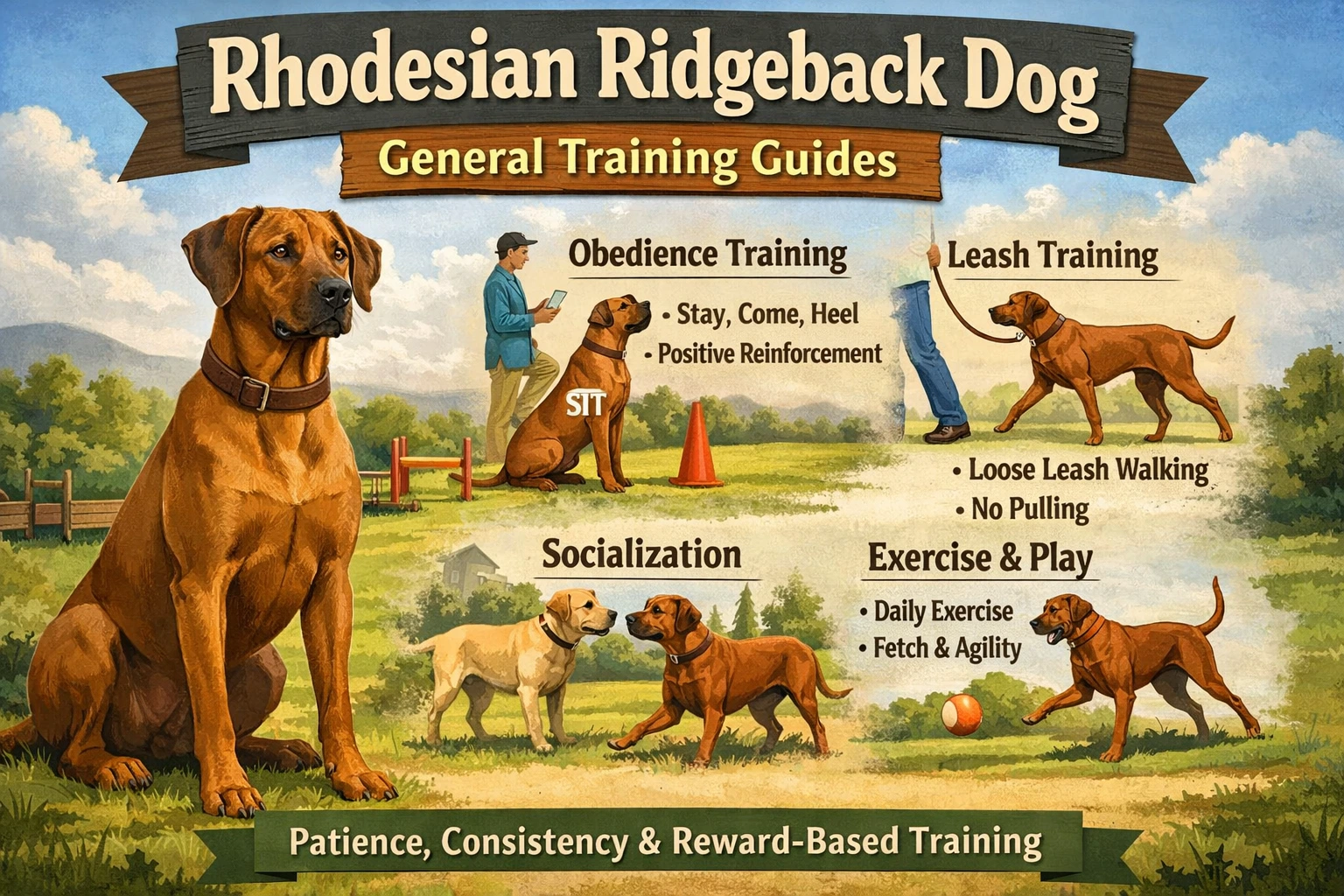
Training should begin early.
Best Training Methods
| Method | Effectiveness |
|---|---|
| Positive Reinforcement | Excellent |
| Clicker Training | Very Good |
| Consistency | Essential |
| Harsh Corrections | Not Recommended |
Ridgebacks are intelligent but independent thinkers, which means patience and consistency are crucial.
Grooming and Maintenance
Despite their size, Rhodesian Ridgebacks are surprisingly low maintenance.
Grooming Schedule
| Task | Frequency |
|---|---|
| Brushing | Weekly |
| Bathing | Every 6–8 Weeks |
| Nail Trimming | Monthly |
| Ear Inspection | Weekly |
| Teeth Brushing | 3–4 Times Weekly |
Common Health Problems
Although generally healthy, Rhodesian Ridgebacks can be susceptible to several inherited conditions.
Common Health Conditions
| Condition | Risk Level |
|---|---|
| Hip Dysplasia | Moderate |
| Elbow Dysplasia | Moderate |
| Dermoid Sinus | Breed-Specific |
| Hypothyroidism | Moderate |
| Bloat (GDV) | Moderate |
| Degenerative Myelopathy | Low |
Regular health screenings and responsible breeding significantly reduce these risks.
Rhodesian Ridgeback Puppy Cost
The purchase price varies based on breeder reputation, bloodline, and location.
Typical Ownership Costs
| Expense | Estimated Cost |
|---|---|
| Puppy Purchase | $1,500–$3,500 |
| First-Year Expenses | $1,000–$2,500 |
| Annual Veterinary Care | $500–$1,000 |
| Pet Insurance | $40–$80 Monthly |
| Food | $600–$1,200 Annually |
Rhodesian Ridgeback Pros and Cons
| Pros | Cons |
|---|---|
| Loyal and protective | Strong prey drive |
| Intelligent | Independent personality |
| Low grooming needs | Requires significant exercise |
| Good family companion | Not ideal for novice owners |
| Athletic and versatile | Can be stubborn |
Rhodesian Ridgeback vs Similar Breeds
| Breed | Lifespan | Grooming | Exercise | Temperament |
|---|---|---|---|---|
| Rhodesian Ridgeback | 10–12 Years | Low | High | Independent |
| Vizsla | 12–14 Years | Low | High | Affectionate |
| Weimaraner | 10–13 Years | Low | High | Friendly |
| Doberman | 10–12 Years | Low | High | Protective |
Frequently Asked Questions
How long do Rhodesian Ridgebacks live?
Most Rhodesian Ridgebacks live between 10 and 12 years, although some exceed 13 years with proper care.
What is the average lifespan of a Rhodesian Ridgeback?
The average life expectancy is approximately 11 years.
Are Rhodesian Ridgebacks aggressive?
No. They are naturally protective and reserved but are not typically aggressive when properly trained and socialized.
Do Rhodesian Ridgebacks shed?
Yes, but shedding is generally moderate and easy to manage due to their short coat.
Are Rhodesian Ridgebacks easy to train?
They are intelligent but independent. Consistent positive reinforcement training works best.
Do Rhodesian Ridgebacks get along with children?
Yes. They are generally affectionate and protective toward children in their family.
What is the biggest health concern for Rhodesian Ridgebacks?
Hip dysplasia, dermoid sinus, and hypothyroidism are among the most commonly discussed breed health concerns.
Can Rhodesian Ridgebacks live in apartments?
They can adapt, but they are best suited to homes with sufficient space and daily exercise opportunities.
Final Thoughts
The Rhodesian Ridgeback is a powerful, intelligent, and loyal breed that combines athletic ability with strong family devotion. While their independent nature may challenge inexperienced owners, they reward committed families with companionship, protection, and affection. With proper nutrition, exercise, training, and veterinary care, most Rhodesian Ridgebacks enjoy a lifespan of 10–12 years and remain active companions well into their senior years.

Ata Ur Rehman is the founder of Pet Age in Human Years Calculator, an educational platform that provides age conversion charts and lifespan guides for dogs, cats, birds, and other companion animals. His work focuses on helping pet owners understand how animal ages translate into human years using commonly accepted age conversion formulas and published lifespan averages.
The website compiles breed and species lifespan data from kennel clubs, breed organizations, and general animal lifespan studies to present simple and easy-to-understand guides for pet owners worldwide.
This website was created to centralize animal age conversion charts into one easy reference platform for pet owners.
This article is for general education. For symptoms, medication, diet changes, or health concerns, use a qualified veterinarian who can assess your individual pet.