On this page
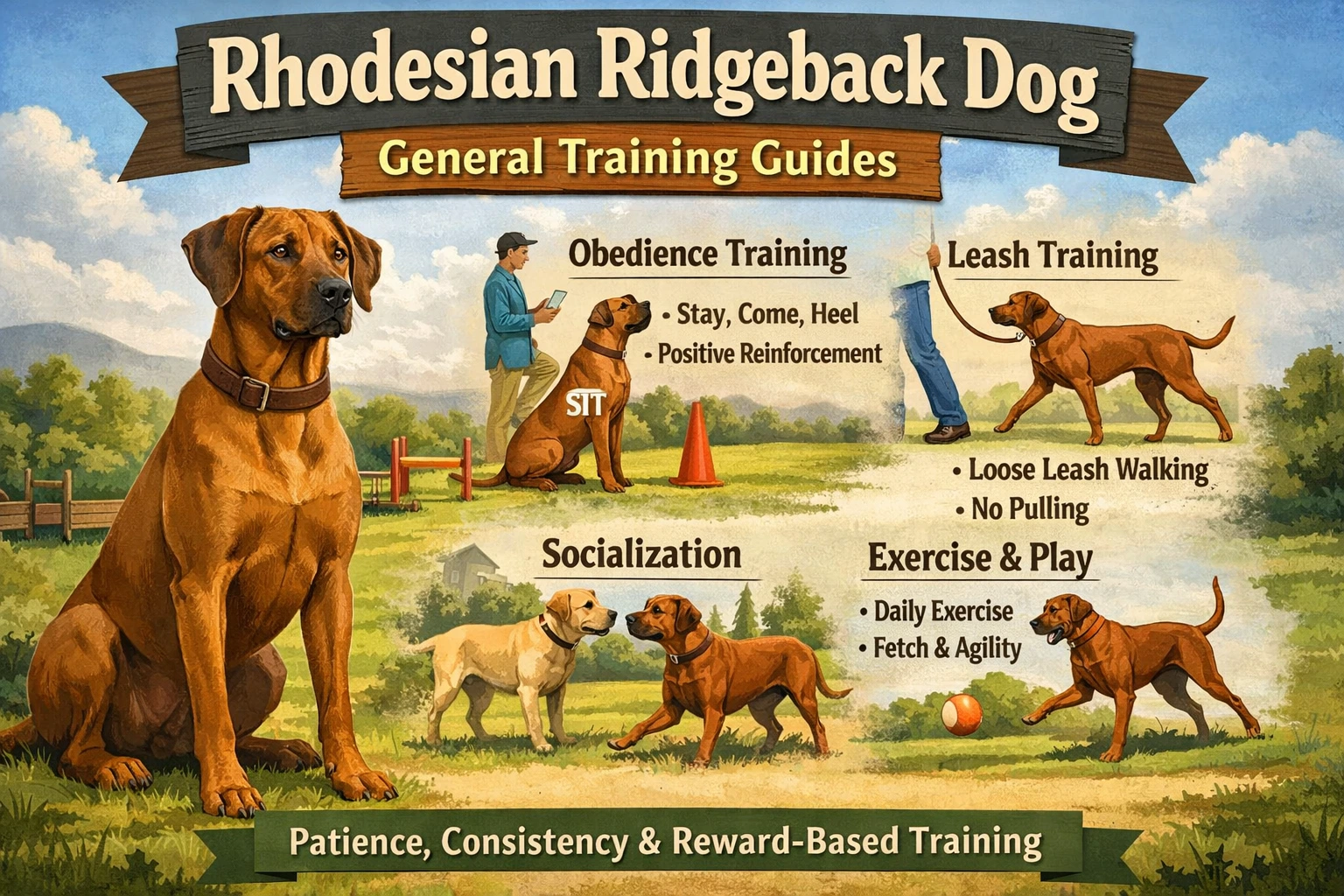
Training a Rhodesian Ridgeback requires patience, consistency, and a clear understanding of the breed’s independent personality. Originally bred in Southern Africa to track and guard against large game, Rhodesian Ridgebacks are intelligent, athletic, and strong-willed dogs. While they learn quickly, they are not always eager to obey repetitive commands. The key to success is positive reinforcement, structured routines, and plenty of physical and mental exercise.
A well-trained Rhodesian Ridgeback becomes a loyal family companion, confident protector, and well-mannered dog both at home and in public. Whether you are raising a puppy or training an adult rescue, this guide covers everything you need to know.
Rhodesian Ridgeback Training at a Glance
| Trait | Description | Training Impact |
|---|---|---|
| Intelligence | Highly intelligent | Learns commands quickly |
| Independence | Strong-willed | Requires consistency |
| Energy Level | High | Needs daily exercise |
| Prey Drive | High | Recall training is essential |
| Trainability | Moderate to High | Best with positive reinforcement |
| Social Nature | Loyal but reserved | Early socialization is important |
Why Training Is Important
Without proper training, a Rhodesian Ridgeback can become difficult to manage due to its size, strength, and confidence. Early training helps establish boundaries and prevents unwanted behaviors from becoming habits.
Benefits of training include:
- Better obedience and control
- Improved safety around people and animals
- Reduced destructive behavior
- Stronger owner-dog relationship
- Better social skills
- Increased confidence
Understanding Rhodesian Ridgeback Behavior
Before training begins, it helps to understand how Ridgebacks think.
| Behavior Trait | Common Challenge | Recommended Solution |
|---|---|---|
| Independent Thinking | Ignores commands | Use high-value rewards |
| Strong Prey Drive | Chasing animals | Practice recall daily |
| High Energy | Hyperactivity | Provide exercise before training |
| Protective Nature | Suspicion of strangers | Early socialization |
| Intelligence | Boredom with repetition | Keep sessions varied |
Training becomes much easier when owners work with these natural instincts instead of against them.
When to Start Training a Rhodesian Ridgeback
| Age | Training Focus |
|---|---|
| 8–12 Weeks | Socialization, name recognition, potty training |
| 3–6 Months | Basic obedience and leash training |
| 6–12 Months | Recall, impulse control, advanced obedience |
| 12+ Months | Reliability and advanced skills |
The earlier training begins, the easier it is to shape good habits.
Essential Rhodesian Ridgeback Training Methods
Positive Reinforcement
Positive reinforcement is the most effective Rhodesian Ridgeback training method. Reward desired behavior immediately using:
- Treats
- Praise
- Toys
- Playtime
Dogs repeat behaviors that produce rewards.
Consistency
Every family member should use the same commands and rules.
Examples:
- Use “Sit” consistently
- Do not allow jumping on some people but not others
- Maintain the same feeding and exercise schedule
Short Training Sessions
| Age | Session Length |
|---|---|
| Puppies | 5–10 minutes |
| Adolescents | 10–15 minutes |
| Adults | 15–20 minutes |
Short sessions improve focus and retention.
How to Train a Rhodesian Ridgeback Puppy
Name Recognition
- Say your puppy’s name.
- Reward eye contact immediately.
- Repeat several times daily.
Potty Training
| Step | Action |
|---|---|
| 1 | Take puppy outside frequently |
| 2 | Use the same potty location |
| 3 | Reward immediately after success |
| 4 | Maintain a consistent schedule |
Crate Training
Crates provide safety and assist with house training.
Tips:
- Introduce gradually
- Never use the crate as punishment
- Reward calm behavior inside the crate
Basic Obedience Commands
Sit
- Hold a treat above the nose.
- Move it backward slowly.
- As the dog sits, say “Sit.”
- Reward immediately.
Stay
- Ask for a sit.
- Hold your hand out.
- Say “Stay.”
- Take one step back.
- Reward success.
Come
Recall training can save your dog’s life.
Steps:
- Use a long training leash.
- Call your dog enthusiastically.
- Reward heavily when they return.
- Practice daily.
Down
Teaching “Down” helps improve impulse control and calmness.
Rhodesian Ridgeback Leash Training
Leash pulling is common because Ridgebacks are strong and energetic.
| Problem | Solution |
|---|---|
| Pulling | Stop walking immediately |
| Lunging | Increase distance from trigger |
| Excitement | Practice focus exercises |
| Distraction | Use reward-based redirection |
Consistency is critical.
Rhodesian Ridgeback Recall Training
Recall training should be a lifelong priority.
Best practices:
- Use high-value treats
- Never punish a dog for returning
- Practice in different environments
- Gradually increase distractions
Recall reliability helps manage the breed’s strong prey drive.
Socialization Training
Proper socialization reduces fear and reactivity.
Expose your Ridgeback to:
- Different people
- Children
- Dogs
- Sounds
- Surfaces
- Public places
Always keep experiences positive.
Exercise Requirements and Training Success
Many training problems result from insufficient exercise.
| Age | Daily Exercise Requirement |
|---|---|
| Puppy | 30–60 minutes |
| Adolescent | 60–90 minutes |
| Adult | 90–120 minutes |
Activities may include:
- Walks
- Hiking
- Running
- Fetch
- Scent games
- Obedience drills
A tired Ridgeback is easier to train.
Common Rhodesian Ridgeback Training Problems
| Problem | Cause | Solution |
|---|---|---|
| Pulling on Leash | High energy | Loose-leash training |
| Ignoring Commands | Distractions | Increase reward value |
| Jumping | Excitement | Reward calm greetings |
| Digging | Boredom | More exercise and enrichment |
| Excessive Barking | Anxiety or boredom | Identify and address trigger |
| Chasing Animals | Prey drive | Recall and impulse control work |
When to Hire a Professional Trainer
Consider professional help if your Ridgeback shows:
- Aggression
- Severe anxiety
- Resource guarding
- Dangerous chasing behavior
- Unmanageable leash reactivity
Early intervention prevents behaviors from becoming established.
Rhodesian Ridgeback Training Tips for Success
- Train daily
- Keep sessions positive
- Use rewards consistently
- Exercise before training
- Be patient during adolescence
- Focus on recall and impulse control
- Avoid harsh punishment
Frequently Asked Questions
Are Rhodesian Ridgebacks easy to train?
Rhodesian Ridgebacks are intelligent but independent. They learn quickly when training is consistent and reward-based.
At what age should Rhodesian Ridgeback training start?
Training should begin as early as 8 weeks of age with socialization, potty training, and basic obedience.
How much exercise does a Rhodesian Ridgeback need?
Most adult Rhodesian Ridgebacks need between 90 and 120 minutes of physical activity daily.
Why does my Rhodesian Ridgeback ignore commands?
Distractions, insufficient rewards, inconsistency, or lack of exercise are common causes.
Are Rhodesian Ridgebacks good off-leash?
Only after extensive recall training. Their strong prey drive can make off-leash reliability challenging.
What is the best training method for Rhodesian Ridgebacks?
Positive reinforcement combined with consistency and structured routines produces the best results.
Final Thoughts
Rhodesian Ridgeback training is a long-term commitment that rewards owners with a loyal, confident, and well-behaved companion. The breed’s intelligence, athleticism, and independent nature require thoughtful training methods focused on positive reinforcement, socialization, obedience, and daily exercise. By starting early, remaining consistent, and prioritizing recall and impulse control, owners can successfully raise a Rhodesian Ridgeback that thrives both at home and in public.

Ata Ur Rehman is the founder of Pet Age in Human Years Calculator, an educational platform that provides age conversion charts and lifespan guides for dogs, cats, birds, and other companion animals. His work focuses on helping pet owners understand how animal ages translate into human years using commonly accepted age conversion formulas and published lifespan averages.
The website compiles breed and species lifespan data from kennel clubs, breed organizations, and general animal lifespan studies to present simple and easy-to-understand guides for pet owners worldwide.
This website was created to centralize animal age conversion charts into one easy reference platform for pet owners.
This article is for general education. For symptoms, medication, diet changes, or health concerns, use a qualified veterinarian who can assess your individual pet.