On this page
Owning an Akbash dog can be incredibly rewarding, but it is important to understand the full financial commitment before bringing one home. Originally developed in Turkey as a livestock guardian dog, the Akbash is known for its intelligence, independence, loyalty, and strong protective instincts. These traits make the breed an excellent companion and guardian, but they also contribute to the overall cost of ownership.
Many prospective owners focus only on the Akbash dog price when purchasing a puppy or adopting a dog. However, the purchase price is only a small portion of the total cost. Food, veterinary care, training, grooming, insurance, supplies, and emergency expenses can add up significantly throughout the dog’s life.
The average Akbash lives between 10 and 12 years, making it a long-term financial responsibility. Understanding the first-year expenses, annual costs, and lifetime ownership costs can help you budget properly and provide your dog with the best possible care.
| Cost Category | First-Year Cost | Annual Cost After Year 1 | Lifetime Cost (10–12 Years) |
|---|---|---|---|
| Purchase or Adoption | $300–$2,500 | — | $300–$2,500 |
| Veterinary Care | $300–$1,000 | $250–$700 | $3,000–$8,000 |
| Food | $600–$1,200 | $700–$1,200 | $7,000–$14,000 |
| Grooming | $100–$400 | $150–$500 | $1,500–$5,000 |
| Training | $200–$1,500 | $100–$500 | $1,000–$4,000 |
| Supplies | $300–$1,000 | $100–$300 | $1,500–$3,000 |
| Insurance | $300–$1,200 | $300–$1,200 | $3,000–$12,000 |
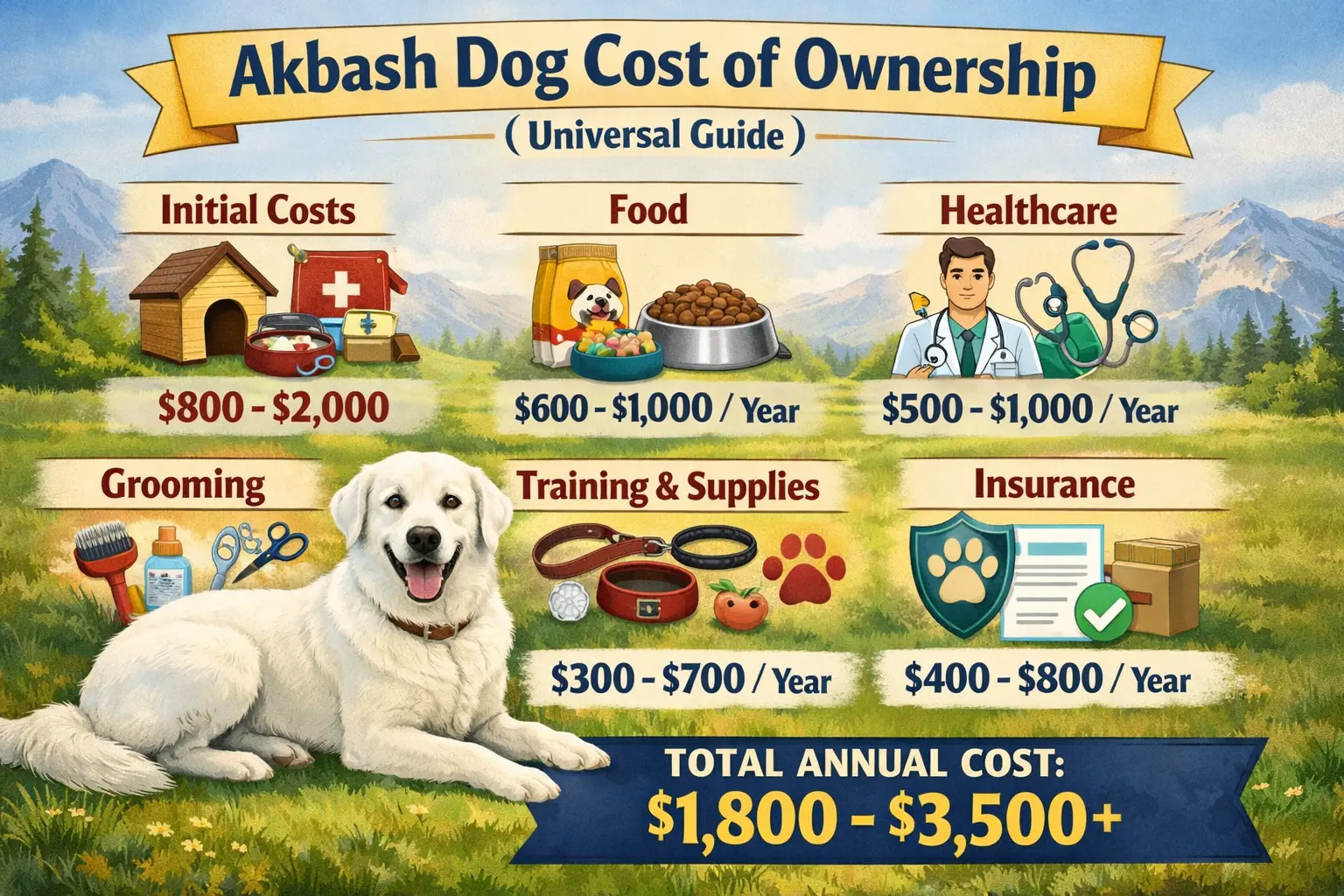
| Total Estimated Cost | $2,100–$8,800 | $1,600–$4,400 | $25,000–$50,000+ |
How Much Does an Akbash Dog Cost?
The Akbash dog price varies based on breeder reputation, bloodline, location, and whether the dog is purchased or adopted.
| Source | Estimated Cost |
|---|---|
| Rescue or Adoption | $300–$600 |
| Reputable Breeder | $800–$2,500 |
| Show or Working Bloodlines | $2,000–$4,000+ |
While adoption is usually the most affordable option, puppies from established breeders often come with health testing, vaccinations, and pedigree documentation.
First-Year Cost of Owning an Akbash Dog
The first year is typically the most expensive period of ownership because you must purchase supplies, complete veterinary procedures, and establish routines.
Initial Veterinary Expenses
During the first year, most puppies require:
- Core vaccinations
- Booster shots
- Deworming
- Microchipping
- Spaying or neutering
- Wellness examinations
| Veterinary Service | Estimated Cost |
|---|---|
| Initial Examination | $50–$150 |
| Vaccinations | $100–$300 |
| Microchip | $25–$75 |
| Spay or Neuter | $150–$500 |
| Deworming | $20–$100 |
| Total | $345–$1,125 |
Essential Supplies
Large guardian breeds require larger and more durable equipment than small dogs.
| Supply | Estimated Cost |
|---|---|
| Large Crate | $100–$300 |
| Dog Bed | $50–$200 |
| Food and Water Bowls | $20–$80 |
| Collar and Leash | $20–$100 |
| Toys | $30–$150 |
| Grooming Tools | $30–$100 |
| Fencing Improvements | $100–$1,000+ |
| Total | $350–$1,930 |
Monthly Cost of Owning an Akbash Dog
After the first year, most costs become predictable monthly expenses.
| Expense Category | Monthly Cost |
|---|---|
| Food | $60–$100 |
| Preventatives | $15–$40 |
| Insurance | $25–$100 |
| Grooming | $10–$40 |
| Toys and Supplies | $10–$30 |
| Total Monthly Cost | $120–$310 |
Most owners spend between $1,500 and $4,000 annually depending on location and healthcare choices.
Food Costs for an Akbash Dog
Akbash dogs commonly weigh between 80 and 140 pounds. Their large size means they consume significantly more food than smaller breeds.
A healthy adult Akbash may eat 4–6 cups of premium dog food daily.
| Food Type | Monthly Cost |
|---|---|
| Budget Food | $40–$60 |
| Mid-Range Food | $60–$90 |
| Premium Food | $90–$150 |
Owners choosing grain-free, raw, or veterinary diets should expect higher feeding costs.
Veterinary Care Costs
Routine veterinary care is one of the most important ongoing expenses.
Typical annual costs include:
| Service | Annual Cost |
|---|---|
| Wellness Exam | $50–$150 |
| Vaccinations | $50–$200 |
| Heartworm Prevention | $60–$150 |
| Flea and Tick Prevention | $60–$250 |
| Dental Cleaning | $200–$800 |
| Total | $420–$1,550 |
Preventative care often reduces the likelihood of expensive emergency treatments later.
Training Costs
The Akbash is highly intelligent but independent. Professional training and socialization are strongly recommended.
| Training Type | Cost |
|---|---|
| Group Classes | $100–$300 |
| Private Lessons | $50–$150 Per Session |
| Advanced Training | $300–$1,000+ |
Early training helps reduce behavioral issues and improves long-term management.
Grooming Expenses
Although the Akbash has a relatively low-maintenance coat compared to some long-haired breeds, regular brushing is necessary.
| Grooming Service | Cost |
|---|---|
| Brush and Comb | $20–$50 |
| Professional Bath | $30–$80 |
| Nail Trim | $10–$25 |
| Annual Grooming Cost | $150–$500 |
Many owners choose to perform most grooming tasks at home to save money.
Pet Insurance Costs
Pet insurance can help offset unexpected veterinary bills.
| Coverage Level | Monthly Premium |
|---|---|
| Basic Coverage | $25–$40 |
| Mid-Level Coverage | $40–$70 |
| Comprehensive Coverage | $70–$120 |
Insurance is often most affordable when purchased while the dog is young and healthy.
Hidden Costs of Owning an Akbash
Many ownership guides overlook expenses that occur throughout a dog’s life.
Common hidden costs include:
| Hidden Expense | Estimated Cost |
|---|---|
| Emergency Vet Visits | $200–$5,000+ |
| Boarding | $25–$70 Per Day |
| Pet Sitting | $20–$50 Per Visit |
| Property Damage | Variable |
| Travel Expenses | Variable |
| Specialized Diets | $100–$300 Monthly |
Building an emergency fund is strongly recommended.
Lifetime Cost of Owning an Akbash Dog
The average Akbash lifespan ranges from 10 to 12 years.
| Cost Category | Estimated Lifetime Cost |
|---|---|
| Purchase or Adoption | $300–$2,500 |
| Food | $7,000–$14,000 |
| Veterinary Care | $3,000–$8,000 |
| Insurance | $3,000–$12,000 |
| Grooming | $1,500–$5,000 |
| Training | $1,000–$4,000 |
| Supplies | $1,500–$3,000 |
| Total Lifetime Cost | $25,000–$50,000+ |
For many owners, the true lifetime cost significantly exceeds the initial purchase price.
Is an Akbash Expensive to Own?
Compared to smaller dog breeds, the Akbash is generally more expensive to own because of its large size, food requirements, and healthcare costs. However, compared with some giant breeds, ownership costs remain relatively manageable.
Owners who budget carefully, invest in preventative healthcare, and maintain consistent training often keep expenses under control while ensuring their dog enjoys a healthy life.
Frequently Asked Questions
How much does an Akbash dog cost?
An Akbash puppy from a reputable breeder typically costs between $800 and $2,500, while adoption fees usually range from $300 to $600.
What is the monthly cost of owning an Akbash?
Most owners spend between $120 and $310 per month depending on food quality, insurance coverage, and healthcare expenses.
Are Akbash dogs expensive to feed?
Yes. Due to their large size, feeding costs generally range from $60 to $100 per month, with premium diets costing even more.
Do Akbash dogs need professional grooming?
Not necessarily. Regular brushing at home can handle most grooming needs, although occasional professional grooming may be beneficial.
Should I get pet insurance for an Akbash?
Many owners choose pet insurance because emergency veterinary treatments can cost thousands of dollars.
What is the lifetime cost of owning an Akbash dog?
The total lifetime cost is typically between $25,000 and $50,000 or more over a lifespan of 10–12 years.
Are Akbash dogs good for first-time owners?
Because they are independent and protective, Akbash dogs are generally better suited for experienced owners who understand large guardian breeds.
Final Thoughts
The Akbash dog is a loyal, intelligent, and highly capable guardian breed, but ownership involves much more than the initial purchase price. Between food, veterinary care, training, grooming, insurance, and unexpected expenses, the total cost of ownership can easily reach $25,000 to $50,000 or more during the dog’s lifetime. Prospective owners who understand these financial commitments and plan accordingly will be better prepared to provide a safe, healthy, and rewarding home for their Akbash companion.

Ata Ur Rehman is the founder of Pet Age in Human Years Calculator, an educational platform that provides age conversion charts and lifespan guides for dogs, cats, birds, and other companion animals. His work focuses on helping pet owners understand how animal ages translate into human years using commonly accepted age conversion formulas and published lifespan averages.
The website compiles breed and species lifespan data from kennel clubs, breed organizations, and general animal lifespan studies to present simple and easy-to-understand guides for pet owners worldwide.
This website was created to centralize animal age conversion charts into one easy reference platform for pet owners.
This article is for general education. For symptoms, medication, diet changes, or health concerns, use a qualified veterinarian who can assess your individual pet.