On this page
Training a Greyhound is different from training many other dog breeds. While Greyhounds are intelligent and eager to please, they are also independent thinkers with a strong prey drive and a gentle, sensitive personality. Whether you have adopted a retired racing Greyhound or are raising a Greyhound puppy, using the right training methods helps build trust, improve obedience, and create a happy, well-behaved companion.
Unlike herding or working breeds, Greyhounds respond best to calm, reward-based training rather than repetitive drills or harsh corrections. Their unique temperament means they learn quickly when training sessions are short, positive, and consistent.
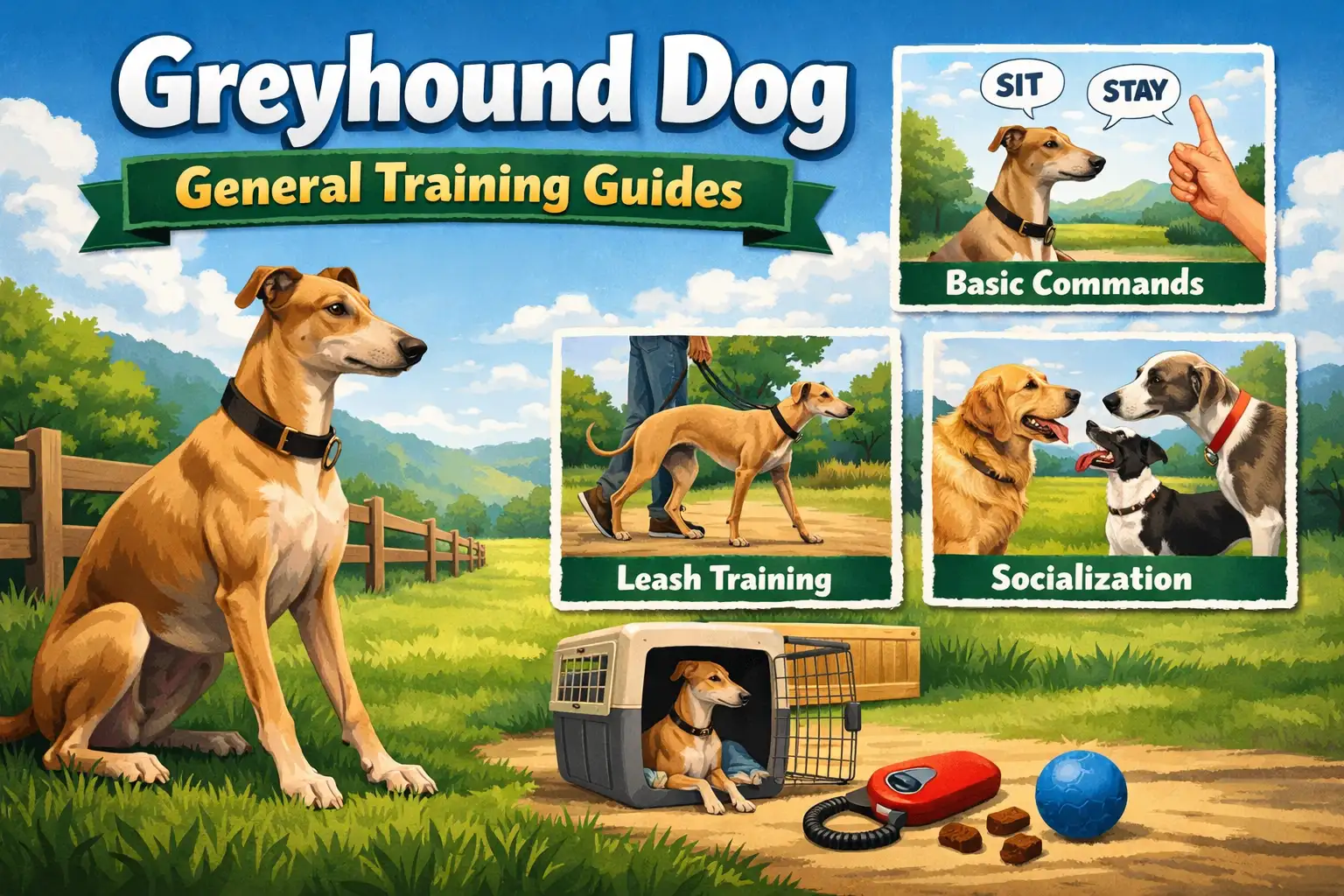
This Greyhound training guide explains how to train a Greyhound successfully, covering puppy training, obedience, leash walking, recall, socialization, common behavior problems, and practical solutions for everyday life.
Understanding Greyhound Behavior Before Training
Before teaching commands, it’s important to understand why Greyhounds behave differently from many other breeds.
Greyhounds belong to the sighthound group. Instead of relying mainly on scent, they instinctively chase anything they see moving quickly. This natural prey drive explains why squirrels, rabbits, birds, or even fast-moving toys can immediately capture their attention.
Most Greyhounds are also calm indoors and surprisingly low-energy around the home. However, this relaxed personality should not be mistaken for laziness or poor intelligence. They simply prefer meaningful training over endless repetition.
Retired racing Greyhounds may also require time to adjust to family life because many have never experienced stairs, mirrors, slippery floors, televisions, or common household noises.
| Greyhound Characteristic | Training Impact | Recommended Approach |
|---|---|---|
| Strong prey drive | Easily distracted outdoors | Practice impulse control and use a long leash |
| Sensitive personality | Can become anxious with harsh corrections | Use positive reinforcement |
| Independent learner | May ignore repetitive commands | Keep sessions short and rewarding |
| Calm indoor nature | Learns well in quiet environments | Begin training inside the home |
| Intelligent but selective | Responds well to motivation | Use treats, praise, and consistency |
Understanding these natural characteristics allows owners to work with the breed instead of fighting against its instincts.
How to Train a Greyhound Successfully
Successful Greyhound training starts with building trust rather than demanding obedience.
Keep each training session between three and five minutes. Multiple short sessions each day are far more effective than one long session.
Choose soft, high-value treats and reward every correct behavior immediately. Greyhounds quickly associate rewards with success when timing is consistent.
Begin training in quiet locations with very few distractions. Once your Greyhound responds reliably indoors, gradually practice in your yard, neighborhood, and eventually public places.
Focus on teaching one skill at a time instead of introducing several commands together.
Essential Commands Every Greyhound Should Learn
Teaching basic obedience creates the foundation for advanced training.
| Training Priority | Command | Purpose |
|---|---|---|
| 1 | Name Recognition | Builds attention |
| 2 | Watch Me | Improves focus |
| 3 | Sit | Encourages calm behavior |
| 4 | Stay | Builds patience |
| 5 | Come | Improves recall |
| 6 | Leave It | Controls prey drive |
| 7 | Loose Leash Walking | Makes walks enjoyable |
| 8 | Place | Encourages relaxation |
Mastering these commands makes daily life easier while improving communication between you and your dog.
Greyhound Puppy Training
Greyhound puppies learn rapidly during their first few months of life.
Training should begin as soon as your puppy arrives home. Focus on socialization, potty training, crate training, handling exercises, and positive experiences with new environments.
Expose your puppy to different people, sounds, surfaces, vehicles, and friendly dogs while ensuring every experience remains positive.
Avoid overwhelming your puppy with crowded parks or noisy environments too early.
Consistency is far more important than intensity.
House Training a Greyhound
House training usually progresses quickly when owners follow a consistent schedule.
Take your Greyhound outside after:
- Waking up
- Eating meals
- Drinking water
- Playing
- Naps
- Before bedtime
Reward successful potty trips immediately with treats and praise.
Never punish indoor accidents. Instead, clean the area thoroughly and adjust your routine to prevent future mistakes.
Crate Training Your Greyhound
Many Greyhounds naturally enjoy quiet resting spaces.
Introduce the crate gradually by placing comfortable bedding inside and rewarding voluntary entry.
Feed meals inside the crate and leave the door open during the early stages.
Never use the crate as punishment.
The crate should always represent safety, comfort, and relaxation.
Leash Training a Greyhound
Loose leash walking is one of the most valuable skills for Greyhound owners.
Because Greyhounds can accelerate incredibly fast, leash manners are essential for safety.
If your Greyhound begins pulling toward wildlife or moving objects, avoid pulling back forcefully.
Instead:
- Stop walking
- Wait calmly
- Reward attention
- Continue walking once your dog relaxes
Consistency teaches your Greyhound that calm walking allows the walk to continue.
Recall Training
Reliable recall is challenging because Greyhounds naturally chase moving objects.
Practice indoors first before moving outdoors.
Always use a secure long training line during recall practice.
Reward every successful recall generously with treats, praise, and play.
Never call your Greyhound for something unpleasant like nail trimming or ending fun.
Instead, make returning to you the best choice every time.
Common Greyhound Training Problems and How to Fix Them
Even with consistent training, most Greyhound owners encounter a few common behavioral challenges. Understanding why these problems occur makes them much easier to manage.
| Training Problem | Possible Cause | Recommended Solution |
|---|---|---|
| Pulling on the leash | Excitement or prey drive | Stop walking, reward calm behavior, and practice loose leash walking daily |
| Poor recall | Strong instinct to chase moving objects | Use a long training line and reward every successful recall |
| Jumping on people | Excitement and attention seeking | Ignore jumping and reward calm greetings |
| Separation anxiety | Difficulty adjusting to being alone | Gradually increase alone time and provide enrichment toys |
| Excessive barking | Boredom or anxiety | Increase mental stimulation and daily exercise |
| Fear of household objects | Lack of early exposure | Introduce new objects slowly using positive reinforcement |
When a problem appears, remain patient. Greyhounds respond much better to encouragement than punishment.
Socializing a Greyhound
Proper socialization helps Greyhounds become confident, relaxed family companions.
Introduce your Greyhound to new people, friendly dogs, parks, car rides, different walking routes, and household experiences at a comfortable pace.
Never force interactions if your dog appears nervous. Instead, allow them to observe from a safe distance while rewarding calm behavior.
Positive experiences during socialization reduce fear-based behaviors later in life.
Mental Enrichment for Greyhounds
Physical exercise alone is not enough.
Greyhounds also benefit from activities that challenge their minds.
Try incorporating:
- Puzzle feeders
- Snuffle mats
- Hide-and-seek games
- Basic scent games
- Food-dispensing toys
- Short obedience sessions
- Interactive play
Mental enrichment prevents boredom and often reduces unwanted behaviors.
Training Tips for Retired Racing Greyhounds
Retired racing Greyhounds often require additional patience because many have never lived inside a typical home.
Your Greyhound may need time to understand:
- Stairs
- Glass doors
- Mirrors
- Vacuum cleaners
- Television sounds
- Slippery flooring
- Household routines
Allow your dog to explore these experiences gradually while rewarding confidence.
Avoid rushing the adjustment process.
Most retired racers become wonderful family pets once they feel secure in their new environment.
When to Seek Professional Training Help
Although many Greyhounds learn successfully at home, some situations require professional assistance.
Consider working with a qualified positive reinforcement trainer if your Greyhound:
- Shows aggressive behavior
- Displays severe separation anxiety
- Has extreme fear of people or environments
- Cannot be safely managed during walks
- Shows obsessive prey-chasing behavior
- Makes little progress after consistent training
A certified trainer or veterinary behaviorist can develop a customized training plan that addresses your dog’s specific needs.
Final Thoughts
Greyhound training is built on trust, patience, and consistency rather than force or repetition. Every Greyhound learns at its own pace, and understanding the breed’s sensitive nature allows owners to create a positive learning experience.
Short daily training sessions, reward-based methods, proper socialization, and realistic expectations help your Greyhound become a confident, well-mannered companion. Whether you are training a Greyhound puppy or welcoming a retired racing Greyhound into your family, investing time in positive training strengthens your bond and helps your dog thrive both at home and outdoors.
Frequently Asked Questions
Are Greyhounds easy to train?
Yes. Greyhounds are intelligent dogs that learn quickly when training is positive, consistent, and reward based. They may appear independent, but they respond well to calm guidance and motivation.
At what age should you start training a Greyhound?
Training should begin as soon as your Greyhound comes home. Puppies can start basic obedience and socialization at around eight weeks of age, while retired racing Greyhounds benefit from training immediately after adoption.
Can Greyhounds be trained off leash?
Greyhounds have a naturally strong prey drive, making off-leash training risky in unsecured areas. Even well-trained Greyhounds should only be allowed off leash inside securely fenced spaces.
How long does it take to train a Greyhound?
Basic obedience usually takes several weeks of consistent daily practice. More advanced skills such as reliable recall and impulse control may require several months depending on the dog’s age, background, and personality.
Do retired racing Greyhounds need special training?
Yes. Many retired racers need time to adjust to living inside a home. They often require additional training for stairs, household noises, leash manners, socialization, and everyday family routines.
What rewards work best during Greyhound training?
Most Greyhounds respond well to soft treats, gentle praise, toys, and short play sessions. Using rewards immediately after the desired behavior helps reinforce learning more effectively.
Why does my Greyhound ignore commands outdoors?
Outdoor distractions such as birds, squirrels, and moving vehicles can easily capture a Greyhound’s attention. Practice commands indoors first, then gradually increase distractions while rewarding focus and responsiveness.
Should you use punishment to train a Greyhound?
No. Harsh corrections or punishment can damage trust and increase fear or anxiety. Positive reinforcement methods produce better long-term results while maintaining your Greyhound’s confidence and willingness to learn.

Ata Ur Rehman is the founder of Pet Age in Human Years Calculator, an educational platform that provides age conversion charts and lifespan guides for dogs, cats, birds, and other companion animals. His work focuses on helping pet owners understand how animal ages translate into human years using commonly accepted age conversion formulas and published lifespan averages.
The website compiles breed and species lifespan data from kennel clubs, breed organizations, and general animal lifespan studies to present simple and easy-to-understand guides for pet owners worldwide.
This website was created to centralize animal age conversion charts into one easy reference platform for pet owners.
This article is for general education. For symptoms, medication, diet changes, or health concerns, use a qualified veterinarian who can assess your individual pet.