On this page
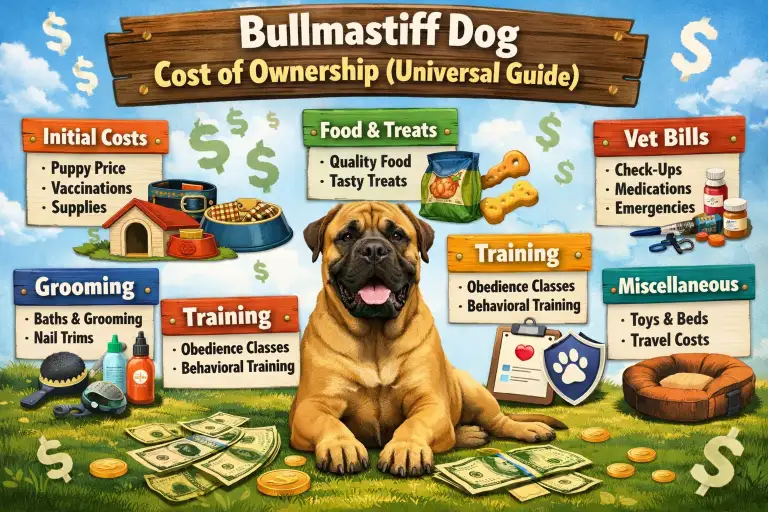
Owning a Bullmastiff is a major financial commitment that extends far beyond the initial purchase price. As a giant guardian breed, the Bullmastiff comes with higher food consumption, increased veterinary expenses, and large-breed maintenance costs that many first-time owners underestimate.
Most people searching for terms like “How much does a Bullmastiff cost?”, “Bullmastiff monthly expenses”, or “Bullmastiff cost of ownership” are usually asking three important questions:
- What is the total cost of owning a Bullmastiff during the first year?
- How much does a Bullmastiff cost per month and per year after that?
- Is owning a Bullmastiff affordable over the long term?
The reality is simple: Bullmastiffs are one of the more expensive dog breeds to own. Their ownership costs are closer to other giant mastiff breeds than to popular large breeds such as Labradors, German Shepherds, or Boxers.
The biggest financial surprises for Bullmastiff owners typically include:
- High-quality large-breed food requirements
- Veterinary care and emergency treatment costs
- Pet insurance premiums for giant breeds
- Replacing heavy-duty equipment and supplies
- Senior dog healthcare expenses
Most Bullmastiff owners should prepare for:
- A very expensive first year of ownership
- Consistently high monthly maintenance costs
- Significant lifetime expenses over the dog’s lifespan
This guide explains exactly where your money goes, which expenses are unavoidable, and whether a Bullmastiff fits your financial situation as well as your lifestyle.
First-Year Bullmastiff Costs: Purchase, Setup, and Veterinary Expenses
The first year of Bullmastiff ownership is almost always the most expensive. New owners face one-time setup costs, initial veterinary visits, vaccinations, and rapid growth-related expenses that continue throughout puppyhood.
Bullmastiff Purchase Price or Adoption Fee
The average Bullmastiff price varies considerably depending on breeder reputation, pedigree, health testing, and location.
Well-bred Bullmastiff puppies from responsible breeders generally cost significantly more than the average dog breed because of:
- Comprehensive health testing programs
- Limited litter sizes
- Higher breeding and whelping costs
- Genetic screening for inherited diseases
Adopting a Bullmastiff from a rescue organization is considerably cheaper upfront, although adopted adult dogs may require additional medical care or behavioral rehabilitation.
Very cheap puppies often become expensive later due to inherited health issues, poor early nutrition, or inadequate veterinary care during critical growth periods.
Initial Veterinary Costs for a Bullmastiff Puppy
The first year includes several unavoidable veterinary expenses, including:
- Core vaccinations and booster shots
- Microchipping and registration
- Routine wellness examinations
- Parasite prevention treatments
- Spaying or neutering procedures
- Growth monitoring for giant-breed development
Because Bullmastiffs grow rapidly during their first two years, regular veterinary supervision is essential to reduce the risk of developmental orthopedic problems.
Large Breed Equipment and Setup Costs
One of the most overlooked Bullmastiff ownership costs is equipment. This breed quickly outgrows standard large-dog supplies.
Most owners purchase:
- Extra-large crates
- Orthopedic dog beds
- Heavy-duty food and water bowls
- Strong collars and harnesses
- Durable chew toys for powerful jaws
- Vehicle restraints and travel equipment
Many owners end up replacing smaller equipment multiple times during the dog’s growth phase.
Puppy Versus Adult Bullmastiff Ownership Costs
Buying a Bullmastiff puppy almost always costs more than adopting an adult dog.
Puppies require:
- More frequent veterinary appointments
- Puppy obedience classes
- Socialization programs
- Higher food intake during growth periods
- More replacement supplies and toys
Adult Bullmastiffs eliminate many of these expenses but may require medical workups or behavioral support depending on their history.
Monthly Bullmastiff Expenses and Annual Ownership Costs
After the first year, Bullmastiff ownership becomes a matter of ongoing monthly and annual expenses. These recurring costs continue throughout the dog’s life and often exceed what new owners expect.
Because Bullmastiffs regularly exceed 100 pounds, nearly every expense scales upward with body size, including food, medications, anesthesia, and preventative care.
Average Monthly Bullmastiff Cost Breakdown
| Expense Category | Average Monthly Cost | Reason for Cost |
|---|---|---|
| Food and nutrition | $90 – $150 | Premium large-breed diets and high calorie intake |
| Parasite prevention | $30 – $50 | Higher dosage medications for giant breeds |
| Grooming and hygiene | $15 – $40 | Nail trims, skin care, shedding management |
| Training and behavior maintenance | $20 – $60 | Refresher classes and ongoing support |
| Toys and supplies | $15 – $30 | Replacement items and enrichment |
Typical Bullmastiff monthly cost: approximately $170 to $330 per month.
This estimate does not include pet insurance, boarding, travel, or emergency veterinary treatment.
Annual Bullmastiff Maintenance Costs
| Annual Expense | Average Cost Per Year |
|---|---|
| Routine veterinary examination | $250 – $450 |
| Bloodwork and wellness screening | $100 – $250 |
| Licensing and registration | $10 – $30 |
| Dental cleaning | $150 – $400 |
Typical annual routine costs: $500 to $1,100.
Skipping dental care often results in much larger expenses later in life.
Realistic Monthly Budget Expectations
| Budget Type | Estimated Monthly Cost |
|---|---|
| Minimum care budget | Approximately $170 |
| Average ownership budget | Approximately $250 |
| Premium care budget | $300+ |
If your budget only supports the minimum level of care, Bullmastiff ownership may become financially stressful over time.
Why Are Bullmastiffs So Expensive to Own?
Several factors contribute to the high cost of Bullmastiff ownership.
Large Body Size Increases Every Expense
| Dog Size | Typical Monthly Cost | Main Cost Driver |
|---|---|---|
| Small dog | $80 – $150 | Lower food and medication use |
| Medium dog | $120 – $220 | Moderate maintenance costs |
| Large dog | $180 – $300 | Higher food and veterinary expenses |
| Bullmastiff | $220 – $350+ | Giant-breed medication and food costs |
Although many people consider Bullmastiffs large dogs, their expenses are closer to those of giant breeds.
Health Risks Increase Veterinary Spending
| Veterinary Service | Typical Cost Range |
|---|---|
| Routine consultation | $80 – $150 |
| Emergency treatment | $800 – $3,000 |
| Surgery | $2,000 – $6,000 |
| Chronic disease management | $500 – $2,000 annually |
Many Bullmastiff owners purchase pet insurance specifically because one major medical emergency can exceed several years of normal ownership costs.
Pet Insurance for Bullmastiffs
| Insurance Coverage | Average Monthly Premium | Coverage Notes |
|---|---|---|
| Accident only | $30 – $50 | Injury coverage only |
| Accident and illness | $60 – $120 | Most popular option |
| Comprehensive plans | $90 – $150 | Lower deductibles and broader protection |
| No insurance | $0 | Highest financial risk |
Purchasing insurance while your Bullmastiff is young often results in lower premiums and fewer exclusions.
Hidden Bullmastiff Costs Most Owners Forget
Many budgets fail because owners focus only on food and annual vet visits while ignoring occasional large expenses.
| Hidden Expense | Typical Cost | Common Cause |
|---|---|---|
| Emergency treatment | $800 – $5,000+ | Injuries, illness, gastric emergencies |
| Dental procedures | $400 – $1,200 | Anesthesia and extraction costs |
| Boarding or pet sitting | $40 – $80 daily | Large dog surcharge |
| Travel expenses | $200 – $1,000+ | Accommodation and transport |
| Property damage | $100 – $1,500 | Furniture and household damage |
| Equipment replacement | $150 – $500 | Beds, harnesses and crates |
How Much Does a Bullmastiff Cost Over Its Lifetime?
| Life Stage | Estimated Cost |
|---|---|
| First year of ownership | $4,000 – $7,500 |
| Adult years (annual) | $2,500 – $4,000 |
| Senior years (annual) | $3,000 – $5,000 |
| Total lifetime ownership cost | $25,000 – $40,000+ |
Dogs that develop chronic medical conditions can exceed these estimates substantially.
Can You Afford a Bullmastiff?
Before bringing home a Bullmastiff, ask yourself:
- Can I comfortably spend $250 to $350 every month?
- Do I have an emergency fund of at least $3,000 to $5,000?
- Can I afford increasing costs during senior years?
- Am I financially prepared for unexpected emergencies?
| Financial Situation | Ownership Outlook |
|---|---|
| Limited budget | Basic care only with higher risk |
| Stable budget | Routine care and savings possible |
| Strong budget | Insurance and emergency funds available |
Final Thoughts on Bullmastiff Ownership Costs
Bullmastiffs are loyal, protective, and affectionate companions, but they are not inexpensive dogs to own.
This breed is best suited to owners who:
- Plan financially for the long term
- Can comfortably manage giant-breed veterinary expenses
- Maintain emergency savings or insurance coverage
- Prefer stability and preparation over shortcuts
If the financial commitment feels difficult before bringing a Bullmastiff home, the challenges usually become greater as the dog ages.
For owners who want additional information about the true cost of dog ownership, the ASPCA provides valuable guidance on budgeting for veterinary care, food, insurance, and long-term pet responsibilities.

Ata Ur Rehman is the founder of Pet Age in Human Years Calculator, an educational platform that provides age conversion charts and lifespan guides for dogs, cats, birds, and other companion animals. His work focuses on helping pet owners understand how animal ages translate into human years using commonly accepted age conversion formulas and published lifespan averages.
The website compiles breed and species lifespan data from kennel clubs, breed organizations, and general animal lifespan studies to present simple and easy-to-understand guides for pet owners worldwide.
This website was created to centralize animal age conversion charts into one easy reference platform for pet owners.
This article is for general education. For symptoms, medication, diet changes, or health concerns, use a qualified veterinarian who can assess your individual pet.