On this page
Leonbergers are not simply large dogs that require larger bowls of food. They are a true giant breed with unique nutritional requirements that influence their growth, joint health, heart function, digestion, body condition, and lifespan. Feeding mistakes that may have little effect on smaller breeds can create lifelong orthopedic and metabolic problems in a Leonberger.
A Leonberger puppy that grows too quickly is more likely to develop hip dysplasia, elbow dysplasia, osteochondrosis, and other skeletal disorders. Adult Leonbergers can weigh anywhere from 100 to 170 pounds (45 to 77 kg), and carrying excess body fat places significant strain on joints and the cardiovascular system.
Leonbergers are also more prone than many breeds to digestive sensitivity and gastric dilatation-volvulus (GDV), commonly called bloat. Meal timing, portion sizes, feeding frequency, and exercise scheduling are therefore almost as important as the food itself.
Proper nutrition directly influences:
• Healthy skeletal development in puppies
• Joint strength and mobility throughout adulthood
• Healthy body weight and muscle condition
• Coat quality and skin health
• Energy levels and stamina
• Digestive health and stool quality
• Longevity and comfort during senior years
What Should a Leonberger Eat?
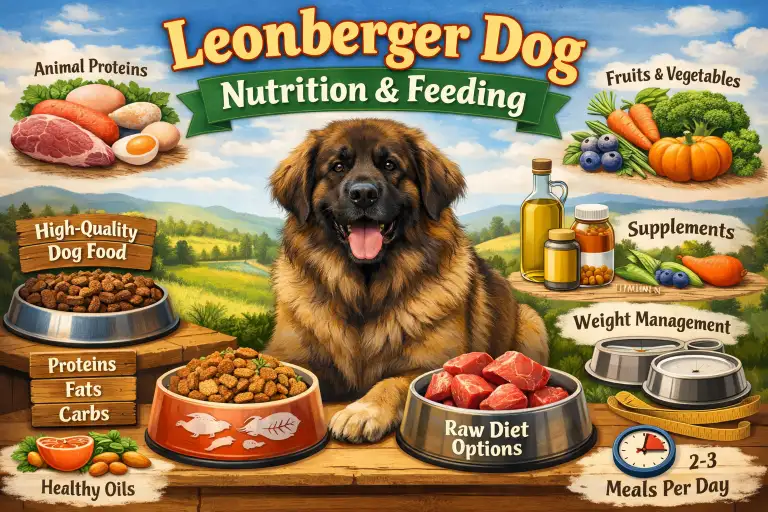
The ideal Leonberger diet is balanced, moderate in calories, and designed specifically for giant breeds. Contrary to popular belief, giant dogs do not require extremely high protein diets or excessive calories.
A complete and balanced commercial food that meets AAFCO or FEDIAF standards is usually the safest and easiest option for most owners. Premium giant-breed formulas are specifically developed to manage calcium, phosphorus, and calorie density during growth while supporting joint health during adulthood.
Essential Nutrients for Leonbergers
| Nutrient | Why It Matters |
|---|---|
| Protein | Supports muscle growth and tissue repair |
| Fat | Provides energy and supports skin and coat health |
| Calcium | Essential for bone growth and skeletal strength |
| Phosphorus | Works with calcium for proper bone formation |
| Fiber | Supports digestion and stool consistency |
| Omega-3 Fatty Acids | Supports joints, skin, heart, and inflammation control |
| Glucosamine and Chondroitin | Helps support cartilage and joint health |
| Antioxidants | Support immunity and healthy aging |
Why Calcium Is Critical in Giant Breed Puppies
Few nutrients are more important in giant breed nutrition than calcium.
Leonberger puppies are extremely sensitive to mineral imbalances during development. Excess calcium supplementation can increase the risk of skeletal abnormalities and orthopedic disease.
Avoid:
• Calcium supplements
• Bone meal supplements
• Excess dairy products
• Multiple overlapping joint supplements during growth
Unless specifically advised by a veterinarian, giant-breed puppies should receive all required minerals from a properly formulated giant-breed puppy food.
Best Food Types for Leonbergers
| Food Type | Advantages | Considerations |
|---|---|---|
| Giant Breed Dry Kibble | Convenient, balanced, cost effective | Choose premium quality formulas |
| Wet Food | Improves palatability and hydration | Higher cost per calorie |
| Fresh Cooked Diets | Excellent digestibility | Must be professionally balanced |
| Mixed Feeding | Adds variety and improves appetite | Calories must be monitored |
| Raw Diets | Can work for some dogs | Nutritional mistakes are common |
| Homemade Diets | Full ingredient control | Requires veterinary nutritionist formulation |
Ingredients to Look For
• Named animal proteins such as chicken, salmon, turkey, lamb, or beef
• Fish oil or marine omega-3 sources
• Digestible carbohydrates such as rice, oats, or sweet potato
• Joint-support nutrients
• Natural antioxidants
• Moderate calorie density
Ingredients to Limit
• Extremely high-fat formulas
• Very calorie-dense performance diets
• Excessive fillers with minimal nutritional value
• Multiple overlapping supplements
• Unbalanced homemade recipes
How to Read a Dog Food Label
Look for:
✓ AAFCO nutritional adequacy statement
✓ Appropriate life stage designation
✓ Named protein sources
✓ Transparent ingredient list
✓ Manufacturer quality control standards
Be cautious with:
• Holistic
• Ancestral
• Wolf diet
• Wild formula
How Much Should a Leonberger Eat?
There is no universal feeding amount for this breed because calorie requirements vary according to body weight, age, activity level, metabolism, reproductive status, and climate.
Estimated Daily Calorie Requirements
| Adult Weight | Low Activity | Moderate Activity | High Activity |
|---|---|---|---|
| 90-110 lbs | 1800-2100 calories | 2100-2400 calories | 2400-2700 calories |
| 111-130 lbs | 2100-2400 calories | 2400-2700 calories | 2700-3000 calories |
| 131-150 lbs | 2400-2700 calories | 2700-3000 calories | 3000-3300 calories |
| 151-170 lbs | 2700-3000 calories | 3000-3400 calories | 3400-3800 calories |
Feeding Frequency by Age
| Age | Meals Per Day |
|---|---|
| 8-12 weeks | 4 meals |
| 3-6 months | 3 meals |
| 6-12 months | 2-3 meals |
| Adults | 2 meals |
| Seniors | 1-2 meals |
Portion Size Guidelines
| Life Stage | Approximate Cups Per Meal |
|---|---|
| Puppy 2-4 months | 1 to 1.5 cups |
| Puppy 4-6 months | 1.5 to 2 cups |
| Puppy 6-12 months | 2 to 3 cups |
| Adult | 4 to 6 cups |
| Senior | 3 to 5 cups |
Body Condition Score
• Ribs should be easy to feel without heavy pressure.
• A visible waist should be present when viewed from above.
• The abdomen should show a moderate tuck when viewed from the side.
• Muscle should be maintained without excessive fat coverage.
Activity Level and Feeding Requirements
| Activity Level | Feeding Adjustment |
|---|---|
| Companion dog | Lower calorie intake |
| Moderately active dog | Average calorie intake |
| Working or sporting dog | Higher calorie intake |
| Outdoor dog during winter | Seasonal increase may be needed |
| Senior dog | Lower calorie intake in most cases |
Frequently Asked Questions About Feeding a Leonberger
How much food should a Leonberger eat per day?
Most adult Leonbergers eat between 2,000 and 3,400 calories per day depending on body weight, age, metabolism, and activity level. Smaller females and less active dogs usually require fewer calories, while large active males may need significantly more.
How many times a day should I feed my Leonberger?
Leonberger puppies should eat 3 to 4 meals per day during early growth. Most adult Leonbergers do best with 2 meals per day. Senior dogs may continue with 2 meals or switch to smaller portions if digestion becomes more sensitive.
What is the best food for a Leonberger puppy?
A large-breed or giant-breed puppy formula that meets AAFCO or FEDIAF standards is the safest option. These foods provide controlled calcium and phosphorus levels to support healthy bone and joint development.
Can Leonbergers eat grain-free food?
Most Leonbergers do not require grain-free diets unless specifically recommended by a veterinarian for allergies or sensitivities. Many dogs tolerate properly formulated diets containing grains very well.
Are Leonbergers prone to obesity?
Yes. Leonbergers can gain weight quickly if calorie intake exceeds activity levels. Their thick coat can hide excess body fat, making regular body condition checks important.
Can Leonbergers eat raw food diets?
Raw diets can work if they are professionally balanced and nutritionally complete. Improperly formulated raw diets may lead to nutrient deficiencies or mineral imbalances, especially in growing puppies.
What foods should Leonbergers never eat?
Leonbergers should never eat chocolate, grapes, raisins, onions, garlic, alcohol, macadamia nuts, xylitol, cooked bones, or heavily seasoned human foods.
Are supplements necessary for Leonbergers?
Most dogs eating complete and balanced diets do not require additional supplements. Some adults and seniors may benefit from omega-3 fatty acids or joint-support supplements under veterinary guidance.
How can I reduce the risk of bloat in my Leonberger?
Feed two or more smaller meals per day, avoid vigorous exercise immediately before and after meals, discourage rapid eating, and avoid feeding one very large meal each day.
How do I know if my Leonberger is overweight?
You should be able to feel the ribs without pressing hard, see a visible waist from above, and notice a gentle abdominal tuck from the side. If these features disappear, your dog may be overweight.
Can I feed my Leonberger homemade food?
Homemade diets can be successful if they are formulated by a veterinary nutritionist to ensure proper nutrient balance for a giant breed.
What treats are best for Leonbergers?
Low-calorie treats such as carrots, blueberries, plain cooked meat, and pumpkin are generally good options. Treats should account for less than 10% of total daily calorie intake.
Should Leonberger seniors eat a different diet?
Yes. Senior Leonbergers often benefit from diets with lower calorie density, high-quality protein, and additional support for joints, heart health, and mobility.
Why is calcium so important for Leonberger puppies?
Excess calcium during growth can increase the risk of orthopedic disorders in giant breeds. Proper mineral balance is more important than increasing calcium intake.
Can Leonbergers have sensitive stomachs?
Yes. Some Leonbergers are prone to gas, loose stools, and food sensitivities. Gradual food transitions and highly digestible diets are often beneficial.
Final Thoughts
Proper nutrition is one of the most important investments you can make in your Leonberger’s health and longevity. Feeding the right food in the right amount at the right stage of life helps support healthy growth, strong joints, ideal body condition, and better quality of life throughout adulthood and senior years.

Ata Ur Rehman is the founder of Pet Age in Human Years Calculator, an educational platform that provides age conversion charts and lifespan guides for dogs, cats, birds, and other companion animals. His work focuses on helping pet owners understand how animal ages translate into human years using commonly accepted age conversion formulas and published lifespan averages.
The website compiles breed and species lifespan data from kennel clubs, breed organizations, and general animal lifespan studies to present simple and easy-to-understand guides for pet owners worldwide.
This website was created to centralize animal age conversion charts into one easy reference platform for pet owners.
This article is for general education. For symptoms, medication, diet changes, or health concerns, use a qualified veterinarian who can assess your individual pet.