On this page
Grooming a Caucasian Shepherd Dog is not simply about appearance. For this giant livestock guardian breed, grooming is an essential part of skin health, coat protection, comfort, and early disease detection. Owners who underestimate grooming requirements often face severe matting, trapped moisture, excessive shedding, unpleasant odors, skin infections, and resistance to handling.
The Caucasian Shepherd Dog was developed to work in harsh mountain climates where protection from snow, rain, wind, and parasites was critical for survival. Its coat evolved to provide insulation in winter and temperature regulation during warmer months. When grooming is neglected, this natural protection system begins to fail.
Dead undercoat accumulates close to the skin, reducing airflow and trapping moisture beneath the coat. Over time this creates an ideal environment for hot spots, bacterial infections, fungal growth, and painful mats that pull on the skin during movement.
Regular grooming sessions also provide valuable opportunities for early health monitoring. While brushing, owners can detect skin redness, parasites, lumps, pressure sores, wounds, or unusual coat changes before they become serious medical issues. Since Caucasian Shepherds are often stoic and may hide discomfort, these routine checks become particularly important.
Behavioral conditioning is another reason grooming should start early. Caucasian Shepherd Dogs are independent, powerful, and naturally suspicious of excessive restraint. Puppies that become comfortable with brushing, nail trimming, ear checks, and handling generally remain cooperative as adults. Dogs introduced to grooming late in life often resist procedures, making maintenance significantly more difficult.
Most importantly, prospective owners should understand that this is not a low-maintenance breed. Even short-coated individuals shed heavily throughout the year, while long-coated dogs require substantial grooming commitments during seasonal coat changes.
Understanding the Caucasian Shepherd Double Coat
The key to proper Caucasian Shepherd grooming is understanding how the breed’s double coat functions.
The coat consists of two separate layers that work together to protect the dog in extreme environments.
| Coat Layer | Purpose | Function |
|---|---|---|
| Soft undercoat | Insulation | Traps air to regulate body temperature in both hot and cold weather |
| Protective outer coat | Weather protection | Shields against moisture, dirt, UV exposure, parasites, and physical damage |
This double coat helps keep the dog warm during winter and surprisingly cool during summer. Contrary to popular belief, removing or shaving the coat does not help the dog stay cooler.
When regularly brushed, air moves freely through the coat and excess undercoat is removed naturally. When neglected, dead hair builds up, heat becomes trapped, moisture remains against the skin, and skin conditions become increasingly common.
Caucasian Shepherd Dogs generally fall into three coat categories:
| Coat Type | Shedding Level | Matting Risk | Grooming Difficulty | Owner Expectations |
|---|---|---|---|---|
| Short double coat | Heavy | Low to Moderate | Moderate | Weekly brushing with seasonal deshedding |
| Medium-length double coat | Very Heavy | Moderate | High | Frequent brushing during shedding seasons |
| Long double coat | Extremely Heavy | High | Very High | Intensive grooming and mat prevention |
Long-coated dogs are especially prone to matting behind the ears, under the collar, around the chest, inside the rear legs, beneath the tail, and in areas where friction occurs during movement.
Do Caucasian Shepherd Dogs Shed a Lot?
Yes. Caucasian Shepherd Dogs are considered heavy shedders throughout the year and extremely heavy shedders during seasonal coat blow periods.
Most owners experience two major shedding seasons annually:
| Season | Shedding Intensity | What Happens |
|---|---|---|
| Spring | Extremely Heavy | Winter undercoat is released rapidly |
| Fall | Heavy | New winter coat begins developing |
| Summer | Moderate | Ongoing maintenance shedding |
| Winter | Moderate | Dense protective coat remains stable |
During coat blow periods, large amounts of undercoat may come out in handfuls or clumps. This process is completely normal and does not indicate illness or poor health.
Daily brushing during these periods dramatically reduces loose fur inside the home and prevents undercoat from becoming compacted against the skin.
Owners often ask whether shaving can reduce shedding.
The answer is no.
Shaving a Caucasian Shepherd Dog often creates more problems than it solves.
Potential consequences include:
- Loss of natural insulation.
- Increased risk of sunburn.
- Higher likelihood of overheating.
- Uneven coat regrowth.
- Greater matting risk after regrowth.
- Reduced protection against environmental hazards.
For this breed, proper brushing is always preferable to shaving.
At-Home Grooming Routine for a Caucasian Shepherd Dog
Maintaining a Caucasian Shepherd Dog’s coat requires consistency rather than occasional intensive grooming sessions. Because this breed has a dense double coat and heavy seasonal shedding cycles, small regular grooming habits are much more effective than waiting until the coat becomes tangled or dirty.
A proper grooming routine should focus on five main areas:
- Brushing and undercoat removal
- Bathing and coat drying
- Nail maintenance
- Ear and skin checks
- Regular health inspection
The goal is not to make the coat look perfect. The goal is to keep the skin healthy, prevent painful mats, reduce excessive shedding, and help the dog remain comfortable.
How Often Should You Groom a Caucasian Shepherd Dog?
The grooming frequency depends on coat length, season, lifestyle, and whether the dog spends time outdoors.
| Grooming Task | Normal Period | Heavy Shedding Season |
|---|---|---|
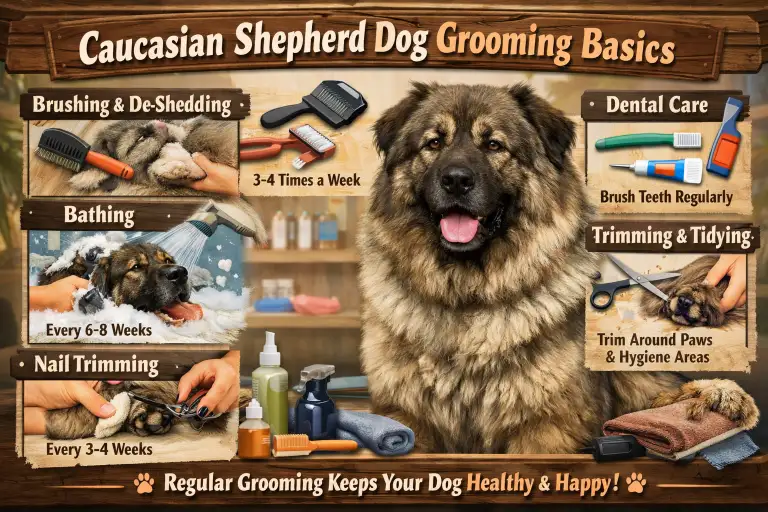
| Brushing | 1–2 times per week | Daily or every other day |
| Undercoat removal | Weekly when needed | Several times per week |
| Bathing | Every 2–4 months or when dirty | Only when necessary |
| Nail trimming | Every 3–4 weeks | Every 3–4 weeks |
| Ear inspection | Weekly | Weekly |
| Skin and body check | Weekly | Weekly |
For most Caucasian Shepherds, brushing is the most important grooming activity. A short 10–20 minute grooming session performed regularly is usually easier than one long grooming session after weeks of neglect.
Brushing a Caucasian Shepherd Dog
Brushing removes loose hair, dead undercoat, dirt, and small tangles before they develop into painful mats.
The correct brushing method is:
- Start from the neck and shoulders.
- Work slowly through the coat section by section.
- Brush in the direction of hair growth.
- Pay extra attention to high-friction areas.
- Finish with a comb check to find hidden tangles.
Important areas to monitor include:
| Area | Why It Needs Attention |
|---|---|
| Behind the ears | Long hair easily tangles here |
| Neck and collar area | Friction creates mats |
| Chest and front legs | Thick hair collects dirt |
| Behind rear legs | Movement causes knots |
| Tail area | Dense coat traps debris |
A slicker brush, undercoat rake, and wide-tooth metal comb are usually the most useful tools for this breed.
Bathing a Caucasian Shepherd Dog
Caucasian Shepherds do not require frequent baths. Their coat naturally helps repel dirt and moisture, and excessive bathing can remove protective oils from the skin.
A good bathing routine includes:
- Brush the coat before bathing.
- Use a dog-safe shampoo.
- Rinse thoroughly to remove all product.
- Dry the coat completely.
- Check the skin afterward.
A wet undercoat is one of the biggest risks after bathing because moisture trapped near the skin can contribute to irritation, odor, and infections.
For this breed, drying is just as important as washing. A high-velocity dog dryer can help remove loose undercoat and speed up drying, especially for long-coated individuals.
Seasonal Grooming Changes
Caucasian Shepherd grooming needs change throughout the year.
| Season | Coat Condition | Grooming Focus |
|---|---|---|
| Spring | Heavy winter undercoat release | Increase brushing frequency |
| Summer | Lighter coat with outdoor dirt exposure | Maintain brushing and prevent skin problems |
| Fall | New winter coat development | Remove loose hair before thickening |
| Winter | Dense protective coat | Keep coat clean and completely dry |
During shedding seasons, owners may notice large amounts of fur around the home. This is normal and should be managed through increased brushing rather than reducing grooming.
Best Grooming Tools for a Caucasian Shepherd Dog
Using the correct tools makes grooming faster and more comfortable.
| Grooming Tool | Main Purpose | Benefit |
|---|---|---|
| Slicker brush | Removes loose hair and small tangles | Keeps outer coat smooth |
| Undercoat rake | Removes dead undercoat | Controls heavy shedding |
| Wide-tooth comb | Finds hidden knots | Helps prevent severe mats |
| Nail grinder or clippers | Nail maintenance | Prevents discomfort and mobility issues |
| Dog shampoo | Coat cleaning | Protects skin health |
| High-velocity dryer | Removes loose fur and moisture | Improves coat maintenance |
Avoid using human shampoo because dogs have different skin pH levels. Human products may cause dryness, irritation, or itching.
Common Caucasian Shepherd Grooming Problems
Because of their thick coat, Caucasian Shepherds can develop grooming-related problems if maintenance is inconsistent.
| Problem | Signs | Possible Cause |
|---|---|---|
| Excessive shedding | Fur everywhere | Normal coat blow or poor brushing |
| Mats | Hard clumps in coat | Missed grooming sessions |
| Skin odor | Unpleasant smell | Moisture buildup or infection |
| Dry skin | Flaking or itching | Overbathing or unsuitable products |
| Hot spots | Red irritated skin | Trapped moisture and bacteria |
| Scratching | Constant itching | Parasites, allergies, or skin problems |
Never cut tight mats with scissors close to the skin. Thick mats can pull the skin upward, increasing the risk of accidental cuts. Severe matting should be handled by an experienced groomer or veterinarian.
Professional Grooming for Caucasian Shepherd Dogs
Many owners can handle regular brushing at home, but professional grooming can be useful during heavy shedding periods or when the coat becomes difficult to manage.
| Task | Home Grooming | Professional Help |
|---|---|---|
| Regular brushing | Yes | Optional |
| Light bathing | Yes | Optional |
| Heavy deshedding | Sometimes | Recommended |
| Severe mat removal | No | Recommended |
| Skin problem treatment | No | Veterinarian |
A professional groomer with experience handling large double-coated breeds can safely remove excess undercoat and identify coat issues early.
Grooming Puppies, Adults, and Senior Caucasian Shepherds
Puppy Grooming
Grooming training should begin when the Caucasian Shepherd puppy comes home.
Early sessions should include:
- Gentle brushing.
- Touching paws.
- Checking ears.
- Handling the coat.
- Reward-based cooperation.
The purpose is not heavy grooming. The purpose is creating positive experiences so the adult dog accepts maintenance.
Adult Grooming
Adult Caucasian Shepherds require predictable routines. Dogs that are groomed regularly usually become comfortable with the process.
Senior Grooming
Older dogs may need shorter grooming sessions because of joint stiffness, reduced mobility, or sensitive skin. Gentle handling becomes more important as the dog ages.
Frequently Asked Questions About Caucasian Shepherd Dog Grooming
How often should you brush a Caucasian Shepherd Dog?
Most Caucasian Shepherd Dogs should be brushed one to two times per week. During seasonal shedding periods, daily brushing may be necessary to remove loose undercoat and prevent mats.
Do Caucasian Shepherd Dogs shed a lot?
Yes. Caucasian Shepherd Dogs are heavy shedders because they have a thick double coat. Shedding increases significantly during spring and fall coat changes.
Can you shave a Caucasian Shepherd Dog?
No, shaving is generally not recommended. The double coat protects the dog from temperature changes, sun exposure, and environmental conditions. Regular brushing is a safer way to manage shedding.
What is the best brush for a Caucasian Shepherd Dog?
The best grooming setup usually includes an undercoat rake, slicker brush, and wide-tooth metal comb. These tools help remove loose undercoat while preventing painful tangles.
How often should a Caucasian Shepherd be bathed?
A Caucasian Shepherd usually needs bathing every few months or when the coat becomes dirty. Frequent bathing can dry the skin and damage natural coat oils.
Are Caucasian Shepherd Dogs high maintenance?
Yes. Their large size, thick double coat, and heavy shedding make them a high-maintenance breed compared with many other dogs. However, a consistent grooming routine makes care manageable.
How do you stop a Caucasian Shepherd from shedding so much?
You cannot completely stop shedding because it is a natural process. Regular brushing, especially during coat blow seasons, is the best way to control loose fur.
Do Caucasian Shepherd Dogs need professional grooming?
Professional grooming is not always required, but it can be helpful for heavy deshedding, severe mats, difficult bathing, or owners who need assistance managing the coat.
How do you prevent mats in a Caucasian Shepherd coat?
Prevent mats by brushing regularly, checking friction areas such as behind ears and under collars, and removing loose undercoat before it becomes compacted.
What grooming mistakes should Caucasian Shepherd owners avoid?
Common mistakes include shaving the coat, skipping brushing for long periods, using harsh shampoos, leaving the coat damp after bathing, and ignoring early signs of skin problems.
Final Thoughts
Caucasian Shepherd Dog grooming is a long-term commitment that protects more than appearance. A healthy coat supports skin protection, comfort, temperature regulation, and overall wellbeing.
The most important habits are simple: brush consistently, remove loose undercoat, keep the coat dry, inspect the skin regularly, and introduce grooming early.
With the right routine and proper tools, even this giant, heavily coated guardian breed can maintain a healthy and manageable coat throughout life.

Ata Ur Rehman is the founder of Pet Age in Human Years Calculator, an educational platform that provides age conversion charts and lifespan guides for dogs, cats, birds, and other companion animals. His work focuses on helping pet owners understand how animal ages translate into human years using commonly accepted age conversion formulas and published lifespan averages.
The website compiles breed and species lifespan data from kennel clubs, breed organizations, and general animal lifespan studies to present simple and easy-to-understand guides for pet owners worldwide.
This website was created to centralize animal age conversion charts into one easy reference platform for pet owners.
This article is for general education. For symptoms, medication, diet changes, or health concerns, use a qualified veterinarian who can assess your individual pet.