On this page
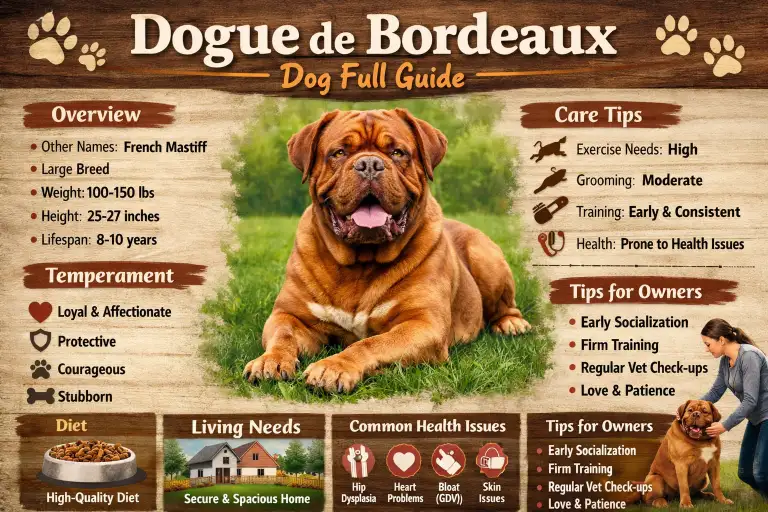
The Dogue de Bordeaux, also known as the French Mastiff, is a powerful giant breed known for its massive head, muscular build, calm personality, and deep loyalty toward its family. Originally developed in France as a working and guarding dog, this breed combines strength and confidence with a surprisingly gentle nature at home.
Before bringing home a Dogue de Bordeaux, owners should understand that this breed is not only defined by its impressive appearance. Its giant size, short lifespan, health risks, drooling, exercise needs, and emotional attachment all play an important role in daily ownership.
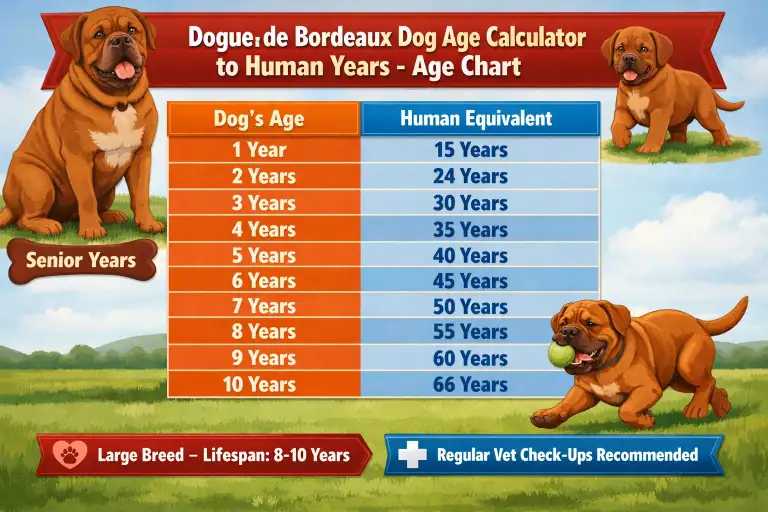
If you want to understand how your Dogue de Bordeaux compares in age to humans, use our Dogue de Bordeaux age calculator to convert your dog’s age into human years and understand each life stage.
Dogue de Bordeaux Breed Overview
| Attribute | Details |
|---|---|
| Origin | France |
| Common name | French Mastiff |
| Breed type | Molosser / Mastiff-type |
| Size category | Giant breed |
| Weight | Males: 110–145 lb (50–66 kg) Females: 99–130 lb (45–59 kg) |
| Height | 23–27 inches (58–69 cm) |
| Coat | Short, fine, smooth |
| Drooling level | Very high |
| Energy level | Low to moderate |
| Average lifespan | 5–8 years |
This breed profile reflects realistic ownership expectations rather than idealized descriptions. The Dogue de Bordeaux is a true giant dog with heavy bone structure, a powerful body, and a shorter lifespan compared with many smaller breeds.
Dogue de Bordeaux Size and Physical Characteristics
The Dogue de Bordeaux has one of the most recognizable appearances among mastiff breeds. Its enormous head, broad chest, muscular frame, and loose facial wrinkles create a powerful presence that reflects its history as a guardian and working dog.
| Feature | Description |
|---|---|
| Overall build | Extremely muscular, broad-chested, heavy-boned body |
| Head | Massive head with pronounced wrinkles and one of the largest head-to-body ratios among dogs |
| Coat colors | Fawn, red, and mahogany shades |
| Mask types | Black mask, brown mask, or no mask |
| Skin | Loose skin with noticeable facial folds |
| Movement | Powerful and steady with limited endurance |
Unlike taller mastiff breeds, the Dogue de Bordeaux is shorter, wider, and heavier for its height. This compact structure gives it tremendous strength but also increases pressure on joints, heart function, and overall mobility.
Dogue de Bordeaux History and Origin
The Dogue de Bordeaux has roots that trace back hundreds of years to ancient Molosser-type dogs developed throughout Europe. In France, these dogs were used for guarding estates, protecting livestock, pulling carts, and performing heavy working tasks.
The breed became valued because of its courage, strength, and intimidating appearance. Unlike hunting breeds designed for speed and endurance, the Dogue de Bordeaux was developed for presence, protection, and physical power.
Periods of conflict and social change nearly caused the breed’s disappearance. Modern Dogue de Bordeaux dogs come from a limited genetic population, which contributes to their consistent appearance but also explains some of the health challenges seen today.
What Makes the Dogue de Bordeaux Challenging to Own?
The Dogue de Bordeaux is not a difficult breed because of temperament alone. Its physical characteristics create unique ownership responsibilities that every potential owner should understand.
| Challenge | Why It Matters |
|---|---|
| Large body size | Requires proper space, handling ability, and strong management |
| Short muzzle | Can increase heat sensitivity and breathing limitations |
| Heavy bone structure | Places extra stress on joints during growth and adulthood |
| Facial wrinkles | Need regular cleaning to prevent moisture-related skin problems |
| Extreme drooling | Daily cleaning is part of normal ownership |
The Dogue de Bordeaux is built for strength and guarding ability, not long-distance exercise or athletic performance. Owners who appreciate this breed must be prepared for the care requirements that come with owning a giant dog.
Dogue de Bordeaux Temperament and Personality
The Dogue de Bordeaux is best described as calm, loyal, protective, and deeply connected to its family. While its appearance can seem intimidating, a well-socialized Dogue de Bordeaux is usually stable and affectionate with the people it trusts.
| Trait | What to Expect |
|---|---|
| Loyalty | Extremely devoted to family members |
| Protectiveness | Naturally alert and protective of home |
| Energy level | Calm indoors with moderate exercise needs |
| Trainability | Moderate; intelligent but sometimes stubborn |
| Sensitivity | Responds best to calm and positive training |
| Stranger behavior | Reserved and observant |
Dogue de Bordeaux Behavior With Family and Children
The Dogue de Bordeaux forms an extremely strong bond with its family. This breed is often described as a “shadow dog” because it prefers staying close to its owners rather than being independent. Despite its intimidating size, it is usually calm, affectionate, and gentle with people it knows.
| Situation | Typical Behavior |
|---|---|
| Adult family members | Loyal, affectionate, and strongly attached |
| Young children | Patient but requires supervision due to size |
| Inside the home | Quiet, relaxed, and observant |
| Rough play | Usually tolerant but may dislike excessive chaos |
| Being left alone | May develop separation-related stress |
Although the Dogue de Bordeaux is generally gentle with its own family, its massive size means supervision is always important. Even without aggressive behavior, accidental knocks from a giant dog can easily hurt small children.
Dogue de Bordeaux Behavior With Strangers
The Dogue de Bordeaux is naturally protective and does not usually approach strangers with immediate excitement. Instead, it tends to observe quietly and decide whether someone is trustworthy.
| Scenario | Likely Response |
|---|---|
| New visitors entering the home | Alert and watchful |
| Familiar guests | Accepting but reserved |
| Delivery workers | Strong guarding response |
| Public places | Calm but aware of surroundings |
Proper socialization is essential. A well-trained Dogue de Bordeaux should be confident and controlled, not fearful or overly reactive. Protective instincts should be managed through early training and positive experiences.
Dogue de Bordeaux With Other Dogs and Pets
The Dogue de Bordeaux can live with other animals, but compatibility depends heavily on early socialization, training, and individual personality. Because of its strength and confidence, poor introductions can create problems.
| Pet Situation | Common Outcome |
|---|---|
| Same-sex dogs | Possible dominance issues |
| Opposite-sex dogs | Often easier compatibility |
| Cats raised together | Can often coexist |
| Small animals | Prey interest may occur |
Dogue de Bordeaux Training Requirements
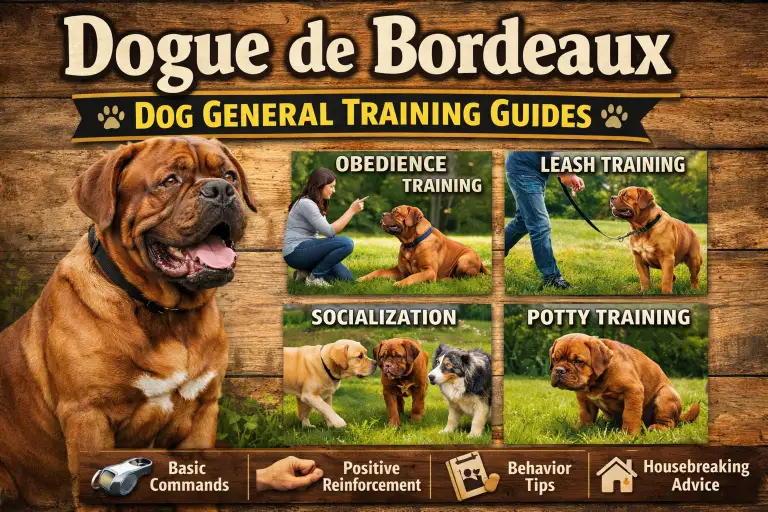
The Dogue de Bordeaux is intelligent but not always eager to obey every command immediately. This breed responds best to calm leadership, consistency, and reward-based training methods.
| Training Area | Recommendation |
|---|---|
| Trainability | Moderate; intelligent but can be stubborn |
| Best training style | Positive reinforcement with firm boundaries |
| Training start age | Begin during puppyhood |
| Session length | Short and consistent daily sessions |
Early training is especially important because unwanted behaviors become much harder to control once this giant breed reaches full size. A Dogue de Bordeaux puppy that learns manners early becomes a much easier adult dog to manage.
Exercise Needs of a Dogue de Bordeaux
Despite its powerful appearance, the Dogue de Bordeaux is not a high-energy breed. It prefers moderate activity and should not be pushed into intense exercise because of its heavy body structure.
| Exercise Type | Recommended Level |
|---|---|
| Daily walks | 30–60 minutes at a steady pace |
| Free running | Limited due to joint stress |
| Jumping activities | Not recommended |
| Puppy exercise | Controlled to protect developing joints |
| Mental stimulation | Training games and routines |
Dogue de Bordeaux Grooming and Daily Care
The Dogue de Bordeaux has a short coat that is easy to maintain, but its wrinkles, drooling, and skin folds require regular attention.
| Care Task | Frequency |
|---|---|
| Brushing | Weekly |
| Bathing | Every 6–8 weeks |
| Wrinkle cleaning | Several times per week |
| Nail trimming | Every 3–4 weeks |
| Ear cleaning | Weekly checks |
| Teeth care | Several times per week |
Owners should pay special attention to heat management. The Dogue de Bordeaux does not tolerate hot weather well because of its large body size and shorter muzzle. Walks should be scheduled during cooler parts of the day with access to water and shade.
Dogue de Bordeaux Health, Lifespan, and Common Problems
The Dogue de Bordeaux has a shorter lifespan than many breeds because of its giant size and increased risk of serious health conditions. Responsible ownership includes regular veterinary care, weight management, and monitoring for early warning signs.
| Health Concern | Why It Matters |
|---|---|
| Heart disease | Can affect lifespan and quality of life |
| Hip dysplasia | May cause pain and mobility problems |
| Elbow dysplasia | Affects movement and comfort |
| Breathing problems | Related to shorter muzzle structure |
| Cancer | A significant health concern in the breed |
| Skin infections | Can develop in moist wrinkles |
Dogue de Bordeaux Cost of Ownership
Owning a Dogue de Bordeaux requires financial preparation. Food, veterinary care, medication, insurance, and emergency treatment can all cost more compared with smaller breeds.
| Cost Area | Expectation |
|---|---|
| Puppy price | High compared with many breeds |
| Food expenses | High due to large body size |
| Veterinary care | Above average |
| Emergency treatment | Very expensive |
| Pet insurance | Strongly recommended |
Frequently Asked Questions About Dogue de Bordeaux Dogs
How long does a Dogue de Bordeaux live?
The average Dogue de Bordeaux lifespan is around 5–8 years. Giant body size, heart problems, and other health conditions contribute to its shorter life expectancy compared with smaller breeds.
Is the Dogue de Bordeaux a good family dog?
Yes, a well-trained Dogue de Bordeaux can be an excellent family companion. It is loyal, affectionate, and protective, but its large size means children should always be supervised.
Are Dogue de Bordeaux dogs aggressive?
No, they are not naturally aggressive. They are protective and reserved with strangers, but proper socialization and training help create a stable and confident temperament.
How much exercise does a Dogue de Bordeaux need?
Most adult Dogue de Bordeaux dogs need about 30–60 minutes of moderate daily activity. Excessive exercise can put unnecessary stress on joints and the heart.
Is a Dogue de Bordeaux good for first-time owners?
This breed is usually better suited for experienced owners because of its size, strength, training requirements, and health-related costs.
How can I calculate my Dogue de Bordeaux age in human years?
You can use a Dogue de Bordeaux age calculator to estimate your dog’s equivalent human age and better understand puppy, adult, and senior life stages.
Final Thoughts: Is the Dogue de Bordeaux Right for You?
The Dogue de Bordeaux is a remarkable giant breed that offers deep loyalty, calm companionship, and natural protection. However, owning one requires serious commitment because of its size, health risks, shorter lifespan, and daily care needs.
This breed is best suited for owners who understand giant dogs and are prepared for both the emotional and financial responsibilities involved. The Dogue de Bordeaux is not simply a powerful-looking dog—it is a devoted companion that requires patience, preparation, and responsible care throughout its life.

Ata Ur Rehman is the founder of Pet Age in Human Years Calculator, an educational platform that provides age conversion charts and lifespan guides for dogs, cats, birds, and other companion animals. His work focuses on helping pet owners understand how animal ages translate into human years using commonly accepted age conversion formulas and published lifespan averages.
The website compiles breed and species lifespan data from kennel clubs, breed organizations, and general animal lifespan studies to present simple and easy-to-understand guides for pet owners worldwide.
This website was created to centralize animal age conversion charts into one easy reference platform for pet owners.
This article is for general education. For symptoms, medication, diet changes, or health concerns, use a qualified veterinarian who can assess your individual pet.