On this page
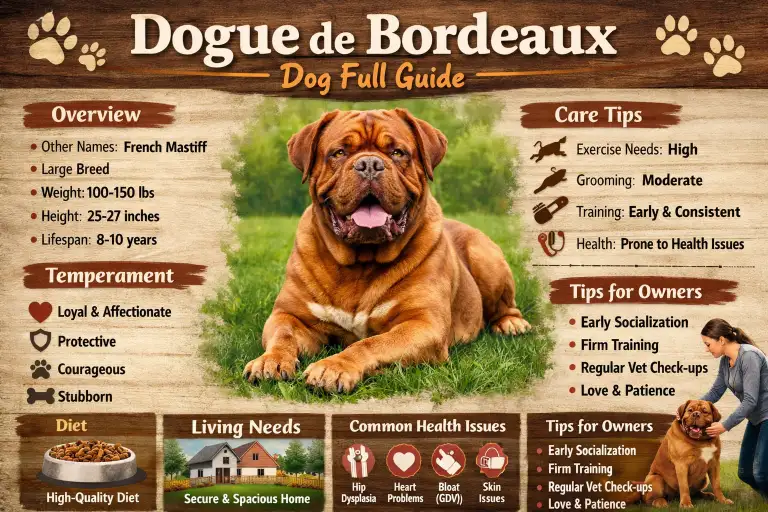
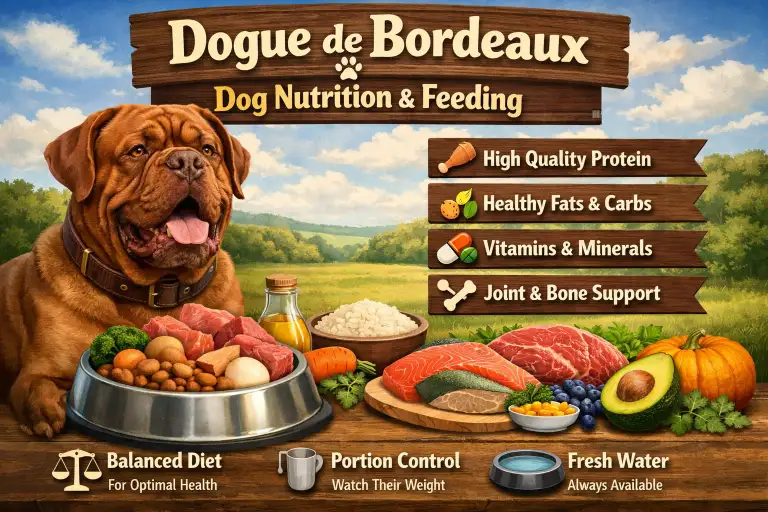
The Dogue de Bordeaux diet plays a major role in maintaining this giant breed’s health, weight, mobility, and lifespan. Because of their massive body structure, heavy bones, muscular build, and naturally calm temperament, Dogue de Bordeaux dogs require a carefully balanced feeding plan that supports steady growth without causing unnecessary weight gain.
Unlike highly active working breeds, the Dogue de Bordeaux has moderate energy needs. Many owners assume that a larger dog automatically requires large amounts of food, but overfeeding is one of the most common mistakes with this breed. Excess calories can increase stress on the joints, worsen mobility problems, and contribute to obesity-related health issues.
A proper Dogue de Bordeaux feeding plan should focus on:
- Controlled growth during puppyhood to protect developing bones and joints
- High-quality protein to maintain muscle mass
- Balanced fat levels to provide energy without excessive weight gain
- Joint-supporting nutrients because of the breed’s heavy frame
- Digestible ingredients to reduce stomach problems and food sensitivities
The ideal diet changes throughout a Dogue de Bordeaux’s life. Puppies need carefully controlled nutrition to prevent rapid growth, adults need calorie management to maintain a healthy body condition, and seniors often require diets that support joints, digestion, and aging-related changes.
Understanding the Nutritional Needs of a Dogue de Bordeaux
A Dogue de Bordeaux does not simply need more food because of its size. This breed needs the right balance of nutrients. Feeding too many calories or choosing food that is too rich can create problems, while an unbalanced diet can affect muscle development, bone health, and overall wellbeing.
The main nutritional goals for this breed include:
| Nutritional Goal | Why It Matters for Dogue de Bordeaux |
|---|---|
| Healthy muscle development | Supports the breed’s large muscular body and physical strength |
| Controlled calorie intake | Helps prevent obesity and reduces pressure on joints |
| Strong bones and joints | Important because of the breed’s heavy body weight |
| Easy digestion | Helps reduce gas, loose stool, and food sensitivity issues |
| Heart support | Provides nutrients that support long-term cardiovascular health |
Best Protein, Fat, and Carbohydrate Balance for Dogue de Bordeaux
Protein, fat, and carbohydrates all have important roles in a Dogue de Bordeaux diet. The goal is not to maximize one nutrient but to create a balanced formula that supports steady energy and healthy body composition.
Protein Requirements
Protein helps maintain muscle mass and supports tissue repair. However, extremely high-protein diets are not always beneficial for giant breeds. Dogue de Bordeaux dogs usually do better with moderate, high-quality protein sources that are easy to digest.
Good protein sources include:
- Chicken
- Turkey
- Fish
- Beef
- Lamb
- Eggs
Fat Requirements
Fat provides concentrated energy and supports healthy skin and coat condition. Because Dogue de Bordeaux dogs are prone to weight gain, excessive fat levels should be avoided unless recommended for a specific health reason.
Carbohydrate Requirements
Carbohydrates are not harmful for Dogue de Bordeaux dogs when they come from quality sources. Digestible carbohydrates can provide energy while helping maintain balanced calorie intake.
Common healthy carbohydrate sources include:
- Brown rice
- Oats
- Sweet potatoes
- Potatoes
- Pumpkin
| Nutrient | Recommended Range | Purpose |
|---|---|---|
| Protein | 22%–28% | Maintains muscle and supports body repair |
| Fat | 10%–16% | Provides energy while controlling weight |
| Carbohydrates | Moderate levels | Supports energy and digestion |
Essential Vitamins and Minerals for Dogue de Bordeaux Dogs
Giant breeds like the Dogue de Bordeaux are sensitive to nutrient balance, especially during growth. Too much calcium or incorrect mineral ratios can interfere with normal bone development, which is why large-breed formulas are usually recommended for puppies.
Important nutrients include:
| Nutrient | Benefits |
|---|---|
| Calcium and Phosphorus | Supports healthy bone development and structure |
| Omega-3 Fatty Acids | Supports joints, skin, coat, and heart health |
| Glucosamine | Helps maintain joint function under heavy body weight |
| Chondroitin | Supports cartilage health and mobility |
| Antioxidants | Helps protect cells as dogs age |
How Much Food Does a Dogue de Bordeaux Need?
The correct amount of food for a Dogue de Bordeaux depends on age, weight, activity level, metabolism, and overall health. Because this breed is naturally large and heavy, many owners accidentally overfeed by judging portions based only on body size.
A healthy Dogue de Bordeaux should maintain a strong body shape with visible waist definition and ribs that can be felt under a thin layer of fat. Feeding should always be adjusted according to body condition rather than appetite alone.
| Adult Weight | Low Activity | Moderate Activity |
|---|---|---|
| 45 kg (100 lbs) | Approximately 1,700 calories/day | Approximately 2,100 calories/day |
| 55 kg (120 lbs) | Approximately 1,900 calories/day | Approximately 2,400 calories/day |
| 65 kg (145 lbs) | Approximately 2,200 calories/day | Approximately 2,700 calories/day |
These calorie estimates are starting points. A Dogue de Bordeaux that gains weight easily may need fewer calories, while an active dog may require slightly more food.
Dogue de Bordeaux Puppy Feeding Guide
Puppy nutrition is one of the most important stages for this breed. Dogue de Bordeaux puppies grow rapidly, but fast growth does not mean they should receive unlimited calories.
Overfeeding during puppyhood can increase the risk of bone and joint problems because the skeleton may struggle to support excessive growth. The goal is slow, controlled development.
| Puppy Age | Feeding Frequency | Main Nutrition Goal |
|---|---|---|
| 2–6 months | 3–4 meals per day | Controlled growth and healthy digestion |
| 6–18 months | 2–3 meals per day | Maintain steady growth and joint protection |
| 18+ months | 2 meals per day | Adult weight maintenance |
Choose a food specifically designed for large-breed puppies. These formulas are created with controlled calcium, phosphorus, and calorie levels to support proper development.
Adult Dogue de Bordeaux Feeding Schedule
Adult Dogue de Bordeaux dogs usually do best with scheduled meals instead of free feeding. Leaving food available all day can encourage overeating and make weight management difficult.
| Life Stage | Meals Per Day | Feeding Focus |
|---|---|---|
| Adult | 2 meals | Weight control and muscle maintenance |
| Senior | 2 smaller meals | Joint support and easier digestion |
Dividing food into two meals can also help reduce digestive discomfort compared with feeding one large meal.
Best Types of Dog Food for Dogue de Bordeaux
The best food for a Dogue de Bordeaux is one that provides balanced nutrition, good digestibility, and appropriate calories. There is no single food that works for every dog, but some options are more suitable for this breed.
| Food Type | Advantages | Disadvantages |
|---|---|---|
| Large-breed dry kibble | Affordable, convenient, balanced nutrition | Quality varies between brands |
| Fresh dog food | Highly palatable and easy to customize | More expensive and requires storage |
| Wet food | Adds moisture and improves taste | Can increase calories quickly |
| Raw diet | Owner controls ingredients | Requires careful nutritional planning |
| Homemade diet | Complete ingredient control | Risk of nutrient imbalance |
For most Dogue de Bordeaux dogs, a high-quality large-breed formula provides the safest nutritional foundation. Raw or homemade diets should only be used with guidance from a veterinary professional or canine nutrition specialist.
Foods Dogue de Bordeaux Dogs Can Eat and Foods to Avoid
| Safe Foods (Plain and Moderated) | Foods to Avoid |
|---|---|
| Cooked chicken | Chocolate |
| Turkey | Grapes and raisins |
| Pumpkin | Onions and garlic |
| Carrots | Xylitol products |
| Plain rice | Alcohol |
Treats should make up no more than 10% of daily calories. Because Dogue de Bordeaux dogs gain weight easily, high-calorie snacks should be limited.
Common Dogue de Bordeaux Feeding Problems
Many nutrition-related issues in this breed are caused by incorrect portions, sudden diet changes, or foods that are difficult to digest.
| Problem | Possible Cause | Solution |
|---|---|---|
| Weight gain | Too many calories or treats | Reduce portions and monitor body condition |
| Loose stool | Sudden food changes | Transition slowly over 7–10 days |
| Gas and bloating | Rich or fatty foods | Choose easily digestible diets |
| Picky eating | Too many food changes | Maintain a consistent feeding routine |
Frequently Asked Questions About Dogue de Bordeaux Diet
How much should a Dogue de Bordeaux eat per day?
An adult Dogue de Bordeaux usually needs around 1,700 to 2,700 calories per day, depending on body weight and activity level. The exact amount should be adjusted based on weight changes and body condition.
What is the best food for a Dogue de Bordeaux?
The best food is a balanced large-breed formula with moderate protein, controlled fat, quality ingredients, and nutrients that support joints and digestion.
Can Dogue de Bordeaux puppies eat regular puppy food?
Regular puppy food is not always suitable. Dogue de Bordeaux puppies should usually eat a large-breed puppy formula because it provides controlled calories and mineral balance.
How many times a day should I feed my Dogue de Bordeaux?
Most adult Dogue de Bordeaux dogs should eat two meals per day. Puppies require more frequent meals depending on their age.
Can a Dogue de Bordeaux eat a raw diet?
A raw diet can be possible, but it requires careful planning to prevent nutritional deficiencies. Large breeds need balanced calcium, phosphorus, and calorie levels, so professional guidance is recommended.
Why is my Dogue de Bordeaux always hungry?
Constant hunger does not always mean your dog needs more food. It can result from habits, low-fiber diets, boredom, or excessive treats. Measure meals carefully and monitor body condition.
How can I help my overweight Dogue de Bordeaux lose weight?
Weight loss should be gradual. Reduce calories slowly, limit treats, increase appropriate exercise, and monitor progress regularly. Maintaining a healthy weight is especially important because extra weight increases stress on joints.
Final Thoughts on Dogue de Bordeaux Nutrition
A healthy Dogue de Bordeaux diet is based on balance, consistency, and portion control. This giant breed does not need excessive food simply because of its size. Instead, it needs carefully managed nutrition that supports strong muscles, healthy joints, proper digestion, and long-term wellbeing.
The best feeding approach changes throughout life. Puppies need controlled growth, adults need calorie management, and seniors need extra support for mobility and aging. By choosing appropriate food, maintaining a healthy weight, and adjusting meals based on your dog’s needs, you can help your Dogue de Bordeaux live a healthier and more comfortable life.

Ata Ur Rehman is the founder of Pet Age in Human Years Calculator, an educational platform that provides age conversion charts and lifespan guides for dogs, cats, birds, and other companion animals. His work focuses on helping pet owners understand how animal ages translate into human years using commonly accepted age conversion formulas and published lifespan averages.
The website compiles breed and species lifespan data from kennel clubs, breed organizations, and general animal lifespan studies to present simple and easy-to-understand guides for pet owners worldwide.
This website was created to centralize animal age conversion charts into one easy reference platform for pet owners.
This article is for general education. For symptoms, medication, diet changes, or health concerns, use a qualified veterinarian who can assess your individual pet.