On this page
Feeding your Greater Swiss Mountain Dog the right diet is essential for supporting healthy growth, strong muscles, healthy joints, and a long active life. These powerful giant-breed dogs have unique nutritional needs because of their large size, fast growth rate, and tendency toward joint and weight-related issues.
Many owners wonder what to feed a Greater Swiss Mountain Dog, how much food they need daily, and which diet is best for puppies, adults, and seniors. The answer depends on your dog’s age, weight, activity level, health condition, and lifestyle.
A proper Greater Swiss Mountain Dog diet should provide high-quality protein for muscle maintenance, controlled calories for healthy weight, essential fatty acids for coat health, and nutrients that support bones and joints. Overfeeding can increase the risk of obesity and joint problems, while poor nutrition during puppyhood can affect proper development.
This complete Greater Swiss Mountain Dog feeding guide explains everything you need to know, including feeding charts, daily portions, best food choices, meal schedules, treats, safe human foods, and common feeding problems.
Greater Swiss Mountain Dog Nutritional Needs
Greater Swiss Mountain Dogs are considered a giant breed, which means their nutritional requirements are different from smaller dogs. They need a balanced diet that supports their large frame without causing excessive growth or unnecessary weight gain.
The best food for a Greater Swiss Mountain Dog should include:
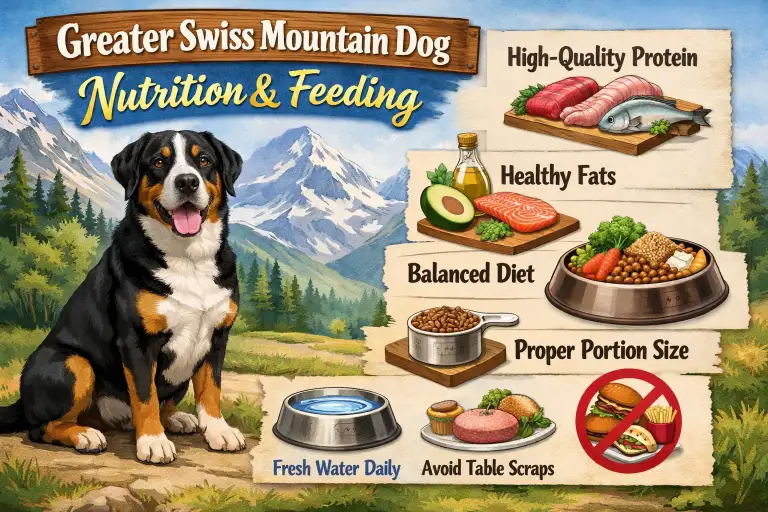
- High-quality animal protein: Supports muscle development and maintenance.
- Healthy fats: Provide energy and improve skin and coat condition.
- Controlled calcium and phosphorus: Important for proper bone development, especially in puppies.
- Glucosamine and chondroitin: Help support joint health in large dogs.
- Omega-3 fatty acids: Support inflammation control, brain health, and a healthy coat.
- Digestible carbohydrates: Provide steady energy without unnecessary calories.
Because Swissies grow quickly, puppy nutrition requires special attention. Feeding too many calories or excessive nutrients can contribute to abnormal bone development and joint stress.
Greater Swiss Mountain Dog Feeding Chart by Age
The amount of food your Greater Swiss Mountain Dog needs changes throughout life. Puppies require more frequent meals to support growth, while adults need carefully measured portions to maintain a healthy body condition.
Greater Swiss Mountain Dog Puppy Feeding Schedule
| Life Stage | Age | Daily Calories | Meals Per Day | Important Nutrients |
|---|---|---|---|---|
| Puppy | 8 weeks – 6 months | 1,500 – 2,500 calories | 3–4 meals | High-quality protein, controlled calcium, balanced minerals |
| Young Adult | 6 – 12 months | 2,000 – 3,500 calories | 2–3 meals | Controlled growth nutrition and joint support |
| Adult | 1 – 6 years | 3,000 – 4,000 calories | 2 meals | Balanced protein, fat, and calories |
| Senior | 7+ years | 2,500 – 3,500 calories | 1–2 meals | Joint support, digestible protein, lower calories |
How Much Should a Greater Swiss Mountain Dog Eat?
The exact amount of food depends on your dog’s weight, metabolism, activity level, and the calorie content of the food. A working or highly active Swissy may need more calories than a calm family companion.
Always monitor your dog’s body condition rather than relying only on feeding labels. A healthy Greater Swiss Mountain Dog should have visible waist definition and ribs that can be felt without being clearly visible.
Greater Swiss Mountain Dog Portion Guide by Weight
| Dog Weight | Portion Adjustment | Feeding Notes |
|---|---|---|
| 60–80 lbs | Standard portion | Suitable for normal activity levels |
| 80–100 lbs | Increase approximately 20% | Adjust based on exercise and metabolism |
| 100–120 lbs | Increase approximately 40% | Monitor weight carefully to prevent obesity |
| 120+ lbs | Increase carefully | Use body condition scoring before adding more food |
Best Dog Food for Greater Swiss Mountain Dogs
Choosing the best dog food for a Greater Swiss Mountain Dog depends on your dog’s individual needs. Some Swissies do well on premium kibble, while others benefit from fresh food, limited-ingredient diets, or veterinarian-formulated meals.
The ideal food should provide complete and balanced nutrition while supporting:
- Healthy weight management
- Strong bones and joints
- Muscle development
- Healthy digestion
- Shiny coat and healthy skin
- Long-term overall health
Types of Dog Food for Greater Swiss Mountain Dogs
| Food Type | Benefits | Possible Drawbacks |
|---|---|---|
| Dry Kibble | Affordable, convenient, easy to store | Quality varies between brands |
| Wet Food | Higher moisture and increased palatability | More expensive and shorter shelf life |
| Raw Diet | High protein and minimally processed | Requires careful preparation and safety handling |
| Fresh Food | Nutrient-rich and highly digestible | Usually more expensive |
| Homemade Diet | Complete ingredient control | Must be properly balanced |
How Many Times a Day Should You Feed a Greater Swiss Mountain Dog?
Meal frequency depends on your dog’s age and health.
- Greater Swiss Mountain Dog puppies: Feed 3–4 smaller meals per day.
- Adult Swissies: Feed 2 meals daily to maintain steady energy.
- Senior Swissies: Feed 1–2 smaller meals that are easier to digest.
Dividing meals instead of feeding one large portion may help reduce digestive stress and lower the risk of problems associated with eating too quickly.
Important Feeding Tips for Greater Swiss Mountain Dogs
- Avoid free-feeding because giant breeds can easily gain excess weight.
- Measure portions instead of guessing daily amounts.
- Change foods gradually over 7–10 days to prevent stomach upset.
- Choose large-breed formulas designed for giant dogs.
- Keep fresh water available at all times.
- Monitor weight regularly and adjust food as needed.
Foods to Avoid Feeding Your Greater Swiss Mountain Dog
While many human foods are safe for dogs in moderation, some foods can be dangerous or even toxic for your Greater Swiss Mountain Dog. Because Swissies are large dogs, owners sometimes assume small amounts of harmful foods are harmless, but certain ingredients can cause serious health problems.
| Food | Safe for Dogs? | Reason |
|---|---|---|
| Chocolate | No | Contains theobromine, which is toxic to dogs |
| Grapes and Raisins | No | Can cause kidney failure |
| Onions and Garlic | No | Can damage red blood cells |
| Xylitol (artificial sweetener) | No | Can cause dangerous blood sugar drops |
| Alcohol | No | Extremely dangerous for dogs |
| High-fat table scraps | Avoid | May contribute to digestive problems and weight gain |
Healthy Treats for Greater Swiss Mountain Dogs
Treats are useful for training and bonding, but they should make up only a small portion of your dog’s daily calories. Too many treats can quickly lead to weight gain, especially in large breeds like the Greater Swiss Mountain Dog.
Safe Treat Options
- Carrots: Low-calorie and crunchy treats that support dental health.
- Apple slices: Safe when seeds and core are removed.
- Blueberries: Rich in antioxidants and easy to portion.
- Plain pumpkin: May support healthy digestion.
- Unsalted peanut butter: Safe in small amounts if it does not contain xylitol.
Greater Swiss Mountain Dog Joint Health and Nutrition
Joint health is one of the most important nutrition concerns for giant breeds. Greater Swiss Mountain Dogs carry a lot of body weight, which puts extra pressure on their hips, elbows, and other joints.
A joint-supporting diet may include:
- Glucosamine
- Chondroitin
- Omega-3 fatty acids from fish oil
- High-quality protein for muscle support
- Controlled calories to prevent excess weight
Maintaining a healthy weight is one of the best ways to protect your Swissy’s joints throughout life.
Common Greater Swiss Mountain Dog Feeding Problems
Even with a carefully planned diet, some owners experience feeding challenges. Understanding the cause can help you find the right solution.
| Problem | Possible Cause | Solution |
|---|---|---|
| Picky eating | Food preference or sudden diet changes | Try different textures and introduce new foods slowly |
| Weight gain | Too many calories or treats | Reduce portions and increase controlled exercise |
| Weight loss | Not enough calories or possible health issue | Increase nutrition and consult a veterinarian if ongoing |
| Loose stool | Sudden food changes or sensitive digestion | Transition foods gradually and consider sensitive formulas |
| Eating too quickly | Fast eating habits | Use slow feeders and divide meals |
| Bloating risk | Large meals or eating too fast | Feed smaller meals and avoid intense exercise after eating |
Greater Swiss Mountain Dog Feeding Tips for a Long Healthy Life
- Choose a high-quality large-breed dog food.
- Feed measured portions based on weight and activity level.
- Keep your Swissy lean to reduce stress on joints.
- Provide fresh water throughout the day.
- Avoid sudden food changes.
- Schedule regular veterinary checkups.
- Adjust nutrition as your dog moves from puppy to adult to senior stages.
Frequently Asked Questions About Greater Swiss Mountain Dog Nutrition
What is the best food for a Greater Swiss Mountain Dog?
The best food for a Greater Swiss Mountain Dog is a high-quality large-breed formula containing balanced protein, healthy fats, essential vitamins, and joint-supporting nutrients. The ideal diet depends on your dog’s age, activity level, and health needs.
How much should a Greater Swiss Mountain Dog eat per day?
Most adult Greater Swiss Mountain Dogs eat approximately 3,000–4,000 calories per day, depending on their weight, activity level, and metabolism. Puppies and active dogs may require more carefully calculated portions.
How often should I feed my Greater Swiss Mountain Dog puppy?
Greater Swiss Mountain Dog puppies should usually eat 3–4 smaller meals per day. Multiple meals help support steady growth and prevent overeating during their rapid development stage.
Can Greater Swiss Mountain Dogs eat raw food?
Some Greater Swiss Mountain Dogs can eat raw diets, but they must be carefully balanced and safely prepared. A poorly designed raw diet may lack important nutrients or increase the risk of bacterial contamination.
Are Greater Swiss Mountain Dogs prone to obesity?
Yes, Greater Swiss Mountain Dogs can gain weight easily if they receive too many calories or treats. Maintaining a healthy body weight is important because excess weight increases stress on their joints and bones.
What human foods are safe for Greater Swiss Mountain Dogs?
Safe human foods include carrots, apples without seeds, blueberries, plain pumpkin, and small amounts of unsweetened peanut butter. Always introduce new foods slowly and avoid toxic ingredients.
What foods should Greater Swiss Mountain Dogs avoid?
Greater Swiss Mountain Dogs should never eat chocolate, grapes, raisins, onions, garlic, alcohol, or foods containing xylitol. These foods can cause serious health problems.
Do Greater Swiss Mountain Dogs need joint supplements?
Some Swissies may benefit from joint supplements containing glucosamine, chondroitin, or omega-3 fatty acids, especially older dogs or those with joint concerns. Always discuss supplements with your veterinarian before starting them.
How can I help my Greater Swiss Mountain Dog maintain a healthy weight?
Maintain a healthy weight by measuring meals, limiting treats, providing regular exercise, and adjusting calories according to your dog’s activity level and body condition.
Final Thoughts: Feeding Your Greater Swiss Mountain Dog the Right Way
A proper diet is one of the most important parts of caring for a Greater Swiss Mountain Dog. Because these dogs are large, powerful, and fast-growing, their nutrition needs careful attention throughout every stage of life.
Choosing quality food, controlling portions, supporting joint health, and monitoring your dog’s weight will help your Swissy stay healthy, active, and happy for years to come.
Every dog is different, so work with your veterinarian to create a feeding plan that matches your Greater Swiss Mountain Dog’s individual needs.

Ata Ur Rehman is the founder of Pet Age in Human Years Calculator, an educational platform that provides age conversion charts and lifespan guides for dogs, cats, birds, and other companion animals. His work focuses on helping pet owners understand how animal ages translate into human years using commonly accepted age conversion formulas and published lifespan averages.
The website compiles breed and species lifespan data from kennel clubs, breed organizations, and general animal lifespan studies to present simple and easy-to-understand guides for pet owners worldwide.
This website was created to centralize animal age conversion charts into one easy reference platform for pet owners.
This article is for general education. For symptoms, medication, diet changes, or health concerns, use a qualified veterinarian who can assess your individual pet.