On this page
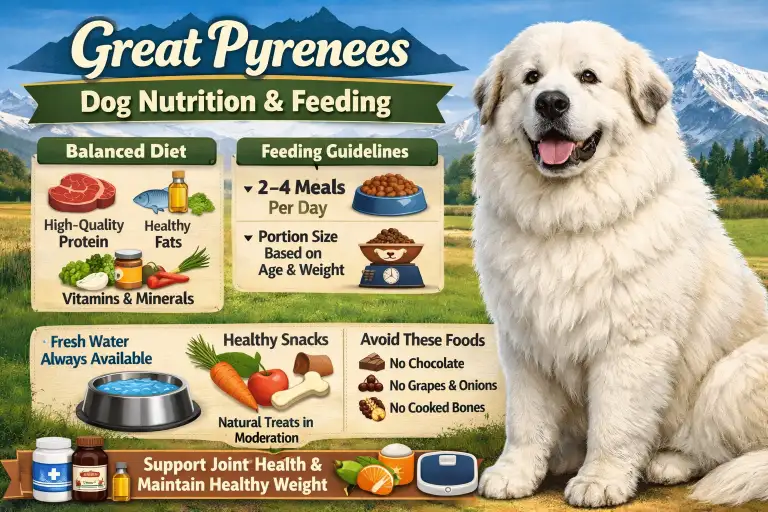
Feeding your Great Pyrenees the right diet is one of the most important things you can do to support a long, healthy, and active life. Because Great Pyrenees are a giant dog breed with unique growth patterns, large bones, and a natural tendency toward joint and weight problems, their nutrition needs careful attention.
A balanced Great Pyrenees diet affects much more than your dog’s weight. The right food supports healthy growth, strong bones, joint protection, muscle development, energy levels, immune health, digestion, skin, and their famous thick white coat.
Many owners wonder:
- What is the best food for Great Pyrenees?
- How much should a Great Pyrenees eat every day?
- What should I feed a Great Pyrenees puppy?
- How can I prevent obesity and joint problems?
This complete Great Pyrenees feeding guide explains everything you need to know about choosing the right food, understanding nutritional requirements, creating a feeding schedule, and avoiding common feeding mistakes.
What This Great Pyrenees Feeding Guide Covers
- The nutritional needs of Great Pyrenees puppies, adults, and seniors
- The ideal balance of protein, fat, carbohydrates, vitamins, and minerals
- How much food a Great Pyrenees should eat based on age and weight
- The best feeding schedule for giant breed dogs
- Different types of dog food and which options work best
- Foods that are safe and dangerous for Great Pyrenees
- Special diets for allergies, sensitive stomachs, and weight control
Unlike small and medium-sized breeds, Great Pyrenees require carefully controlled nutrition. Overfeeding during puppyhood can cause rapid growth, which may increase the risk of bone and joint problems. Feeding too many calories to adult dogs can quickly lead to obesity because of their large size and slower metabolism.
By following a proper feeding plan and choosing high-quality nutrition, your Great Pyrenees can maintain a healthy weight, strong joints, beautiful coat, and better quality of life.
Great Pyrenees Nutritional Requirements
Great Pyrenees have special dietary requirements because they are a giant breed developed to work as livestock guardians. Their bodies need nutrients that support powerful muscles, healthy joints, and steady energy without causing excessive weight gain.
The most important parts of a healthy Great Pyrenees diet include:
- High-quality protein for muscle development and maintenance
- Healthy fats for energy, skin health, and coat quality
- Controlled carbohydrates for daily activity without unnecessary calories
- Balanced minerals for proper bone and joint development
- Essential vitamins for immune support and overall health
Protein Requirements for Great Pyrenees
Protein is one of the most important nutrients for Great Pyrenees because it helps maintain strong muscles and supports healthy growth.
However, giant breed dogs need balanced protein levels rather than excessive amounts. Too much unbalanced nutrition during puppy growth can contribute to skeletal development problems.
Good protein sources include:
- Chicken
- Turkey
- Beef
- Fish
- Lamb
- Eggs
Healthy Fats for Skin and Coat Health
Great Pyrenees are known for their thick double coat, and healthy fats play an important role in maintaining soft skin and a shiny coat.
Important fat sources include:
- Fish oil
- Omega-3 fatty acids
- Chicken fat
- Flaxseed
Omega-3 fatty acids may also support joint health and help reduce inflammation, which is especially beneficial for large breeds.
Carbohydrates and Energy Needs
Carbohydrates provide energy for daily activities, but Great Pyrenees are not high-energy dogs compared to many working breeds. Too many calories from carbohydrates can contribute to unwanted weight gain.
Healthy carbohydrate sources include:
- Brown rice
- Sweet potatoes
- Oats
- Vegetables
Essential Vitamins and Minerals for Great Pyrenees
Large breed dogs require carefully balanced vitamins and minerals, especially during puppy development.
Calcium and Phosphorus Balance
Calcium and phosphorus are essential for strong bones, but the correct balance is extremely important for Great Pyrenees puppies.
Too much calcium or an incorrect mineral ratio can interfere with normal bone development. Choosing a food designed for large breed puppies is usually the safest option.
Important Vitamins and Minerals Include:
- Vitamin D: Helps regulate calcium absorption
- Zinc: Supports skin and coat health
- Vitamin E: Supports immune function
- Glucosamine and chondroitin: Support joint health
Great Pyrenees Diet by Life Stage
Your Great Pyrenees nutritional needs change throughout life. Puppies, adults, and senior dogs require different calorie levels and nutrient balances.
| Life Stage | Protein Range | Fat Range | Main Nutrition Goal |
|---|---|---|---|
| Great Pyrenees Puppy | 22–28% | 8–12% | Controlled growth, bone development, joint support |
| Adult Great Pyrenees | 18–25% | 5–10% | Maintain healthy weight and muscle |
| Senior Great Pyrenees | 16–22% | 4–8% | Support mobility and prevent weight gain |
Joint Health Nutrition for Great Pyrenees
Because Great Pyrenees are a giant breed, joint care should begin early. Nutrition can play an important role in maintaining mobility and reducing stress on their hips, elbows, and knees.
| Supplement | Benefits |
|---|---|
| Glucosamine | Supports cartilage and joint structure |
| Chondroitin | Helps maintain healthy joint function |
| Omega-3 Fish Oil | Supports joints, skin, and coat health |
A properly balanced diet helps your Great Pyrenees grow correctly as a puppy, maintain strength as an adult, and enjoy better mobility during senior years.
How Much Should You Feed a Great Pyrenees?
Knowing how much to feed a Great Pyrenees is essential because this giant breed can easily gain excess weight. Extra weight puts unnecessary pressure on their hips, joints, and bones, increasing the risk of mobility problems.
The correct amount of food depends on several factors:
- Age and life stage
- Current body weight
- Activity level
- Type of dog food
- Overall health condition
A working Great Pyrenees that spends time outdoors may require more calories than a mostly indoor companion dog. Always monitor your dog’s body condition and adjust portions when needed.
Daily Calorie Requirements for Great Pyrenees
| Life Stage | Weight Range | Approximate Daily Calories |
|---|---|---|
| Puppy | 30–50 lbs | 1,000–1,400 calories |
| Puppy | 50–100 lbs | 1,400–2,000 calories |
| Adult | 70–100 lbs | 1,200–1,800 calories |
| Adult | 100–130 lbs | 1,800–2,200 calories |
| Senior | 70–100 lbs | 1,000–1,600 calories |
| Senior | 100–130 lbs | 1,500–2,000 calories |
Great Pyrenees Feeding Schedule
A consistent feeding schedule helps prevent digestive problems and keeps your dog’s energy levels stable.
| Age | Meals Per Day | Feeding Tips |
|---|---|---|
| Great Pyrenees Puppy | 3–4 meals daily | Small meals support digestion and controlled growth |
| Adult Great Pyrenees | 2 meals daily | Helps maintain stable weight and energy |
| Senior Great Pyrenees | 2 meals daily | Adjust portions based on activity level |
How to Know If Your Great Pyrenees Is at a Healthy Weight
Weight management is one of the most important parts of Great Pyrenees care. A healthy dog should:
- Have a visible waist when viewed from above
- Have ribs that can be felt without pressing hard
- Move comfortably without difficulty
- Maintain good energy levels
If your Great Pyrenees is gaining weight, reduce unnecessary treats, measure meals carefully, and increase appropriate exercise.
Best Types of Food for Great Pyrenees
Choosing the best food for Great Pyrenees depends on your dog’s age, health, activity level, and personal needs. High-quality food should provide complete and balanced nutrition for large breeds.
Dry Dog Food (Kibble)
Kibble is one of the most popular choices for Great Pyrenees owners because it is affordable, convenient, and easy to store.
Benefits:
- Easy portion control
- Long shelf life
- Designed formulas for large breeds
- Convenient for daily feeding
Wet or Canned Dog Food
Canned food contains more moisture and can be useful for dogs that have trouble chewing or need extra hydration.
Benefits:
- More appealing taste
- Higher moisture content
- Helpful for older dogs
Raw Diet for Great Pyrenees
Some owners choose a raw diet because they believe it improves coat quality and digestion. However, raw feeding requires careful planning to ensure proper nutrition and food safety.
Before starting a raw diet, consult a veterinary professional to ensure your dog receives balanced nutrients.
Homemade Food for Great Pyrenees
Homemade meals can work for some dogs, but creating a balanced diet for a giant breed requires careful attention to protein, minerals, and calories.
Incorrect homemade diets may cause nutritional deficiencies, especially in growing puppies.
Safe and Toxic Foods for Great Pyrenees
Many owners share human foods with their dogs, but some foods can be dangerous. Knowing what your Great Pyrenees can and cannot eat helps prevent emergencies.
| Safe Foods | Foods to Avoid |
|---|---|
| Cooked chicken | Chocolate |
| Turkey | Grapes and raisins |
| Carrots | Onions and garlic |
| Pumpkin | Xylitol |
| Sweet potato | Macadamia nuts |
Treat Guidelines for Great Pyrenees
Treats are useful for training and bonding, but too many treats can quickly increase calorie intake.
Follow the general rule that treats should make up no more than 10% of your dog’s daily calories.
- Use small training treats for obedience practice
- Choose healthy snacks like carrots or apple slices
- Avoid treats with excessive sugar, fillers, or artificial ingredients
Special Diets for Great Pyrenees Health Problems
Some Great Pyrenees need special diets due to allergies, sensitive digestion, weight issues, or activity levels.
| Condition | Recommended Diet Approach |
|---|---|
| Sensitive stomach | Easy-to-digest food with gradual diet changes |
| Food allergies | Limited ingredient or single protein diets |
| Overweight Great Pyrenees | Lower calorie food with controlled portions |
| Underweight dog | Higher calorie meals with quality protein |
| Active working dog | Higher energy nutrition |
Common Great Pyrenees Feeding Problems
Picky Eating
Some Great Pyrenees can be selective eaters. Avoid constantly changing foods because it may create more feeding issues.
Helpful solutions include:
- Using consistent feeding times
- Adding healthy food toppers
- Offering fresh, high-quality food
Loose Stool or Digestive Problems
Sudden food changes are one of the most common causes of digestive upset.
When changing food:
- Mix old and new food gradually over 7–10 days
- Monitor stool quality
- Contact a veterinarian if problems continue
Overeating and Weight Gain
Great Pyrenees often enjoy food, but overeating can quickly lead to obesity.
Prevent weight gain by:
- Measuring every meal
- Limiting treats
- Providing regular exercise
Frequently Asked Questions About Feeding Great Pyrenees
What is the best food for a Great Pyrenees?
The best food for a Great Pyrenees is a high-quality large breed formula that provides balanced protein, controlled calories, healthy fats, and joint-supporting nutrients. The ideal choice depends on your dog’s age, activity level, and health needs.
How much food should a Great Pyrenees eat per day?
Most adult Great Pyrenees eat around 4–6 cups of quality dry food per day, divided into two meals. The exact amount depends on calorie content, weight, age, and activity level.
What should I feed a Great Pyrenees puppy?
Great Pyrenees puppies should eat a large-breed puppy formula designed for controlled growth. Puppy food should provide balanced protein and minerals without promoting overly rapid growth.
How many times a day should I feed my Great Pyrenees?
Puppies should usually eat 3–4 smaller meals daily. Adult and senior Great Pyrenees typically do well with two meals per day.
Can Great Pyrenees eat a raw diet?
Some Great Pyrenees owners choose raw feeding, but it requires careful planning to provide complete nutrition. Always research thoroughly and consult a veterinary professional before making major diet changes.
How do I help my overweight Great Pyrenees lose weight?
Weight loss should focus on controlled portions, fewer treats, proper exercise, and a balanced lower-calorie diet. Avoid rapid weight loss because it can affect health.
Do Great Pyrenees need joint supplements?
Not every dog requires supplements, but many large breeds benefit from nutrients such as glucosamine, chondroitin, and omega-3 fatty acids for long-term joint support.
What foods are toxic to Great Pyrenees?
Foods that are dangerous for Great Pyrenees include chocolate, grapes, raisins, onions, garlic, xylitol, and macadamia nuts. Avoid giving unknown human foods without checking their safety.
Final Thoughts: Creating the Best Diet for Your Great Pyrenees
A proper Great Pyrenees feeding plan is about balance, not simply giving more food because your dog is large. The right nutrition supports healthy growth, strong joints, a beautiful coat, and a longer life.
Choose high-quality food, measure portions carefully, maintain a healthy weight, and adjust your dog’s diet as they move from puppyhood to adulthood and senior years.
With the right diet and consistent care, your Great Pyrenees can remain a healthy, loyal, and happy companion for many years.

Ata Ur Rehman is the founder of Pet Age in Human Years Calculator, an educational platform that provides age conversion charts and lifespan guides for dogs, cats, birds, and other companion animals. His work focuses on helping pet owners understand how animal ages translate into human years using commonly accepted age conversion formulas and published lifespan averages.
The website compiles breed and species lifespan data from kennel clubs, breed organizations, and general animal lifespan studies to present simple and easy-to-understand guides for pet owners worldwide.
This website was created to centralize animal age conversion charts into one easy reference platform for pet owners.
This article is for general education. For symptoms, medication, diet changes, or health concerns, use a qualified veterinarian who can assess your individual pet.