On this page
Grooming a Kangal dog is an important part of keeping this powerful livestock guardian breed healthy, comfortable, and happy. The Kangal has a thick double coat designed to protect it from extreme weather conditions, including cold temperatures, heat, rain, and harsh outdoor environments. While this natural coat is one of the breed’s greatest strengths, it also requires proper care to prevent excessive shedding, skin problems, and coat buildup.
Many owners ask, “How do you groom a Kangal dog?” or “How often should a Kangal be brushed?” The answer depends on the season, coat condition, and your dog’s lifestyle. Unlike breeds that need frequent haircuts, Kangals mainly require regular brushing, occasional bathing, nail care, ear cleaning, and routine health checks.
Proper grooming does more than improve your Kangal’s appearance. It helps remove loose fur, dirt, and debris while allowing you to detect early signs of skin infections, parasites, allergies, or injuries hidden beneath their thick coat.
Regular grooming also strengthens the bond between you and your Kangal. Because Kangals are large and powerful dogs, getting them comfortable with brushing, handling, and routine care from an early age makes future grooming sessions much easier.
In this complete Kangal dog grooming guide, you will learn:
- How to care for a Kangal’s double coat
- How often you should brush your Kangal
- The best grooming tools for Kangal dogs
- How to manage heavy shedding seasons
- Bathing tips and common mistakes to avoid
- Nail, ear, teeth, and skin care routines
- Professional grooming vs home grooming
Why Grooming Is Important for a Kangal Dog
A Kangal’s thick coat provides natural protection, but without regular maintenance, dead hair can build up and create problems. Grooming helps keep the coat healthy while supporting your dog’s overall wellbeing.
| Grooming Benefit | Why It Matters |
|---|---|
| Healthy Coat | Removes loose fur and keeps the coat smooth |
| Reduced Shedding | Controls loose hair around your home |
| Better Skin Health | Helps identify rashes, infections, and parasites early |
| Comfort | Prevents tangles, mats, and irritation |
| Bonding | Builds trust and makes handling easier |
A well-maintained Kangal should have a clean, healthy-looking coat with no strong odor, excessive mats, or irritated skin. Regular grooming is especially important because the dense coat can hide small problems until they become more serious.
Understanding the Kangal Dog Coat
Before learning how to groom a Kangal, it is important to understand the structure of their coat.
Kangals have a short to medium-length double coat made up of two layers:
Kangal Undercoat
The undercoat is soft, thick, and dense. Its main purpose is insulation. It keeps your Kangal warm during cold weather and helps regulate body temperature during warmer months.
This layer is responsible for the heavy shedding that many Kangal owners notice, especially during seasonal changes.
Kangal Outer Coat
The outer coat consists of coarse guard hairs that protect the dog from:
- Rain
- Dirt
- Sun exposure
- Scratches
- Harsh outdoor conditions
The outer coat naturally repels moisture and does not require frequent washing.
Because of this double coat, Kangals should never be shaved unless medically necessary. Removing the coat can interfere with their natural temperature regulation and protection.
How Often Should You Groom a Kangal Dog?
The ideal grooming schedule depends on the time of year and your dog’s shedding level.
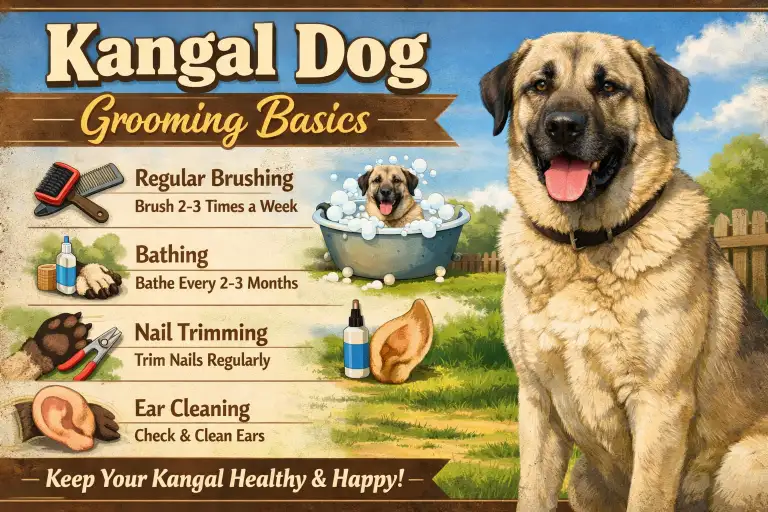
Most Kangals need brushing 2–3 times per week during normal periods. During heavy shedding seasons, grooming may need to increase to daily brushing.
Kangals usually experience major shedding during:
- Spring – when they lose their winter undercoat
- Fall – when they prepare for colder weather
During these periods, owners often describe their Kangal as “blowing their coat” because large amounts of loose fur come out.
Kangal Grooming Schedule
| Grooming Task | Recommended Frequency |
|---|---|
| Brushing | 2–3 times per week |
| Heavy shedding brushing | Daily during spring and fall |
| Bathing | Every few months or when dirty |
| Nail trimming | Every 4–6 weeks |
| Ear checking | Weekly |
| Teeth brushing | Several times per week |
| Skin inspection | Weekly |
Regular brushing prevents loose fur from collecting inside the coat and reduces the chance of painful mats developing.
Areas That Need Extra Attention
Some parts of a Kangal’s body are more likely to develop tangles or collect dirt:
- Behind the ears
- Around the neck
- Under the legs
- Between the toes
- Around the tail area
These areas should be checked during every grooming session.
A few minutes of regular maintenance is much easier than trying to remove large mats later.
Best Grooming Tools for a Kangal Dog
Using the correct grooming tools makes caring for a Kangal much easier. Because of their thick double coat, ordinary brushes designed for short-haired dogs are usually not enough.
The most useful Kangal grooming tools include:
| Grooming Tool | Purpose |
|---|---|
| Slicker Brush | Removes loose hair and small tangles |
| Undercoat Rake | Removes thick shedding undercoat |
| Pin Brush | Smooths and maintains the outer coat |
| Metal Comb | Checks for hidden mats |
| Deshedding Tool | Helps during heavy shedding seasons |
| Dog Shampoo | Keeps skin and coat clean |
When brushing your Kangal, always work gently. Pulling aggressively can damage the coat or make your dog uncomfortable with grooming.
Start with the areas where loose undercoat collects, then finish with a comb to check for remaining tangles.
Grooming a Kangal dog is an essential part of responsible ownership. This powerful Turkish livestock guardian breed is known for its impressive size, loyalty, and protective nature, but its thick double coat requires regular care to stay healthy.
Many owners search for “how to groom a Kangal dog” because Kangals have a unique coat designed to protect them from harsh weather conditions. Their dense undercoat provides insulation, while the coarse outer coat protects against dirt, rain, sun, and outdoor elements.
Although Kangals are considered a relatively low-maintenance breed compared with some long-haired dogs, they still require regular brushing, occasional bathing, nail trimming, ear cleaning, and skin checks.
A proper grooming routine helps:
- Reduce excessive shedding
- Prevent painful mats and tangles
- Keep the skin healthy
- Detect parasites and infections early
- Maintain a clean and comfortable coat
- Build trust between you and your dog
This complete Kangal dog grooming guide explains everything you need to know about brushing, bathing, shedding seasons, grooming tools, and daily care.
Understanding the Kangal Dog Coat
The Kangal has a short to medium-length double coat made of two important layers.
Kangal Undercoat
The undercoat is soft, dense, and thick. Its main job is temperature control. It keeps the Kangal warm during cold months and helps protect the dog from extreme outdoor conditions.
This layer is responsible for the heavy shedding that owners often notice during seasonal changes.
Kangal Outer Coat
The outer coat contains coarse guard hairs that protect the dog from:
- Rain
- Dirt
- Sun exposure
- Scratches
- Environmental debris
The outer coat naturally protects the dog and should not be shaved unless there is a medical reason.
How Often Should You Groom a Kangal Dog?
Most Kangals need brushing 2–3 times per week during normal periods. However, grooming frequency increases during heavy shedding seasons.
Kangals typically shed heavily during:
- Spring: Removing their thick winter undercoat
- Fall: Preparing their coat for colder weather
During these periods, daily brushing may be necessary.
Kangal Grooming Schedule
| Grooming Task | Frequency |
|---|---|
| Brushing | 2–3 times weekly |
| Heavy shedding brushing | Daily during spring and fall |
| Bathing | Every few months or when dirty |
| Nail trimming | Every 4–6 weeks |
| Ear cleaning | Weekly check |
| Teeth brushing | 2–3 times per week |
| Skin inspection | Weekly |
Regular grooming prevents loose hair buildup and allows you to find skin problems before they become serious.
Best Brushes and Grooming Tools for a Kangal Dog
Choosing the right grooming tools makes maintaining a Kangal’s thick coat much easier.
Recommended Kangal Grooming Tools
| Tool | Purpose |
|---|---|
| Slicker Brush | Removes loose fur and small tangles |
| Undercoat Rake | Removes dead undercoat during shedding |
| Pin Brush | Smooths the outer coat |
| Metal Comb | Finds hidden mats |
| Deshedding Tool | Controls seasonal shedding |
| Dog Shampoo | Cleans without damaging natural oils |
When brushing your Kangal, always be gentle. Their coat protects them, and aggressive brushing can irritate the skin.
How to Brush a Kangal Dog Properly
A proper brushing routine helps keep the coat healthy and reduces shedding around your home.
Follow these steps:
- Start with an undercoat rake to remove loose fur.
- Brush gently in the direction of hair growth.
- Focus on areas that collect mats:
- Behind the ears
- Under the legs
- Around the tail
- Neck area
- Use a metal comb to check for hidden tangles.
- Finish with a pin brush to smooth the coat.
During shedding season, brushing your Kangal outside can make cleanup much easier.
How Often Should You Bathe a Kangal Dog?
Kangals do not need frequent baths because their coat naturally protects itself.
Most Kangals only need bathing:
- Every few months
- After getting extremely dirty
- When they develop an unpleasant odor
Over-bathing can remove natural oils and cause dry skin.
Kangal Bathing Tips
When bathing your Kangal:
- Use a dog-safe shampoo
- Completely soak the thick coat
- Rinse thoroughly
- Avoid getting water inside the ears
- Dry the undercoat completely
A damp undercoat can create skin irritation or unpleasant odors.
Kangal Nail, Ear, Teeth, and Skin Care
Grooming is not only about brushing. Other areas require regular attention.
Nail Care
Long nails can affect walking comfort and posture.
Trim your Kangal’s nails every:
4–6 weeks
Signs nails need trimming:
- Clicking sounds on hard floors
- Nails touching the ground while standing
- Difficulty walking comfortably
Ear Cleaning
Check your Kangal’s ears weekly.
Look for:
- Redness
- Bad odor
- Excess wax
- Scratching
- Head shaking
Clean only the outer ear using a veterinarian-approved ear cleaner.
Teeth Cleaning
Dental care helps prevent:
- Bad breath
- Gum disease
- Tooth problems
Brush your Kangal’s teeth several times per week using dog-safe toothpaste.
Skin Checks
Because Kangals have thick coats, skin problems can sometimes remain hidden.
During grooming, check for:
- Hot spots
- Fleas and ticks
- Skin redness
- Lumps or bumps
- Dry patches
Early detection makes treatment easier.
Seasonal Kangal Grooming Tips
Spring Grooming
Spring is usually the heaviest shedding season.
Increase:
- Brushing frequency
- Undercoat removal
- Skin inspections
Summer Grooming
During warmer months:
- Keep the coat clean
- Check for ticks
- Avoid shaving
- Provide shade and fresh water
The double coat helps regulate temperature, so removing it is unnecessary.
Winter Grooming
During winter:
- Keep the undercoat healthy
- Avoid excessive bathing
- Make sure the coat stays dry
Common Kangal Grooming Mistakes to Avoid
| Mistake | Why It Causes Problems | Better Approach |
|---|---|---|
| Shaving the coat | Removes natural protection | Keep the double coat intact |
| Bathing too often | Causes dry skin | Bathe only when needed |
| Using the wrong brush | May damage the coat | Use double-coat grooming tools |
| Ignoring mats | Can cause skin irritation | Brush regularly |
| Skipping nail care | Causes discomfort | Trim regularly |
Kangal Dog Grooming FAQs
How often should you groom a Kangal dog?
A Kangal should be brushed 2–3 times per week during normal periods. During spring and fall shedding seasons, daily brushing may be needed to remove loose undercoat.
Do Kangal dogs shed a lot?
Yes, Kangals shed moderately throughout the year and heavily during seasonal shedding periods. Their thick double coat produces large amounts of loose fur during spring and fall.
Can you shave a Kangal dog?
No. A Kangal should not be shaved unless recommended by a veterinarian for medical reasons. Their double coat helps regulate body temperature and protects their skin.
What is the best brush for a Kangal dog?
The best brushes for Kangals include an undercoat rake, slicker brush, pin brush, and metal comb. These tools help remove loose fur without damaging the coat.
How do I stop my Kangal from shedding so much?
You cannot completely stop shedding, but you can manage it by:
- Brushing regularly
- Using proper deshedding tools
- Maintaining a healthy diet
- Grooming more often during shedding seasons
How often should a Kangal be bathed?
Most Kangals only need bathing every few months or when they become dirty. Frequent bathing can remove natural oils from their coat.
Do Kangal dogs need professional grooming?
Professional grooming is not always necessary, but it can be helpful for large Kangals that are difficult to handle, especially during heavy shedding periods.
How do I remove mats from a Kangal’s coat?
Use a metal comb or undercoat rake and gently work through the affected area. Never pull aggressively because mats can hurt the skin.
Are Kangals high-maintenance dogs?
Kangals are not considered high-maintenance dogs, but their size and thick double coat require regular brushing and basic grooming care.
What grooming routine is best for a Kangal puppy?
Start grooming your Kangal puppy early with short, positive sessions. Teach them to accept brushing, nail trimming, and handling so they become comfortable as adults.

Ata Ur Rehman is the founder of Pet Age in Human Years Calculator, an educational platform that provides age conversion charts and lifespan guides for dogs, cats, birds, and other companion animals. His work focuses on helping pet owners understand how animal ages translate into human years using commonly accepted age conversion formulas and published lifespan averages.
The website compiles breed and species lifespan data from kennel clubs, breed organizations, and general animal lifespan studies to present simple and easy-to-understand guides for pet owners worldwide.
This website was created to centralize animal age conversion charts into one easy reference platform for pet owners.
This article is for general education. For symptoms, medication, diet changes, or health concerns, use a qualified veterinarian who can assess your individual pet.