On this page
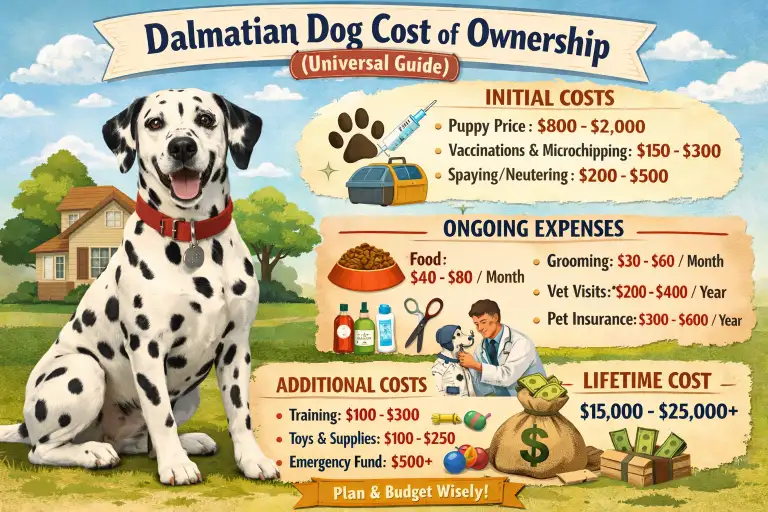
If you are searching for how much a Dalmatian costs, you are already making a responsible decision. Many people only consider the Dalmatian puppy price or adoption fee, but the true cost of owning this active breed includes food, veterinary care, training, grooming, insurance, and unexpected expenses.
The cost of owning a Dalmatian is a long-term commitment. This intelligent and energetic breed requires proper nutrition, regular exercise, preventive healthcare, and training. Understanding the real expenses before bringing a Dalmatian home can help you decide if this breed fits your budget.
Dalmatians are not considered a low-cost dog breed. Their size, energy level, and breed-specific health concerns can increase ownership expenses over time. This guide covers the realistic Dalmatian ownership cost, including first-year expenses, monthly costs, medical care, and lifetime expenses.
How Much Does a Dalmatian Cost?
The cost of a Dalmatian depends on whether you buy a puppy from a breeder, adopt an adult dog, and where you live. The initial purchase price is only one part of the total expense.
A responsible owner should consider:
- Dalmatian puppy purchase price or adoption fee
- Initial veterinary visits and vaccinations
- BAER hearing testing
- Training classes
- Food and daily supplies
- Emergency medical expenses
Dalmatian First-Year Cost: Puppy vs Adult Dog
The first year is usually the most expensive because new owners must pay for setup costs, medical care, training, and essential supplies.
| Expense Category | Dalmatian Puppy | Adult Dalmatian |
|---|---|---|
| Purchase or adoption fee | Higher | Lower |
| Vaccinations and vet visits | Higher | Moderate |
| BAER hearing test | Recommended | May already be completed |
| Spay/neuter procedure | Usually required | May already be done |
| Training expenses | Higher | Moderate |
| Supplies and equipment | Higher | Moderate |
Planning your budget before bringing home a Dalmatian prevents financial stress and helps you provide better care throughout your dog’s life.
Monthly Cost of Owning a Dalmatian
After the first year, Dalmatian expenses become more predictable. However, owners should continue budgeting for food, healthcare, prevention, training, and replacement supplies.
| Monthly Expense | Estimated Cost Level |
|---|---|
| High-quality dog food | Moderate |
| Flea, tick, and heartworm prevention | Low to moderate |
| Toys and enrichment activities | Low to moderate |
| Grooming supplies | Low |
| Training and activities | Moderate |
Annual Dalmatian Ownership Expenses
The average yearly cost of owning a Dalmatian includes routine veterinary care, preventive treatments, food, and general maintenance.
| Annual Expense | Cost Level |
|---|---|
| Veterinary checkups | Moderate |
| Vaccinations | Moderate |
| Preventive medications | Moderate |
| Grooming services | Low to moderate |
| Replacement supplies | Low to moderate |
Dalmatian Health Costs and Medical Expenses
One of the biggest factors affecting the lifetime cost of a Dalmatian is healthcare. Like all breeds, Dalmatians can develop certain health problems that may increase veterinary expenses.
Common Dalmatian health concerns include:
- Hearing problems requiring BAER testing
- Urinary stones requiring prevention or treatment
- Skin allergies and medication costs
- Emergency veterinary care
| Health Expense | Possible Cost Level |
|---|---|
| BAER hearing test | Low to moderate |
| Urinary stone treatment | High |
| Allergy treatment | Moderate |
| Emergency surgery | Very high |
Is Pet Insurance Worth It for a Dalmatian?
Many Dalmatian owners consider pet insurance because unexpected veterinary bills can become expensive. Insurance costs depend on your dog’s age, location, coverage level, and provider.
Some owners choose insurance, while others create an emergency savings fund specifically for veterinary expenses. The important thing is having a plan before a medical emergency happens.
Dalmatian Lifetime Cost: How Much Will You Spend?
Dalmatians typically live around 12 to 14 years. Over their lifetime, the total cost can become significant because owners pay for food, healthcare, supplies, training, and senior care.
| Life Stage | Expected Cost Pattern |
|---|---|
| Puppy year | Highest expenses |
| Adult years | Regular yearly costs |
| Senior years | Higher medical expenses |
Hidden Costs of Owning a Dalmatian
Many new owners forget about additional expenses that appear throughout a dog’s life.
| Hidden Expense | Why It Matters |
|---|---|
| Pet boarding | Needed during vacations or travel |
| Dental cleaning | Can become expensive |
| Damaged furniture | Active dogs may cause wear |
| New toys and beds | Regular replacement is needed |
| Special diets | Required for some health conditions |
Are Dalmatians Expensive to Own?
Yes, Dalmatians can be more expensive than many smaller dog breeds because they require quality food, regular exercise, training, and preventive healthcare.
However, with proper planning, budgeting, and responsible care, owning a Dalmatian can be a rewarding experience. These loyal, intelligent, and energetic dogs make wonderful companions for owners who are prepared for the financial commitment.
Frequently Asked Questions About Dalmatian Cost
How much does a Dalmatian puppy cost?
The price of a Dalmatian puppy depends on the breeder, location, pedigree, and health testing. Responsible breeders may charge more because of proper health screening and care.
How much does it cost per month to own a Dalmatian?
Monthly Dalmatian expenses usually include food, preventive medications, toys, and routine care. Costs vary depending on your location and lifestyle.
Are Dalmatians expensive dogs?
Dalmatians are not the most expensive breed, but they are not a budget breed either. Their energy level and healthcare needs require ongoing financial planning.
What is the lifetime cost of a Dalmatian?
The lifetime cost of owning a Dalmatian can be substantial because expenses continue throughout their 12–14 year lifespan.
For more information about Dalmatian health, lifespan, and breed characteristics, visit the American Kennel Club’s Dalmatian guide.

Ata Ur Rehman is the founder of Pet Age in Human Years Calculator, an educational platform that provides age conversion charts and lifespan guides for dogs, cats, birds, and other companion animals. His work focuses on helping pet owners understand how animal ages translate into human years using commonly accepted age conversion formulas and published lifespan averages.
The website compiles breed and species lifespan data from kennel clubs, breed organizations, and general animal lifespan studies to present simple and easy-to-understand guides for pet owners worldwide.
This website was created to centralize animal age conversion charts into one easy reference platform for pet owners.
This article is for general education. For symptoms, medication, diet changes, or health concerns, use a qualified veterinarian who can assess your individual pet.