On this page
Many people assume that grooming a Vizsla is effortless because of the breed’s short, smooth coat. Unlike long-haired breeds, Vizslas do not require haircuts, trimming, or regular visits to a professional groomer. However, that simplicity often causes owners to underestimate the importance of a proper grooming routine.
In reality, Vizsla grooming is primarily about skin health, shedding management, and overall comfort rather than coat styling. Because Vizslas have a short, single-layer coat with very little insulation, dirt, allergens, dead hair, and excess oils sit directly on the skin instead of becoming trapped in thick fur. Without regular grooming, these irritants can contribute to itching, dry skin, unpleasant odor, excessive shedding, and coat dullness.
Regular grooming also supports the active lifestyle that Vizslas are known for. As energetic sporting dogs that spend significant time outdoors, they frequently come into contact with mud, pollen, grass, dust, and environmental allergens. Routine brushing and cleaning help remove these irritants before they create skin problems.
Another major benefit of grooming is early detection of health issues. Weekly hands-on checks make it easier to spot redness, hot spots, ear irritation, unusual shedding, parasites, lumps, or changes in skin condition before they become more serious problems.
Finally, grooming sessions strengthen the bond between owner and dog. Vizslas are highly sensitive and people-oriented companions, and positive grooming experiences help build trust while reducing anxiety around nail trims, bathing, and veterinary handling.
Do Vizslas Shed? Understanding the Vizsla Coat Type
One of the most common questions owners ask is: Do Vizslas shed?
The answer is yes. Although Vizslas are considered low to moderate shedders, they still lose hair throughout the year. Unlike double-coated breeds such as Golden Retrievers or German Shepherds, Vizslas have a short, smooth, single-layer coat without an undercoat. Their shedding tends to be lighter but more constant.
Because Vizsla hair is short and stiff, owners often notice it sticking to clothing, furniture, bedding, and car seats rather than collecting in visible piles around the home.
Regular brushing helps remove loose hair before it spreads around the house while also distributing natural skin oils that keep the coat healthy and shiny.
Vizslas are also known for having relatively sensitive skin. Excessive bathing can strip away protective oils, while insufficient grooming allows dirt and allergens to accumulate. Maintaining a balanced grooming schedule is essential for healthy skin and coat maintenance.
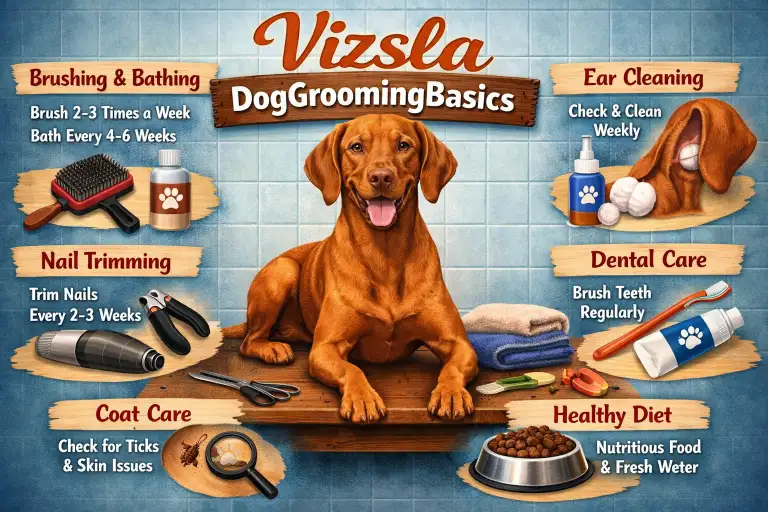
Vizsla Grooming Schedule
| Grooming Task | Recommended Frequency | Purpose |
|---|---|---|
| Brushing | 1–2 times weekly | Controls shedding and distributes natural oils |
| Bathing | Every 4–8 weeks | Removes dirt and allergens without drying skin |
| Nail Trimming | Every 2–4 weeks | Prevents discomfort and joint stress |
| Ear Cleaning | Every 2–4 weeks | Reduces wax buildup and infection risk |
| Teeth Brushing | 2–3 times weekly | Supports dental health and fresher breath |
| Skin Inspection | Weekly | Helps detect irritation and skin issues early |
Very active Vizslas that swim frequently or spend significant time outdoors may require slightly more frequent grooming, while indoor companion dogs often remain comfortable on the lower end of these recommendations.
The good news for owners is that Vizslas do not require clipping, shaving, or breed-specific styling. A simple maintenance routine is usually all that is needed.
How to Groom a Vizsla at Home
Learning how to groom a Vizsla at home is surprisingly straightforward. Because their coat remains short throughout the year, owners can usually complete the entire routine in less than thirty minutes.
The first step is brushing. Weekly brushing removes loose hair, stimulates circulation, and distributes natural oils across the coat. Most owners find that using a rubber grooming mitt or soft bristle brush works best for this breed.
Pay particular attention to the neck, chest, shoulders, and sides where loose hair tends to collect. Gentle pressure is sufficient because aggressive brushing can irritate sensitive skin.
Bathing should only occur when necessary. Most healthy Vizslas require bathing every four to eight weeks unless they become especially muddy or develop a strong odor. Frequent bathing can remove protective oils and lead to dryness or itching.
Always choose a dog shampoo designed for sensitive skin. Human shampoos often contain ingredients that disrupt the natural pH balance of canine skin and may increase irritation.
Use lukewarm water and thoroughly rinse the coat after shampooing. Residual shampoo left on the skin is one of the most common causes of post-bath itching in short-coated breeds.
Essential Vizsla Grooming Tools
| Tool | Purpose | Frequency of Use |
|---|---|---|
| Rubber grooming mitt | Removes loose hair and dirt | 1–2 times weekly |
| Soft bristle brush | Polishes coat and distributes oils | Weekly |
| Sensitive skin dog shampoo | Cleans skin and coat safely | Every 4–8 weeks |
| Microfiber towels | Drying after baths | After every bath |
| Nail clippers or grinder | Maintains proper nail length | Every 2–4 weeks |
Keep grooming sessions short, positive, and rewarding. Vizslas respond exceptionally well to praise and consistency, making early grooming experiences especially important for puppies.
Vizsla Nail Care, Ear Cleaning, and Dental Hygiene
Coat maintenance is only one part of a complete grooming routine. Nail care, ear cleaning, and dental hygiene are equally important for long-term health.
Vizsla nails should generally be trimmed every two to four weeks. If you can hear nails clicking on hard flooring, they are likely overdue for trimming. Overgrown nails can alter movement patterns and place unnecessary strain on joints and ligaments.
Ear care is another important consideration because Vizslas have floppy ears that can trap moisture and debris. Check the ears weekly for redness, odor, discharge, or excessive wax buildup.
Dental care should not be overlooked either. Plaque accumulation can occur quickly and may contribute to bad breath, gum disease, and tooth loss later in life. Brushing your Vizsla’s teeth several times per week significantly improves long-term oral health.
Common Grooming Problems in Vizslas
| Problem | Common Symptoms | Likely Cause | Recommended Action |
|---|---|---|---|
| Overgrown nails | Clicking sounds while walking | Infrequent trimming | Trim nails or seek professional help |
| Ear infections | Odor, redness, head shaking | Moisture buildup | Clean ears and consult a veterinarian if needed |
| Bad breath | Persistent odor from the mouth | Plaque accumulation | Increase brushing frequency |
| Dry skin | Flaking and scratching | Excessive bathing or harsh shampoos | Use gentler products and reduce baths |
| Hot spots | Red, irritated patches | Moisture and skin irritation | Seek veterinary advice if severe |
Common Vizsla Grooming Mistakes to Avoid
Despite their low-maintenance reputation, several grooming mistakes are commonly seen in this breed.
The most common error is bathing too frequently. Excessive bathing removes natural skin oils and often results in itching, dryness, and irritation.
Another mistake is using human shampoo instead of products formulated specifically for dogs. Human products frequently disrupt the skin barrier and worsen existing sensitivities.
Owners should also avoid shaving a Vizsla. Although their coat is short, it still provides important protection from sunlight, temperature extremes, and environmental irritants.
Grooming requirements may also change with age. Puppies benefit from very short and positive sessions to build confidence, while senior Vizslas often need more frequent nail maintenance due to reduced activity levels.
During seasonal shedding periods in spring and fall, increasing brushing sessions can significantly reduce hair around the home and improve coat condition.
Do Vizslas Need Professional Grooming?
Most Vizslas do not require regular professional grooming appointments. Their grooming needs are usually simple enough to manage at home with minimal equipment and a consistent routine.
Professional groomers can still be helpful for difficult nail trims, deep cleaning, or dogs that become anxious during grooming sessions.
If you notice persistent redness, skin sores, unusual hair loss, strong ear odor, or recurring irritation, a veterinary examination is recommended rather than additional grooming.
| Task | Home or Professional | Recommended Frequency |
|---|---|---|
| Brushing | Home | Weekly |
| Bathing | Home | Every 4–8 weeks |
| Nail Trimming | Home or Professional | Every 2–4 weeks |
| Ear Cleaning | Home | Every 2–4 weeks |
| Skin Problems | Veterinarian | As needed |
With a simple routine and consistent care, Vizsla grooming remains quick, affordable, and easy to maintain. Regular grooming not only keeps your Vizsla looking great but also contributes significantly to long-term health, comfort, and quality of life.
Frequently Asked Questions About Vizsla Grooming
How often should you groom a Vizsla?
Most Vizslas benefit from brushing once or twice weekly, bathing every four to eight weeks, and nail trims every two to four weeks.
Are Vizslas high-maintenance dogs?
No. Vizslas are considered low-maintenance in terms of coat care, but they still require routine skin, ear, nail, and dental maintenance.
Do Vizslas need haircuts?
No. Vizslas do not require clipping, trimming, or haircuts because their coat naturally stays short.
What is the best brush for a Vizsla?
A rubber grooming mitt or soft bristle brush is usually the best choice for removing loose hair while protecting sensitive skin.
Can you shave a Vizsla in summer?
No. Shaving removes the coat’s natural protection against sunlight and environmental exposure and is generally not recommended.

Ata Ur Rehman is the founder of Pet Age in Human Years Calculator, an educational platform that provides age conversion charts and lifespan guides for dogs, cats, birds, and other companion animals. His work focuses on helping pet owners understand how animal ages translate into human years using commonly accepted age conversion formulas and published lifespan averages.
The website compiles breed and species lifespan data from kennel clubs, breed organizations, and general animal lifespan studies to present simple and easy-to-understand guides for pet owners worldwide.
This website was created to centralize animal age conversion charts into one easy reference platform for pet owners.
This article is for general education. For symptoms, medication, diet changes, or health concerns, use a qualified veterinarian who can assess your individual pet.