On this page
If you’re wondering, “How old is my Weimaraner in human years?”, you’re not alone. Many owners search for a reliable Weimaraner age calculator to understand their dog’s real age and life stage.
Large-breed dogs like Weimaraners do not age at the same rate as humans or smaller breeds. The old rule that 1 dog year equals 7 human years is inaccurate and doesn’t reflect modern canine aging science.
A modern Weimaraner age to human years calculator uses large-breed-specific aging models that consider:
- Rapid development during puppyhood
- Slower aging during adult years
- Earlier senior aging compared to small breeds
This provides a more realistic picture of your dog’s physical, mental, and developmental age.
How Does a Weimaraner Age Calculator Work?
Instead of multiplying by seven, modern dog age calculators use non-linear aging curves based on veterinary research and lifespan studies.
- The first two years of a Weimaraner’s life equal a large jump in human years.
- Adult years progress more slowly.
- Senior years reflect accelerated biological aging.
Knowing your dog’s true age helps you make better decisions about nutrition, exercise, training, and veterinary care.
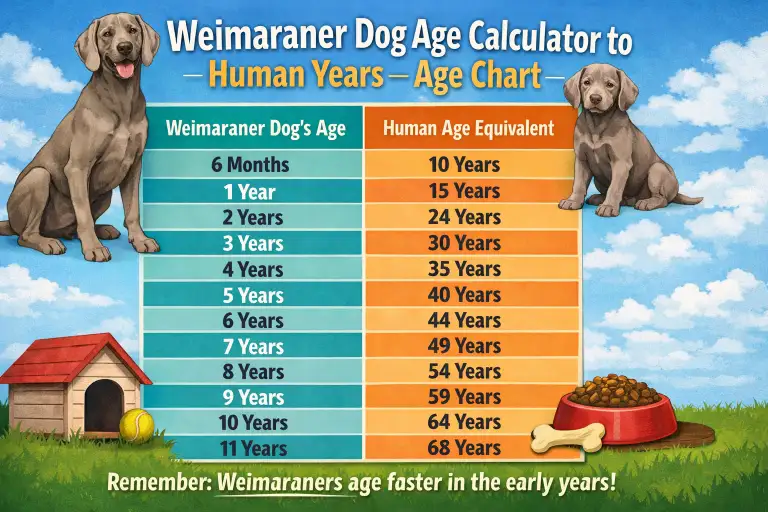
Quick Weimaraner Age to Human Years Chart
| Weimaraner Age | Human Age Equivalent | Life Stage |
|---|---|---|
| 6 months | 10 years | Puppy |
| 1 year | 15 years | Puppy / Adolescent |
| 2 years | 24 years | Adult |
| 3 years | 28 years | Adult |
| 5 years | 36 years | Adult |
| 7 years | 44 years | Mature Adult |
| 9 years | 54 years | Senior |
| 10 years | 60 years | Senior |
| 12 years | 70 years | Senior |
These numbers are estimates. Genetics, activity level, diet, and overall health can affect how quickly an individual Weimaraner ages.
Complete Weimaraner Dog Age Chart
| Dog Age | Human Years | Life Stage |
|---|---|---|
| 3 months | 5 years | Puppy |
| 6 months | 10 years | Puppy |
| 1 year | 15 years | Puppy / Teen |
| 2 years | 24 years | Adult |
| 3 years | 28 years | Adult |
| 4 years | 32 years | Adult |
| 5 years | 36 years | Adult |
| 6 years | 40 years | Adult |
| 7 years | 44 years | Mature Adult |
| 8 years | 49 years | Mature |
| 9 years | 54 years | Senior |
| 10 years | 60 years | Senior |
| 11 years | 65 years | Senior |
| 12 years | 70 years | Senior |
When Is a Weimaraner Considered a Senior?
| Life Stage | Typical Age | Description |
|---|---|---|
| Puppy | 0–1 Year | Fast growth and learning |
| Adult | 2–7 Years | Peak health and energy |
| Senior | 8–9+ Years | Slower movement and age-related changes |
Most Weimaraners are considered seniors around 8 to 9 years old, even if they still appear energetic and playful.
Why One Dog Year Is Not Equal to Seven Human Years
The famous 7 dog years to 1 human year formula is outdated and inaccurate.
Weimaraners age differently because:
- Puppies mature much faster than human children.
- Large breeds age faster than small breeds.
- Dogs do not age in a straight line.
- Aging speeds change throughout life.
Dog Aging Models Compared
| Model | Method | Accuracy |
|---|---|---|
| 7-Year Rule | Multiply every year by 7 | Poor |
| Linear Models | Same increase every year | Limited |
| Modern Science-Based Models | Non-linear aging curves | Best for Weimaraners |
Weimaraner Life Stages Explained
Puppy Stage (0–1 Year)
- Rapid growth and development
- Learning social skills and training
- High energy levels
- Important period for nutrition and exercise
Adult Stage (2–7 Years)
- Peak physical condition
- Strong muscles and stamina
- Stable behavior and maturity
- Ideal age for regular activities and sports
Senior Stage (8+ Years)
Senior Weimaraners may become slower but can still enjoy a high quality of life.
| Sign | Meaning | Owner Action |
|---|---|---|
| Slower movement | Joint stiffness | Gentle exercise |
| Sleeping more | Lower energy | Maintain routine |
| Weight gain | Slower metabolism | Adjust food intake |
| Gray hair | Normal aging | No treatment needed |
| Trouble jumping | Joint issues | Visit your veterinarian |
Weimaraner Lifespan
The average Weimaraner lifespan is between 10 and 13 years. Genetics, body weight, exercise, diet, and veterinary care all influence longevity.
Factors That Affect Lifespan
| Factor | Effect on Aging |
|---|---|
| Genetics | Can influence lifespan and disease risk |
| Weight | Excess weight stresses joints and organs |
| Diet | Quality nutrition supports healthy aging |
| Exercise | Maintains muscle and heart health |
| Veterinary Care | Early detection of health problems |
Senior Care Tips for Older Weimaraners
- Feed an age-appropriate diet.
- Keep exercise gentle and consistent.
- Provide comfortable bedding.
- Monitor changes in behavior and mobility.
- Schedule regular veterinary checkups.
Frequently Asked Questions
How long do Weimaraners live?
Most Weimaraners live between 10 and 13 years.
Is a 10-year-old Weimaraner old?
Yes. A 10-year-old Weimaraner is considered a senior dog.
When does a Weimaraner become a senior?
Most become seniors around 8 to 9 years of age.
Do Weimaraners age faster than small dogs?
Yes. Large breeds generally age faster and have shorter lifespans than small breeds.
Should senior Weimaraners still exercise?
Yes. Older dogs benefit from regular, gentle exercise to maintain muscle and joint health.

Ata Ur Rehman is the founder of Pet Age in Human Years Calculator, an educational platform that provides age conversion charts and lifespan guides for dogs, cats, birds, and other companion animals. His work focuses on helping pet owners understand how animal ages translate into human years using commonly accepted age conversion formulas and published lifespan averages.
The website compiles breed and species lifespan data from kennel clubs, breed organizations, and general animal lifespan studies to present simple and easy-to-understand guides for pet owners worldwide.
This website was created to centralize animal age conversion charts into one easy reference platform for pet owners.
This article is for general education. For symptoms, medication, diet changes, or health concerns, use a qualified veterinarian who can assess your individual pet.