On this page
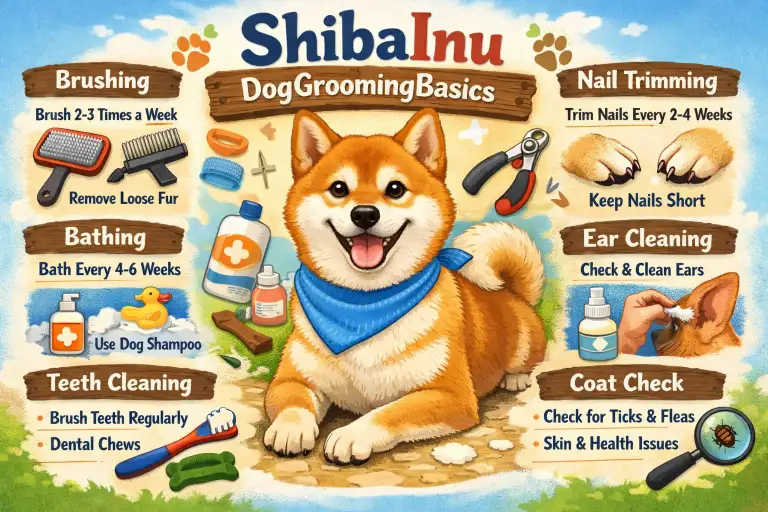
Shiba Inu grooming may seem easy because of their naturally clean appearance, but this Japanese breed has a thick double coat that requires proper maintenance throughout the year. While Shiba Inus rarely need haircuts or frequent baths, they do need regular brushing, seasonal deshedding, nail trimming, and routine hygiene care to stay healthy and comfortable.
If you are wondering how to groom a Shiba Inu, how often they shed, or whether Shiba Inus should ever be shaved, this complete grooming guide covers everything owners need to know.
Shiba Inu Grooming Overview
| Grooming Task | Recommended Frequency | Home or Professional |
|---|---|---|
| Brushing (normal season) | 1-2 times weekly | Home |
| Brushing (shedding season) | 3-5 times weekly | Home |
| Bathing | Every 6-8 weeks | Home or Groomer |
| Nail Trimming | Every 3-4 weeks | Home or Groomer |
| Ear Cleaning | Every 3-4 weeks | Home |
| Teeth Brushing | 2-3 times weekly | Home |
| Professional Deshedding | During coat blow seasons | Recommended |
Understanding the Shiba Inu Double Coat
The Shiba Inu has a dense double coat consisting of a coarse outer layer called the guard coat and a soft insulating undercoat. Together, these layers protect the dog from cold weather, heat, moisture, and dirt.
The outer guard hairs repel water and debris, while the undercoat regulates body temperature throughout the year. This natural insulation is why veterinarians and breed experts strongly advise against shaving a Shiba Inu.
| Coat Layer | Purpose | Grooming Requirement |
|---|---|---|
| Guard Coat | Protects against sun, dirt, and moisture | Never shave or clip |
| Undercoat | Provides insulation and temperature control | Requires regular brushing and deshedding |
Do Shiba Inus Shed a Lot?
Yes. Shiba Inus are considered heavy shedders despite their relatively short coat length. They shed lightly throughout the year and experience two major seasonal shedding periods known as a “coat blow.”
During these periods, large amounts of undercoat are released over several weeks.
| Season | What Happens | Recommended Grooming |
|---|---|---|
| Spring | Winter coat sheds heavily | Frequent brushing and deshedding |
| Summer | Light maintenance shedding | Weekly brushing |
| Fall | Winter undercoat develops | Additional brushing |
| Winter | Minimal shedding | Maintenance grooming |
Regular brushing during shedding seasons removes loose fur before it spreads around your home and helps prevent skin irritation caused by trapped undercoat.
How Often Should You Brush a Shiba Inu?
Most Shiba Inus need brushing once or twice per week during normal months and three to five times weekly during heavy shedding periods.
Skipping brushing allows dead undercoat to build up near the skin, increasing odors, irritation, and matting.
Best Brushes for Shiba Inus
| Tool | Purpose |
|---|---|
| Slicker Brush | Removes loose hair and surface debris |
| Undercoat Rake | Removes heavy undercoat during coat blow |
| Metal Comb | Checks for remaining loose fur |
| Deshedding Tool | Useful during seasonal shedding periods |
How Often Should You Bathe a Shiba Inu?
Most healthy Shiba Inus only require a bath every six to eight weeks. Their coat naturally repels dirt and odors, making them one of the cleanest dog breeds.
Bathing too often strips natural oils from the skin and may increase dryness, irritation, and itching.
| Condition | Bath Frequency |
|---|---|
| Healthy indoor dog | Every 6-8 weeks |
| Very active outdoor dog | Every 4-6 weeks if needed |
| During coat blow | Only when necessary |
Always use dog-specific shampoo and rinse thoroughly to prevent residue buildup that can irritate the skin.
Should You Shave a Shiba Inu?
No. Shaving a Shiba Inu is strongly discouraged unless medically required by a veterinarian.
The double coat protects the dog from both cold and heat. Removing the coat can lead to uneven regrowth, sunburn, overheating, and permanent coat damage.
Shaving does not reduce shedding and may actually make coat maintenance more difficult in the future.
Shiba Inu Nail, Ear, and Dental Care
| Care Area | Frequency | Benefit |
|---|---|---|
| Nail Trimming | Every 3-4 weeks | Prevents discomfort and posture problems |
| Ear Cleaning | Every 3-4 weeks | Reduces infection risk |
| Teeth Brushing | 2-3 times weekly | Supports dental health |
| Skin Inspection | Weekly | Detects problems early |
Common Shiba Inu Grooming Mistakes
- Shaving the double coat.
- Bathing too frequently.
- Using human shampoo.
- Ignoring seasonal shedding periods.
- Skipping nail trimming.
- Allowing the undercoat to become packed and compacted.
When Should You Use a Professional Groomer?
Professional grooming is recommended during heavy shedding seasons, for severe undercoat buildup, or if your dog becomes stressed during grooming sessions.
Professional groomers have high-velocity dryers and deshedding equipment that can safely remove large amounts of loose undercoat.
Frequently Asked Questions
How often should a Shiba Inu be groomed?
Most Shiba Inus need brushing once or twice weekly and a bath every six to eight weeks.
Do Shiba Inus need haircuts?
No. Shiba Inus naturally maintain their coat and generally do not require trimming or clipping.
Can you shave a Shiba Inu during summer?
No. Their double coat actually helps regulate body temperature and protects against heat exposure.
Why is my Shiba Inu shedding so much?
Heavy shedding is normal during spring and fall coat blow seasons when the undercoat is replaced.
What is the best brush for a Shiba Inu?
A combination of a slicker brush, undercoat rake, and metal comb works best for maintaining a healthy Shiba Inu coat.
Final Thoughts
Shiba Inu grooming is less about frequent bathing and more about proper coat maintenance. Regular brushing, seasonal deshedding, routine hygiene care, and avoiding common mistakes like shaving will help keep your Shiba Inu healthy and comfortable throughout its life.
For additional breed-specific information, visit the American Kennel Club’s Shiba Inu breed profile.

Ata Ur Rehman is the founder of Pet Age in Human Years Calculator, an educational platform that provides age conversion charts and lifespan guides for dogs, cats, birds, and other companion animals. His work focuses on helping pet owners understand how animal ages translate into human years using commonly accepted age conversion formulas and published lifespan averages.
The website compiles breed and species lifespan data from kennel clubs, breed organizations, and general animal lifespan studies to present simple and easy-to-understand guides for pet owners worldwide.
This website was created to centralize animal age conversion charts into one easy reference platform for pet owners.
This article is for general education. For symptoms, medication, diet changes, or health concerns, use a qualified veterinarian who can assess your individual pet.