On this page
English Springer Spaniel puppies grow and develop much faster than humans during their first years of life. In just 12 months, a Springer Spaniel experiences rapid growth, brain development, hormonal changes, and physical maturity that would take a human well over a decade to reach.
By their first birthday, most English Springer Spaniels are physically comparable to a human teenager, even though many still display playful puppy behavior and immature decision-making.
As a medium-sized dog breed, English Springer Spaniels age more gradually than giant breeds such as Great Danes or Mastiffs, but they still age considerably faster than humans. The average English Springer Spaniel lifespan ranges from 12 to 14 years, with many dogs entering their senior years around age 8 or 9.
This means an 8-year-old Springer Spaniel is biologically closer to a middle-aged or senior human adult than many owners realize.
Unlike humans, dogs do not age in a straight line. Most Springer Spaniels remain active and healthy through adulthood before experiencing more noticeable physical and cognitive aging over a shorter period later in life.
Understanding your dog’s age in human years helps you make better decisions about nutrition, exercise, preventive healthcare, and veterinary screenings throughout every life stage.
The Science Behind English Springer Spaniel Aging
The popular belief that one dog year equals seven human years is outdated and scientifically inaccurate. Dogs age much faster during puppyhood and adolescence, while the aging process slows during adulthood before accelerating again in senior years.
During their first year, English Springer Spaniels develop from newborn puppies into fully grown dogs. Their skeletal system, muscles, organs, immune system, and brain all mature at an incredibly rapid pace.
By age two, most Springer Spaniels have reached full physical maturity and are comparable to a young adult human in biological age.
Research published in 2019 studying changes in canine DNA confirmed that dogs follow a curved aging pattern rather than a simple mathematical formula. Early years account for a much larger portion of biological aging than later years.
Breed size also influences longevity and aging speed.
Medium-sized breeds like the English Springer Spaniel generally live longer than large and giant breeds while aging more steadily throughout adulthood. This is one reason many Springers remain energetic, athletic, and playful well into middle age.
Dog Size vs Average Lifespan
| Dog Size | Average Lifespan |
|---|---|
| Small Dog Breeds | 12–16 years |
| Medium Dog Breeds (English Springer Spaniel) | 12–14 years |
| Large Dog Breeds | 10–12 years |
| Giant Dog Breeds | 8–10 years |
Because English Springer Spaniels fall into the medium-sized category, they typically enjoy a more balanced aging curve and longer lifespan than larger working breeds.
English Springer Spaniel Age Chart: Dog Years to Human Years
If you are asking “How old is my English Springer Spaniel in human years?”, the answer depends on much more than simply multiplying by seven.
Breed-specific age charts provide a much more accurate estimate by considering growth patterns, lifespan, and the aging characteristics of medium-sized dogs.
The first two years account for the largest jump in biological age, while each additional year adds fewer equivalent human years.
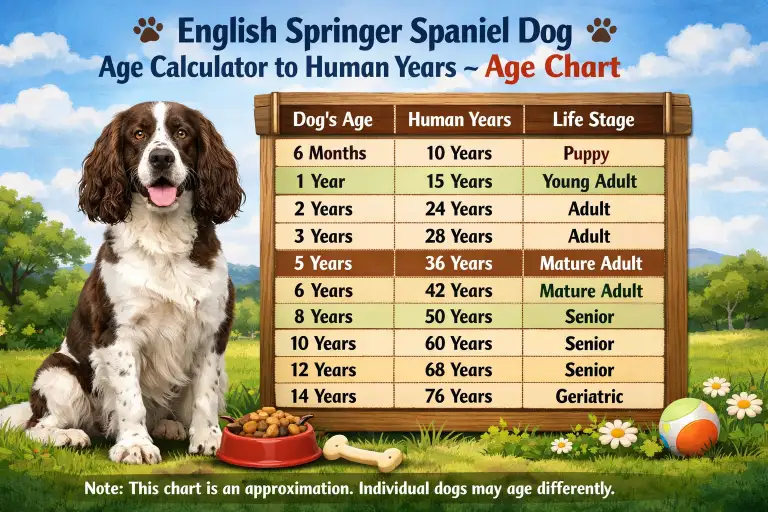
Use the chart below to estimate your English Springer Spaniel’s age in human years.
English Springer Spaniel Age Chart
| English Springer Spaniel Age | Human Age Equivalent |
|---|---|
| 1 year | 15 human years |
| 2 years | 24 human years |
| 3 years | 28 human years |
| 4 years | 32 human years |
| 5 years | 36 human years |
| 6 years | 40 human years |
| 7 years | 44 human years |
| 8 years | 48 human years |
| 9 years | 52 human years |
| 10 years | 56 human years |
| 11 years | 60 human years |
| 12 years | 64 human years |
| 13 years | 68 human years |
| 14 years | 72 human years |
This English Springer Spaniel age chart provides a more realistic estimate than the traditional 7-year rule. However, genetics, diet, activity level, body condition, and overall health can all influence how quickly an individual dog ages.
Important: If your website already includes an English Springer Spaniel age calculator, this age chart page should support and strengthen that calculator page through internal linking and topical authority.
English Springer Spaniel Life Stages Explained
English Springer Spaniels move through several distinct life stages, and each stage comes with different nutritional, behavioral, and healthcare needs.
English Springer Spaniel Life Stages
| Life Stage | Age Range | Typical Characteristics |
|---|---|---|
| Puppy | 0–12 months | Rapid growth, teething, socialization, training, very high energy. |
| Young Adult | 1–4 years | Peak athletic ability, high activity levels, mental maturity developing. |
| Adult | 5–8 years | Stable behavior, predictable routines, excellent physical condition. |
| Senior | 9+ years | Reduced stamina, slower movement, increased veterinary monitoring. |
Recognizing these stages allows owners to adjust exercise routines, feeding schedules, and preventive healthcare appropriately.
Helping Your English Springer Spaniel Age Healthily
Healthy aging begins long before your dog reaches their senior years. Daily care decisions have a major impact on longevity and quality of life.
Nutrition should evolve with age. Growing puppies need calorie-dense diets that support development, while adults require balanced nutrition to maintain lean muscle and healthy body weight.
Senior English Springer Spaniels often benefit from diets that support joint health, digestion, cognitive function, and mobility.
Exercise remains equally important throughout life. Young adults thrive on vigorous activity and mental stimulation, while older dogs often do better with shorter walks and lower-impact exercise.
Regular veterinary care becomes increasingly important as dogs age.
English Springer Spaniel Age-Based Care Guide
| Age Group | Primary Care Priorities |
|---|---|
| Puppy | Vaccinations, socialization, training, high-quality puppy nutrition. |
| Adult | Weight management, dental care, regular exercise, annual checkups. |
| Senior | Joint support, mobility management, bloodwork, twice-yearly vet visits. |
Small adjustments in diet, exercise, and healthcare can dramatically improve your English Springer Spaniel’s comfort, mobility, and quality of life during their later years.
Frequently Asked Questions
How old is a 10-year-old English Springer Spaniel in human years?
A 10-year-old English Springer Spaniel is approximately equal to a 56-year-old human according to modern age conversion methods for medium-sized dog breeds.
At what age is an English Springer Spaniel considered a senior?
Most veterinarians consider English Springer Spaniels to enter their senior years between 8 and 9 years of age.
What is the average lifespan of an English Springer Spaniel?
The average English Springer Spaniel lifespan is between 12 and 14 years, although some dogs live longer with excellent care and genetics.
Is the 7 dog years rule accurate?
No. Modern research shows dogs age rapidly during early life and more slowly during adulthood, making the traditional 7-year rule inaccurate for most breeds.

Ata Ur Rehman is the founder of Pet Age in Human Years Calculator, an educational platform that provides age conversion charts and lifespan guides for dogs, cats, birds, and other companion animals. His work focuses on helping pet owners understand how animal ages translate into human years using commonly accepted age conversion formulas and published lifespan averages.
The website compiles breed and species lifespan data from kennel clubs, breed organizations, and general animal lifespan studies to present simple and easy-to-understand guides for pet owners worldwide.
This website was created to centralize animal age conversion charts into one easy reference platform for pet owners.
This article is for general education. For symptoms, medication, diet changes, or health concerns, use a qualified veterinarian who can assess your individual pet.