On this page
This complete English Springer Spaniel grooming guide is designed to help owners keep their dog’s coat, skin, ears, and nails healthy with a simple and practical routine. Whether you own a family companion or an active hunting Springer, understanding the breed’s unique grooming requirements can prevent matting, excessive shedding, skin irritation, and ear infections.
You’ll learn how the English Springer Spaniel’s coat works, how often grooming is required, the best grooming tools for the breed, and the most common grooming mistakes owners make. With the right routine, most owners can successfully maintain their Springer Spaniel’s coat at home while knowing when professional grooming services are beneficial.
Regular grooming does far more than improve appearance. Brushing distributes natural skin oils, reduces shedding, improves coat quality, and helps identify early signs of hot spots, parasites, allergies, or skin infections. Proper bathing and drying protect the skin barrier, while routine ear cleaning and nail trimming reduce discomfort and prevent common health issues.
Although English Springer Spaniels are considered a moderate to high-maintenance grooming breed, their care routine is straightforward once you understand their coat type and seasonal grooming needs.
English Springer Spaniel Coat Type and Grooming Requirements
The English Springer Spaniel has a double coat, consisting of a protective outer coat and a dense insulating undercoat. The outer coat helps repel dirt, moisture, and debris, while the soft undercoat regulates body temperature during both hot and cold weather.
This coat structure makes the breed highly adaptable for outdoor activities, hunting, and active lifestyles, but it also means grooming should never be neglected.
There are generally two coat variations seen in the breed:
- Field-bred English Springer Spaniels usually have shorter, lighter coats that require less maintenance.
- Show-bred English Springer Spaniels often have heavier feathering and a fuller coat that requires more frequent brushing and trimming.
Both coat types shed throughout the year and experience heavier seasonal shedding during spring and fall.
Without regular grooming, loose undercoat accumulates quickly and mats often develop behind the ears, under the front legs, around the chest, and near the tail. These mats trap moisture and debris against the skin, increasing the risk of hot spots, odor, and skin infections.
English Springer Spaniel Coat and Grooming Overview
| Coat Feature | Description | Grooming Impact |
|---|---|---|
| Double Coat | Protective outer coat with dense undercoat | Requires regular brushing to remove loose hair |
| Shedding Level | Moderate to heavy throughout the year | Increase brushing during seasonal shedding |
| Matting Risk | Highest behind ears, chest, legs, and tail | These areas need extra attention |
| Coat Length | Medium length with feathering | Routine trimming prevents tangles |
| Skin Sensitivity | Can develop irritation or hot spots | Proper drying and gentle products are important |
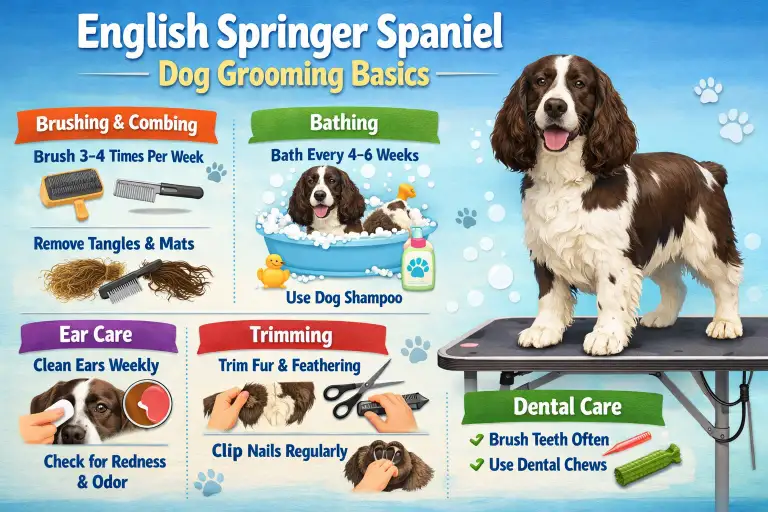
Most English Springer Spaniels should be brushed at least two to three times per week, with daily brushing recommended during heavy shedding seasons.
Bathing is generally needed every four to six weeks, although highly active outdoor dogs may require more frequent cleaning.
Understanding your dog’s coat type is the foundation of effective English Springer Spaniel grooming and makes selecting tools and routines much easier.
How to Groom an English Springer Spaniel at Home
Learning how to groom an English Springer Spaniel at home can save money and strengthen your bond with your dog. The key is consistency rather than lengthy grooming sessions.
Brushing is the most important part of the grooming routine. It removes dead hair, prevents painful mats, improves airflow to the skin, and distributes natural oils throughout the coat.
Always brush your Springer before bathing. Water tightens tangles and makes mats more difficult to remove.
Pay special attention to:
- Behind the ears
- Under the armpits
- The chest and feathering
- The tail area
- Between the legs
These areas mat faster than the rest of the coat.
Bathing should only be done when necessary. Excessive bathing strips natural oils and often causes dry, itchy skin. Always use a high-quality dog shampoo formulated for sensitive skin or double-coated breeds.
Rinse thoroughly after shampooing because residue left in the coat can cause irritation and itching.
Drying is just as important as bathing. Moisture trapped near the skin creates the perfect environment for bacterial infections and hot spots.
Use towels first, then finish drying with a pet dryer or hair dryer on a low heat setting while constantly moving the airflow.
Light trimming can help maintain cleanliness and improve appearance. Most owners trim:
- Hair around the paws
- Feathering on the legs
- Excess fur beneath the tail
Never shave an English Springer Spaniel. Shaving can permanently damage the double coat and interfere with natural temperature regulation.
English Springer Spaniel Home Grooming Schedule
| Grooming Task | Recommended Frequency | Helpful Tip | Common Mistake |
|---|---|---|---|
| Brushing | 2-3 times weekly | Focus on mat-prone areas | Waiting until mats appear |
| Bathing | Every 4-6 weeks | Use dog shampoo only | Bathing too frequently |
| Drying | After every bath | Dry completely to skin level | Leaving moisture trapped |
| Trimming | Every 4-8 weeks | Trim paws and feathering only | Shaving the coat |
| Seasonal Shedding Care | Spring and Fall | Increase brushing frequency | Ignoring loose undercoat |
A regular grooming routine makes the process easier for both owner and dog and helps reduce grooming anxiety over time.
Best Grooming Tools for English Springer Spaniels
Choosing the right English Springer Spaniel grooming tools makes coat maintenance significantly easier and safer.
The ideal grooming kit includes:
- Slicker brush
- Metal comb
- Undercoat rake
- Dog shampoo
- Conditioner for feathering
- Nail clippers or grinder
- Dog ear cleaner
A slicker brush removes loose hair and prevents surface tangles, while a metal comb helps identify hidden mats beneath the feathering.
During spring and autumn shedding seasons, an undercoat rake helps remove dead undercoat without damaging the protective top coat.
English Springer Spaniels are also prone to ear problems because their long ears trap heat and moisture. Weekly ear checks and gentle cleaning significantly reduce the risk of infections.
Nails should be trimmed before they begin touching the floor while walking, and paw pads should be checked regularly for debris, cracks, or compacted fur.
Essential English Springer Spaniel Grooming Tools
| Tool | Purpose | Frequency | Avoid |
|---|---|---|---|
| Slicker Brush | Removes loose hair and tangles | 2-3 times weekly | Applying excessive pressure |
| Metal Comb | Finds hidden mats | After brushing | Skipping feathered areas |
| Undercoat Rake | Reduces seasonal shedding | During shedding season | Overusing on thin coat areas |
| Dog Shampoo | Cleans skin and coat | Every 4-6 weeks | Using human shampoo |
| Conditioner | Softens feathering | As needed | Heavy oily products |
| Nail Clippers | Maintains proper nail length | Every 3-4 weeks | Cutting too close to the quick |
| Ear Cleaner | Prevents ear infections | Weekly checks | Using alcohol or water |
Common English Springer Spaniel Grooming Mistakes to Avoid
Many grooming problems develop slowly because owners are unaware that certain practices can damage the coat or skin.
The most common mistake is shaving an English Springer Spaniel. Double-coated breeds rely on their coat for insulation and temperature control. Shaving often causes uneven regrowth, coat texture changes, and increased shedding.
Another common issue is infrequent brushing. Small tangles quickly become painful mats that pull on the skin and trap moisture and bacteria.
Over-bathing is also common. Washing too frequently removes protective oils and often leads to dryness and itching.
During grooming sessions:
- Use only dog-specific tools.
- Keep dryer temperatures low.
- Never force brushes through mats.
- Avoid getting water deep into the ears.
Professional groomers can safely remove severe matting, trim heavy feathering, and manage difficult coats that are challenging for owners to maintain at home.
Common Grooming Mistakes and Better Alternatives
| Common Mistake | Why It’s Harmful | Better Alternative |
|---|---|---|
| Shaving the coat | Damages coat growth and insulation | Trim feathering only |
| Skipping brushing | Leads to painful mats | Brush consistently |
| Bathing too often | Dries the skin | Bathe every 4-6 weeks |
| Ignoring ear care | Increases infection risk | Perform weekly ear checks |
| Cutting nails too short | Causes pain and bleeding | Trim small amounts regularly |
You should consult a professional groomer if your English Springer Spaniel develops heavy matting, excessive shedding, or requires detailed coat trimming.
You should contact your veterinarian if you notice hair loss, persistent itching, skin sores, ear odor, redness, or signs of infection.
Frequently Asked Questions About English Springer Spaniel Grooming
How often should an English Springer Spaniel be groomed?
Most English Springer Spaniels should be brushed two to three times per week and bathed every four to six weeks.
Do English Springer Spaniels shed a lot?
Yes. English Springer Spaniels are moderate to heavy shedders, especially during spring and fall coat changes.
Can you shave an English Springer Spaniel?
No. Shaving can permanently damage the double coat and interfere with natural temperature regulation.
Do English Springer Spaniels need professional grooming?
Many owners can manage grooming at home, but professional grooming every few months can help maintain coat health and feathering.
Why do English Springer Spaniels get ear infections?
The breed’s long floppy ears trap moisture and reduce airflow, making routine ear cleaning an important part of preventive care.

Ata Ur Rehman is the founder of Pet Age in Human Years Calculator, an educational platform that provides age conversion charts and lifespan guides for dogs, cats, birds, and other companion animals. His work focuses on helping pet owners understand how animal ages translate into human years using commonly accepted age conversion formulas and published lifespan averages.
The website compiles breed and species lifespan data from kennel clubs, breed organizations, and general animal lifespan studies to present simple and easy-to-understand guides for pet owners worldwide.
This website was created to centralize animal age conversion charts into one easy reference platform for pet owners.
This article is for general education. For symptoms, medication, diet changes, or health concerns, use a qualified veterinarian who can assess your individual pet.