On this page
Shar-Pei grooming is very different from grooming most short-haired dog breeds. Although the coat appears easy to maintain, the breed’s deep wrinkles, thick skin, and sensitivity to moisture make proper grooming essential for long-term health.
Without regular wrinkle care and skin maintenance, Shar-Peis are highly prone to yeast infections, unpleasant odor, skin irritation, and chronic inflammation. A proper grooming routine helps prevent these issues while keeping your dog comfortable and healthy.
Why Shar-Pei Grooming Requires Special Care
The Shar-Pei was developed with loose, heavily folded skin that creates warm areas where moisture and bacteria can become trapped. These folds are most common around the face, neck, shoulders, and legs.
If these areas are not cleaned and dried regularly, they can quickly develop:
- Yeast infections
- Hot spots
- Skin irritation
- Bad odor
- Bacterial infections
Unlike many short-coated breeds, Shar-Pei grooming focuses more on skin care and wrinkle maintenance than on coat length alone.
Shar-Pei Coat Types and Grooming Needs
Shar-Peis typically have one of three coat varieties, and each requires a slightly different grooming routine.
| Coat Type | Texture | Shedding Level | Brushing Frequency | Bathing Schedule |
|---|---|---|---|---|
| Horse Coat | Short, rough, stiff | Low to Moderate | Once weekly | Every 4-6 weeks |
| Brush Coat | Short and dense | Moderate | 1-2 times weekly | Every 4-6 weeks |
| Bear Coat | Long and fluffy | Moderate to High | 2-3 times weekly | Every 4-6 weeks |
How Often Should You Groom a Shar-Pei?
| Grooming Task | Recommended Frequency |
|---|---|
| Brushing | 1-2 times per week |
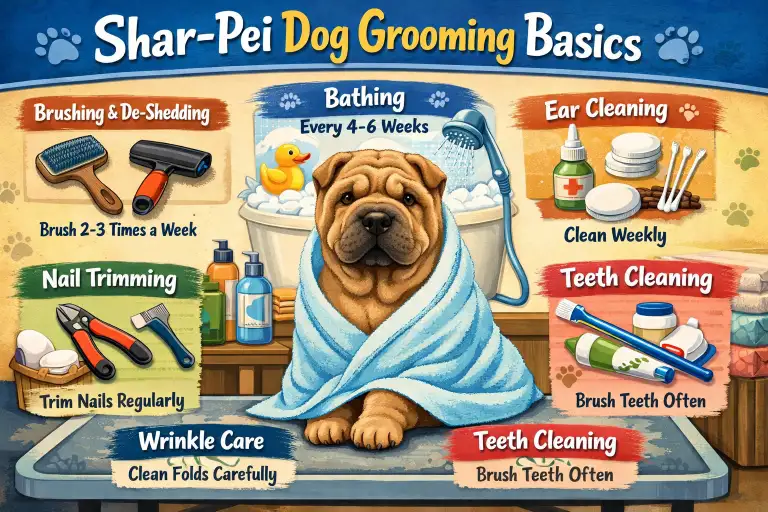
| Bathing | Every 4-6 weeks |
| Wrinkle Cleaning | 2-3 times weekly |
| Ear Cleaning | Weekly |
| Nail Trimming | Every 3-4 weeks |
| Teeth Brushing | 2-3 times weekly |
How to Bathe a Shar-Pei Safely
Over-bathing is one of the most common mistakes Shar-Pei owners make. Frequent bathing strips natural oils from the skin and often worsens allergies and irritation.
Follow these steps for safe bathing:
- Use lukewarm water.
- Choose a mild dog shampoo formulated for sensitive skin.
- Massage shampoo gently into the coat.
- Avoid aggressive scrubbing around wrinkles.
- Rinse thoroughly until all shampoo residue is gone.
- Dry every wrinkle completely using soft towels.
Never use human shampoo on a Shar-Pei because human skin products have a different pH balance and may damage the skin barrier.
Shar-Pei Wrinkle Care Guide
Wrinkle care is the most important part of Shar-Pei grooming.
Moisture trapped inside folds can quickly lead to yeast infections and bacterial growth.
How to Clean Shar-Pei Skin Folds
- Use a soft cloth or cotton pad.
- Gently wipe inside each fold.
- Remove dirt and moisture buildup.
- Dry the area completely before the skin closes again.
- Inspect folds after rainy walks or swimming.
Common problem areas include:
- Under the chin
- Behind the ears
- Around the neck
- Facial wrinkles
- Shoulder folds
Shar-Pei Shedding and Brushing Tips
Many owners ask, “Do Shar-Peis shed?”
The answer is yes. Shar-Peis shed moderately throughout the year and often experience heavier seasonal shedding during spring and fall.
Brushing helps remove loose hair while distributing healthy oils across the skin.
For best results:
- Use a soft rubber grooming brush.
- Brush in the direction of hair growth.
- Keep sessions short and positive.
- Avoid hard-bristle brushes.
Shar-Pei Ear Cleaning and Eye Care
Shar-Peis have narrow ear canals that trap moisture and increase the risk of ear infections.
Ear Cleaning Tips
- Clean ears once weekly.
- Use veterinarian-approved ear cleaner.
- Only clean visible areas.
- Dry ears after every bath.
Eye Care Tips
- Wipe discharge using a damp cloth.
- Use separate cloths for each eye.
- Watch for redness or swelling.
Signs of Shar-Pei Skin Problems
| Symptom | Possible Cause |
|---|---|
| Strong odor | Yeast infection |
| Red skin | Allergies or irritation |
| Constant scratching | Dry skin or allergies |
| Dark thickened skin | Chronic inflammation |
Early treatment often prevents expensive veterinary care later.
Common Shar-Pei Grooming Mistakes
- Bathing too frequently.
- Leaving wrinkles damp.
- Using human shampoo.
- Skipping brushing sessions.
- Ignoring ear cleaning.
- Using harsh brushes on sensitive skin.
When Should You Visit a Groomer or Veterinarian?
Seek professional help if your Shar-Pei develops:
- Persistent odor.
- Recurring skin infections.
- Severe itching.
- Hair loss.
- Red inflamed wrinkles.
- Ear discharge.
Frequently Asked Questions About Shar-Pei Grooming
How often should a Shar-Pei be bathed?
Most healthy Shar-Peis only require a bath every 4 to 6 weeks unless your veterinarian recommends a medicated bathing schedule.
Do Shar-Peis need wrinkle cleaning every day?
Most adult Shar-Peis benefit from wrinkle checks several times per week, while dogs with allergies or deeper folds may require daily cleaning.
Do Shar-Peis shed a lot?
Shar-Peis are moderate shedders and usually shed more heavily during spring and fall seasonal coat changes.
What is the best brush for a Shar-Pei?
A soft rubber grooming brush works best for horse and brush coats, while bear coats often benefit from a gentle slicker brush.
Can I use baby shampoo on a Shar-Pei?
No. Always use dog-specific shampoo designed for sensitive canine skin.

Ata Ur Rehman is the founder of Pet Age in Human Years Calculator, an educational platform that provides age conversion charts and lifespan guides for dogs, cats, birds, and other companion animals. His work focuses on helping pet owners understand how animal ages translate into human years using commonly accepted age conversion formulas and published lifespan averages.
The website compiles breed and species lifespan data from kennel clubs, breed organizations, and general animal lifespan studies to present simple and easy-to-understand guides for pet owners worldwide.
This website was created to centralize animal age conversion charts into one easy reference platform for pet owners.
This article is for general education. For symptoms, medication, diet changes, or health concerns, use a qualified veterinarian who can assess your individual pet.