On this page
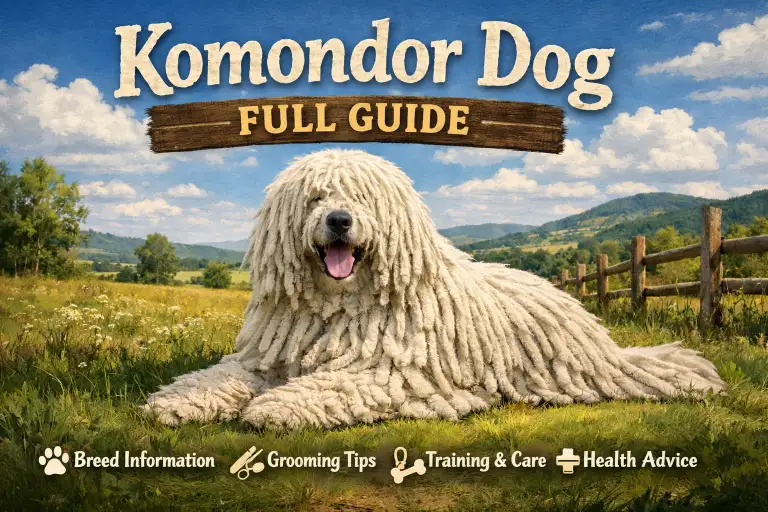
The Komondor dog breed is one of the world’s most unique and recognizable dogs. Known for its long, white corded coat that looks like dreadlocks, this rare Hungarian livestock guardian dog was bred for one important purpose: protecting sheep and livestock from predators.
Unlike many companion breeds, the Komondor was developed to work independently. These dogs were expected to watch over flocks, make decisions without constant human commands, and defend their territory when danger appeared. This history explains why the modern Komondor is naturally protective, intelligent, independent, and highly loyal.
Before choosing a Komondor, owners should understand that this is not a typical family pet. The breed requires an experienced owner, proper socialization, regular coat maintenance, and enough space to feel comfortable.
Komondor Breed Overview
The Komondor is a large Hungarian guardian breed famous for its powerful body, calm personality, and naturally corded coat. Every feature of this dog developed for survival and protection.
| Breed Feature | Details |
|---|---|
| Breed Name | Komondor |
| Origin | Hungary |
| Breed Group | Livestock Guardian Dog / Working Dog |
| Size | Large Giant Breed |
| Male Weight | 100 pounds or more |
| Female Weight | 80–100 pounds |
| Male Height | 27.5 inches or taller |
| Female Height | 25.5 inches or taller |
| Coat Type | Long naturally corded coat |
| Coat Color | White or ivory |
| Lifespan | 10–12 years |
| Energy Level | Moderate |
Why Does the Komondor Have a Corded Coat?
The Komondor coat is not just for appearance. It is one of the breed’s most important working features.
The thick cords helped protect the dog from harsh weather conditions, animal bites, and attacks from predators. The white coat also allowed Komondors to blend into sheep flocks while guarding them.
Unlike normal dog fur, the Komondor coat naturally forms cords as the dog matures. Owners must separate and maintain these cords regularly to prevent painful matting and skin problems.
Komondor Temperament and Personality
The Komondor temperament is very different from many family dog breeds. This dog is calm, serious, and naturally suspicious of unfamiliar people.
Komondors were created to protect livestock without direct supervision, which means they are independent thinkers. They do not always obey instantly because they were bred to evaluate situations and make their own decisions.
With their family, Komondors are usually affectionate, devoted, and extremely loyal. They form strong bonds with their owners and take their protective role seriously.
Komondor Personality Traits
| Trait | Description |
|---|---|
| Loyalty | Extremely loyal and protective toward family members |
| Stranger Behavior | Cautious and reserved with unfamiliar people |
| Intelligence | Smart but independent-minded |
| Trainability | Moderate; requires patience and consistency |
| Energy Level | Moderate with daily activity needs |
| Barking | May bark to alert owners of unusual activity |
Are Komondors Good Family Dogs?
Many people ask, “Is a Komondor a good family dog?” The answer depends on the family’s lifestyle and experience with large guardian breeds.
A well-trained and properly socialized Komondor can be loving and protective with children in its own family. However, because of its large size and guarding instincts, supervision is important around young children.
This breed is usually not ideal for first-time dog owners. Komondors need someone who understands independent guardian dogs and can provide calm, confident leadership.
Komondor Suitability Guide
| Living Situation | Suitable? | Reason |
|---|---|---|
| Experienced dog owners | Yes | Best match for this independent breed |
| First-time owners | No | Training and management can be challenging |
| Apartment living | No | Needs space and territory |
| Farm or rural homes | Excellent | Matches its guardian instincts |
| Families with children | Possible | Requires training and supervision |
| Multi-pet homes | Depends | Works best when raised together |
Komondor Behavior With Strangers and Other Animals
The Komondor is naturally protective, which means it may not immediately welcome strangers. This behavior is normal for a livestock guardian breed.
A properly socialized Komondor should learn the difference between normal visitors and real threats. Early exposure to different people, environments, and situations is extremely important.
With other animals, Komondors often do well when raised together. Their history as flock guardians makes them naturally comfortable around livestock and familiar pets.
Key Facts About Komondor Temperament
- Protective without unnecessary aggression
- Very loyal to its family
- Independent and confident
- Quiet indoors when properly exercised
- Requires early socialization
- Not a breed that seeks constant attention
Komondor Grooming Requirements
The Komondor grooming process is one of the biggest responsibilities of owning this breed. Unlike most dogs, the Komondor does not need regular brushing because its coat is designed to form natural cords.
The cords must be separated by hand, especially during puppy development, to prevent painful mats from forming. Poor coat maintenance can trap moisture, dirt, and bacteria, which may lead to skin infections and discomfort.
How Often Should You Groom a Komondor?
| Grooming Task | Recommended Frequency |
|---|---|
| Cord separation | Regularly, especially during coat development |
| Bathing | Every few months or when needed |
| Drying after bathing | Several hours; coat must dry completely |
| Nail trimming | Every 2–4 weeks |
| Ear cleaning | Regularly to prevent infections |
| Dental care | Several times per week |
One advantage of the Komondor coat is that the breed sheds very little compared with many large dogs. However, low shedding does not mean low maintenance. The coat requires significant time and effort.
Komondor Training Guide
Training a Komondor requires patience, consistency, and an understanding of guardian dog behavior. This breed is intelligent but does not have the same obedience style as many working dogs.
Komondors were bred to make decisions independently, so they may question commands if they do not understand the purpose. Training should focus on trust, respect, and positive reinforcement.
Best Training Tips for a Komondor
- Start socialization from puppyhood
- Use calm and consistent training methods
- Avoid harsh corrections
- Teach basic obedience early
- Expose the dog to different people and environments
- Build confidence through positive experiences
A Komondor that receives proper training becomes a stable, confident guardian. Without training and socialization, its natural protective instincts can become difficult to manage.
Komondor Exercise Needs
Although the Komondor is a large dog, it does not require extreme exercise like some high-energy breeds. Its working style involves watching, patrolling, and responding when needed.
Daily walks, outdoor time, and mental stimulation are usually enough for most Komondors.
| Activity | Recommendation |
|---|---|
| Daily walks | 30–60 minutes |
| Outdoor access | Highly recommended |
| Mental stimulation | Important for preventing boredom |
| Intense exercise | Not usually required |
Komondor Health Problems and Lifespan
The Komondor lifespan is usually around 10–12 years, which is typical for a giant dog breed.
Like other large breeds, Komondors can be prone to certain health conditions. Responsible breeding and regular veterinary care help reduce risks.
Common Komondor Health Issues
- Hip dysplasia: A common concern in large breeds affecting movement and comfort.
- Bloat (Gastric Dilatation-Volvulus): A serious emergency condition affecting deep-chested dogs.
- Skin infections: Can occur if the corded coat is not properly maintained.
- Ear infections: Thick hair and moisture can contribute to problems.
- Joint problems: Large body size can put stress on joints.
Komondor Nutrition and Feeding
A healthy Komondor diet should support strong muscles, healthy joints, and proper weight management.
Because Komondors are large dogs, overfeeding can increase the risk of joint problems. Puppies especially need controlled growth to protect their developing bones.
Komondor Feeding Guidelines
| Life Stage | Feeding Recommendation |
|---|---|
| Komondor Puppy | Large-breed puppy food with controlled calories |
| Adult Komondor | High-quality diet with balanced protein and nutrients |
| Senior Komondor | Food supporting joints and healthy aging |
Komondor Price and Cost of Ownership
The Komondor cost is higher than many average dog breeds because of its size, grooming needs, and specialized care requirements.
| Expense | Estimated Cost |
|---|---|
| Komondor puppy price | $1,500–$3,000 |
| Food | Higher than average due to large size |
| Grooming | High time and maintenance cost |
| Veterinary care | Large-breed medical expenses |
| Insurance | Recommended for unexpected costs |
Komondor Pros and Cons
| Advantages | Challenges |
|---|---|
| Excellent natural guard dog | Not suitable for beginners |
| Extremely loyal family companion | Independent personality |
| Low shedding coat | Very high grooming requirements |
| Calm indoors | Needs space and territory |
| Unique appearance | Suspicious of strangers |
Final Verdict: Is the Komondor the Right Dog for You?
The Komondor dog breed is an amazing guardian for the right owner. It is loyal, intelligent, protective, and deeply connected to its family.
However, this is not an easy breed. The Komondor requires an experienced owner who understands guardian instincts, has enough space, and is willing to commit to intensive coat care.
If you want a calm, protective, and unique dog and are prepared for its needs, the Komondor can become an incredible lifelong companion.
Frequently Asked Questions About Komondor Dogs
1. Are Komondors good family dogs?
Yes, Komondors can be excellent family dogs for experienced owners. They are loyal and protective but require proper training, socialization, and supervision around children because of their size.
2. Are Komondors aggressive?
Komondors are not naturally aggressive, but they are protective by nature. They may become defensive if they believe their family or territory is threatened.
3. How big does a Komondor get?
Adult male Komondors usually weigh over 100 pounds and stand at least 27.5 inches tall. Females are slightly smaller but still large and powerful dogs.
4. Do Komondors shed a lot?
No, Komondors are considered low-shedding dogs. However, their corded coat requires extensive maintenance to stay healthy and clean.
5. How often should a Komondor be bathed?
Komondors do not need frequent baths, but when they are bathed, drying the thick cords completely is extremely important to prevent skin problems.
6. Are Komondors easy to train?
No. Komondors are intelligent but independent. Training requires patience, consistency, positive reinforcement, and early socialization.
7. Can Komondors live in apartments?
Most Komondors are not suitable for apartment living because they need space to move, patrol, and express their natural guarding behaviors.
8. How long do Komondors live?
The average Komondor lifespan is around 10–12 years with proper nutrition, exercise, grooming, and veterinary care.
9. How much does a Komondor puppy cost?
A Komondor puppy usually costs between $1,500 and $3,000 depending on breeder reputation, location, pedigree, and availability.
10. Is a Komondor a good first dog?
No, the Komondor is generally not recommended for first-time dog owners. This breed requires experience with independent, protective dogs.

Ata Ur Rehman is the founder of Pet Age in Human Years Calculator, an educational platform that provides age conversion charts and lifespan guides for dogs, cats, birds, and other companion animals. His work focuses on helping pet owners understand how animal ages translate into human years using commonly accepted age conversion formulas and published lifespan averages.
The website compiles breed and species lifespan data from kennel clubs, breed organizations, and general animal lifespan studies to present simple and easy-to-understand guides for pet owners worldwide.
This website was created to centralize animal age conversion charts into one easy reference platform for pet owners.
This article is for general education. For symptoms, medication, diet changes, or health concerns, use a qualified veterinarian who can assess your individual pet.