On this page
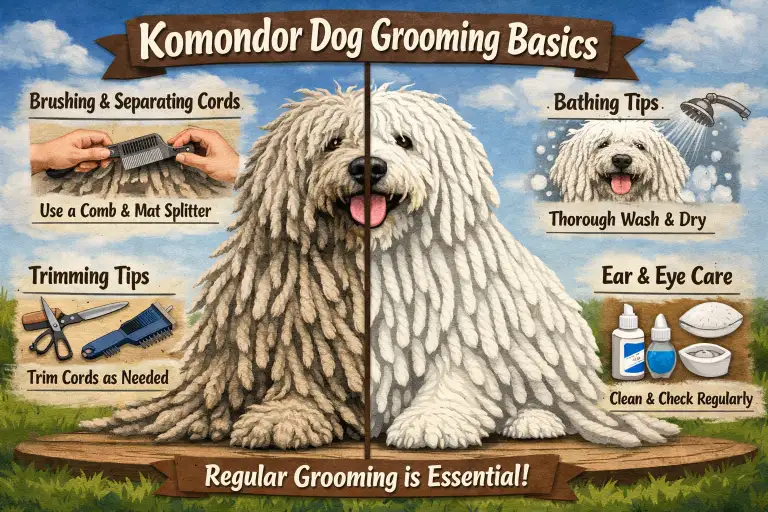
Grooming a Komondor is unlike grooming almost any other dog breed. Their famous corded coat is designed to protect them from harsh weather, predators, and injuries, but it requires a completely different grooming approach. A Komondor should never be brushed like a normal dog because brushing can destroy the natural cords that make this breed unique.
Proper Komondor grooming is focused on maintaining healthy cords, preventing trapped moisture, keeping the skin clean, and avoiding painful matting. While their coat does not require daily brushing, it does require regular hands-on maintenance and careful inspection.
Many owners searching for how to groom a Komondor are surprised to learn that the biggest challenges are not brushing or shedding, but drying, odor prevention, and keeping the skin underneath the cords healthy.
This complete Komondor grooming guide explains everything you need to know, including cord maintenance, bathing frequency, drying methods, common grooming mistakes, and when professional help may be needed.
Komondor Grooming Overview
| Grooming Area | What to Expect | Why It Matters |
|---|---|---|
| Coat Type | Long, naturally forming cords | Requires special care instead of brushing |
| Grooming Style | Hand maintenance and cord separation | Prevents painful mats and skin problems |
| Bathing Needs | Every 6–12 weeks depending on lifestyle | Keeps cords clean and controls odor |
| Drying Requirement | Several hours after bathing | Prevents moisture-related infections |
| Professional Grooming | Occasional assistance may be needed | Helpful for severe matting or coat problems |
Understanding the Komondor Corded Coat
The Komondor’s coat is one of the most recognizable dog coats in the world. Unlike breeds with smooth, curly, or double coats, Komondors develop natural cords made from tightly packed hair. These cords provide insulation and protection while working as livestock guardians.
Understanding the coat growth process is essential for anyone learning Komondor coat care. Puppies are not born with cords. Young Komondors begin with a soft, fluffy puppy coat that gradually changes as they mature.
The cords usually begin forming between 8 months and 2 years of age. During this transition period, owners must gently separate developing cords by hand to prevent large mats from forming.
| Komondor Coat Stage | Coat Development | Owner Care |
|---|---|---|
| Puppy Stage (0–8 months) | Soft and fluffy coat | Avoid brushing and focus on gentle cleaning |
| Cord Formation (8–24 months) | Hair begins clumping into cords | Separate cords regularly by hand |
| Adult Coat (2+ years) | Fully developed protective cords | Maintain cleanliness, dryness, and healthy skin |
Can You Brush a Komondor?
No, traditional brushing is not recommended for Komondors. Unlike many dog breeds, the goal is not to remove loose hair through brushing. Instead, the coat should naturally form and maintain its cords.
Using brushes, combs, or de-matting tools can break the cords and create an uneven coat texture. The safest grooming method is gentle hand separation and regular inspection.
| Grooming Method | Safe for Komondors? | Reason |
|---|---|---|
| Hand separating cords | Yes | Maintains healthy cord structure |
| Dog-safe shampoo | Yes | Cleans coat and skin safely |
| Regular brushing | No | Damages natural cords |
| Shaving the coat | No | Removes natural protection |
| Leaving cords wet | No | Can cause odor and infections |
How Often Should You Groom a Komondor?
A Komondor does not need daily brushing, but it does need consistent maintenance. The most important part of grooming is checking the cords, separating them when necessary, and keeping the coat completely dry.
| Grooming Task | Recommended Frequency | Purpose |
|---|---|---|
| Check cords and skin | 2–3 times weekly | Find dirt, moisture, and irritation early |
| Separate cords | Weekly or as needed | Prevents painful mat formation |
| Bathing | Every 6–12 weeks | Keeps coat and skin clean |
| Full drying | After every bath | Prevents odor and bacterial growth |
How to Bathe a Komondor: Step-by-Step Bathing Guide
Bathing a Komondor requires more time and preparation than bathing most dog breeds. Their thick cords absorb a large amount of water, shampoo, and dirt, so proper technique is essential.
The goal of Komondor bathing is to clean both the cords and the skin underneath without damaging the coat. Using harsh products, skipping rinsing, or failing to dry the coat completely can lead to odor, itching, and skin infections.
Steps for Bathing a Komondor
- Separate cords before bathing: Check for stuck dirt, compacted areas, or hidden mats.
- Wet the coat completely: The cords must be fully soaked before applying shampoo.
- Use a gentle dog shampoo: Choose products designed for sensitive canine skin.
- Massage carefully: Clean the cords and skin without rough rubbing.
- Rinse extremely well: Leftover shampoo can cause irritation and itching.
- Dry completely: Never leave a Komondor damp after bathing.
| Komondor Lifestyle | Recommended Bathing Schedule | Approximate Drying Time |
|---|---|---|
| Mostly indoors with low activity | Every 10–12 weeks | 8–12 hours |
| Regular outdoor activity | Every 8–10 weeks | 10–16 hours |
| Farm work or muddy environments | Every 6–8 weeks | 12–24 hours |
Why Drying a Komondor Properly Is So Important
Drying is one of the most important parts of Komondor grooming care. A wet corded coat can stay damp for many hours, creating the perfect environment for bacteria, yeast, and unpleasant odors.
Towels alone are usually not enough because they only remove surface water. Air circulation from a fan, high-quality dog dryer, or well-ventilated area is often necessary.
A properly dried Komondor should feel dry all the way through the cords, not just on the outside.
| Drying Method | Effectiveness | Recommendation |
|---|---|---|
| Absorbent towels | Removes surface moisture | Use as the first drying step |
| Fan or air circulation | Helps dry deep cords | Highly recommended |
| Professional dog dryer | Fast and effective | Useful for large adult Komondors |
| Leaving coat wet naturally | Poor choice | Can cause odor and infections |
Komondor Cord Maintenance Between Baths
Between bathing sessions, Komondor owners should regularly inspect and maintain the cords. This process is done by hand and helps prevent cords from joining together into painful mats.
The most common areas that need attention include:
- Behind the ears
- Under the legs
- Around the neck and collar area
- Between the toes
- Areas exposed to dirt or moisture
Gentle cord separation is one of the most important parts of Komondor coat maintenance. It keeps the coat comfortable and allows airflow to reach the skin.
Essential Komondor Grooming Tools
Unlike many breeds, Komondors do not require a large collection of brushes and combs. The most important tools are those that help maintain cleanliness and dryness.
| Tool | Main Purpose |
|---|---|
| Dog-safe shampoo | Cleans cords without irritating skin |
| Absorbent towels | Removes excess water after bathing |
| Dog dryer or fan | Helps completely dry thick cords |
| Clean hands | Separates cords safely |
| Ear cleaner | Maintains ear hygiene |
| Nail clippers | Keeps nails at a healthy length |
Komondor Skin Care: Preventing Odor, Infection, and Irritation
Although the Komondor coat looks thick and protective, the skin underneath still needs regular attention. Problems hidden beneath cords can become serious if they are not noticed early.
Regular grooming sessions are the best opportunity to check for redness, swelling, unusual smells, or changes in skin condition.
| Skin Problem | Common Signs | Recommended Action |
|---|---|---|
| Yeast infection | Strong odor, greasy cords, itching | Veterinary treatment may be needed |
| Bacterial infection | Redness, pain, swelling | Contact a veterinarian |
| Hot spots | Wet, painful skin patches | Seek veterinary care quickly |
| General irritation | Flaking, itching, dry skin | Improve hygiene and drying routine |
Other Important Komondor Hygiene Care
Grooming a Komondor is not only about maintaining the coat. Regular care of nails, ears, teeth, and skin helps support overall health.
| Care Area | Recommended Schedule | Benefit |
|---|---|---|
| Nail trimming | Every 3–4 weeks | Supports comfortable movement |
| Ear checks | Weekly | Helps prevent moisture buildup |
| Teeth brushing | 2–3 times weekly | Reduces dental problems |
| Skin inspection | Weekly | Detects problems early |
Frequently Asked Questions About Komondor Grooming
How often should a Komondor be groomed?
A Komondor should have regular grooming checks several times a week, especially for cord separation and skin inspection. Full baths are usually needed every 6–12 weeks depending on the dog’s lifestyle, activity level, and environment.
Can you brush a Komondor?
No, brushing a Komondor is not recommended. Their coat is designed to form natural cords, and brushes or combs can break the cords and damage the coat structure. Komondor grooming is done mainly through hand separation and maintenance.
How do you maintain a Komondor corded coat?
Maintaining a Komondor corded coat requires gently separating cords by hand, checking for dirt or moisture, keeping the coat completely dry, and preventing cords from joining into large mats. Regular maintenance keeps the dog comfortable and protects skin health.
How often should you bathe a Komondor?
Most Komondors need a bath every 6–12 weeks. Dogs that spend more time outdoors, work on farms, or get dirty frequently may need more frequent bathing. The most important step after bathing is complete drying.
Why does my Komondor smell bad after a bath?
A Komondor may smell bad after bathing if moisture remains trapped inside the cords. Incomplete drying can allow bacteria and yeast to grow, causing odor. Always dry the cords completely after every bath.
How long does it take to dry a Komondor?
Drying a Komondor can take anywhere from 8 to 24 hours depending on coat thickness, weather, and drying equipment. Fans, proper airflow, and dog dryers can help speed up the process.
Should a Komondor be shaved?
Generally, a Komondor should not be shaved unless recommended for a medical reason. Shaving removes the protective coat and can affect the natural cord development. Professional advice should be taken before removing the coat.
Do Komondors shed a lot?
Komondors do shed, but most loose hair becomes trapped inside the cords instead of falling around the home like many other breeds. Regular cord maintenance helps manage trapped hair and keeps the coat healthy.
How do you clean a Komondor’s ears?
Komondor ears should be checked weekly because their cords can trap moisture and reduce airflow around the ears. Use a veterinarian-approved ear cleaner and avoid allowing water to remain inside the ears after bathing.
Can I groom my Komondor at home?
Yes, many owners can handle basic Komondor grooming at home. Regular cord separation, bathing, drying, and hygiene checks can be done by owners who are patient and consistent. Professional groomers may be needed for severe matting or coat problems.
What are the most common Komondor grooming mistakes?
The most common mistakes include brushing the coat, shaving without a medical reason, leaving cords wet after bathing, using harsh shampoos, and ignoring skin problems hidden under the cords.
How much grooming does a Komondor need compared to other dogs?
A Komondor does not require daily brushing, but its grooming needs are more specialized than many breeds. The time commitment comes from cord maintenance, bathing, and drying rather than brushing or trimming.

Ata Ur Rehman is the founder of Pet Age in Human Years Calculator, an educational platform that provides age conversion charts and lifespan guides for dogs, cats, birds, and other companion animals. His work focuses on helping pet owners understand how animal ages translate into human years using commonly accepted age conversion formulas and published lifespan averages.
The website compiles breed and species lifespan data from kennel clubs, breed organizations, and general animal lifespan studies to present simple and easy-to-understand guides for pet owners worldwide.
This website was created to centralize animal age conversion charts into one easy reference platform for pet owners.
This article is for general education. For symptoms, medication, diet changes, or health concerns, use a qualified veterinarian who can assess your individual pet.