On this page
The Kuvasz is a giant livestock guardian breed with unique nutritional needs that differ from those of smaller or faster-maturing dogs. Because Kuvasz puppies grow slowly and adults have large, muscular frames, providing the right balance of nutrients is essential for healthy development, joint protection, and long-term wellness. Feeding too much, too little, or choosing an unsuitable diet can contribute to obesity, orthopedic disorders, digestive problems, and reduced quality of life.
Whether your Kuvasz is a working farm guardian or a family companion, its daily calorie and nutrient requirements should match its age, activity level, and body condition. A well-balanced diet supports healthy bones, lean muscle mass, a thick white double coat, and sustained energy throughout every stage of life.
This complete Kuvasz feeding guide explains the best food for Kuvasz dogs, daily feeding amounts, puppy nutrition, adult feeding schedules, senior diet recommendations, treats, common feeding mistakes, and practical tips to help your dog stay healthy for years to come.
Why Proper Nutrition Is Essential for a Kuvasz
Feeding a Kuvasz is about much more than filling a food bowl. As one of the largest guardian breeds, the Kuvasz requires carefully balanced nutrition to support controlled growth, maintain a healthy weight, and reduce stress on developing joints. Proper feeding during puppyhood can significantly influence the dog’s health later in life.
A nutritionally complete diet provides benefits such as:
- Supports healthy bone growth and joint development during the long growth period.
- Builds strong muscles for guarding work, hiking, and everyday activity.
- Maintains a healthy skin barrier and bright white double coat.
- Promotes efficient digestion and consistent stool quality.
- Helps reduce the risk of obesity, arthritis, and other age-related conditions.
Unlike many medium-sized breeds, Kuvasz dogs may continue developing until they are around two to three years old. During this time, excessive calories or improper mineral levels can increase the risk of developmental orthopedic diseases. Feeding should also reflect your dog’s lifestyle. A working Kuvasz protecting livestock throughout the day will require significantly more calories than a pet living primarily indoors.
What to Feed a Kuvasz: Essential Nutritional Requirements
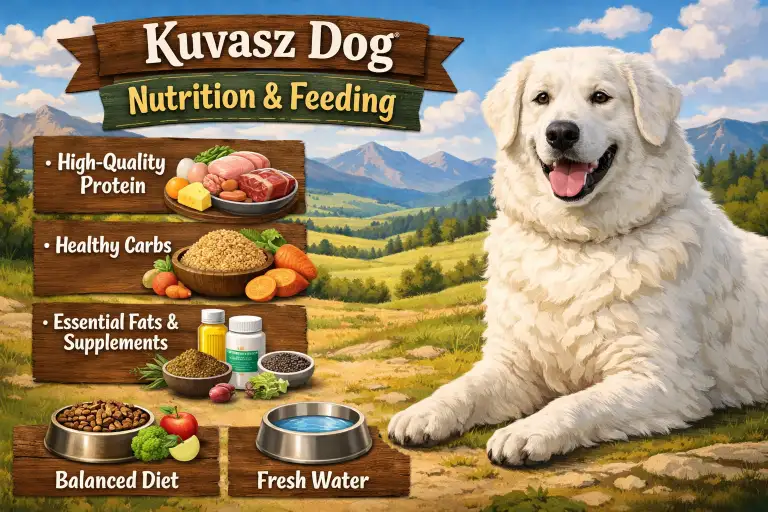
The best food for a Kuvasz is a complete and balanced large-breed diet formulated with high-quality protein, moderate healthy fats, digestible carbohydrates, and essential vitamins and minerals. Every nutrient plays a specific role in supporting growth, immunity, mobility, and overall health.
Recommended Macronutrients for Adult Kuvasz Dogs
| Nutrient | Recommended Amount | Primary Benefit |
|---|---|---|
| Protein | 22–30% | Supports muscle growth, tissue repair, and immune function. |
| Fat | 10–18% | Provides energy while maintaining healthy skin and coat. |
| Carbohydrates | No fixed requirement | Supplies additional energy and dietary fiber. |
| Fiber | 3–6% | Improves digestion and promotes healthy bowel movements. |
High-quality animal proteins such as chicken, turkey, lamb, beef, salmon, or fish meal should appear among the first ingredients. Healthy fats from fish oil or chicken fat provide essential fatty acids that support skin health, brain function, and joint mobility.
Essential Vitamins and Minerals for Kuvasz Health
Large-breed dogs are particularly sensitive to mineral imbalances during growth. Choosing a properly formulated large-breed puppy or adult food helps maintain the correct calcium-to-phosphorus ratio needed for safe skeletal development.
| Nutrient | Health Benefits | Deficiency Risk | Excess Risk |
|---|---|---|---|
| Calcium | Strong bones and healthy joints | Weak skeletal development | Abnormal bone growth and joint issues |
| Phosphorus | Supports bone formation and metabolism | Poor growth | Mineral imbalance |
| Zinc | Healthy skin, immune support, and coat quality | Dry skin and dull coat | Digestive upset |
| Omega-3 Fatty Acids | Joint support and reduced inflammation | Reduced mobility | Loose stools if excessive |
| Vitamin E | Antioxidant protection and immune health | Muscle weakness | Rare toxicity |
Most healthy Kuvasz dogs receiving a premium complete dog food do not require additional supplements. Adding calcium or joint supplements without veterinary guidance may upset the nutritional balance, especially during puppy growth.
How to Read a Kuvasz Dog Food Label
Understanding dog food labels helps you choose a nutritionally complete diet rather than relying solely on marketing claims. Always evaluate the ingredient list and nutritional statement before purchasing food.
| Label Feature | Meaning | What Owners Should Look For |
|---|---|---|
| AAFCO Statement | Confirms nutritional adequacy | Must state “Complete and Balanced.” |
| Crude Protein | Total protein percentage | Prefer high-quality animal protein sources. |
| By-Products | May include nutrient-rich organ meats | Not automatically poor quality. |
| Grain-Free | Contains no traditional grains | Usually unnecessary unless recommended by your veterinarian. |
| Large Breed Formula | Balanced minerals and calories for large dogs | Highly recommended, especially for growing puppies. |
Ignore marketing phrases such as “premium,” “natural,” or “holistic” unless they are supported by complete nutritional information. Instead, choose foods that provide balanced nutrition, high-quality ingredients, and feeding guidelines appropriate for large-breed dogs.
Selecting the right food during every stage of your Kuvasz’s life creates the foundation for healthy growth, strong joints, excellent body condition, and a longer, more active life.
How Much Should You Feed a Kuvasz?
Knowing how much to feed a Kuvasz is just as important as choosing the right food. Portion sizes should be based on your dog’s age, body weight, activity level, metabolism, and body condition rather than following the feeding guide on the bag alone. A highly active livestock guardian will burn far more calories than a Kuvasz living as a household companion.
Regularly monitor your dog’s weight and body condition score, then adjust portions gradually to maintain a lean, muscular physique. Overfeeding is one of the leading causes of obesity and joint problems in giant breeds.
Estimated Daily Calorie Needs for Adult Kuvasz Dogs
| Body Weight | Low Activity | Moderate Activity | High or Working Activity |
|---|---|---|---|
| 80 lb (36 kg) | 1,600–1,800 kcal | 1,900–2,100 kcal | 2,300–2,600 kcal |
| 100 lb (45 kg) | 1,900–2,100 kcal | 2,200–2,500 kcal | 2,700–3,100 kcal |
| 120 lb (54 kg) | 2,200–2,400 kcal | 2,600–2,900 kcal | 3,100–3,600 kcal |
These values are general estimates. Puppies, pregnant females, nursing mothers, and highly active working dogs may require different calorie levels. Always adjust feeding based on your veterinarian’s recommendations and your dog’s body condition.
Kuvasz Feeding Schedule by Age
Feeding frequency changes as your Kuvasz matures. Splitting meals into multiple servings helps improve digestion and may lower the risk of bloat, a serious condition that affects many deep-chested breeds.
| Life Stage | Meals Per Day | Recommendation |
|---|---|---|
| 2–6 Months | 3 meals | Supports steady, controlled growth. |
| 6–18 Months | 2–3 meals | Maintains healthy development while preventing rapid weight gain. |
| Adult | 2 meals | Helps maintain stable energy and supports digestive health. |
| Senior | 2 smaller meals | Easier digestion and improved nutrient absorption. |
Body Condition Score: Is Your Kuvasz Eating the Right Amount?
The best indicator of proper feeding is your dog’s body condition rather than the number on the scale.
| What You Notice | Body Condition | Recommended Action |
|---|---|---|
| Ribs difficult to feel | Overweight | Reduce daily calories by 10–15% and increase exercise. |
| Ribs easily felt without excess fat | Ideal Weight | Continue current feeding routine. |
| Ribs clearly visible with little muscle | Underweight | Increase portions gradually and rule out medical issues. |
Even small portion adjustments can make a significant difference over time. Reassess your Kuvasz every few weeks and avoid sudden dietary changes.
Best Food Types for Kuvasz Dogs
The best diet depends on your dog’s health, lifestyle, and your budget. Most veterinarians recommend choosing a complete and balanced large-breed formula from a reputable manufacturer.
| Food Type | Advantages | Disadvantages | Best For |
|---|---|---|---|
| Dry Kibble | Affordable, convenient, nutritionally balanced | Lower moisture content | Most healthy adult Kuvasz dogs |
| Wet Food | Highly palatable and hydrating | More expensive and shorter shelf life | Picky eaters and senior dogs |
| Fresh Cooked Food | High-quality ingredients with excellent digestibility | Higher cost and refrigeration required | Owners seeking minimally processed diets |
| Raw Diet | Rich in animal protein | Requires careful nutritional balance and food safety | Experienced owners under veterinary guidance |
| Freeze-Dried Food | Convenient with long shelf life | Premium price | Travel or occasional meal rotation |
| Homemade Diet | Complete ingredient control | High risk of nutritional deficiencies if unbalanced | Only with veterinary nutritionist supervision |
For most Kuvasz dogs, grain-inclusive diets are perfectly healthy. Grain-free food should only be chosen when medically necessary or recommended by your veterinarian.
Safe and Unsafe Human Foods for Kuvasz Dogs
| Safe Foods | Foods to Avoid |
|---|---|
| Cooked chicken | Chocolate |
| Plain eggs | Grapes and raisins |
| Carrots | Onions and garlic |
| Apple slices (without seeds) | Xylitol and artificial sweeteners |
Healthy treats should account for no more than 10% of your dog’s daily calorie intake to prevent unwanted weight gain.
Frequently Asked Questions About Feeding a Kuvasz
How much food should a Kuvasz eat each day?
An adult Kuvasz typically requires between 1,900 and 3,000+ calories per day, depending on body weight, activity level, age, and metabolism. Always adjust portions based on body condition rather than feeding charts alone.
What is the best dog food for a Kuvasz?
The best dog food for a Kuvasz is a complete and balanced large-breed formula that contains high-quality animal protein, moderate fat, balanced calcium and phosphorus, and essential vitamins and minerals.
Can Kuvasz dogs eat raw food?
Yes, some owners successfully feed raw diets, but they require careful nutritional balancing and safe food handling. A poorly formulated raw diet can lead to nutrient deficiencies or bacterial contamination.
How often should a Kuvasz puppy be fed?
Young Kuvasz puppies between two and six months of age should usually eat three meals daily. As they mature, feeding can gradually transition to two meals per day.
Should Kuvasz dogs eat grain-free food?
Not usually. Unless your veterinarian diagnoses a specific food allergy or intolerance, grain-inclusive diets are appropriate for most healthy Kuvasz dogs.
Are supplements necessary for Kuvasz dogs?
If your dog eats a complete and balanced commercial diet, additional supplements are generally unnecessary unless prescribed by your veterinarian.
What foods are toxic to a Kuvasz?
Chocolate, grapes, raisins, onions, garlic, macadamia nuts, alcohol, xylitol, and caffeine are toxic to dogs and should never be fed to a Kuvasz.
How can I tell if my Kuvasz is overweight?
You should be able to easily feel your dog’s ribs without seeing excessive fat. If the ribs are difficult to feel or your Kuvasz has little waist definition, it’s time to reduce calories and increase exercise after consulting your veterinarian.

Ata Ur Rehman is the founder of Pet Age in Human Years Calculator, an educational platform that provides age conversion charts and lifespan guides for dogs, cats, birds, and other companion animals. His work focuses on helping pet owners understand how animal ages translate into human years using commonly accepted age conversion formulas and published lifespan averages.
The website compiles breed and species lifespan data from kennel clubs, breed organizations, and general animal lifespan studies to present simple and easy-to-understand guides for pet owners worldwide.
This website was created to centralize animal age conversion charts into one easy reference platform for pet owners.
This article is for general education. For symptoms, medication, diet changes, or health concerns, use a qualified veterinarian who can assess your individual pet.