On this page
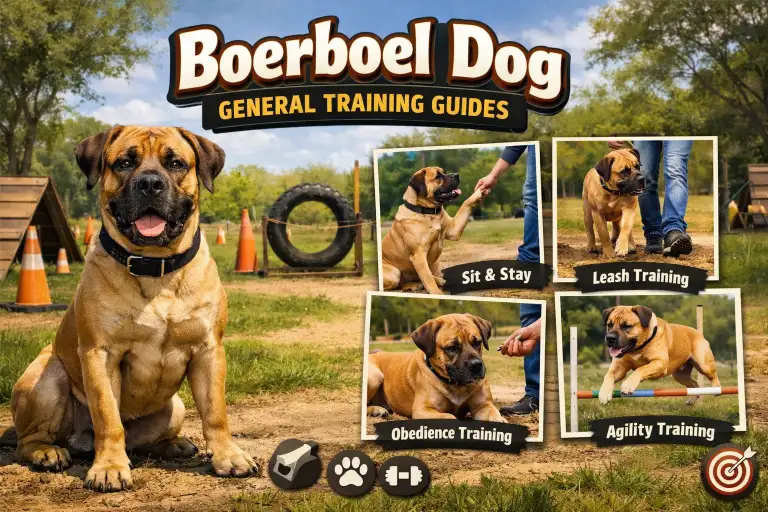
Training a Boerboel requires a completely different approach than training many other dog breeds. As one of the world’s most powerful guardian dogs, the Boerboel was developed in South Africa to protect homes, farms, livestock, and families while making intelligent decisions without constant human direction. Because of this history, owners who rely on generic dog training methods often struggle with leash pulling, stubborn behavior, poor recall, or excessive protectiveness.
A well-trained Boerboel is calm, confident, obedient, and trustworthy—not because it fears its owner, but because it understands clear rules and consistent expectations. Whether you are raising a Boerboel puppy or working with an adult rescue, successful training depends on patience, positive reinforcement, socialization, and daily structure rather than punishment or outdated dominance techniques.
In this complete Boerboel training guide, you’ll learn how to train a Boerboel puppy, teach essential obedience commands, improve leash manners, build reliable recall, prevent behavior problems, and develop a balanced family guardian that remains confident without becoming reactive. This guide focuses on everyday obedience and responsible ownership—not personal protection or bite-work training.
With the right foundation, your Boerboel can become a loyal companion that listens well at home, remains composed around visitors, and responds confidently in real-life situations.
Why Boerboel Training Is Essential
Boerboel training should begin as early as possible because this breed grows rapidly in both size and strength. Waiting until adulthood to correct unwanted behaviors often makes training far more difficult. Early obedience training teaches your Boerboel how to behave around family members, children, guests, and unfamiliar environments before protective instincts become deeply established.
Unlike smaller breeds, an untrained Boerboel can create serious safety concerns simply because of its physical power. Pulling on the leash, jumping on people, ignoring commands, or making independent decisions around strangers may quickly become difficult for an owner to manage. Consistent training replaces uncertainty with clear communication and helps the dog understand exactly what behavior is expected.
Proper Boerboel obedience training also reduces stress for both the owner and the dog. Clear boundaries create confidence, while predictable routines help prevent anxiety, frustration, and overprotective behavior. A structured training program allows this intelligent guardian breed to remain calm instead of constantly feeling responsible for making its own decisions.
Many Boerboels that are surrendered to shelters or require behavioral rehabilitation are not naturally aggressive—they simply lacked early socialization, consistent leadership, and ongoing obedience work. Investing time in training during puppyhood creates a safer, happier companion throughout the dog’s life.
Untrained vs Properly Trained Boerboel
| Training Area | Untrained Boerboel | Well-Trained Boerboel |
|---|---|---|
| Leash Walking | Pulls strongly and ignores handler | Walks calmly with loose-leash manners |
| Meeting Strangers | Suspicious or overly reactive | Observes quietly and waits for owner direction |
| Family Interaction | Jumps, pushes, or ignores boundaries | Respects personal space and household rules |
| Protective Instincts | Acts independently without guidance | Looks to the owner before responding |
| Confidence Level | Easily stressed or uncertain | Emotionally balanced and confident |
| Safety | Higher risk of accidents or liability | Reliable, predictable family companion |
Remember that Boerboel training is not about suppressing the breed’s natural guardian instincts. Instead, the goal is to teach self-control, reliability, and good decision-making. A properly trained Boerboel remains protective when appropriate while staying calm in normal everyday situations such as neighborhood walks, veterinary visits, or welcoming guests into the home.
The earlier you establish structure and consistency, the easier it becomes to manage adolescence and adulthood. Daily practice, positive reinforcement, and patient leadership are the foundations of long-term success.
Understanding Boerboel Temperament Before You Begin Training
Understanding Boerboel temperament is one of the most important parts of successful training. This breed was developed to think independently, evaluate situations carefully, and protect its family only when necessary. Unlike breeds that constantly seek direction, Boerboels naturally assess situations before reacting, which is why training must focus on trust and communication rather than control through force.
Many owners mistakenly describe Boerboels as stubborn or dominant. In reality, most training challenges come from inconsistent expectations, limited socialization, or unclear leadership. When a Boerboel receives mixed signals, it often falls back on its natural guardian instincts instead of following human guidance.
Boerboels also mature mentally much more slowly than their physical appearance suggests. A dog that already weighs well over 100 pounds may still behave like an adolescent and require continued guidance. Expecting adult-level obedience too early often leads to frustration for both the owner and the dog.
Because Boerboels form extremely strong bonds with their families, they naturally pay close attention to changes within their environment. New visitors, unfamiliar animals, and unusual sounds are often noticed immediately. Proper training teaches the dog to remain calm, observe the situation, and wait for owner direction instead of reacting independently.
Common Boerboel Personality Traits and Training Approach
| Natural Trait | Common Misunderstanding | Best Training Response |
|---|---|---|
| Protective | “My Boerboel is aggressive.” | Provide calm leadership and controlled socialization. |
| Confident | “My dog is stubborn.” | Stay patient, consistent, and reward good choices. |
| Independent | “My dog ignores commands.” | Increase motivation with rewards and engagement. |
| Reserved Around Strangers | “My Boerboel isn’t friendly.” | Practice positive, controlled introductions. |
| Large and Powerful | “He’ll calm down as he gets older.” | Start leash control and impulse training early. |
When you work with your Boerboel’s natural instincts instead of trying to eliminate them, training becomes much easier. Calm routines, consistent commands, structured social experiences, and positive reinforcement create a confident guardian that is dependable in everyday life. Rather than forcing obedience, successful Boerboel owners earn cooperation through trust, leadership, and consistency.
Once your Boerboel understands expectations and develops confidence through regular training, teaching advanced obedience skills becomes significantly easier. The next step is creating a structured daily training routine that builds reliable behavior from puppyhood through adulthood.
Step-by-Step Boerboel Training Method (Puppies & Adult Dogs)
The best way to train a Boerboel is through consistency, patience, and positive reinforcement. Because this breed is intelligent and naturally independent, harsh corrections or punishment often reduce trust instead of improving obedience. Daily training sessions that are calm, structured, and rewarding produce the best long-term results.
Start every training session in a quiet environment where your Boerboel can focus without distractions. Once your dog reliably follows commands, gradually introduce new environments, unfamiliar people, and everyday distractions. This step-by-step approach helps build dependable obedience in real-life situations.
Every Boerboel should master essential obedience skills before moving to advanced training. Core commands such as sit, stay, come, heel, leave it, and place provide the foundation for safe behavior at home and in public. Combined with leash manners and impulse control, these skills allow owners to confidently manage such a large and protective breed.
Positive reinforcement remains the most effective Boerboel training technique. Reward correct behavior immediately with healthy treats, verbal praise, toys, or calm affection so your dog clearly understands which behavior earned the reward.
Boerboel Training Schedule by Age
| Age | Primary Training Goal | Owner Focus | Common Mistake |
|---|---|---|---|
| 8–16 Weeks | Socialization, name recognition, potty training, basic commands | Build trust and confidence | Missing the critical socialization window |
| 4–6 Months | Loose-leash walking, recall, impulse control | Practice every day | Expecting perfect obedience too soon |
| 6–12 Months | Reliable obedience around distractions | Maintain calm leadership | Reducing training because the dog looks mature |
| Adult | Advanced reliability and lifelong reinforcement | Continue regular practice | Stopping obedience training completely |
Short, focused sessions are much more productive than long training periods. Most Boerboels stay engaged for 10 to 15 minutes before losing concentration. Ending each session with success helps keep your dog motivated and eager to learn again.
Recommended Daily Boerboel Training Routine
| Training Activity | Recommended Amount |
|---|---|
| Training Session Length | 10–15 minutes |
| Sessions Per Day | 1–2 structured sessions |
| Mental Stimulation | Obedience commands, puzzle toys, focus games |
| Physical Exercise | Daily walks and controlled play sessions |
| Training Environment | Begin quietly, then gradually add distractions |
Remember that training never truly ends. Even adult Boerboels benefit from regular obedience practice throughout life. Consistency reinforces good habits and prevents unwanted behaviors from returning.
Common Boerboel Training Problems and How to Fix Them
Even well-raised Boerboels may develop training challenges during puppyhood or adolescence. Fortunately, most behavior problems are caused by inconsistent routines, insufficient socialization, or unclear communication rather than true aggression. Identifying the cause early makes correction much easier.
One of the most common issues is leash pulling. Because Boerboels are exceptionally powerful, poor leash manners can become dangerous if ignored. Early leash training and daily practice help prevent this habit from becoming permanent.
Another frequent concern is ignoring commands when distractions appear. Dogs often perform perfectly at home but struggle in parks or public places. This simply means additional practice is needed in gradually more challenging environments.
Some Boerboels naturally become overly protective as they mature. While guarding behavior is part of the breed, owners should teach the dog to remain calm, wait for permission, and follow commands instead of making independent decisions.
Common Boerboel Behavior Problems and Solutions
| Problem | Likely Cause | Recommended Solution |
|---|---|---|
| Pulling on the leash | Weak leash foundation | Restart loose-leash training with consistent rewards |
| Ignoring commands | High distractions | Practice in quieter environments before progressing |
| Overprotective behavior | Unclear boundaries | Teach “Place,” calm greetings, and impulse control |
| Reacting to strangers | Limited socialization | Introduce controlled positive experiences |
| Growling or snapping | Fear, stress, pain, or anxiety | Stop training and consult a qualified behavior professional |
If your Boerboel shows repeated aggressive behavior, fear-based biting, or sudden personality changes, seek help from an experienced professional dog trainer or veterinary behaviorist. Early intervention is always safer and more successful than waiting for the behavior to worsen.
Responsible Boerboel ownership means recognizing when professional guidance is needed. With consistent training and expert support when necessary, most behavior issues can be significantly improved.
Frequently Asked Questions About Boerboel Training
Are Boerboels easy to train?
Boerboels are highly intelligent and capable of learning quickly, but they are independent thinkers. They respond best to positive reinforcement, clear leadership, and consistent daily training rather than harsh discipline.
At what age should you start training a Boerboel puppy?
Training should begin as soon as your Boerboel puppy comes home, usually between 8 and 10 weeks of age. Early socialization, house training, name recognition, and simple obedience commands create the best lifelong foundation.
Can an adult Boerboel still be trained?
Yes. Adult Boerboels can successfully learn new commands and improve behavior with patience, consistency, and structured training. Older dogs may require additional time, but they remain highly trainable.
How long should Boerboel training sessions be?
Most Boerboels learn best during short training sessions lasting 10 to 15 minutes. One or two focused sessions each day are generally more effective than one long session.
How do you stop a Boerboel from pulling on the leash?
Begin loose-leash training in quiet areas, reward your dog for walking beside you, and stop moving whenever the leash becomes tight. Consistent practice teaches your Boerboel that pulling never leads to forward movement.
Are Boerboels naturally aggressive?
No. Boerboels are naturally protective, not automatically aggressive. Proper socialization, obedience training, and responsible ownership help them become calm, confident, and reliable family guardians.
Is positive reinforcement the best way to train a Boerboel?
Yes. Reward-based training builds trust, improves learning, and strengthens the relationship between owner and dog. Harsh punishment often creates fear and damages confidence in guardian breeds.
Do Boerboels need professional obedience training?
Many owners successfully train their Boerboels at home, but professional puppy classes or obedience programs are highly recommended for first-time Boerboel owners or dogs showing behavioral challenges.

Ata Ur Rehman is the founder of Pet Age in Human Years Calculator, an educational platform that provides age conversion charts and lifespan guides for dogs, cats, birds, and other companion animals. His work focuses on helping pet owners understand how animal ages translate into human years using commonly accepted age conversion formulas and published lifespan averages.
The website compiles breed and species lifespan data from kennel clubs, breed organizations, and general animal lifespan studies to present simple and easy-to-understand guides for pet owners worldwide.
This website was created to centralize animal age conversion charts into one easy reference platform for pet owners.
This article is for general education. For symptoms, medication, diet changes, or health concerns, use a qualified veterinarian who can assess your individual pet.