On this page
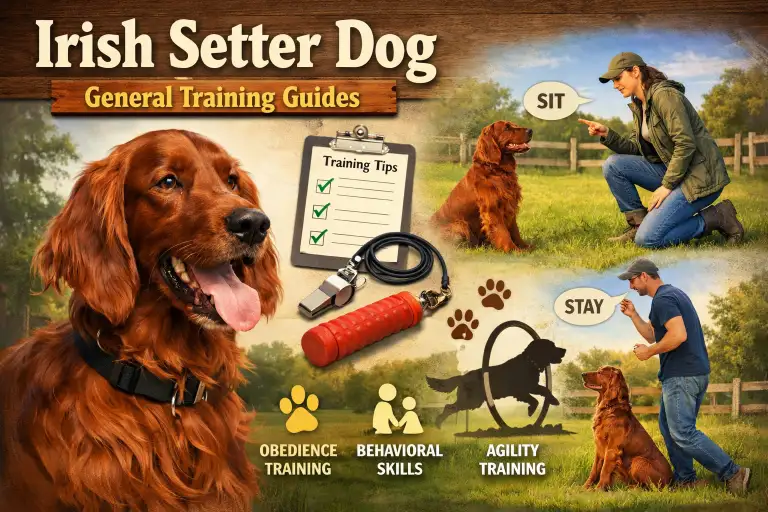
Irish Setter training can be incredibly rewarding, but it requires an approach that matches the breed’s unique personality and energy level. Irish Setters are intelligent, affectionate, people-oriented dogs that learn quickly when training is engaging and consistent. However, their enthusiasm, curiosity, and strong desire to explore can make obedience training challenging without the right strategy.
Many owners struggle with common issues such as poor recall, leash pulling, jumping on guests, overexcitement, and a dog that seems to listen perfectly at home but ignores commands outdoors. These challenges are common among Irish Setters and usually reflect the breed’s natural instincts rather than stubbornness or unwillingness to learn.
Successful Irish Setter training focuses on building attention, self-control, and clear communication. Instead of relying on harsh corrections or repetitive commands, owners achieve better results by using positive reinforcement, structured routines, and realistic expectations that match the breed’s development.
Whether you’re raising a puppy, managing an energetic adolescent, or improving the behavior of an adult dog, this guide will help you develop reliable obedience while strengthening the bond with your Irish Setter.
What You’ll Learn
By the end of this guide, you’ll understand how to:
- Train your Irish Setter for better focus and obedience
- Improve recall around distractions
- Prevent pulling and improve leash manners
- Manage high energy and overexcitement
- Build calm behavior inside the home
- Avoid common training mistakes
- Set realistic expectations based on age and maturity
Why Irish Setter Training Is Different From Other Dog Breeds
Irish Setters were originally developed as sporting dogs that worked closely with hunters while covering large areas of ground. This history helps explain many of the behaviors owners see today.
Unlike breeds that were developed primarily for guarding or independent work, Irish Setters are highly social and thrive on interaction with people. They are intelligent enough to learn quickly, but their curiosity and enthusiasm can make them easily distracted by scents, movement, wildlife, and exciting environments.
This combination of intelligence and energy often creates frustration for owners who expect immediate obedience.
An Irish Setter may perform perfectly in the living room but appear to forget every command when visiting a park or walking down a busy street. This behavior is normal and usually reflects environmental distractions rather than a lack of intelligence.
What Makes Irish Setters Challenging to Train?
Several breed traits influence training success:
| Irish Setter Trait | How It Affects Training |
|---|---|
| High Energy | Requires physical and mental exercise before training sessions |
| Strong Curiosity | Creates distractions during recall and obedience work |
| Social Personality | Can lead to jumping, excitement, and greeting problems |
| Sensitive Nature | Responds better to positive reinforcement than harsh corrections |
| Slow Maturity | May act puppy-like well into adulthood |
Understanding these traits helps owners set realistic expectations and choose training methods that fit the breed.
Why Positive Reinforcement Works Best
Irish Setters are sensitive dogs that generally respond poorly to harsh training techniques. Excessive corrections, yelling, or punishment often reduce confidence and can create frustration instead of improving behavior.
Positive reinforcement training works because it teaches the dog what to do rather than focusing on mistakes.
Rewards may include:
- Small training treats
- Verbal praise
- Favorite toys
- Short play sessions
- Access to desired activities
When rewards are delivered consistently and at the right moment, Irish Setters learn quickly and become more motivated to repeat desired behaviors.
Understanding Irish Setter Behavior and Learning Style
Training becomes much easier when owners understand how Irish Setters think and learn.
Irish Setters are intelligent problem-solvers, but they often have shorter attention spans than calmer breeds. They learn best when training sessions are enjoyable, varied, and interactive.
Long, repetitive sessions frequently lead to boredom and reduced focus.
Instead, successful owners use short sessions that maintain engagement and end on a positive note.
Common Irish Setter Behavioral Traits
Most Irish Setters display some combination of the following:
- High enthusiasm around people
- Strong interest in scents and wildlife
- Short attention spans when excited
- Friendly but impulsive greetings
- Periods of intense energy followed by relaxation
- Desire for social interaction
These traits are not behavioral flaws. They simply require structure, guidance, and consistent training.
Irish Setter Behavior by Age
| Age Stage | Common Behavior | Training Focus |
|---|---|---|
| 8 Weeks–6 Months | Biting, chewing, jumping, limited focus | Socialization, basic obedience, routines |
| 6–18 Months | Testing boundaries, high energy, distractions | Recall, impulse control, leash manners |
| 18–36 Months | Greater confidence, stronger habits | Reliability, advanced obedience |
| 3+ Years | More stable behavior | Maintenance and continued enrichment |
Understanding these developmental stages helps prevent unrealistic expectations and reduces frustration during training.
Irish Setter Puppy Training Timeline
Early training creates the foundation for lifelong behavior. Irish Setter puppies benefit from structured guidance from the moment they arrive home.
8–12 Weeks
Focus Areas:
- Name recognition
- House training
- Crate training
- Handling and grooming acceptance
- Positive socialization
At this age, training should be short, positive, and focused on building trust.
3–6 Months
Focus Areas:
- Sit
- Down
- Stay
- Come
- Loose-leash walking
This is an ideal period for introducing basic obedience and reinforcing good habits before adolescence begins.
6–12 Months
Focus Areas:
- Recall training
- Impulse control
- Greeting manners
- Managing distractions
Many owners experience setbacks during this stage. Consistency becomes especially important because adolescent Irish Setters often test boundaries.
12–18 Months
Focus Areas:
- Reliable obedience
- Advanced recall
- Off-leash preparation
- Calm behavior around distractions
Although many dogs appear physically mature by this stage, Irish Setters often continue developing emotionally for much longer.
Owners who remain patient and consistent typically see substantial improvements in focus, reliability, and self-control.
Step-by-Step Irish Setter Training Approach
Training an Irish Setter successfully is less about teaching dozens of commands and more about developing focus, self-control, and reliability. Because Irish Setters are energetic and easily distracted, they benefit from a structured approach that builds skills gradually.
The most effective Irish Setter training programs follow three principles:
- Keep training sessions short and engaging.
- Practice consistently in different environments.
- Reward desired behavior immediately.
Most Irish Setters learn faster with several 5–10 minute sessions throughout the day rather than one long training session.
Essential Skills to Teach First
Before moving to advanced obedience, focus on these foundational behaviors:
| Priority Skill | Why It Matters |
|---|---|
| Name Recognition | Builds attention and engagement |
| Recall (“Come”) | Critical for safety |
| Sit and Stay | Improves impulse control |
| Loose-Leash Walking | Makes daily walks easier |
| Settle Command | Encourages calm behavior indoors |
| Leave It | Prevents unwanted behaviors |
Strong foundations make advanced training significantly easier later.
Sample Daily Training Routine
| Time | Training Activity |
|---|---|
| Morning | Focus exercises and recall practice |
| Midday | Short obedience session |
| Afternoon | Loose-leash walking |
| Evening | Settle training and calm behavior exercises |
Consistency matters more than perfection. Small daily improvements create lasting results over time.
Irish Setter Recall Training
Recall training is one of the most important skills an Irish Setter can learn.
Because the breed was developed to work independently in the field while following scents and movement, many Irish Setters naturally become distracted outdoors. This makes reliable recall training essential for safety and freedom.
Why Recall Is Difficult for Irish Setters
Common distractions include:
- Wildlife
- New scents
- Other dogs
- People
- Open spaces
- Fast-moving objects
A distracted Irish Setter is not necessarily being disobedient. Their instincts simply become more rewarding than listening.
How to Teach Recall
Start in a quiet environment with minimal distractions.
Step 1: Build Value
Say your dog’s name followed by your recall cue.
Examples:
- Come
- Here
- Front
Immediately reward with a high-value treat when they reach you.
Step 2: Increase Distance
Gradually increase the distance between you and your dog while maintaining success.
Step 3: Add Mild Distractions
Practice in:
- The backyard
- Quiet parks
- Low-traffic walking paths
Only increase difficulty when your dog responds consistently.
Recall Mistakes to Avoid
- Repeating commands multiple times
- Calling only when playtime ends
- Punishing after the dog returns
- Progressing too quickly
A successful recall should always lead to something positive.
Irish Setter Leash Training and Pulling Prevention
Leash pulling is one of the most common Irish Setter behavior problems.
Their excitement, athleticism, and curiosity often cause them to move faster than their owners.
Fortunately, consistent leash training can significantly improve walking manners.
Why Irish Setters Pull
Common reasons include:
- Excitement
- Curiosity
- Excess energy
- Lack of loose-leash training
- Reward from reaching interesting locations
Many owners unintentionally reinforce pulling by continuing to walk while the leash is tight.
Loose-Leash Walking Method
When your Irish Setter pulls:
- Stop moving immediately.
- Wait for leash slack.
- Reward attention toward you.
- Resume walking.
Over time, your dog learns that pulling slows progress while walking politely moves them forward.
Leash Training Tips
- Exercise before training walks.
- Use rewards frequently.
- Practice in low-distraction environments first.
- Keep expectations realistic for young dogs.
- Gradually increase distractions.
Consistency is the key to success.
Socialization and Manners Training
Proper socialization plays a major role in Irish Setter behavior.
A well-socialized Irish Setter is generally more confident, adaptable, and easier to train.
Socialization does not mean allowing your puppy to interact with everything. Instead, it means creating positive experiences with different environments, people, sounds, and situations.
Important Socialization Experiences
Expose your Irish Setter to:
- Different age groups
- Friendly dogs
- Various surfaces
- Household noises
- Car rides
- Public environments
- Veterinary visits
- Grooming routines
The goal is calm exposure rather than overwhelming excitement.
Teaching Greeting Manners
Irish Setters often greet people enthusiastically.
Common problems include:
- Jumping
- Pawing
- Excessive excitement
To improve manners:
- Reward four paws on the floor.
- Ignore jumping behavior.
- Ask for a sit before greetings.
- Reward calm interactions.
Consistent expectations help prevent bad habits from becoming permanent.
Managing Hyperactivity and Overexcitement
Many owners search for ways to calm an Irish Setter.
In reality, most Irish Setters are not hyperactive—they are under-stimulated, over-excited, or lacking impulse control skills.
Training alone will not solve excessive energy.
Physical Exercise Requirements
Most adult Irish Setters benefit from:
- Daily walks
- Running opportunities
- Fetch games
- Outdoor exploration
- Structured play sessions
Exercise helps reduce excess energy before training sessions.
Mental Exercise Requirements
Mental stimulation is equally important.
Examples include:
- Puzzle toys
- Food-dispensing toys
- Scent games
- Obedience training
- Trick training
- Problem-solving activities
Mental work often tires a dog faster than physical exercise.
Teaching Calm Behavior
Many owners accidentally reward excitement.
Instead:
- Reward relaxation.
- Reinforce quiet behavior.
- Practice settle exercises.
- Create calm routines.
The more often calm behavior is rewarded, the more frequently it occurs.
Signs Your Irish Setter Needs More Mental Stimulation
- Constant attention-seeking
- Destructive chewing
- Excessive barking
- Difficulty settling
- Restlessness indoors
Addressing these needs often improves behavior dramatically and makes obedience training much easier.
To understand your dog's current life stage, use the Irish Setter Dog Age Calculator.
Frequently Asked Questions About Irish Setter Training
Are Irish Setters Easy to Train?
Irish Setters are intelligent and eager to please, which makes them highly trainable. However, their high energy levels, curiosity, and tendency to become distracted can make training more challenging than with calmer breeds. Consistent positive reinforcement and short, engaging training sessions usually produce the best results.
At What Age Should You Start Training an Irish Setter?
Training should begin as soon as your Irish Setter puppy comes home, usually around 8 weeks of age. Early training should focus on socialization, house training, name recognition, and basic obedience. Starting early helps prevent unwanted habits and builds a strong foundation for future training.
How Long Does It Take to Train an Irish Setter?
Basic obedience training can often be established within a few months, but developing reliable behavior around distractions usually takes longer. Because Irish Setters mature slowly, many continue refining their training skills well into their second or third year.
Why Does My Irish Setter Ignore Me Outside?
Irish Setters are naturally attracted to scents, movement, wildlife, and new environments. If your dog listens indoors but ignores commands outside, the issue is often distraction rather than disobedience. Gradually practicing training in more challenging environments helps improve reliability.
What Is the Best Training Method for an Irish Setter?
Positive reinforcement training is generally the most effective approach. Rewarding desired behaviors with treats, praise, toys, or play encourages your Irish Setter to repeat those behaviors. Harsh corrections and punishment can reduce confidence and slow progress.
How Do I Stop My Irish Setter From Pulling on the Leash?
Consistent loose-leash training is the most effective solution. Stop walking whenever your dog pulls and only continue once the leash becomes loose. Reward your Irish Setter frequently for walking calmly beside you and gradually increase distractions as they improve.
How Do You Teach Recall to an Irish Setter?
Start recall training in a quiet environment with minimal distractions. Use a clear recall cue such as “come” and reward your dog immediately when they respond. As reliability improves, gradually practice in more distracting locations while continuing to reward success.
Are Irish Setters Good Off-Leash Dogs?
Irish Setters can become reliable off-leash companions with proper recall training, but they should never be allowed off-leash until their recall is highly dependable. Their strong interest in scents and wildlife can make them prone to chasing distractions if training is incomplete.
How Much Exercise Does an Irish Setter Need?
Most adult Irish Setters require at least 1–2 hours of physical activity each day, along with mental stimulation. Regular exercise helps reduce excess energy, improves focus, and makes training significantly easier.
How Do I Calm Down an Overexcited Irish Setter?
Managing overexcitement involves a combination of exercise, mental enrichment, impulse-control training, and rewarding calm behavior. Avoid accidentally reinforcing excitement by giving attention when your dog is jumping, barking, or overly stimulated.
Why Is My Irish Setter So Hyper?
Irish Setters are naturally energetic dogs. What appears to be hyperactivity is often a result of insufficient physical exercise, mental stimulation, or training. Structured activities and consistent routines usually help improve behavior.
Can Older Irish Setters Still Be Trained?
Yes. While puppies often learn faster, adult Irish Setters are fully capable of learning new skills and improving behavior. Consistency, patience, and positive reinforcement remain effective regardless of age.
What Are the Most Common Irish Setter Training Problems?
The most common challenges include poor recall, leash pulling, jumping on people, excessive excitement, difficulty focusing outdoors, and inconsistent obedience around distractions. Most of these issues can be improved through structured training and consistent practice.
How Often Should I Train My Irish Setter?
Several short training sessions each day are usually more effective than one long session. Most Irish Setters respond best to 5–10 minute sessions repeated throughout the day while maintaining a positive and engaging training experience.

Ata Ur Rehman is the founder of Pet Age in Human Years Calculator, an educational platform that provides age conversion charts and lifespan guides for dogs, cats, birds, and other companion animals. His work focuses on helping pet owners understand how animal ages translate into human years using commonly accepted age conversion formulas and published lifespan averages.
The website compiles breed and species lifespan data from kennel clubs, breed organizations, and general animal lifespan studies to present simple and easy-to-understand guides for pet owners worldwide.
This website was created to centralize animal age conversion charts into one easy reference platform for pet owners.
This article is for general education. For symptoms, medication, diet changes, or health concerns, use a qualified veterinarian who can assess your individual pet.