On this page
Irish Setters are admired for their rich red coats, elegant appearance, and energetic personality. However, maintaining that beautiful coat requires consistent grooming and proper coat care. Without regular brushing and maintenance, Irish Setters can develop mats, skin irritation, ear problems, and excess shedding that affect both their comfort and overall health.
Irish Setter grooming is about much more than appearance. A proper grooming routine helps keep the coat healthy, reduces tangles, supports skin health, and allows owners to spot potential health concerns before they become serious problems. Because Irish Setters have a long, silky coat with feathering on the ears, chest, legs, belly, and tail, they require more attention than many short-coated breeds.
How Often Should You Groom an Irish Setter?
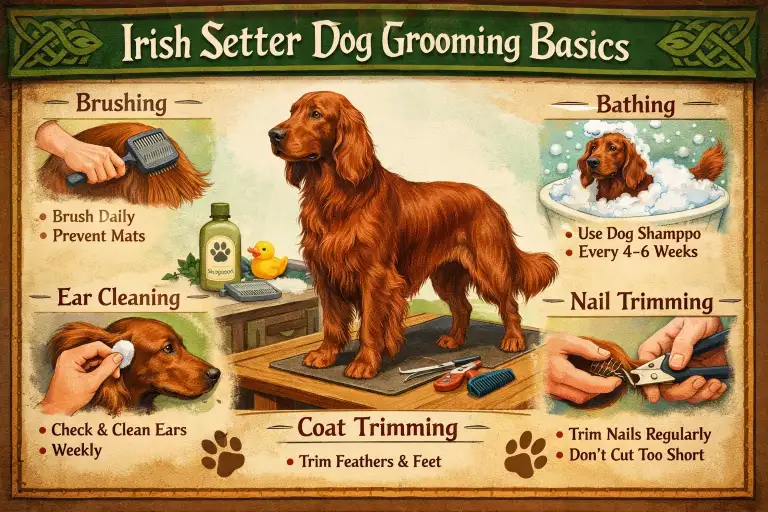
Irish Setters should be brushed 3–4 times per week, bathed every 4–6 weeks, and receive regular ear cleaning and nail trimming. Their silky coat tangles easily, particularly behind the ears, under the front legs, and along feathered areas. Consistent grooming prevents matting, controls shedding, and helps maintain healthy skin and coat condition.
In this Irish Setter grooming guide, you’ll learn:
- How to groom an Irish Setter at home
- The best grooming tools for Irish Setters
- How often Irish Setters should be brushed and bathed
- Ways to manage shedding and prevent mats
- Proper ear, nail, skin, and dental care
- Common grooming mistakes owners should avoid
Whether you own an Irish Setter puppy, an active adult, or a senior dog, establishing a regular grooming routine will help keep your dog comfortable, healthy, and looking its best.
Irish Setter Coat Type, Shedding, and Grooming Frequency
Understanding the coat type is the foundation of proper Irish Setter grooming.
Irish Setters have a long, silky, single-layer coat with distinctive feathering on the ears, chest, legs, belly, and tail. Unlike many double-coated breeds, they do not experience heavy seasonal coat blowouts. However, their fine hair can easily trap loose fur, dirt, and debris, making regular grooming essential.
Because the coat is soft and feathered, tangles can develop quickly if brushing is neglected. Areas that experience friction or retain moisture are particularly vulnerable to matting.
Do Irish Setters Shed?
Yes, Irish Setters shed moderately throughout the year.
While they do not shed as heavily as many double-coated breeds, owners can expect consistent year-round shedding with seasonal increases during spring and fall. Most shedding problems occur when loose hair becomes trapped within the feathered coat instead of falling away naturally.
Regular brushing helps remove loose hair before it accumulates, reducing both shedding around the home and the risk of mat formation.
Irish Setter Grooming Frequency
The best grooming results come from short, consistent sessions rather than occasional intensive grooming.
| Grooming Task | Recommended Frequency |
|---|---|
| Brushing | 3–4 times per week |
| Bathing | Every 4–6 weeks |
| Ear Cleaning | Every 2–3 weeks |
| Nail Trimming | Every 3–4 weeks |
| Teeth Brushing | Several times per week |
| Professional Grooming | Every 8–12 weeks |
Dogs that swim frequently, spend significant time outdoors, or participate in hunting and sporting activities may require more frequent grooming.
High-Risk Matting Areas
Certain parts of the Irish Setter coat require extra attention because they are more likely to develop tangles and mats.
| Body Area | Why Mats Form |
|---|---|
| Behind the ears | Constant movement and soft feathering |
| Under the front legs | Friction during walking and running |
| Chest feathering | Long hair traps debris and moisture |
| Belly coat | Contact with grass, dirt, and moisture |
| Behind collars and harnesses | Continuous rubbing and friction |
| Tail feathering | Easily collects burrs and tangles |
Checking these areas during every grooming session can prevent small tangles from turning into painful mats that pull on the skin.
Best Brush for an Irish Setter
Many owners ask which grooming tool works best for Irish Setters.
A slicker brush combined with a stainless-steel grooming comb is generally considered the most effective combination. The slicker brush removes loose hair and surface tangles, while the comb helps locate hidden mats close to the skin.
Using both tools regularly helps maintain the coat’s natural texture, improves appearance, and significantly reduces grooming problems over time.
How to Groom an Irish Setter at Home: Brushing, Bathing, and Grooming Tools
Learning how to groom an Irish Setter at home can save money, reduce matting, and keep your dog’s coat healthy between professional grooming appointments. The key is consistency. Regular maintenance prevents small grooming issues from becoming larger problems that require professional intervention.
For most owners, brushing is the single most important part of Irish Setter grooming. Because the breed has long feathering and silky hair, loose fur and tangles can become trapped close to the skin. Regular brushing removes debris, distributes natural oils, and helps maintain the coat’s signature shine.
Step-by-Step Irish Setter Brushing Routine
When brushing your Irish Setter, always work methodically through the coat rather than brushing only the visible surface.
Follow this simple process:
- Begin at the feet and lower legs.
- Work upward toward the chest and shoulders.
- Brush small sections at a time.
- Pay special attention to feathering.
- Use a comb after brushing to detect hidden tangles.
- Check behind the ears and under the front legs before finishing.
This approach helps ensure you reach the entire coat instead of leaving mats hidden beneath the outer layer.
Common Areas That Need Extra Attention
Even well-maintained Irish Setters can develop tangles in certain locations.
The most common problem areas include:
- Behind the ears
- Under the front legs
- Chest feathering
- Belly coat
- Tail feathering
- Areas beneath collars and harnesses
These spots experience constant friction and often trap moisture, making them more prone to matting.
Best Grooming Tools for Irish Setters
Using the correct grooming tools makes coat maintenance significantly easier and more effective.
| Tool | Purpose | Recommended Use |
|---|---|---|
| Slicker Brush | Removes loose hair and tangles | 3–4 times weekly |
| Pin Brush | Light maintenance brushing | Between full sessions |
| Stainless-Steel Comb | Detects hidden mats | After every brushing |
| Detangling Spray | Helps loosen knots | As needed |
| Dog Dryer | Speeds drying after baths | After bathing |
| Nail Grinder | Smooth nail maintenance | Every 3–4 weeks |
A slicker brush and metal comb remain the two most important tools for most Irish Setter owners.
Bathing an Irish Setter
Bathing helps remove dirt, oils, allergens, and debris that accumulate within the coat. However, bathing too frequently can strip natural oils and leave the skin dry and irritated.
Most Irish Setters only need a bath every 4–6 weeks unless they become unusually dirty or spend significant time outdoors.
Before bathing:
- Thoroughly brush the coat
- Remove all tangles and mats
- Check ears and feathered areas
- Use lukewarm water
Never bathe a heavily matted dog. Water can tighten existing mats, making them more difficult and painful to remove afterward.
Irish Setter Bathing Schedule
| Situation | Recommended Schedule | Product Type |
|---|---|---|
| Normal household pet | Every 4–6 weeks | Gentle moisturizing shampoo |
| Active outdoor dog | As needed | Shampoo plus conditioner |
| Sensitive skin | Every 6–8 weeks | Hypoallergenic shampoo |
| Frequent swimmer | As needed | Mild cleansing shampoo |
Choose products designed specifically for dogs. Human shampoos often disrupt the skin’s natural pH balance and may lead to irritation.
Proper Drying After a Bath
Many owners underestimate the importance of proper drying.
Leaving feathered areas damp can contribute to matting, skin irritation, and unpleasant odors.
After bathing:
- Towel dry the entire coat.
- Gently squeeze excess moisture from feathering.
- Use a dog-safe dryer or cool-air setting.
- Brush while drying to prevent tangles.
- Ensure the coat is completely dry before outdoor activity.
Avoid hot air dryers because excessive heat can damage both the coat and the skin.
Should You Trim or Shave an Irish Setter?
Irish Setters do not require full-body haircuts.
Most grooming professionals recommend light maintenance trimming around:
- Feet
- Hocks
- Sanitary areas
- Excess feathering
These small trims help keep the coat clean and manageable while preserving the breed’s natural appearance.
Shaving an Irish Setter is generally not recommended unless advised by a veterinarian for a medical condition. Removing the coat can alter coat texture, reduce natural protection, and increase the risk of skin problems.
Irish Setter Grooming Checklist
Use this simple checklist to stay on track:
- Brush 3–4 times per week
- Check ears weekly
- Remove small tangles immediately
- Bathe every 4–6 weeks
- Trim nails every 3–4 weeks
- Brush teeth several times weekly
- Inspect skin during grooming sessions
- Schedule professional grooming every 8–12 weeks
Following a consistent grooming routine helps keep an Irish Setter’s coat healthy, reduces shedding, and prevents many common grooming-related problems before they develop.
To understand your dog's current life stage, use the Irish Setter Dog Age Calculator.
For more detail on diet and coat-supporting nutrition, see our Irish Setter nutrition and feeding guide.
Frequently Asked Questions About Irish Setter Grooming
How often should you groom an Irish Setter?
Irish Setters should be brushed 3–4 times per week to prevent tangles and mats. Most dogs need a bath every 4–6 weeks, nail trimming every 3–4 weeks, and regular ear cleaning to maintain healthy skin and coat condition.
Do Irish Setters shed a lot?
Irish Setters are considered moderate shedders. They shed throughout the year, with slightly heavier shedding during spring and fall. Regular brushing helps remove loose hair before it accumulates in the coat or around the home.
What is the best brush for an Irish Setter?
A slicker brush is generally the best brush for an Irish Setter because it removes loose hair, dirt, and tangles from the long, silky coat. For complete grooming, many owners also use a stainless-steel comb to detect hidden mats near the skin.
Can you shave an Irish Setter?
Shaving an Irish Setter is usually not recommended unless directed by a veterinarian for a medical reason. Their coat helps protect the skin and regulate temperature. Shaving may alter coat texture and increase the risk of skin irritation.
How often should an Irish Setter be bathed?
Most Irish Setters only need a bath every 4–6 weeks. Dogs that swim frequently, spend a lot of time outdoors, or become particularly dirty may require more frequent bathing. Always brush the coat before bathing to remove tangles and loose hair.
Do Irish Setters need professional grooming?
While many owners successfully groom their Irish Setter at home, professional grooming every 8–12 weeks can help maintain coat condition, trim feathering, remove stubborn mats, and keep the dog looking its best.
How do you prevent mats in an Irish Setter’s coat?
The best way to prevent mats is through regular brushing and combing. Pay special attention to high-friction areas such as behind the ears, under the front legs, chest feathering, belly hair, and behind collars or harnesses.
Are Irish Setters good for people with allergies?
No. Irish Setters are not considered hypoallergenic dogs. Although they are moderate shedders, they still produce dander and shed hair that may trigger allergies in sensitive individuals.
How often should you clean an Irish Setter’s ears?
Irish Setter ears should be checked weekly and cleaned every 2–3 weeks or as recommended by your veterinarian. Their long, floppy ears can trap moisture and debris, increasing the risk of ear infections.
What grooming problems are most common in Irish Setters?
The most common grooming issues include matting behind the ears, tangled feathering, trapped loose hair, ear infections, overgrown nails, hot spots, and skin irritation caused by inadequate coat maintenance or improper bathing routines.

Ata Ur Rehman is the founder of Pet Age in Human Years Calculator, an educational platform that provides age conversion charts and lifespan guides for dogs, cats, birds, and other companion animals. His work focuses on helping pet owners understand how animal ages translate into human years using commonly accepted age conversion formulas and published lifespan averages.
The website compiles breed and species lifespan data from kennel clubs, breed organizations, and general animal lifespan studies to present simple and easy-to-understand guides for pet owners worldwide.
This website was created to centralize animal age conversion charts into one easy reference platform for pet owners.
This article is for general education. For symptoms, medication, diet changes, or health concerns, use a qualified veterinarian who can assess your individual pet.