On this page
Irish Setters are energetic sporting dogs that require a carefully balanced diet to maintain their athletic build, healthy coat, and consistent energy levels. Feeding an Irish Setter is not simply about choosing a dog food brand—it’s about providing the right combination of nutrients, calories, and feeding routines that support their unique lifestyle and life stage.
Whether you’re raising a growing puppy, caring for an active adult, or supporting a senior dog, proper nutrition plays a major role in overall health. A well-balanced diet helps maintain lean muscle, supports healthy joints, promotes digestive health, and contributes to a shiny coat and healthy skin.
Unlike less active breeds, Irish Setters were developed for endurance and sustained activity. As a result, many require higher calorie intake and greater nutritional support than the average household dog. However, feeding requirements can vary significantly depending on age, metabolism, body condition, and daily exercise levels.
A field-trained Irish Setter that spends hours running and working each week will have different nutritional needs than a family companion with moderate exercise. Feeding both dogs the same amount can lead to unwanted weight gain, weight loss, digestive issues, or reduced performance.
This Irish Setter feeding guide explains what to feed, how much to feed, feeding schedules by age, and the nutritional requirements that help support long-term health throughout every stage of life.
What to Feed an Irish Setter: Core Nutritional Needs Explained
Choosing the best food for an Irish Setter starts with understanding the breed’s nutritional requirements. Irish Setters generally thrive on diets that provide high-quality protein, healthy fats, digestible carbohydrates, and essential vitamins and minerals.
The goal is not to follow feeding trends or marketing claims but to provide complete and balanced nutrition that supports your dog’s activity level and overall health.
Key Nutrients Irish Setters Need
| Nutrient | Recommended Range | Why It Matters |
|---|---|---|
| Protein | 22–30% (dry matter) | Supports muscle maintenance and recovery |
| Fat | 12–20% | Provides energy and supports coat health |
| Carbohydrates | Moderate | Supplies steady energy and aids digestion |
| Omega-3 Fatty Acids | Included | Supports joints, skin, and coat |
| Calcium & Phosphorus | Balanced ratio | Essential for healthy bones and joints |
Protein should come primarily from clearly identified animal sources such as chicken, turkey, fish, lamb, or beef. Active Irish Setters rely on protein to maintain lean muscle mass and recover from exercise.
Healthy fats are equally important. Irish Setters use dietary fat efficiently as an energy source, making moderate fat levels beneficial for performance, endurance, and coat condition. Diets that are excessively low in fat may contribute to reduced energy levels and poor coat quality.
Digestible carbohydrates such as rice, oats, barley, and sweet potatoes can provide additional energy while supporting healthy digestion. Contrary to popular myths, properly selected carbohydrates can be part of a balanced canine diet.
How to Read an Irish Setter Dog Food Label
When evaluating dog food, focus on nutritional quality rather than marketing language.
| Label Item | What to Look For | What to Avoid |
|---|---|---|
| Nutritional Statement | Complete and balanced formula | Supplemental-only diets |
| Protein Source | Named meat or fish ingredients | Unclear protein sources |
| Ingredient List | Animal protein near the top | Excessive fillers |
| Feeding Guidelines | Clear feeding recommendations | Vague instructions |
A quality food should provide balanced nutrition appropriate for your dog’s age and activity level. Large-breed puppy formulas may be beneficial during growth because they help support proper bone and joint development.
Raw, grain-free, fresh, and homemade diets can work for some dogs when properly balanced, but no feeding style is automatically superior. The most important factor is nutritional completeness and consistency.
What Makes the Best Food for an Irish Setter?
The best Irish Setter dog food should:
- Provide high-quality animal protein
- Support healthy skin and coat condition
- Maintain ideal body weight
- Promote healthy digestion
- Match your dog’s age and activity level
- Deliver balanced vitamins and minerals
- Support long-term joint health
A food that helps your Irish Setter maintain steady energy, healthy body condition, firm stools, and a shiny coat is usually a strong indication that the diet is working well.
How Much Should an Irish Setter Eat? Feeding Amounts and Schedules
One of the most common questions Irish Setter owners ask is how much food their dog needs each day. While there is no single answer that fits every dog, feeding amounts should always be based on body weight, age, activity level, metabolism, and overall body condition.
Irish Setters are naturally active dogs that often burn more calories than many breeds of similar size. Working dogs, sporting dogs, and highly active companions generally require more calories than less active household pets. Feeding too little can result in weight loss, poor muscle condition, and low energy, while overfeeding can contribute to excess weight gain and joint stress.
Daily Calorie Needs by Weight and Activity
| Dog Weight | Low Activity | Moderate Activity | High Activity |
|---|---|---|---|
| 20 kg (44 lb) | 900–1,050 kcal | 1,100–1,300 kcal | 1,400–1,600 kcal |
| 25 kg (55 lb) | 1,050–1,200 kcal | 1,300–1,500 kcal | 1,600–1,850 kcal |
| 30 kg (66 lb) | 1,200–1,350 kcal | 1,500–1,700 kcal | 1,850–2,100 kcal |
These calorie estimates provide a useful starting point, but individual dogs may require adjustments based on exercise routines, body condition, and metabolic differences.
Irish Setter Feeding Schedule by Age
A consistent feeding schedule helps maintain healthy digestion, steady energy levels, and proper weight management.
| Life Stage | Meals Per Day | Feeding Notes |
|---|---|---|
| Puppy (8–12 weeks) | 4 meals | Supports rapid growth and digestion |
| Puppy (3–6 months) | 3 meals | Encourages steady development |
| Puppy (6–12 months) | 2–3 meals | Transition toward adult feeding |
| Adult | 2 meals | Helps maintain energy and weight |
| Senior | 2 smaller meals | Supports digestion and weight control |
Young puppies benefit from smaller, more frequent meals because their digestive systems are still developing. As they mature, meal frequency can gradually be reduced.
Most adult Irish Setters perform best on two meals per day. Dividing food into morning and evening meals can help maintain consistent energy while reducing the likelihood of digestive discomfort.
Using Body Condition to Adjust Portions
Feeding recommendations on dog food packaging are only guidelines. Monitoring your dog’s body condition provides a much more accurate way to determine whether feeding amounts should be adjusted.
| Body Condition | What It Indicates | Recommended Action |
|---|---|---|
| Ribs clearly visible | Underweight | Increase calories gradually |
| Ribs easily felt but not visible | Ideal condition | Maintain current intake |
| Ribs difficult to feel | Overweight | Reduce calories slightly |
A healthy Irish Setter should have a noticeable waist when viewed from above and a visible abdominal tuck when viewed from the side. You should be able to feel the ribs without pressing hard, but they should not be prominently visible.
Common Feeding Mistakes to Avoid
Many feeding problems occur because owners unintentionally provide too many calories.
Common mistakes include:
- Free-feeding throughout the day
- Feeding large amounts of table scraps
- Ignoring treat calories
- Failing to adjust portions when activity levels change
- Increasing food intake without monitoring body condition
Treats should generally account for no more than 10% of total daily calories. Training rewards, chews, and snacks all contribute to your dog’s overall calorie intake.
The best feeding plan is one that maintains a healthy body condition, supports consistent energy levels, and can be adjusted as your Irish Setter’s needs change throughout life.
Best Dog Food Types for Irish Setters
Irish Setters can thrive on several different types of diets when they are nutritionally complete and properly balanced. The best choice depends on your dog’s age, activity level, health status, digestive tolerance, and your personal preferences as an owner.
Rather than focusing on trends, concentrate on selecting a feeding approach that provides consistent nutrition and supports your dog’s long-term health.
Comparing Different Food Types
| Food Type | Advantages | Disadvantages | Best For |
|---|---|---|---|
| Dry Kibble | Convenient, affordable, complete nutrition | Quality varies between brands | Most households |
| Fresh Food | Highly palatable, minimally processed | More expensive | Active and picky eaters |
| Wet Food | Increased moisture content, appealing taste | Higher cost per serving | Dogs needing additional hydration |
| Raw Food | High protein content | Requires careful balancing and food safety practices | Experienced owners |
| Homemade Diets | Full ingredient control | Difficult to balance without guidance | Special dietary situations |
Is Kibble Good for Irish Setters?
High-quality kibble remains one of the most practical and effective feeding options for many Irish Setter owners. Premium formulas provide complete nutrition, consistent calorie content, and convenience for long-term feeding.
Look for products that list animal protein among the first ingredients and provide nutrition appropriate for your dog’s life stage.
Fresh Food Diets
Fresh diets have become increasingly popular because many dogs find them highly palatable. Fresh food can be beneficial for picky eaters and may support digestive health when properly formulated.
However, owners should ensure fresh diets provide complete and balanced nutrition rather than relying solely on appearance or marketing claims.
Raw Feeding Considerations
Some owners choose raw diets for Irish Setters because of their high protein content and natural ingredient profiles. While some dogs do well on properly balanced raw diets, nutritional deficiencies and food safety concerns can occur when diets are not carefully managed.
Anyone considering raw feeding should ensure the diet provides all required nutrients in appropriate amounts.
Homemade Diets
Homemade meals allow owners to control ingredient selection, but balancing vitamins, minerals, protein, fat, and calorie content can be challenging. Improperly balanced homemade diets may lead to nutritional deficiencies over time.
Safe and Unsafe Foods for Irish Setters
| Safe Foods | Foods to Avoid |
|---|---|
| Cooked chicken | Chocolate |
| Carrots | Grapes and raisins |
| Pumpkin | Onions |
| Rice | Garlic |
| Sweet potatoes | Xylitol-containing products |
| Green beans | Macadamia nuts |
Even safe foods should be introduced gradually and fed in moderation. Any new ingredient should be monitored for digestive tolerance and potential sensitivities.
Which Food Type Is Best?
There is no universally perfect diet for every Irish Setter. The best food is one that:
- Meets complete nutritional requirements
- Supports ideal body condition
- Maintains healthy digestion
- Promotes healthy skin and coat
- Matches activity levels
- Provides consistent long-term results
If your Irish Setter maintains a healthy weight, has good energy, produces firm stools, and has a shiny coat, the current feeding plan is likely meeting their nutritional needs effectively.
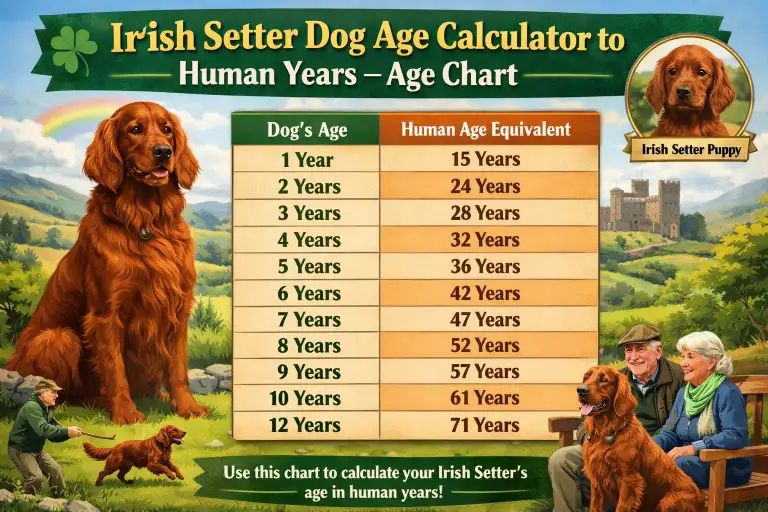
To understand your dog's current life stage, use the Irish Setter Dog Age Calculator.
For life-stage context, see our Irish Setter age chart.

Ata Ur Rehman is the founder of Pet Age in Human Years Calculator, an educational platform that provides age conversion charts and lifespan guides for dogs, cats, birds, and other companion animals. His work focuses on helping pet owners understand how animal ages translate into human years using commonly accepted age conversion formulas and published lifespan averages.
The website compiles breed and species lifespan data from kennel clubs, breed organizations, and general animal lifespan studies to present simple and easy-to-understand guides for pet owners worldwide.
This website was created to centralize animal age conversion charts into one easy reference platform for pet owners.
This article is for general education. For symptoms, medication, diet changes, or health concerns, use a qualified veterinarian who can assess your individual pet.