On this page
Labrador Retrievers are smart, friendly, energetic dogs, but they still need proper training to become calm and well-behaved companions. Many people believe Labs are easy to train, but without structure, they can quickly develop habits like jumping, leash pulling, food stealing, chewing, and ignoring commands.
Learning how to train a Labrador Retriever the right way helps your dog understand rules, build confidence, and stay safe in daily life. Whether you have a Labrador puppy, an adolescent Lab, an adult dog, or a rescue Labrador, the key to successful training is consistency, patience, rewards, and short daily practice.
Why Labrador Retriever Training Is Important
Labrador training is not only about teaching commands. It is also about safety, manners, and building a stronger bond with your dog. A large, excited Labrador can easily knock over children, pull hard on the leash, or run into danger if they do not respond when called.
Training also helps reduce common Labrador behavior problems. A well-trained Lab is less likely to bark excessively, chew furniture, jump on guests, or act wildly indoors. Clear rules make Labradors feel calmer because they know what is expected of them.
Most Labrador behavior problems start as small habits during puppyhood or adolescence. That is why early Labrador puppy training is important. However, adult Labradors and rescue Labs can also learn new skills with the right approach.
Understanding Labrador Retriever Behavior
Labrador Retrievers are eager to please, highly social, and usually very food motivated. These traits make training easier, especially when you use treats, praise, and toys as rewards.
Labs also have high energy levels, especially when young. A puppy or teenage Labrador may struggle to focus for long periods. This does not mean your dog is stubborn. It usually means they need shorter training sessions, more repetition, and better impulse control.
Labradors learn best when rewards are given immediately after the correct behavior. Mixed signals, late rewards, or inconsistent rules can confuse them. Everyone in the home should use the same commands and training rules.
Labrador Training by Age
| Labrador Age Stage | Common Behavior | Training Focus |
|---|---|---|
| 8–16 weeks | Curious, mouthy, distracted | Name response, sit, house training |
| 4–6 months | More confident, testing limits | Leash walking, recall, impulse control |
| 6–18 months | High energy, selective listening | Consistency, calm behavior, distraction training |
| 18+ months | More settled, habits formed | Reliable obedience, real-life practice |
| Rescue adult | May have unknown history | Trust building, basic obedience, slow progress |
How to Train a Labrador Retriever Step by Step
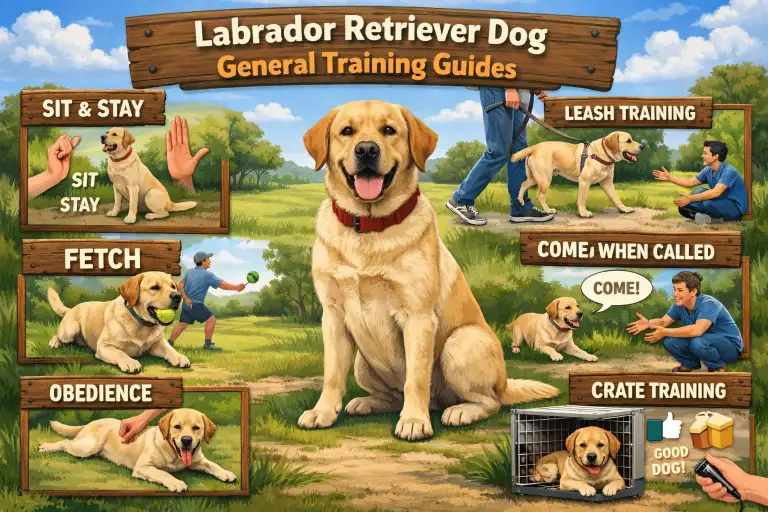
Start Labrador obedience training with simple commands and short sessions. Most Labs do best with 5 to 10 minutes of training at a time. Two to four short sessions each day are better than one long session.
Begin with basic Labrador commands such as:
- Name response
- Sit
- Stay
- Come when called
- Leave it
- Loose leash walking
Train in a quiet place first. Once your Labrador understands the command indoors, practice in the yard, on walks, and around distractions. Many Labradors know commands at home but forget them when they are excited, so real-life practice is very important.
Use rewards your Labrador truly enjoys. Small treats work well for most Labs, but praise, toys, and play can also be effective. Reward your dog immediately after the correct behavior so they understand what they did right.
Simple Labrador Training Routine
| Training Element | Recommendation |
|---|---|
| Session length | 5–10 minutes |
| Sessions per day | 2–4 short sessions |
| Best time to train | Before meals or walks |
| Main skills | Sit, stay, recall, leash walking |
| Rewards | Treats, praise, toys |
| Progress signs | Faster response, calmer behavior |
| Common mistake | Training too long or repeating commands |
Common Labrador Training Problems
Many Labrador training problems are normal, especially in young dogs. Labs are excited, strong, and social, so they need help learning self-control.
Jumping on people is one of the most common issues. Labradors usually jump because they are excited and want attention. Teach your Lab to sit before greetings and only reward calm behavior.
Leash pulling is another common problem. Labs love exploring and may pull hard during walks. Loose leash training, stopping when your dog pulls, and rewarding calm walking can help.
Some Labradors ignore commands outdoors because distractions are more exciting than the reward. Practice commands in different places and use higher-value treats when distractions are strong.
Food stealing and counter surfing are also common because Labradors love food. Keep food out of reach, teach “leave it,” and reward your dog for staying away from counters and tables.
Labrador Behavior Problems and Solutions
| Problem | Why It Happens | Training Solution |
|---|---|---|
| Jumping on people | Excitement and attention seeking | Teach sit for greetings |
| Pulling on leash | Energy and curiosity | Practice loose leash walking |
| Ignoring commands | Too many distractions | Train in different environments |
| Overexcitement | Poor impulse control | Reward calm behavior |
| Food stealing | Strong food motivation | Teach boundaries and manage food |
When to Get Professional Help
Most Labrador training issues improve with consistent home training. However, some situations need help from a professional dog trainer or behavior expert.
Get professional help if your Labrador shows aggression, snapping, serious fear, anxiety, or no progress after several weeks of steady training. Early support can prevent small problems from becoming serious behavior issues.
To understand your dog’s current life stage, use the Labrador Retriever Dog Age Calculator.
Frequently Asked Questions (FAQs)
How long does it take to train a Labrador Retriever?
Most Labrador Retrievers can learn basic commands within a few weeks of consistent training. However, developing reliable obedience and good behavior in different environments may take several months. Daily practice and consistency are the keys to success.
Are Labrador Retrievers easy to train?
Yes, Labrador Retrievers are generally considered one of the easiest dog breeds to train. They are intelligent, eager to please, and highly motivated by food rewards. However, their high energy levels can make training challenging if they do not receive enough exercise and mental stimulation.
What is the best age to start training a Labrador puppy?
The best time to start Labrador puppy training is at 8 weeks of age. Puppies can begin learning their name, basic commands, house training, and socialization skills as soon as they arrive in their new home.
How often should I train my Labrador?
Most Labradors respond best to 2–4 short training sessions per day. Sessions should last between 5 and 10 minutes to keep your dog focused and engaged.
Why does my Labrador ignore commands outside?
Labradors often become distracted by smells, people, animals, and new environments. If your dog listens indoors but ignores commands outdoors, gradually practice in more distracting locations while using high-value rewards.
How do I stop my Labrador from pulling on the leash?
To stop leash pulling, reward your Labrador for walking beside you and stop moving whenever they pull ahead. Consistent loose-leash training helps your dog learn that pulling does not get them where they want to go.
Why does my Labrador jump on people?
Jumping is usually caused by excitement and attention-seeking behavior. Teach your Labrador to sit before greeting people and reward calm behavior instead of jumping.
Can you train an adult Labrador Retriever?
Yes, adult Labradors can be trained successfully. While puppies may learn new habits faster, adult dogs can still master obedience commands, leash manners, and behavior improvements with patience and consistent training.
What treats are best for Labrador training?
Small, soft, and high-value treats work best during training. Many Labrador owners use pieces of chicken, training treats, cheese, or other healthy rewards that their dog finds highly motivating.
When should I hire a professional dog trainer?
Consider hiring a professional trainer if your Labrador shows aggression, severe anxiety, fear-based behaviors, or if you are not seeing progress after several weeks of consistent training. Professional guidance can help address problems before they become more serious.
Final Thoughts
Training a Labrador Retriever takes patience, consistency, and daily practice. Labs are intelligent and eager to learn, but they need clear rules and positive guidance. Start with basic obedience, reward good behavior, practice in real-life situations, and keep sessions short.
With the right Labrador training routine, your dog can become calmer, safer, and more reliable at home, on walks, and around other people.

Ata Ur Rehman is the founder of Pet Age in Human Years Calculator, an educational platform that provides age conversion charts and lifespan guides for dogs, cats, birds, and other companion animals. His work focuses on helping pet owners understand how animal ages translate into human years using commonly accepted age conversion formulas and published lifespan averages.
The website compiles breed and species lifespan data from kennel clubs, breed organizations, and general animal lifespan studies to present simple and easy-to-understand guides for pet owners worldwide.
This website was created to centralize animal age conversion charts into one easy reference platform for pet owners.
This article is for general education. For symptoms, medication, diet changes, or health concerns, use a qualified veterinarian who can assess your individual pet.