On this page
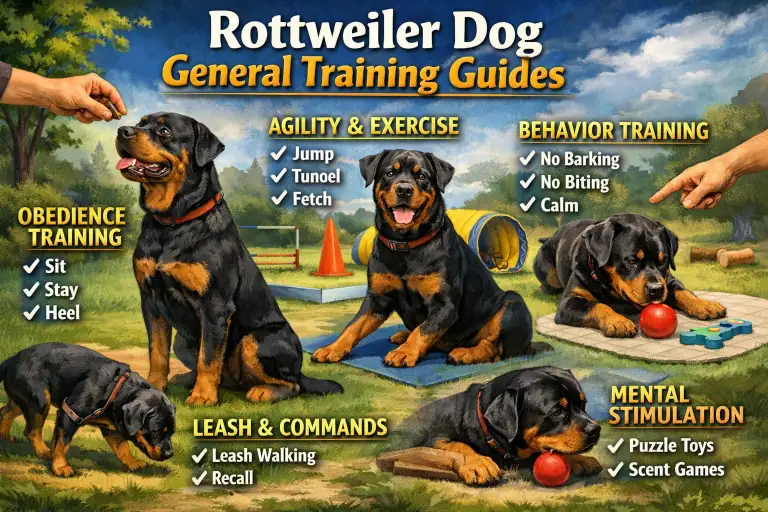
Training a Rottweiler is not about dominance, force, or trying to control your dog through fear. The best Rottweiler training is built on trust, structure, consistency, and clear communication. Rottweilers are powerful, intelligent working dogs, and when they receive the right guidance, they can become calm, obedient, loyal, and safe family companions.
Rottweilers are naturally confident, protective, and people-focused. These qualities make them excellent companions, but they also mean training must begin early and remain consistent. Without proper training, a Rottweiler may develop behavior problems such as leash pulling, jumping, ignoring commands, overprotectiveness, reactivity, or stubborn behavior.
Because Rottweilers are large and strong, even small training problems can become serious if they are ignored. A dog that pulls on the leash, barks at strangers, or refuses to listen can be difficult to manage in public. That is why Rottweiler obedience training is not optional. It is an important part of responsible ownership.
This complete Rottweiler training guide will help you understand how to train a Rottweiler puppy, adolescent Rottweiler, adult Rottweiler, or rescue Rottweiler using safe, humane, and reward-based methods.
Why Proper Rottweiler Training Matters
Rottweilers are strong, confident dogs with natural guarding instincts. When trained correctly, they are calm, reliable, and easy to manage. When training is skipped, delayed, or inconsistent, small behavior issues can quickly grow into major problems.
Proper Rottweiler training helps your dog understand what is expected in everyday situations. It teaches your Rottweiler how to walk calmly on a leash, listen around distractions, greet people politely, and stay under control in public places.
Training is also important for safety. A poorly trained Rottweiler that jumps, pulls, lunges, or ignores commands can be stressful for the owner and intimidating to others. Even if the dog is not aggressive, poor manners can create dangerous situations because of the breed’s size and strength.
A well-trained Rottweiler is more likely to be welcomed around guests, family members, children, other pets, and public environments. Good training also protects the dog from being misunderstood. Rottweilers are often judged more harshly than smaller breeds, so calm and controlled behavior is especially important.
Understanding the Rottweiler Temperament
Before learning how to train a Rottweiler, it is important to understand the breed’s temperament. Rottweilers are intelligent, loyal, brave, and naturally protective. They were originally bred as working dogs, which means they need purpose, structure, and mental stimulation.
Many people describe Rottweilers as stubborn. In reality, most Rottweilers are not stubborn for no reason. They are strong-minded dogs that need clear guidance. If training is confusing, inconsistent, or boring, they may choose not to respond.
Rottweilers are also very observant. They notice their owner’s emotions, body language, and tone of voice. If you are nervous, angry, or inconsistent, your dog may become unsure or reactive. Calm leadership helps your Rottweiler feel secure.
This breed learns best when training is fair, consistent, and reward-based. Food rewards, praise, toys, and play can all motivate a Rottweiler. Harsh punishment, yelling, or fear-based methods can damage trust and may cause defensive behavior.
When to Start Training a Rottweiler Puppy
Rottweiler puppy training should begin as soon as your puppy comes home. Most puppies arrive at around 8 weeks old, and this is the perfect time to start building good habits.
Training a Rottweiler puppy does not mean long or difficult sessions. At this age, training should be short, fun, and positive. Puppies have short attention spans, so five-minute sessions are often enough.
The first things to teach a Rottweiler puppy include:
- Name recognition
- Potty training
- Crate training
- Bite control
- Sit
- Come
- Gentle leash introduction
- Handling and grooming comfort
- Calm behavior around people
Early training is important because Rottweilers grow quickly. A cute puppy that jumps, bites, or pulls may become difficult to manage as an adult. Teaching good manners early prevents future problems.
Rottweiler Puppy Socialization
Socialization is one of the most important parts of Rottweiler puppy training. Socialization means helping your puppy experience different people, places, sounds, surfaces, and situations in a positive way.
A well-socialized Rottweiler is more likely to become calm and confident. A poorly socialized Rottweiler may become fearful, suspicious, or reactive.
Expose your Rottweiler puppy to:
- Friendly people
- Children at a safe distance
- Other calm dogs
- Car rides
- Different walking areas
- Household sounds
- Grooming tools
- Visitors
- New surfaces such as grass, pavement, and tiles
Socialization should never be forced. Let your puppy observe at a safe distance and reward calm behavior. The goal is not to make your Rottweiler love everyone. The goal is to teach your dog to stay calm, neutral, and confident.
Basic Rottweiler Obedience Training
Every Rottweiler should learn basic obedience commands. These commands create safety, control, and communication between you and your dog.
The most important Rottweiler commands include:
Sit
“Sit” is usually one of the easiest commands to teach. Hold a treat near your dog’s nose and slowly move it upward. As your Rottweiler’s head follows the treat, their bottom will naturally lower. When they sit, say “yes” and reward immediately.
Down
“Down” helps your dog settle and stay calm. Start with your Rottweiler in a sitting position. Hold a treat near the nose and slowly lower it toward the floor. Reward when your dog lies down.
Stay
“Stay” teaches patience and impulse control. Start with a short distance and short time. Ask your Rottweiler to sit, say “stay,” take one step back, then return and reward. Increase distance and time slowly.
Come
Recall is one of the most important safety commands. Use a happy voice and reward generously when your Rottweiler comes to you. Never punish your dog after calling them, even if they took too long. Your dog should always feel that coming to you is a good thing.
Leave It
“Leave it” teaches your Rottweiler to ignore unsafe or unwanted items. This command is useful for food on the ground, dangerous objects, or distractions during walks.
Heel or Loose Leash Walking
Because Rottweilers are strong, leash manners are essential. Your dog should learn to walk calmly without pulling. Reward your Rottweiler when they walk near your side and stop moving forward when they pull.
Rottweiler Leash Training
Rottweiler leash training should begin early. A small puppy pulling on the leash may seem harmless, but an adult Rottweiler that pulls can be very difficult to control.
The key rule is simple: pulling should not move the dog forward. If your Rottweiler pulls, stop walking. Wait until the leash becomes loose, then continue. Reward calm walking near your side.
Do not allow your Rottweiler to drag you toward people, dogs, smells, or exciting places. If pulling gets them what they want, they will keep doing it.
Useful leash training tips:
- Start in a quiet area
- Use high-value treats
- Reward eye contact
- Change direction when your dog pulls
- Keep sessions short
- Practice daily
- Stay calm and patient
Avoid yanking the leash or using harsh corrections. These methods can increase frustration or reactivity. Rottweilers learn better when they understand what behavior earns rewards.
Crate Training a Rottweiler
Crate training can be very helpful for Rottweiler puppies and adult dogs. A crate gives your dog a safe place to rest and helps with potty training, travel, and household management.
The crate should never be used as punishment. It should feel like a calm, comfortable space.
To crate train a Rottweiler:
- Place treats inside the crate.
- Let your dog enter freely.
- Keep the door open at first.
- Feed meals near or inside the crate.
- Close the door for short periods.
- Slowly increase crate time.
A properly crate-trained Rottweiler learns to relax alone and settle quietly. This can prevent separation issues and destructive behavior.
Potty Training a Rottweiler Puppy
Potty training requires patience, routine, and consistency. Take your Rottweiler puppy outside often, especially after eating, drinking, playing, sleeping, or waking up.
Reward your puppy immediately after they potty outside. Do not wait until you come back indoors because the reward must be connected to the correct behavior.
A simple potty training routine includes:
- Take your puppy out first thing in the morning
- Take them out after meals
- Take them out after naps
- Take them out after playtime
- Take them out before bedtime
- Reward outdoor potty success
Accidents will happen. Do not punish your puppy. Clean the area properly and improve your schedule.
Training an Adolescent Rottweiler
Adolescence is often the most challenging stage of Rottweiler training. This phase usually happens between 6 and 18 months of age. Your dog may begin testing limits, ignoring commands, pulling harder, or becoming more interested in the environment.
This does not mean your training failed. It means your Rottweiler is growing and needs continued structure.
During adolescence, focus on:
- Consistent rules
- Daily obedience practice
- Leash control
- Impulse control
- Calm greetings
- Recall practice
- Training around distractions
Do not relax the rules during this stage. If your Rottweiler learns that ignoring you works, the behavior can become a habit.
Training an Adult Rottweiler
Adult Rottweilers can still be trained successfully. However, adult dogs may already have established habits, so training may take more time.
If you are training an adult Rottweiler, start with the basics. Do not assume the dog understands commands in every situation. A dog may know “sit” at home but fail to respond outside because of distractions.
Adult Rottweiler training should focus on:
- Rebuilding obedience
- Improving leash manners
- Creating household rules
- Reducing unwanted habits
- Building trust
- Practicing calm behavior
Be patient. Adult dogs can learn new behavior, but consistency is very important.
Training a Rescue Rottweiler
Rescue Rottweilers may come with unknown histories. Some may have had poor training, little socialization, or negative experiences. These dogs need patience, structure, and time to feel safe.
Do not rush training with a rescue Rottweiler. Start with routine and trust. Give the dog time to adjust before expecting too much.
Helpful steps include:
- Keep a predictable schedule
- Use calm body language
- Avoid punishment
- Reward good behavior
- Teach simple commands
- Give the dog a safe resting place
- Work slowly around triggers
If your rescue Rottweiler shows fear, aggression, snapping, or extreme anxiety, contact a qualified professional trainer or veterinary behaviorist.
Common Rottweiler Behavior Problems
Rottweilers can develop behavior problems when training is inconsistent, socialization is limited, or their needs are not met. The good news is that many problems can improve with the right approach.
Leash Pulling
Leash pulling is common in strong breeds. Teach your Rottweiler that pulling stops the walk and calm walking continues it.
Jumping on People
Jumping often happens because the dog is excited. Do not reward jumping with attention. Ask for a sit before greeting.
Ignoring Commands
If your Rottweiler ignores commands, training may need to be strengthened. Practice in quiet areas first, then slowly add distractions.
Overprotective Behavior
Rottweilers are naturally protective, but they should not make their own decisions about every person or situation. Teach calm behavior around visitors and reward neutrality.
Reactivity Toward Dogs
Reactivity can come from fear, frustration, or lack of socialization. Create distance from other dogs and reward calm behavior. Do not force close greetings.
Barking at Strangers
Some barking is alert behavior, but constant barking should be managed. Teach a quiet cue and reward calm responses.
Positive Reinforcement vs Harsh Training
Positive reinforcement is the best way to train a Rottweiler. This method rewards the behavior you want, making your dog more likely to repeat it.
Rewards can include:
- Treats
- Praise
- Toys
- Play
- Attention
- Access to something the dog wants
Harsh training methods can create fear, stress, and defensive reactions. Rottweilers are powerful dogs, and damaging trust can make behavior problems worse.
A calm, confident, reward-based approach helps your Rottweiler learn while maintaining a strong bond.
Daily Training Routine for a Rottweiler
Rottweiler training works best when it becomes part of daily life. You do not need long sessions. Short, regular practice is more effective.
A simple daily routine may include:
- 5 minutes of obedience practice in the morning
- Leash manners during walks
- Calm behavior before meals
- Recall practice in the yard
- Impulse control before doors
- Relaxation training in the evening
Training should not only happen during “training time.” Use everyday moments to teach your Rottweiler patience, focus, and manners.
Mistakes Rottweiler Owners Should Avoid
Many Rottweiler training problems happen because of common owner mistakes. Avoiding these mistakes can make training much easier.
Common mistakes include:
- Waiting too long to start training
- Allowing puppy behavior that will be unsafe in adulthood
- Using harsh punishment
- Repeating commands too many times
- Skipping socialization
- Being inconsistent with rules
- Not practicing around distractions
- Stopping training after basic commands
- Letting the dog pull on the leash
- Ignoring early signs of reactivity
Rottweilers need clear rules and consistent guidance. Mixed messages can confuse them and slow progress.
When to Get Professional Help
Getting help from a professional trainer is not a failure. It is a responsible choice, especially with a large and powerful breed.
You should contact a professional if your Rottweiler:
- Growls at people
- Snaps or bites
- Lunges on the leash
- Shows extreme fear
- Guards food or objects
- Reacts strongly to dogs
- Cannot be controlled in public
- Shows sudden behavior changes
If behavior changes happen suddenly, a vet check is also important. Pain or health issues can sometimes cause aggression or unusual behavior.
Choose a trainer who uses humane, reward-based methods. Avoid trainers who rely heavily on fear, intimidation, or harsh corrections.
To understand your dog’s current life stage, use the Rottweiler Dog Age Calculator.
Frequently Asked Questions About Rottweiler Training
Are Rottweilers easy to train?
Yes, Rottweilers are intelligent and capable of learning quickly. However, they need consistency, structure, and confident handling. They are not the best breed for owners who are unwilling to train daily.
What is the best age to start Rottweiler training?
The best age to start Rottweiler training is as soon as the puppy comes home, usually around 8 weeks old. Early training helps prevent bad habits.
How do you discipline a Rottweiler?
Discipline should mean teaching, not punishment. Use clear rules, redirect unwanted behavior, reward good choices, and stay consistent. Avoid yelling or harsh corrections.
How do I stop my Rottweiler from pulling on the leash?
Stop walking when your Rottweiler pulls. Wait for the leash to loosen, then move forward again. Reward calm walking near your side.
Can an adult Rottweiler still be trained?
Yes, adult Rottweilers can still be trained. It may take more time if the dog already has bad habits, but consistent training can create major improvement.
How do I stop my Rottweiler from being overprotective?
Teach your Rottweiler calm behavior around people and reward neutrality. Do not encourage suspicious or guarding behavior. If your dog growls, snaps, or lunges, contact a professional trainer.
Is punishment good for Rottweiler training?
Harsh punishment is not recommended. It can damage trust and increase fear or defensive behavior. Reward-based training is safer and more effective.
Conclusion
Rottweiler training is about building trust, structure, and reliable communication. This breed is strong, intelligent, loyal, and protective, which means training must be taken seriously.
A well-trained Rottweiler can be calm, obedient, confident, and safe in real-life situations. Whether you are training a puppy, adolescent dog, adult dog, or rescue Rottweiler, the key is consistency.
Start with basic obedience, focus on leash manners, provide positive socialization, and use reward-based methods. Avoid harsh punishment and do not wait too long to correct behavior problems.
With patience, daily practice, and clear leadership, your Rottweiler can become a well-mannered companion and a trusted member of your family.

Ata Ur Rehman is the founder of Pet Age in Human Years Calculator, an educational platform that provides age conversion charts and lifespan guides for dogs, cats, birds, and other companion animals. His work focuses on helping pet owners understand how animal ages translate into human years using commonly accepted age conversion formulas and published lifespan averages.
The website compiles breed and species lifespan data from kennel clubs, breed organizations, and general animal lifespan studies to present simple and easy-to-understand guides for pet owners worldwide.
This website was created to centralize animal age conversion charts into one easy reference platform for pet owners.
This article is for general education. For symptoms, medication, diet changes, or health concerns, use a qualified veterinarian who can assess your individual pet.