On this page
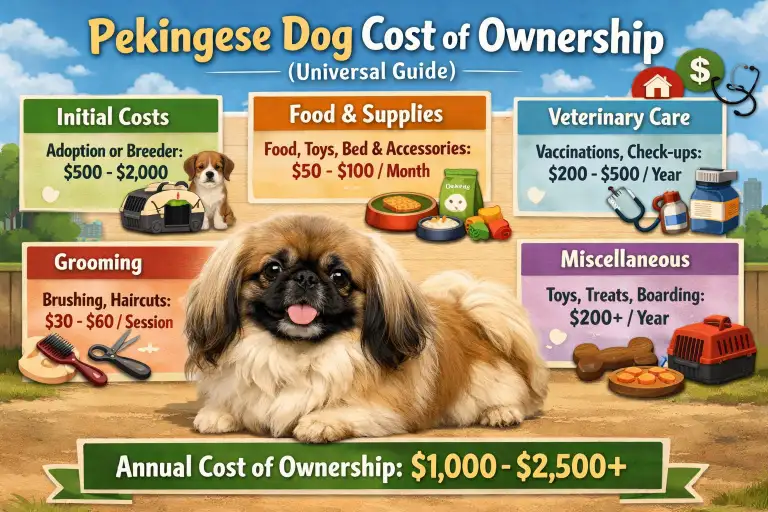
Understanding the true Pekingese dog cost of ownership involves much more than the initial purchase price. While many prospective owners focus on what a Pekingese puppy costs to buy or adopt, the long-term financial commitment includes food, grooming, veterinary care, pet insurance, preventative medications, and potential breed-specific health expenses.
A Pekingese is a small companion breed, but it is not necessarily an inexpensive dog to own. Their luxurious double coat requires regular grooming, while their brachycephalic (flat-faced) structure can increase the likelihood of eye, dental, respiratory, and heat-related health concerns. These factors can significantly affect both annual and lifetime ownership costs.
For most owners, the largest expenses occur during the first year. Adoption or purchase fees, vaccinations, spay or neuter surgery, grooming supplies, training, and initial veterinary care can quickly add up. After that, ownership costs become more predictable, although ongoing grooming and healthcare remain important budget considerations.
Pekingese Purchase Price vs Ownership Cost
Many people researching Pekingese costs focus only on the initial purchase price. However, the cost of buying a Pekingese is only a small portion of the total financial commitment.
A Pekingese puppy purchased from a reputable breeder may cost anywhere from several hundred to several thousand dollars depending on pedigree, breeder reputation, location, and health testing. Adoption through a rescue organization is often less expensive and may include vaccinations, microchipping, or spay/neuter services.
While the purchase or adoption fee is a one-time expense, ownership costs continue throughout the dog’s life. Food, grooming, routine veterinary care, dental care, preventative medications, pet insurance, and unexpected medical expenses typically represent a much larger financial commitment than the initial acquisition cost.
For many owners, the lifetime cost of owning a Pekingese can exceed tens of thousands of dollars over the dog’s lifespan. Understanding both the upfront and long-term expenses helps create a more realistic budget before bringing a Pekingese home.
| Cost Category | Typical Range |
|---|---|
| Purchase Price from Breeder | $800 – $3,000+ |
| Adoption Fee | $100 – $600 |
| Average Annual Ownership Cost | $1,640 – $3,320 |
| Estimated Lifetime Ownership Cost | $18,000 – $45,000+ |
Several factors can influence how much it costs to own a Pekingese:
- Whether the dog is purchased from a breeder or adopted through a rescue
- The dog’s age, health status, and medical needs
- Local veterinary and grooming prices
- Professional versus at-home grooming routines
- Pet insurance coverage and emergency savings plans
- Long-term healthcare and senior care requirements
Many owners underestimate how quickly small recurring expenses accumulate over time. Regular grooming appointments, preventative medications, dental care, eye care, boarding, and unexpected veterinary bills can collectively represent a significant portion of the total lifetime cost of owning a Pekingese.
In this guide, you’ll learn:
- How much a Pekingese costs to buy or adopt
- Typical first-year ownership expenses
- Average monthly and annual ownership costs
- Pet insurance and breed-specific healthcare expenses
- Estimated lifetime costs of owning a Pekingese
- Hidden expenses many owners overlook
Whether you’re comparing breeds or planning your budget before bringing a dog home, understanding the full financial picture can help you determine whether a Pekingese fits your lifestyle and long-term expectations.
Average Monthly Cost Breakdown
Most Pekingese owners spend between $120 and $235 per month on routine care. Grooming and healthcare typically account for a larger share of expenses than food, which is why ownership costs are often higher than many people expect for a small breed.
| Monthly Expense | Typical Cost Range |
|---|---|
| Food | $25 – $45 |
| Grooming | $40 – $80 |
| Preventatives (fleas, ticks, worms) | $15 – $30 |
| Pet insurance or emergency savings | $30 – $60 |
| Toys, treats, and supplies | $10 – $20 |
| Estimated monthly total | $120 – $235 |
Average Annual Cost Breakdown
After the first year, annual ownership costs are generally predictable. However, veterinary treatment, dental work, and unexpected medical issues can increase spending significantly in some years.
| Annual Expense | Typical Cost Range |
|---|---|
| Food | $300 – $540 |
| Grooming | $480 – $960 |
| Routine vet visits & vaccines | $200 – $500 |
| Preventative medications | $180 – $360 |
| Insurance or emergency savings | $360 – $720 |
| Miscellaneous supplies | $120 – $240 |
| Estimated annual total | $1,640 – $3,320 |
Annual costs may be higher if:
- Your dog develops chronic health conditions
- You use professional grooming more frequently
- You live in an area with higher veterinary costs
- Your dog requires prescription food or medication
Annual costs may be lower if:
- You perform some grooming at home
- Your dog remains healthy with minimal medical needs
- You live in a lower-cost region
- You maintain strong preventative care habits
Major Cost Drivers Unique to Pekingese Dogs
Several breed-specific characteristics make the Pekingese more expensive to own than some other toy breeds. While food consumption remains relatively low, grooming requirements and healthcare expenses can increase total ownership costs throughout the dog’s life.
Grooming Costs
The Pekingese has a dense double coat that requires consistent maintenance. Without routine brushing and grooming, matting can lead to discomfort, skin irritation, and additional veterinary expenses.
| Grooming Type | Frequency | Average Cost |
|---|---|---|
| Full professional groom | Every 6–8 weeks | $60 – $120 |
| Bath and brush | Monthly | $40 – $70 |
| Home grooming tools | One-time purchase | $80 – $150 |
Breed-Specific Healthcare Costs
Pekingese dogs are known for their flat facial structure, prominent eyes, and compact body. These traits contribute to several health concerns that may increase veterinary spending over time.
- Eye injuries and infections
- Dental disease and tooth loss
- Respiratory and breathing issues
- Joint and spinal conditions in older dogs
- Heat-related complications
Typical Pekingese Health Costs
| Health Issue | Typical Treatment Cost |
|---|---|
| Eye infection treatment | $150 – $400 |
| Dental cleaning with anesthesia | $400 – $900 |
| Breathing-related examinations | $200 – $600 |
| Emergency veterinary visit | $500 – $2,000+ |
Pet Insurance for a Pekingese
Because Pekingese dogs can be prone to eye, dental, and respiratory issues, many owners consider pet insurance as part of their monthly budget. While insurance increases routine expenses, it can help reduce the financial impact of major illnesses, injuries, or emergency procedures.
| Coverage Type | Typical Monthly Cost |
|---|---|
| Accident-only coverage | $20 – $30 |
| Accident and illness coverage | $35 – $60 |
| Premium coverage with lower deductible | $60 – $90 |
Lifetime Cost, Hidden Expenses, and Smart Budgeting Tips
A healthy Pekingese can live between 12 and 15 years, meaning ownership costs accumulate over a long period. While monthly expenses may appear manageable, the total lifetime cost can be substantial when grooming, healthcare, insurance, and senior care are considered together.
Estimated Lifetime Cost of Owning a Pekingese
| Care Level | Estimated Lifetime Cost |
|---|---|
| Low-cost ownership | $18,000 – $25,000 |
| Average ownership | $25,000 – $35,000 |
| Higher-cost ownership | $35,000 – $45,000+ |
The largest lifetime expenses typically include:
- Professional grooming over many years
- Routine and emergency veterinary care
- Dental cleanings and oral health treatment
- Senior care, medications, and monitoring
Hidden Costs Many Owners Overlook
| Hidden Expense | Typical Cost |
|---|---|
| Boarding or pet sitting | $30 – $70 per day |
| Travel-related pet expenses | $100 – $500 per trip |
| Lifetime dental care | $1,500 – $4,000 |
| Replacement beds, toys, and equipment | $300 – $800 |
| Senior care and medication | $500 – $2,000+ per year |
Smart Budgeting Tips for Pekingese Owners
- Maintain an emergency veterinary fund
- Learn basic coat maintenance and brushing techniques
- Prioritize preventative dental care
- Compare insurance options before enrolling
- Schedule regular wellness exams to identify issues early
Final Thoughts
The cost of owning a Pekingese extends far beyond the initial purchase or adoption fee. Grooming, healthcare, insurance, and long-term maintenance all contribute to the total financial commitment. Owners who plan ahead and budget realistically are usually better prepared to provide consistent care throughout the dog’s life.

Ata Ur Rehman is the founder of Pet Age in Human Years Calculator, an educational platform that provides age conversion charts and lifespan guides for dogs, cats, birds, and other companion animals. His work focuses on helping pet owners understand how animal ages translate into human years using commonly accepted age conversion formulas and published lifespan averages.
The website compiles breed and species lifespan data from kennel clubs, breed organizations, and general animal lifespan studies to present simple and easy-to-understand guides for pet owners worldwide.
This website was created to centralize animal age conversion charts into one easy reference platform for pet owners.
This article is for general education. For symptoms, medication, diet changes, or health concerns, use a qualified veterinarian who can assess your individual pet.