On this page
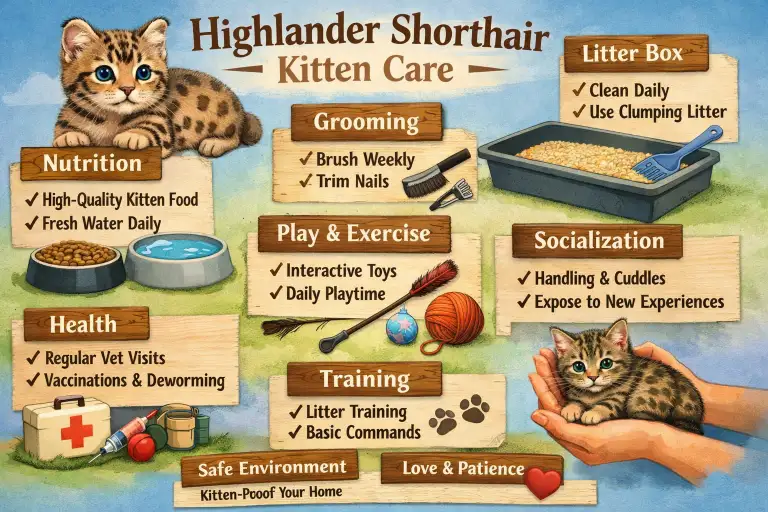
Bringing a Highlander Shorthair kitten home is an exciting and joyful experience. These kittens are energetic, curious, and social, but they also need a safe, calm environment to settle in. Before your kitten arrives, it is important to prepare your home to make the transition smooth and stress-free for both of you.
Start by creating a special space for your kitten. This could be a quiet room or a cozy corner with a bed, blanket, and a few toys. Kittens feel safer when they have a small, enclosed space they can call their own. Make sure it is away from loud noises, busy areas, or places where other pets may disturb them.
Next, gather the essential supplies. Your kitten will need a litter box, food and water bowls, kitten-friendly food, toys, scratching posts, and grooming tools. You may also want a soft bed, a carrier for vet visits, and some treats for bonding. Preparing these items ahead of time ensures your kitten has everything they need from day one.
Finally, take a moment to kitten-proof your home. Remove small objects that could be swallowed, secure cords and wires, and check windows or balconies for safety. If you have other pets, introduce them slowly and carefully to avoid stress. Setting up a safe, welcoming environment helps your Highlander Shorthair feel at home faster.
Feeding, Nutrition & Litter Training
Highlander Shorthair kittens grow quickly, so feeding them the right way is very important. Kittens need special food with more protein and nutrients than adult cats. You can offer a mix of wet and dry food, depending on your kitten’s preference. Always make sure fresh water is available at all times.
Young kittens eat several times a day. The number of meals and portion size depends on their age. You can use the table below as a simple guide:
| Age (weeks) | Meals per day | Portion Size |
|---|---|---|
| 4–6 | 4 | 1–2 tablespoons |
| 6–8 | 4 | 2–3 tablespoons |
| 8–12 | 3 | 3–4 tablespoons |
| 12+ | 2–3 | 1/4 cup per meal |
Litter training usually starts as soon as your kitten comes home. Place the litter box in a quiet area and show your kitten where it is. After meals or naps, gently place the kitten in the box. Praise and pet them when they use it correctly. Accidents are normal, so clean gently without scolding.
Using the right type of litter also helps. Most kittens prefer unscented, clumping litter. Keep the box clean, scoop daily, and change litter regularly. A simple routine makes it easier for your Highlander Shorthair to learn quickly and stay healthy.
Sleep, Play & Socialization
Kittens sleep a lot, sometimes 16–20 hours a day. Sleep is important for their growth and health. Your Highlander Shorthair may take several short naps, so provide a soft bed in a quiet area. Make sure they can rest without being disturbed by other pets or loud noises.
Playtime is also essential. Highlander Shorthair kittens are very active and need daily exercise. Use safe toys like feather wands, balls, or small plush toys. Avoid using your hands or feet as toys to prevent biting and scratching habits. Short, frequent play sessions are better than long ones to keep your kitten engaged but not tired.
Socialization helps your kitten grow into a friendly, confident cat. Handle your kitten gently, pet them often, and speak softly. Expose them to new experiences gradually, such as meeting family members or other pets. This helps reduce fear and builds trust.
Here’s a simple daily routine for sleep, play, and meals:
| Time of day | Activity |
|---|---|
| Morning | Breakfast, 20 min play |
| Midday | Nap time |
| Afternoon | Snack, short play session |
| Evening | Dinner, interactive play |
| Night | Nap / quiet time |
Grooming & Health Basics
Highlander Shorthair kittens have short coats, so grooming is easy but still important. Brush their fur a few times a week to remove loose hair and keep their coat shiny. Check their ears, eyes, and teeth regularly for cleanliness. Trim their nails carefully every couple of weeks to prevent scratching injuries.
Routine health care is essential. Schedule your kitten’s first vet visit soon after bringing them home. The vet will check weight, overall health, and discuss vaccinations and parasite prevention (no dosages listed here, just general guidance). Keep a log of your kitten’s growth and behavior, noting anything unusual like decreased appetite or lethargy.
You can also use a simple health checklist table:
| Health Aspect | How Often | What to Check |
|---|---|---|
| Fur & Skin | Weekly | Smooth, shiny, no bald spots |
| Eyes & Ears | Weekly | Clear, clean, no discharge |
| Teeth & Gums | Weekly | Pink gums, clean teeth |
| Nails | Every 2 weeks | Trim to prevent overgrowth |
| Weight | Weekly | Steady growth as expected |
Following these basic grooming and health habits helps your Highlander Shorthair stay happy, clean, and healthy.
Safety, Common Mistakes & Owner Tips
Keeping your Highlander Shorthair kitten safe is very important. Remove or secure items that could be dangerous, like cords, small objects, or toxic plants. Always supervise them around windows, balconies, or high places. If you have other pets, introduce them slowly to prevent stress or fights.
New owners often make simple mistakes. Overfeeding, inconsistent litter training, or not providing enough playtime can cause problems. Handling the kitten roughly or too much at once can make them fearful. Patience and consistency are key.
Here’s a quick reminder table of common mistakes and tips:
| Common Mistake | How to Avoid |
|---|---|
| Overfeeding | Follow portion guidelines, use a feeding schedule |
| Litter problems | Scoop daily, place box in quiet area |
| Rough play | Use toys, not hands |
| Ignoring naps | Provide quiet rest spaces |
| Unsafe home | Kitten-proof and supervise |
Finally, remember that every kitten is unique. Some may be shy, energetic, or clingy. Take time to learn their personality, provide love and patience, and enjoy the bonding journey. A Highlander Shorthair kitten can bring years of joy when raised in a safe, loving home.
For more detailed kitten care tips, you can visit the ASPCA Kitten Care Guide.

Ata Ur Rehman is the founder of Pet Age in Human Years Calculator, an educational platform that provides age conversion charts and lifespan guides for dogs, cats, birds, and other companion animals. His work focuses on helping pet owners understand how animal ages translate into human years using commonly accepted age conversion formulas and published lifespan averages.
The website compiles breed and species lifespan data from kennel clubs, breed organizations, and general animal lifespan studies to present simple and easy-to-understand guides for pet owners worldwide.
This website was created to centralize animal age conversion charts into one easy reference platform for pet owners.
This article is for general education. For symptoms, medication, diet changes, or health concerns, use a qualified veterinarian who can assess your individual pet.