On this page
Australian Shepherds are energetic, intelligent, and highly active dogs that require a carefully balanced diet to support their unique physical and mental needs. Proper nutrition is essential not only for maintaining a healthy weight but also for supporting muscle development, joint health, a shiny coat, and overall vitality. Because Australian Shepherds are herding dogs by nature, they have higher energy requirements than many other breeds, making diet and feeding strategies a crucial part of their care.
Feeding your Australian Shepherd the right way can also influence their behavior, stamina, and longevity. Underfeeding can lead to fatigue, poor coat condition, or developmental issues in puppies, while overfeeding may result in obesity, joint stress, or metabolic problems in adults and seniors.
This guide is designed to help you understand the nutritional needs of Australian Shepherds at every life stage — from growing puppies to active adults and senior dogs — and to provide practical advice for portioning, choosing the right food type, and managing real-world feeding scenarios.
Quick Nutritional Needs Overview by Life Stage
| Life Stage | Protein (%) | Fat (%) | Key Considerations |
|---|---|---|---|
| Puppy (8 weeks – 12 months) | 25–30% | 12–18% | Supports rapid growth, muscle development, and high energy needs. |
| Adult (1 – 7 years) | 22–28% | 10–15% | Maintains muscle mass, energy for daily activity, and healthy coat. |
| Senior (7+ years) | 20–25% | 8–12% | Supports joint health, maintains ideal weight, and prevents metabolic decline. |
This table provides a quick reference for the protein and fat percentages Australian Shepherds require at different life stages. Keeping these ratios in mind will help you choose the right commercial dog food or formulate a balanced homemade diet.
Essential Nutrients for Australian Shepherds
Feeding your Australian Shepherd the right nutrients is key to keeping them healthy, active, and happy. Dogs need a balance of macronutrients (protein, fats, and carbohydrates) and micronutrients (vitamins and minerals) to grow properly, have energy, and stay strong.
Macronutrients: Protein, Fats, and Carbs
- Protein: Helps build muscles, repair tissues, and support an active lifestyle. Australian Shepherds, being energetic, need good quality protein from meat, eggs, or fish.
- Fats: Provide energy for play, training, and long walks. Fats also keep the skin and coat healthy. Healthy sources include fish oil, chicken fat, or flaxseed.
- Carbohydrates: Supply quick energy for daily activity. Good carbs include rice, oats, and sweet potatoes. Too many carbs from low-quality sources can lead to weight gain.
Macronutrient Breakdown for Australian Shepherds
| Life Stage / Activity | Protein (%) | Fat (%) | Carbs (%) |
|---|---|---|---|
| Puppy – High Activity | 28–30% | 14–18% | 40–45% |
| Adult – Moderate Activity | 22–28% | 10–15% | 45–50% |
| Senior – Low Activity | 20–25% | 8–12% | 50–55% |
This table shows how much protein, fat, and carbs your Australian Shepherd should get depending on their age and energy level. Puppies and active adults need more protein and fat, while seniors need fewer calories to avoid weight gain.
Micronutrients: Vitamins, Minerals, and Omega‑3
Micronutrients help with bones, joints, immunity, and coat health. Even a healthy diet may need a bit of extra vitamins or minerals if your dog has special needs.
Essential Vitamins and Minerals for Australian Shepherds
| Nutrient | Role in Health | Sources |
|---|---|---|
| Calcium & Phosphorus | Strong bones & teeth | Meat, eggs, dairy, bone meal |
| Vitamin A | Vision & skin health | Liver, eggs, fish oil |
| Vitamin E | Immune system & coat | Vegetable oils, leafy greens |
| Omega‑3 Fatty Acids | Skin, coat, and joints | Fish oil, flaxseed |
| Zinc & Copper | Immune system & coat | Meat, fish, whole grains |
Giving your Australian Shepherd the right vitamins and minerals ensures they grow strong, stay active, and have a shiny coat. If you use a high-quality commercial dog food, it usually covers these nutrients, but check the label to be sure.
Feeding Guidelines: How Much and How Often to Feed Your Australian Shepherd
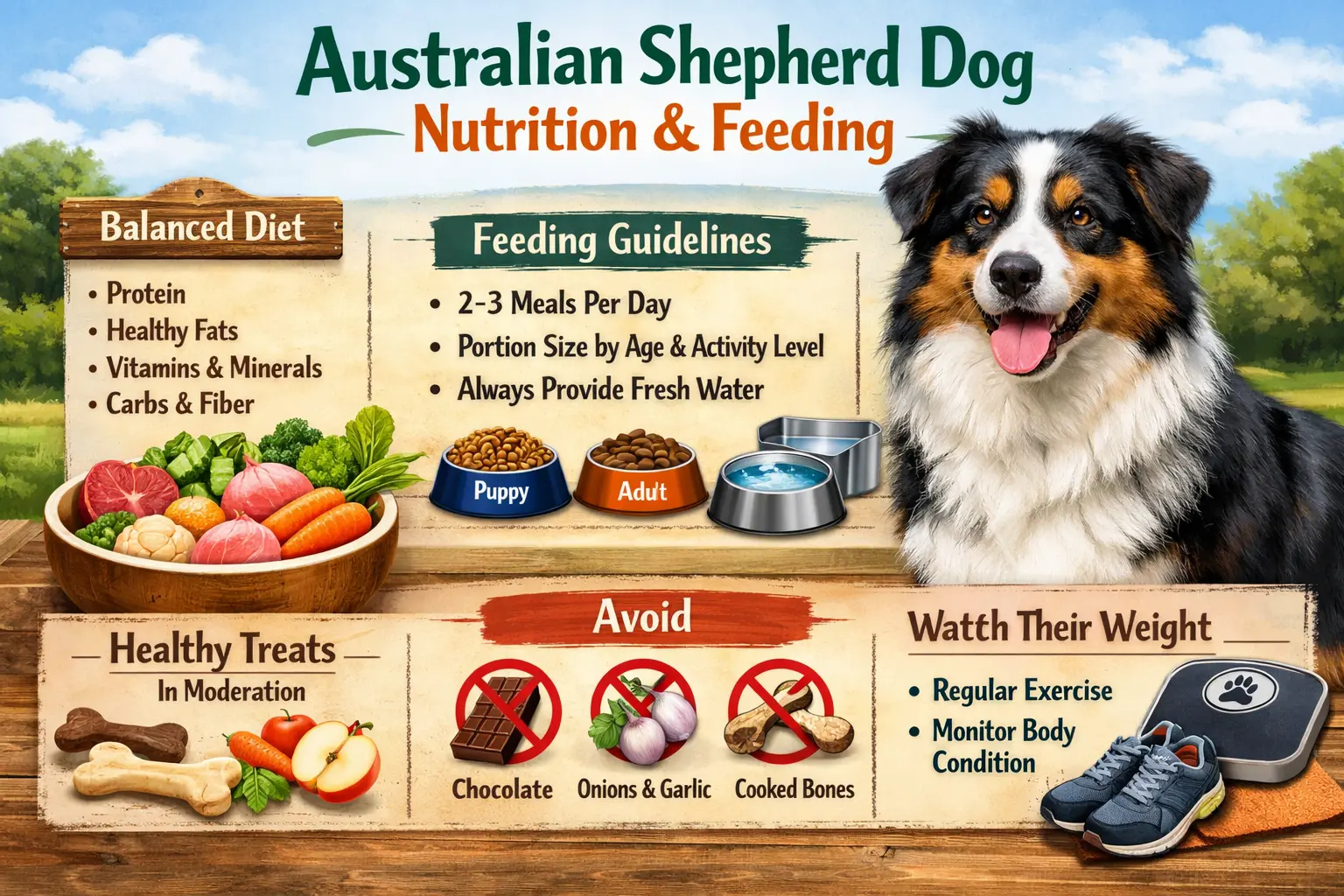
Feeding your Australian Shepherd the right amount is just as important as feeding the right food. Too much can cause weight gain, and too little can make your dog tired or underweight. The amount depends on age, weight, and activity level.
Australian Shepherd Calories Per Day by Weight and Activity Level
Australian Shepherds are active dogs, so they need enough calories to stay energetic. Puppies need more calories for growth, adults need moderate calories, and seniors need fewer calories to prevent weight gain.
Daily Calorie Needs for Australian Shepherds
| Dog Weight | Low Activity (cal/day) | Moderate Activity (cal/day) | High Activity (cal/day) |
|---|---|---|---|
| 10 lbs (4.5 kg) | 200–250 | 250–300 | 300–350 |
| 20 lbs (9 kg) | 350–400 | 400–450 | 450–500 |
| 40 lbs (18 kg) | 600–650 | 650–750 | 750–850 |
| 60 lbs (27 kg) | 800–900 | 900–1000 | 1000–1100 |
This table helps you quickly see how many calories your Australian Shepherd needs based on weight and activity.
Feeding Frequency by Life Stage
- Puppies: 3–4 small meals per day. They have small stomachs but high energy needs.
- Adult Dogs: 2 meals per day is usually enough.
- Senior Dogs: 1–2 meals per day, depending on appetite and health.
Using Body Condition Score (BCS) to Adjust Portions
Body Condition Score helps you see if your dog is too thin, perfect, or overweight. You can adjust food portions based on their BCS.
Portion Guide Using Body Condition Score
| Body Condition Score | Appearance | Feeding Tip |
|---|---|---|
| 1–3 (Underweight) | Ribs visible, little fat | Increase food slightly, add healthy calories |
| 4–5 (Ideal) | Ribs can be felt, visible waist | Maintain current portions |
| 6–7 (Overweight) | Ribs hard to feel, fat layer over ribs | Reduce food slightly, add exercise |
| 8–9 (Obese) | Ribs not visible, heavy fat | Cut calories, consult vet for weight plan |
Checking your dog’s body condition regularly ensures they stay at a healthy weight without overfeeding or underfeeding.
Types of Dog Food for Australian Shepherds: Pros and Cons
Australian Shepherds can eat different types of dog food. Each type has its own benefits and drawbacks, and some foods are safer or healthier than others. Choosing the right food helps keep your dog energetic, healthy, and happy.
Dog Food Types for Australian Shepherds
| Food Type | Benefits | Drawbacks | Best For |
|---|---|---|---|
| Kibble (Dry Food) | Convenient, long shelf life, balanced nutrition | Some low-quality brands have fillers | Busy owners, adult dogs |
| Canned (Wet Food) | Tasty, high moisture content | Can be expensive, may spoil quickly | Picky eaters, hydration support |
| Raw Food | High protein, natural diet | Risk of bacteria, requires careful handling | Active dogs, puppies under supervision |
| Fresh / Cooked Food | Highly digestible, controlled ingredients | Short shelf life, costly | Dogs with allergies, sensitive stomachs |
| Freeze-Dried | Preserves nutrients, easy to store | More expensive than kibble | Owners who want raw benefits without prep |
| Homemade | Complete control over ingredients | Must balance nutrients carefully | Owners wanting fully natural diet |
This table helps you see which food works best for your dog’s lifestyle, age, and health needs.
Safe vs Toxic Foods
Not all human foods are safe for dogs. Some foods can make your Australian Shepherd very sick or even be deadly. Always check before feeding.
Safe and Toxic Foods for Australian Shepherds
| Safe Foods | Toxic Foods |
|---|---|
| Chicken (cooked) | Chocolate |
| Carrots | Grapes / Raisins |
| Pumpkin | Onions & Garlic |
| Apples (no seeds) | Avocado |
| Blueberries | Alcohol |
| Plain Rice or Pasta | Macadamia nuts |
| Salmon (cooked) | Xylitol (sweetener) |
Treats like small pieces of carrot or apple are safe. Always avoid toxic foods, even in tiny amounts.
Special Diets, Common Problems, and Real-Life Scenarios
Sometimes, your Australian Shepherd may have special dietary needs or face feeding challenges. Whether it’s dealing with allergies, picky eating, or managing weight, it’s important to know how to adjust their diet to keep them healthy.
Special Diets for Allergies, Sensitive Stomachs, and Weight Management
Some Australian Shepherds have food allergies or a sensitive stomach, and they need specific foods to feel good. If your dog has these issues, here’s how to help:
- Food Allergies: Choose foods with fewer ingredients and avoid common allergens like wheat, beef, or chicken if your dog is allergic.
- Sensitive Stomach: Look for foods with easily digestible ingredients, like rice and chicken.
- Weight Management: For overweight dogs, choose foods lower in calories and fat. You may also want to reduce portion sizes and add more exercise.
Special Diets for Health Conditions
| Condition | Recommended Diet | Food Type Suggestions |
|---|---|---|
| Food Allergies | Limited ingredient diet | Hypoallergenic food, single-protein diet |
| Sensitive Stomach | Easily digestible food | Rice, chicken, turkey, sweet potatoes |
| Weight Management | Lower calorie, high fiber | Weight control formulas, homemade meals with veggies |
Dealing with Picky Eaters, Food Refusal, or Digestive Issues
Some Australian Shepherds are picky eaters or refuse to eat their meals. Here’s how you can solve these problems:
- Picky Eaters: Try offering a variety of textures (kibble, wet food) or adding tasty toppers like a bit of plain yogurt.
- Food Refusal: If your dog refuses food, try switching to a different flavor or food type. Sometimes dogs get bored of the same food every day.
- Digestive Issues: For dogs with upset stomachs, choose a food that’s gentle on the stomach, like boiled chicken and rice, or a special formula for sensitive digestion.
Feeding Scenarios: Travel, Multiple Dogs, and Managing Food Aggression
In some cases, feeding routines need to be adjusted for real-life situations, like traveling, feeding multiple dogs, or managing food aggression.
- Traveling with Dogs: Bring enough of their regular food or find a similar food to avoid upsetting their stomach.
- Feeding Multiple Dogs: If you have more than one dog, feed them in separate areas to prevent food competition or aggression.
- Food Aggression: Some dogs can become possessive of their food. If this happens, consult a vet or behaviorist to safely manage the issue.
Feeding Guidelines for Real-Life Scenarios
| Scenario | Feeding Tips |
|---|---|
| Traveling | Bring enough of your dog’s usual food, or buy similar food to avoid upset stomach. |
| Multiple Dogs | Feed each dog separately to prevent fights over food. |
| Food Aggression | Feed in a quiet place away from distractions and other pets. Use behavior training if necessary. |
For more detailed information on the nutritional needs of specific dog breeds, check out this comprehensive guide to dog food
FAQs
How much should I feed my Australian Shepherd daily?
The amount depends on your dog’s age, weight, activity level, and body condition. Active adult Australian Shepherds usually need more calories than low-activity or senior dogs. Use feeding charts as a starting point, then adjust portions based on weight, energy, and body condition.
How many times a day should an Australian Shepherd eat?
Puppies usually do best with 3–4 small meals per day, while adult Australian Shepherds are typically fed 2 meals per day. Senior dogs may eat 1–2 meals daily, depending on appetite and health.
What nutrients are most important for Australian Shepherds?
Australian Shepherds need high-quality protein for muscle support, healthy fats for energy and coat health, digestible carbohydrates for activity, and key micronutrients like calcium, phosphorus, zinc, copper, vitamin E, and omega-3 fatty acids.
Is dry food or wet food better for Australian Shepherds?
Both can work well. Dry kibble is convenient, affordable, and easy to store, while wet food is more flavorful and adds moisture. The best choice depends on your dog’s preference, health needs, budget, and activity level.
Can Australian Shepherds eat homemade food?
Yes, but homemade diets must be properly balanced. Australian Shepherds need the right mix of protein, fat, carbohydrates, vitamins, and minerals. A poorly balanced homemade diet can cause nutrient deficiencies, so it is best to consult a veterinarian or canine nutritionist.
What foods should Australian Shepherds avoid?
Australian Shepherds should avoid toxic foods such as chocolate, grapes, raisins, onions, garlic, macadamia nuts, alcohol, avocado, and xylitol. Even small amounts of some toxic foods can be dangerous.
What should I do if my Australian Shepherd is a picky eater?
Try offering a consistent feeding schedule, switching textures, or adding safe toppers such as a small amount of plain yogurt or cooked pumpkin. Avoid constantly changing foods, as this may encourage picky behavior or upset digestion.
Do Australian Shepherd puppies need special food?
Yes. Puppies need food formulated for growth, with higher protein and fat levels to support muscle development, energy, and healthy growth. Feed puppy food until they reach maturity, usually around 12 months.
How do I know if my Australian Shepherd is overweight?
Use body condition scoring. If you cannot easily feel your dog’s ribs, they have no visible waist, or they carry excess fat around the ribs and belly, they may be overweight. Reduce portions gradually and increase activity with veterinary guidance.
Should senior Australian Shepherds eat less?
Often, yes. Senior dogs may become less active and need fewer calories. However, they still need quality protein, joint-supporting nutrients, and a balanced diet to maintain muscle and overall health.
To understand your dog’s current life stage, use the Australian Shepherd Dog Age Calculator.
For more detail, see our Australian Shepherd age chart.
Final Thoughts
Feeding an Australian Shepherd properly is about more than filling a bowl. This energetic and intelligent breed needs a balanced diet that supports daily activity, lean muscle, joint health, digestion, and a healthy coat. Puppies, adults, and seniors all have different nutritional needs, so portions and food choices should change as your dog grows and ages.
The best feeding plan is one that matches your Australian Shepherd’s weight, activity level, health condition, and lifestyle. Choose high-quality food, monitor body condition regularly, avoid toxic ingredients, and make adjustments when your dog’s needs change. With the right nutrition and feeding routine, your Australian Shepherd can stay active, healthy, and happy throughout every life stage.

Ata Ur Rehman is the founder of Pet Age in Human Years Calculator, an educational platform that provides age conversion charts and lifespan guides for dogs, cats, birds, and other companion animals. His work focuses on helping pet owners understand how animal ages translate into human years using commonly accepted age conversion formulas and published lifespan averages.
The website compiles breed and species lifespan data from kennel clubs, breed organizations, and general animal lifespan studies to present simple and easy-to-understand guides for pet owners worldwide.
This website was created to centralize animal age conversion charts into one easy reference platform for pet owners.
This article is for general education. For symptoms, medication, diet changes, or health concerns, use a qualified veterinarian who can assess your individual pet.