On this page
Training a Basset Hound is very different from training many other dog breeds. These dogs were not developed to constantly look to humans for direction. Instead, they were bred to work independently, following scent trails for long distances while making decisions on their own.
Because of this history, many owners mistakenly label Basset Hounds as stubborn, lazy, or difficult to train. In reality, they are intelligent scent hounds that simply process information differently than highly handler-focused breeds.
A Basset Hound’s nose often takes priority over everything else. If an interesting scent appears, it can instantly become more important than a command, a toy, or even praise. Understanding this natural behavior is the foundation of successful training.
This guide explains how to train a Basset Hound using practical, reward-based methods that work with the breed’s instincts rather than against them. Whether you are raising a puppy, adopting an adult rescue, or improving everyday manners, the goal is the same: build cooperation, trust, and reliable behavior through patience and consistency.
Why Training a Basset Hound Is So Important
Many people assume Basset Hounds require very little training because they are calm indoors and generally friendly. While they may be less energetic than some breeds, proper training is essential for safety and daily life.
Without training, a Basset Hound may:
- Ignore commands outdoors
- Pull strongly on the leash
- Follow scent trails without warning
- Wander away from owners
- Develop frustrating household habits
- Become difficult to manage in public
Because scent often overrides attention, an untrained Basset Hound can quickly become a safety risk around roads, parks, and unfamiliar environments.
Training also strengthens the relationship between owner and dog. Clear communication reduces frustration and helps the dog understand expectations.
Why Training Matters
| Without Training | With Consistent Training |
|---|---|
| Ignores commands outdoors | More reliable responses |
| Pulls heavily on leash | Better leash manners |
| Follows scents without control | Improved focus |
| Owner becomes frustrated | Stronger bond and trust |
| Confused about expectations | Understands household rules |
Training does not remove a Basset Hound’s independence. It simply teaches the dog how to make safer and better choices.
Understanding How a Basset Hound Thinks
Successful training begins with understanding the breed’s mindset.
Basset Hounds experience the world primarily through scent. Their noses are among the most powerful in the canine world, and their brains are naturally programmed to prioritize smells above almost everything else.
This affects training in several ways:
- They become distracted easily outdoors.
- They often pause before responding.
- They are less naturally obedient than some breeds.
- They prefer rewards that feel worthwhile.
- They dislike harsh handling and pressure.
Many owners mistake these traits for stubbornness, but most Basset Hounds are not intentionally ignoring commands. They are simply evaluating competing information before making a decision.
Common Basset Hound Traits and Training Impact
| Trait | Training Effect |
|---|---|
| Strong scent drive | Easily distracted outdoors |
| Independent nature | Requires extra motivation |
| Slow decision-making | Delayed responses are normal |
| Sensitive temperament | Harsh methods reduce learning |
| Food motivation | Rewards are highly effective |
Understanding these characteristics allows owners to set realistic expectations and avoid unnecessary frustration.
The Best Training Approach for Basset Hounds
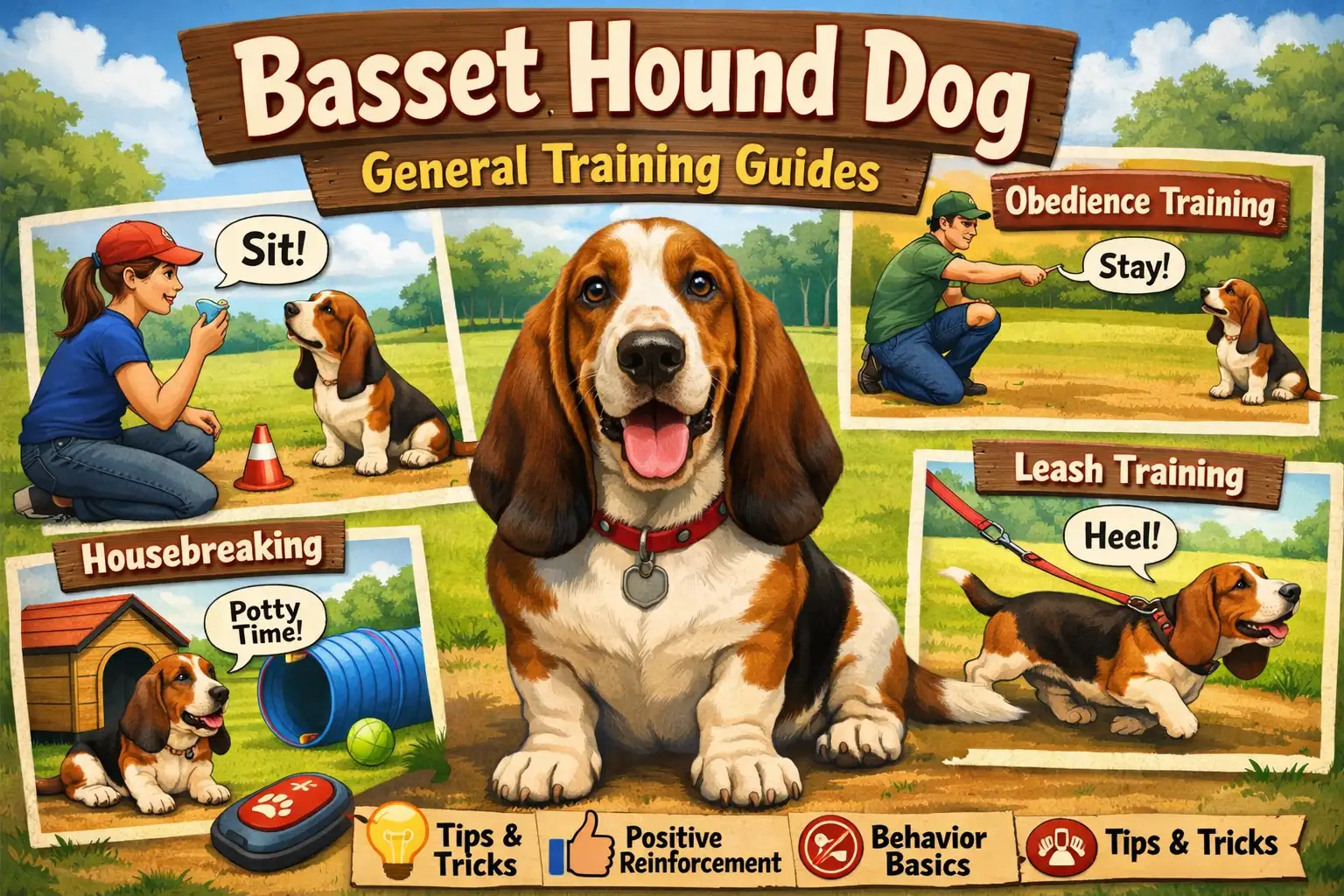
Basset Hounds respond best to positive reinforcement training.
Rather than forcing obedience, positive reinforcement encourages the dog to repeat behaviors that lead to rewards.
The most effective rewards include:
- Small food treats
- Soft, high-value snacks
- Praise
- Play
- Access to preferred activities
Food rewards are usually the strongest motivator because many Basset Hounds value food more consistently than toys or verbal praise.
Core Training Principles
- Keep sessions short.
- Reward immediately.
- Stay patient.
- Avoid repeating commands.
- Increase difficulty gradually.
- End sessions while the dog is still engaged.
Training should feel enjoyable rather than stressful.
Step-by-Step Basset Hound Training Plan
Step 1: Start in a Quiet Environment
Begin training indoors or in a distraction-free area.
Your Basset Hound should first understand commands before being expected to respond around exciting scents and distractions.
Step 2: Use High-Value Rewards
Many training failures happen because the reward is not valuable enough.
Examples include:
- Small chicken pieces
- Freeze-dried treats
- Soft training treats
- Cheese in tiny amounts
The reward must compete with environmental distractions.
Step 3: Keep Sessions Short
Basset Hounds often learn best through multiple short sessions rather than one long session.
Recommended Training Schedule
| Training Element | Recommendation |
|---|---|
| Session Length | 5–10 minutes |
| Sessions Per Day | 2–4 short sessions |
| Training Environment | Quiet first, distractions later |
| Reward Type | High-value treats |
| Training Style | Calm and positive |
Step 4: Build Difficulty Slowly
Progress gradually through different environments:
- Inside the house
- Backyard
- Quiet outdoor area
- Neighborhood walk
- Busier environments
If your dog struggles, return to an easier step and rebuild success.
Essential Commands Every Basset Hound Should Learn
While advanced obedience is optional, several commands are extremely important for safety and daily life.
Sit
Useful for:
- Greeting people
- Waiting calmly
- Building focus
Stay
Helps prevent unsafe movement around doors, roads, and distractions.
Leave It
One of the most valuable commands for scent hounds.
It teaches the dog to disengage from objects, food, or scents when asked.
Come (Recall)
Recall training is critical but often challenging with Basset Hounds.
Owners should understand that recall reliability may always be lower than in some other breeds due to scent distractions.
Loose-Leash Walking
Because Basset Hounds naturally track scents while walking, leash training should focus on cooperation rather than perfection.
Training Basset Hound Puppies
Puppy training should begin immediately after arrival.
Early training focuses on:
- House training
- Socialization
- Name recognition
- Basic commands
- Handling exercises
- Leash introduction
Puppy Training Priorities
| Skill | Importance |
|---|---|
| House Training | Essential |
| Socialization | Essential |
| Name Recognition | High |
| Recall Foundation | High |
| Leash Training | High |
| Basic Manners | High |
Young puppies learn quickly but have short attention spans, so keep lessons brief and positive.
Training an Adult Basset Hound
Adult Basset Hounds may require more patience because established habits take time to change.
However, adult dogs remain fully capable of learning:
- Better leash manners
- Reliable routines
- Improved focus
- Household rules
- Basic obedience
Consistency is more important than age.
Common Basset Hound Training Problems and Solutions
Many owners experience similar challenges.
Fortunately, most problems have practical solutions.
Problem-Solving Guide
| Problem | Common Cause | Solution |
|---|---|---|
| Ignores commands outdoors | Strong scent distractions | Train in easier environments first |
| Pulls on leash | Tracking instincts | Reward calm walking frequently |
| Stops listening mid-session | Boredom or fatigue | Shorten sessions |
| Slow responses | Natural decision-making | Wait patiently |
| Training progress stalls | Difficulty increased too quickly | Return to easier exercises |
Remember that setbacks are normal and do not mean training has failed.
Training Mistakes to Avoid
Many Basset Hound owners unintentionally slow progress through common mistakes.
Avoid These Errors
Repeating Commands
Saying “sit” five times teaches the dog that immediate responses are unnecessary.
Give the cue once and wait.
Training Too Long
Long sessions often lead to boredom and reduced engagement.
Using Harsh Corrections
Yelling, leash jerks, or punishment can damage trust and reduce learning.
Expecting Instant Results
Basset Hounds generally progress more slowly than highly obedience-focused breeds.
Patience produces better long-term results.
Can Basset Hounds Be Trained Off-Leash?
Owners should be cautious with off-leash expectations.
Because scent can instantly override attention, many Basset Hounds are never completely reliable off-leash in unfenced areas.
Even well-trained dogs may follow a scent trail without noticing distance or danger.
For this reason:
- Use secure fenced areas.
- Practice recall regularly.
- Consider long training lines outdoors.
- Never assume perfect reliability.
Safety should always come first.
Signs Your Training Is Working
Progress often appears gradually.
Positive signs include:
- Faster responses to cues
- Better focus during sessions
- Reduced leash pulling
- Increased engagement
- More reliable household manners
- Greater willingness to cooperate
Training success is measured through consistency over time, not perfection.
To understand your dog's current life stage, use the Basset Hound Dog Age Calculator.
Final Thoughts
Training a Basset Hound requires patience, realistic expectations, and an understanding of how scent hounds think. These dogs are not difficult because they lack intelligence. They are challenging because they were bred to work independently and trust their noses above all else.
Owners who embrace this reality and use reward-based training methods typically achieve the best results. Short sessions, valuable rewards, gradual progression, and consistent routines help build reliable behaviors while preserving the breed’s unique personality.
A well-trained Basset Hound will never be a robot, and most owners would not want one to be. The goal is not perfect obedience but a cooperative, safe, and enjoyable companion that understands how to live successfully in the modern world.

Ata Ur Rehman is the founder of Pet Age in Human Years Calculator, an educational platform that provides age conversion charts and lifespan guides for dogs, cats, birds, and other companion animals. His work focuses on helping pet owners understand how animal ages translate into human years using commonly accepted age conversion formulas and published lifespan averages.
The website compiles breed and species lifespan data from kennel clubs, breed organizations, and general animal lifespan studies to present simple and easy-to-understand guides for pet owners worldwide.
This website was created to centralize animal age conversion charts into one easy reference platform for pet owners.
This article is for general education. For symptoms, medication, diet changes, or health concerns, use a qualified veterinarian who can assess your individual pet.