On this page
A Bernese Mountain Dog Golden Retriever mix, commonly called a Golden Mountain Dog, is a large mixed-breed dog produced by crossing a Bernese Mountain Dog with a Golden Retriever. The combination often produces a friendly, people-oriented, intelligent dog with a substantial build and a thick medium-to-long coat, but mixed-breed puppies can inherit any blend of traits from either parent.
If you are considering this cross, the biggest practical questions are not just how beautiful the dog will be. You should be prepared for large-dog costs, regular grooming, daily exercise, early training, heavy shedding, and meaningful health-screening requirements on both sides of the pedigree.
Key Takeaways
- The Bernese Mountain Dog Golden Retriever mix is often called the Golden Mountain Dog.
- Most are large dogs, commonly falling somewhere between the typical size ranges of Golden Retrievers and Bernese Mountain Dogs.
- Temperament is often affectionate, friendly, and trainable, but no mixed-breed puppy is guaranteed to inherit an exact personality.
- Both parent breeds have substantial double coats, so expect regular brushing and significant shedding.
- This mix generally needs daily physical activity plus mental stimulation, without overexercising growing puppies.
- Prospective buyers should ask for health testing relevant to both parent breeds rather than assuming crossbreeding eliminates inherited disease risk.
- Hip, elbow, heart, and eye screening are especially important because they appear in health-testing recommendations for both parent breeds.
- A Golden Mountain Dog needs enough space, time, grooming tolerance, training commitment, and budget for a large companion dog.
What is a Golden Mountain Dog?
A Golden Mountain Dog is a cross between:
- a Golden Retriever, a sporting breed known for sociability, trainability, retrieving ability, and an affectionate family temperament
- a Bernese Mountain Dog, a large Swiss working breed known for its calm, good-natured personality, strength, and distinctive black, rust, and white coat
The American Kennel Club recognizes both parent breeds, but the Golden Mountain Dog itself is not an AKC-recognized pure breed with a fixed breed standard.
That distinction matters. In a standardized breed, breeders select toward a relatively predictable range of structure, coat, size, and temperament. In a first-generation mix, puppies can vary much more. Even littermates may look or behave differently.
A Golden Mountain Dog may resemble a Golden Retriever with darker markings, a lighter-built Bernese Mountain Dog, or something in between.
Bernese Mountain Dog Golden Retriever mix at a glance
| Trait | Typical expectation |
|---|---|
| Other name | Golden Mountain Dog |
| Size | Large |
| Height | Often roughly in the low-to-upper 20-inch range at the shoulder |
| Weight | Commonly about 60-110+ lb depending on parents and sex |
| Coat | Medium to long, dense, usually double-coated |
| Shedding | Moderate to heavy |
| Temperament | Often affectionate, social, intelligent, family-oriented |
| Exercise | Moderate to active daily exercise |
| Training | Usually responsive to reward-based training |
| Grooming | Regular brushing; more during shedding periods |
| Climate | Thick coat generally handles cool weather better than heat |
| Lifespan | Variable; influenced by size, genetics, health, and which parent traits dominate |
Ranges for mixed breeds are estimates. Adult size is best predicted from the parents and grandparents.
How big does a Bernese Mountain Dog Golden Retriever mix get?
Expect a large dog.
The AKC Golden Retriever breed profile lists adult Goldens around 55-75 pounds and approximately 21.5-24 inches tall, depending on sex.
The AKC Bernese Mountain Dog profile lists Berners around 70-115 pounds and approximately 23-27.5 inches tall, again depending on sex.
A Golden Mountain Dog can fall anywhere around or between those parental ranges. Some are closer to a Golden Retriever in build, while others inherit the heavier bone and larger frame of the Bernese parent.
Do not assume a mixed puppy will conveniently stop at the midpoint of the two breeds. Genetics does not average every trait neatly.
What does a Golden Mountain Dog look like?
Appearance varies considerably, but common features may include:
- a broad but friendly-looking head
- floppy ears
- brown eyes
- a strong, athletic or sturdy body
- feathering on the legs, chest, and tail
- a medium-to-long coat
- a dense undercoat
- a plume-like tail
Coat colors can include:
- black with rust and white markings
- golden or cream
- dark brown or reddish tones
- black and gold combinations
- tricolor patterns influenced by the Bernese parent
Some Golden Mountain Dogs strongly resemble a Berner; others look like a Golden with unusual coloring.
Because both parent breeds have substantial coats, a short, low-shedding coat would be unexpected.
Do Golden Mountain Dogs shed a lot?
Usually, yes.
Both parent breeds have double coats and shed. The Bernese Mountain Dog has a thick coat designed for cold conditions and sheds heavily during seasonal coat changes. Golden Retrievers also shed throughout the year and typically have heavier seasonal shedding.
Plan to brush several times per week and potentially daily during heavy shedding periods.
A professional groomer can help with coat maintenance, but regular home brushing is still part of ownership.
What is the temperament of a Bernese Golden Retriever mix?
The parent breeds have overlapping personality traits, which is one reason this cross attracts family-dog owners.
Golden Retrievers are widely known for being friendly, affectionate, eager to work with people, and highly trainable. Bernese Mountain Dogs are commonly described as good-natured, calm, affectionate, and devoted to family.
A Golden Mountain Dog may therefore be:
- affectionate
- social
- gentle
- intelligent
- eager to please
- playful
- attached to family members
- somewhat reserved with strangers if the Bernese side is stronger
However, genetics is only part of temperament. Early socialization, puppy experiences, training methods, environment, pain, health, and individual personality all matter.
No ethical breeder can guarantee that every puppy will be perfectly calm, friendly with every dog, or ideal with children.
Are Golden Mountain Dogs good family dogs?
They can be excellent family companions in the right home.
The advantages are easy to see: both parent breeds are known for affection and close relationships with people. A well-socialized mix may enjoy family activities, training, hiking, games, and relaxing at home.
The challenges are just as important:
- a large adolescent dog can accidentally knock over a small child
- the coat creates significant household shedding
- young dogs may be energetic and mouthy
- the dog needs consistent training
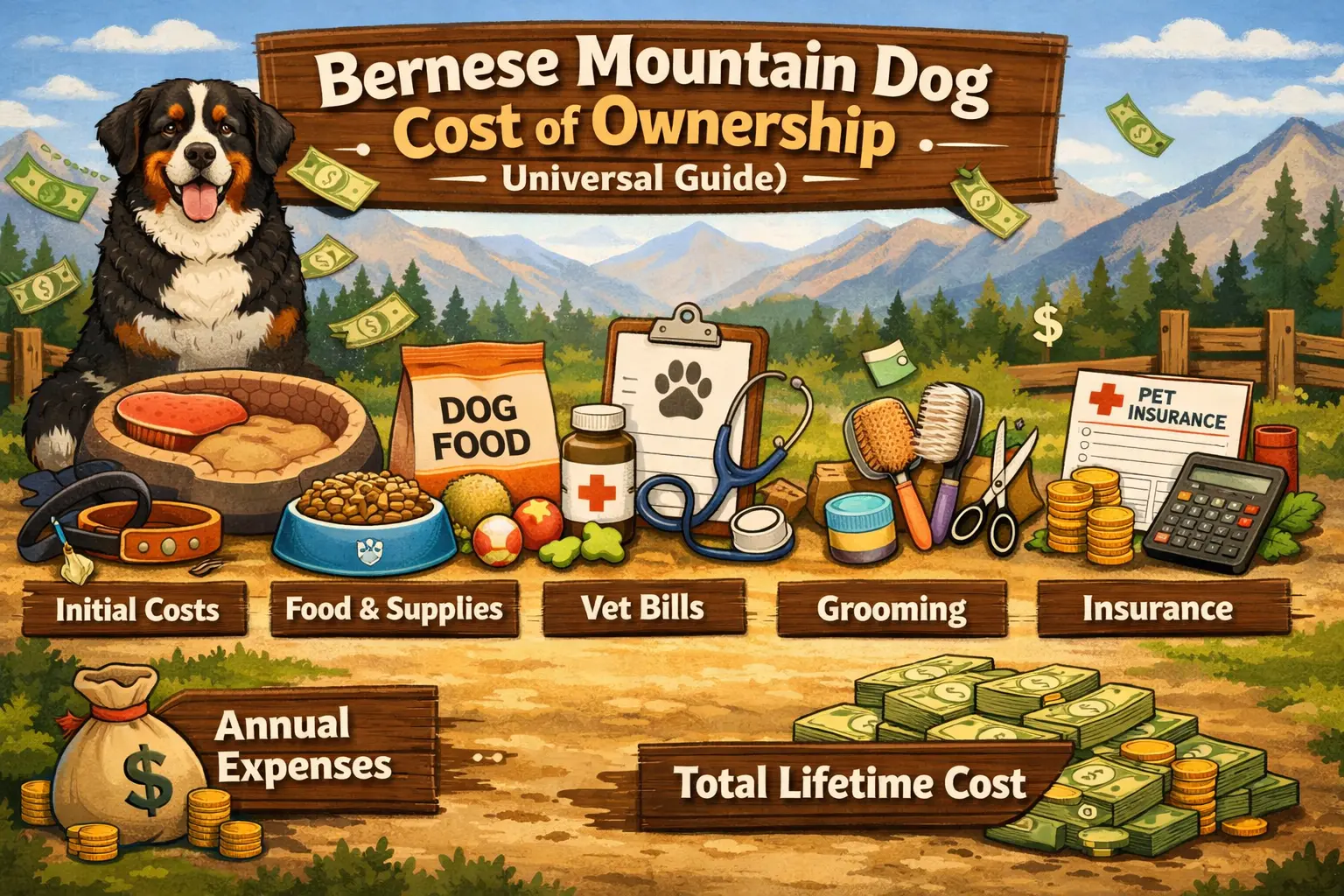
- large-dog veterinary and food costs can be substantial
- separation may be difficult for a dog that strongly prefers human company
Children and dogs should always be supervised, regardless of breed or reputation. Teach children not to climb on a dog, disturb meals, pull fur, or bother a sleeping dog.
Are they good with other dogs and cats?
Many Golden Mountain Dogs can live successfully with other pets, especially when introduced and socialized appropriately.
Golden Retrievers are typically sociable dogs, and Bernese Mountain Dogs can also be good household companions. Still, individual prey drive, play style, confidence, guarding behavior, and prior experience vary.
A large playful puppy may overwhelm a small dog or cat without intending harm. Manage introductions, provide escape spaces for smaller pets, and reward calm behavior.
Do not assume “friendly breed mix” means training and supervision are unnecessary.
How much exercise does a Golden Mountain Dog need?
Most adults need daily exercise plus mental stimulation.
A practical routine might include:
- one or two walks
- sniffing and exploration
- retrieving games
- swimming if the individual enjoys it and conditions are safe
- hiking in appropriate weather
- obedience or trick training
- food puzzles and scent games
Exercise should be adjusted for age, health, temperature, and body condition.
Growing large-breed puppies should not be pushed into repetitive high-impact exercise simply to “tire them out.” Their joints and growth plates are still developing. Structured play, age-appropriate walks, training, and exploration are more sensible than long-distance running with a young puppy.
Because this cross may inherit a heavy Bernese-type coat, use extra caution in hot weather. Exercise during cooler parts of the day, provide water and shade, and stop if the dog shows signs of overheating.
Are Golden Mountain Dogs easy to train?
They are often highly trainable, but size makes early training especially important.
Both parent breeds are known for working with people. Positive reinforcement, clear routines, and short consistent sessions usually suit this type of dog well.
Prioritize skills such as:
- responding to name
- recall
- loose-leash walking
- settling on a mat
- polite greetings
- leave it
- drop it
- handling for grooming
- calm behavior around doors
- comfortable crate or confinement training
A 20-pound puppy pulling on the leash is inconvenient. A 90-pound adult doing the same thing can be difficult to manage. Train before the dog’s full strength arrives.
Early socialization should expose the puppy safely to different surfaces, sounds, people, friendly dogs, handling, travel, and everyday environments without overwhelming them.
How much grooming does this mix need?
Expect grooming to be a regular part of ownership.
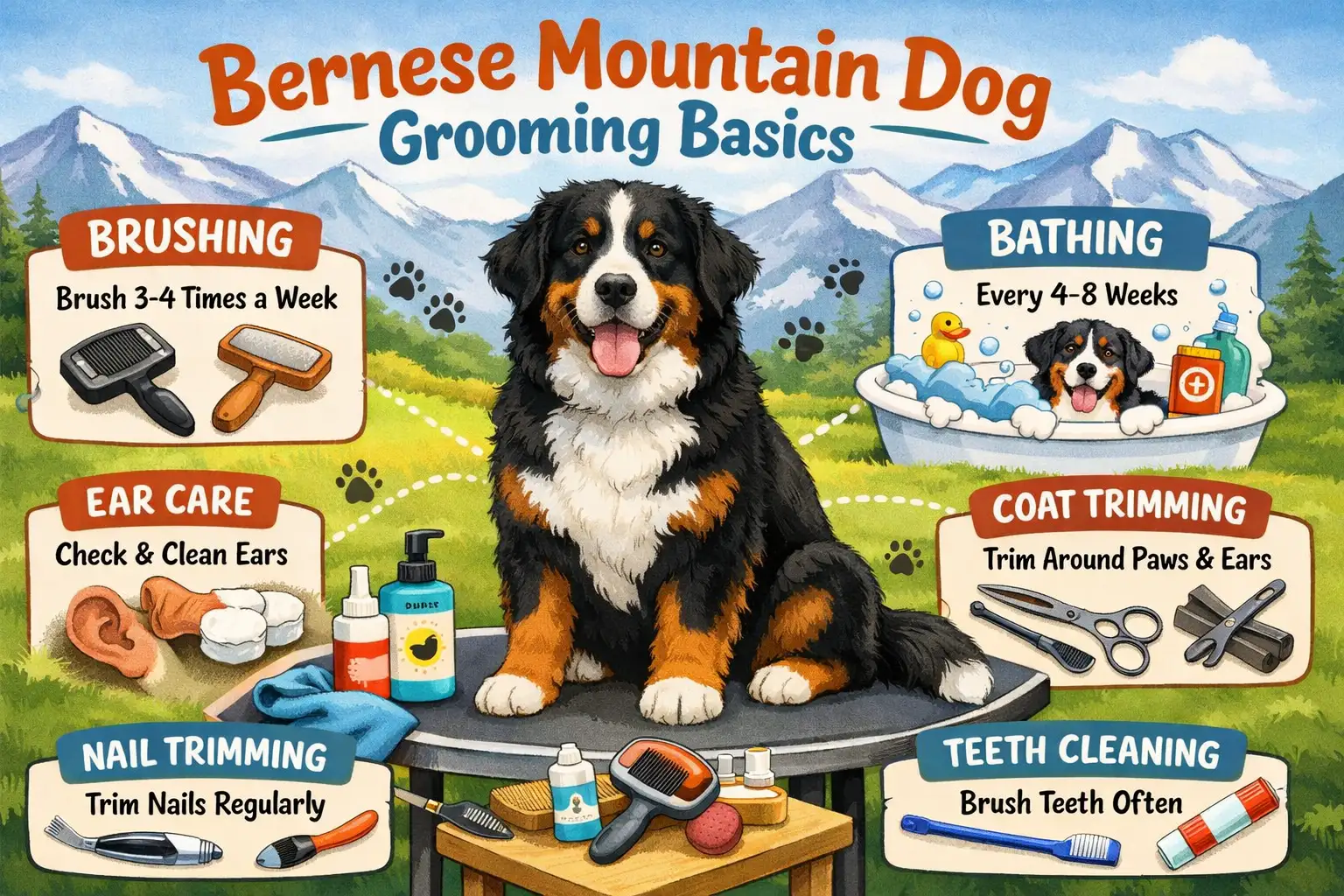
A Golden Mountain Dog with a dense coat may need:
- brushing two to four times per week
- more frequent brushing during seasonal shedding
- nail trimming every few weeks depending on wear
- regular ear checks
- dental brushing
- occasional baths
- trimming around paws or sanitary areas if needed
Mats often develop behind ears, in armpits, around the collar area, and in feathering. Start grooming practice in puppyhood so brushing, nail handling, and ear checks become routine rather than a wrestling match.
What health problems can a Bernese Mountain Dog Golden Retriever mix have?
Crossbreeding does not guarantee freedom from genetic disease. A puppy can inherit risk variants or structural tendencies from either parent.
Important concerns to discuss with a breeder and veterinarian include:
- hip dysplasia
- elbow dysplasia
- hereditary eye disease
- heart disease
- degenerative myelopathy risk from the Bernese side
- cancers seen in both parent populations
- bloat/gastric dilatation-volvulus risk in large, deep-chested dogs
- skin or ear problems
- age-related joint disease
This does not mean every Golden Mountain Dog will develop these problems. It means buyers should take health screening seriously.
What health tests should the parents have?
This is one of the most important questions to ask before buying a puppy.
For Golden Retrievers, the Golden Retriever Club of America emphasizes screening breeding dogs for hips, elbows, eyes, and heart. The AKC also lists hip, elbow, cardiac, ophthalmologist, and relevant DNA testing among breed-club recommendations.
For Bernese Mountain Dogs, the Bernese Mountain Dog Club of America recommends testing that includes hips, elbows, eyes, heart, and degenerative myelopathy, with additional testing options depending on the breeding program.
For a Golden Mountain Dog litter, ask for documented testing on both parents, appropriate to each parent’s breed.
A statement such as “the vet said the parents are healthy” is not the same as breed-recommended orthopedic, cardiac, eye, and DNA screening.
How long does a Golden Mountain Dog live?
There is no authoritative lifespan standard for the mix.
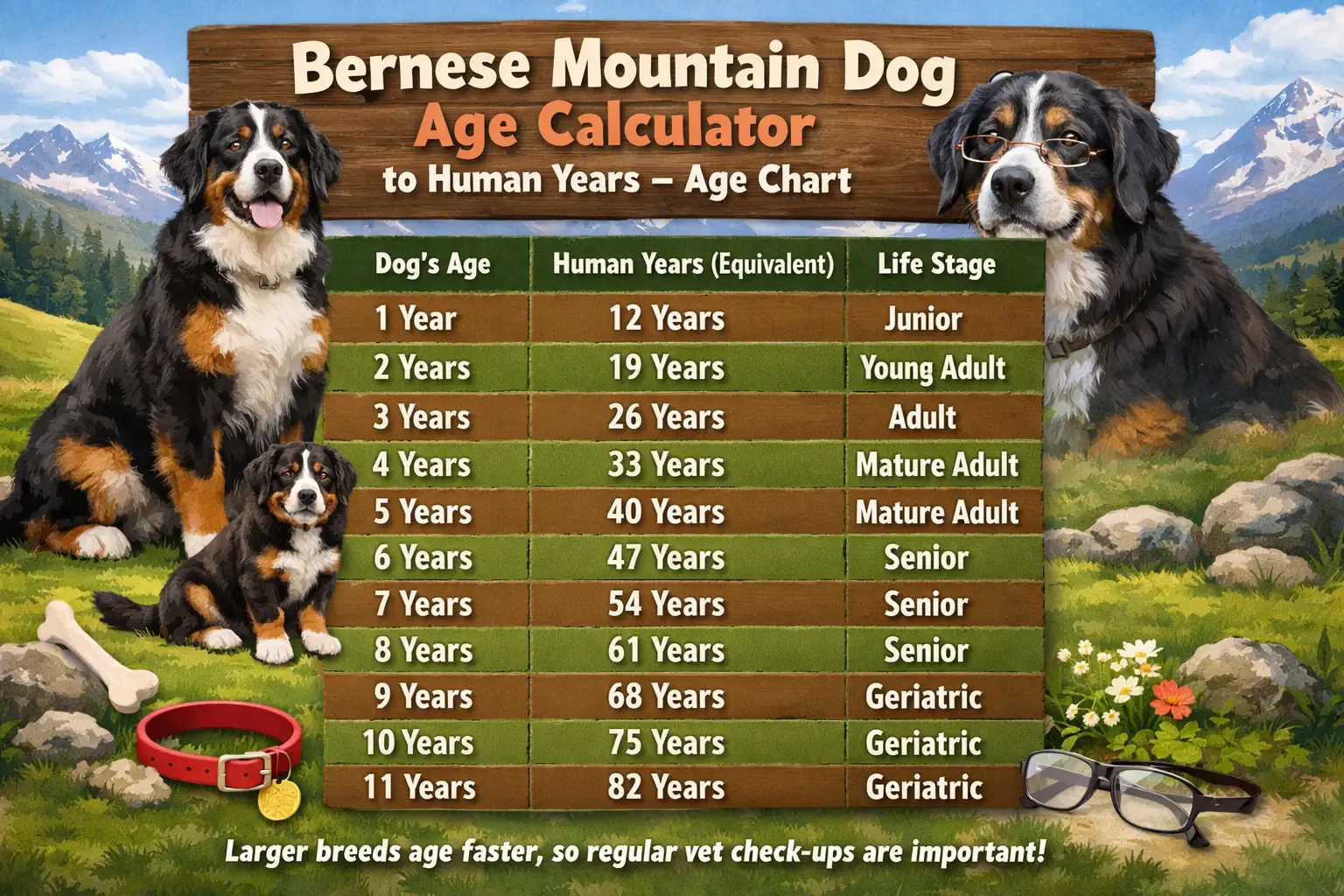
The parent breeds provide useful context. The AKC lists Golden Retrievers around 10-12 years and Bernese Mountain Dogs around 7-10 years.
A mixed dog’s lifespan may fall within, below, or above those ranges depending on genetics, adult size, disease, body condition, preventive care, and chance. Claims that the mix will automatically live much longer because it is a cross should be treated cautiously.
Maintaining a healthy weight, providing regular preventive care, keeping teeth and joints monitored, and choosing parents with appropriate health screening can improve the odds of a healthier life, but no breeder can guarantee a lifespan.
What should a Golden Mountain Dog eat?
Feed a complete and balanced diet appropriate for the dog’s life stage, size, and health needs.
Large-breed puppies benefit from food formulated to support controlled growth. Overfeeding a growing puppy can create excessive weight and may place additional stress on developing joints.
For adults:
- measure meals rather than free-feeding if weight is difficult to control
- keep treats within the overall calorie plan
- monitor body condition rather than relying only on scale weight
- adjust intake when activity changes
- discuss supplements with a veterinarian instead of assuming every large dog needs them
Fresh water should always be available.
Is a Bernese Mountain Dog Golden Retriever mix right for you?
This mix may suit you if you want a large, affectionate companion and you are comfortable with:
- frequent brushing and shedding
- daily exercise
- early training
- a large adult body size
- large-dog food and veterinary expenses
- regular social interaction
- possible inherited health risks
It may be a poor fit if you want:
- a low-shedding dog
- a small apartment companion with minimal activity
- a dog that can routinely tolerate extreme heat
- a highly independent pet that spends long periods alone
- predictable adult appearance without knowing the parents
Meet adult dogs from both parent breeds before deciding. If you would not be happy owning either a Golden Retriever or a Bernese Mountain Dog, this mix is probably not the safest choice.
How to find a responsible Golden Mountain Dog breeder
Look past attractive puppy photos.
Ask the breeder to provide:
- registered identities of both parents
- hip and elbow screening results
- eye examination results
- cardiac screening results
- Bernese-relevant DNA testing where appropriate
- Golden-relevant DNA testing where appropriate
- information about longevity and health in previous generations
- a written contract
- a return-to-breeder policy if you cannot keep the dog
A responsible breeder should also ask you questions. Producing large mixed-breed puppies without documented health screening is not made responsible simply by calling them “designer dogs.”
Rescue is another option. Golden Retriever, Bernese Mountain Dog, and large-breed rescues sometimes take in mixes, and shelters may have dogs with similar ancestry.
Frequently asked questions
What is a Golden Mountain Dog?
A Golden Mountain Dog is a Bernese Mountain Dog Golden Retriever mix. It is a mixed breed rather than an AKC-recognized pure breed.
How big is a Golden Retriever mixed with a Bernese Mountain Dog?
Most are large dogs. Adult weight can commonly fall somewhere around 60-110 pounds or more, depending on the size and build inherited from the parents.
Do Golden Mountain Dogs shed?
Yes. Both parent breeds have double coats and shed, so regular brushing and significant seasonal shedding should be expected.
Are Golden Mountain Dogs good with kids?
Many can be affectionate family dogs, but their large size means supervision and training are essential around children. Individual temperament varies.
Are Bernese Mountain Dog Golden Retriever mixes easy to train?
They are often responsive to reward-based training because both parent breeds tend to work well with people. Early leash manners, recall, handling, and calm greetings are especially important for a large dog.
What colors can a Golden Mountain Dog be?
Coats may be golden, cream, black, brown, reddish, or tricolor, with markings influenced by the Bernese parent. Mixed-breed appearance is not predictable enough to guarantee one color pattern.
How long do Bernese Golden Retriever mixes live?
There is no fixed lifespan for the mix. The parent breeds are commonly listed around 10-12 years for Golden Retrievers and 7-10 years for Bernese Mountain Dogs, but an individual mixed dog’s lifespan can vary considerably.
Is a Golden Mountain Dog hypoallergenic?
No. Both parent breeds shed and have substantial coats. This cross should not be considered a predictable low-allergen or low-shedding choice.
A note on sources and method
This article uses current American Kennel Club breed information for Golden Retrievers and Bernese Mountain Dogs, Golden Retriever Club of America health-screening guidance, Bernese Mountain Dog Club of America testing recommendations, and current mixed-breed SERP content for the traits owners most often ask about. Because the Golden Mountain Dog is a cross rather than a standardized breed, size, coat, temperament, and lifespan are presented as ranges and possibilities rather than guarantees. Health-testing recommendations are based on the parent breeds and should be verified against current breed-club guidance when selecting breeding dogs.

Ata Ur Rehman is the founder of Pet Age in Human Years Calculator, an educational platform that provides age conversion charts and lifespan guides for dogs, cats, birds, and other companion animals. His work focuses on helping pet owners understand how animal ages translate into human years using commonly accepted age conversion formulas and published lifespan averages.
The website compiles breed and species lifespan data from kennel clubs, breed organizations, and general animal lifespan studies to present simple and easy-to-understand guides for pet owners worldwide.
This website was created to centralize animal age conversion charts into one easy reference platform for pet owners.
This article is for general education. For symptoms, medication, diet changes, or health concerns, use a qualified veterinarian who can assess your individual pet.