On this page
Training a Bernese Mountain Dog is not about dominance or strict control. It is about building trust, consistency, and cooperation with a large, intelligent, and emotionally sensitive breed. Bernese Mountain Dogs are known for their gentle temperament, loyalty, and strong connection to their families. However, their size, strength, and slow emotional maturity make proper training essential.
Whether you are raising a Bernese puppy, managing a teenage Berner, or adopting an adult dog, this guide will help you develop good manners, reliable obedience, and a confident companion.
Why Bernese Mountain Dog Training Is Important
Bernese Mountain Dogs are naturally friendly, but their large size can create challenges if training is neglected. A fully grown Bernese can weigh over 100 pounds, meaning even harmless behaviors such as jumping, pulling on the leash, or leaning on people can become difficult to manage.
Training provides more than obedience. It creates structure, improves safety, reduces stress, and helps your dog understand expectations in everyday situations.
| Area | Without Training | With Training |
|---|---|---|
| Leash Walking | Pulling and poor control | Calm loose-leash walking |
| Greeting Visitors | Jumping and excitement | Polite greetings |
| Confidence | Easily overwhelmed | Relaxed and secure |
| Safety | Difficult to manage | Predictable behavior |
| Home Life | Frustrating and chaotic | Calm and organized |
Understanding the Bernese Mountain Dog Temperament
Successful training begins with understanding how this breed learns.
Bernese Mountain Dogs are people-oriented and eager to please. They respond best to positive reinforcement and often struggle with harsh corrections or excessive pressure. Their sensitive nature means they can become discouraged if training feels stressful.
Another important characteristic is their slow maturity. Many Bernese dogs continue behaving like puppies well into adolescence. Owners often mistake this for stubbornness when it is simply part of normal breed development.
| Trait | Common Misunderstanding | Reality |
|---|---|---|
| Slow Responses | Stubbornness | Thoughtful processing |
| Distraction | Ignoring commands | Immature focus |
| Strong Attachment | Neediness | Natural bonding behavior |
| Training Shutdown | Laziness | Stress or confusion |
The best training approach combines patience, consistency, rewards, and realistic expectations.
Best Training Methods for Bernese Mountain Dogs
Modern dog training research supports reward-based methods for sensitive breeds like the Bernese Mountain Dog.
Effective rewards include:
- Small training treats
- Verbal praise
- Toys and play
- Affection and attention
- Access to favorite activities
Avoid punishment-based techniques that rely on fear, intimidation, or excessive corrections. These methods often reduce confidence and damage trust.
Training Schedule by Age
8–16 Weeks
Focus on:
- Name recognition
- House training
- Crate training
- Socialization
- Basic sit command
- Gentle leash introduction
4–8 Months
Focus on:
- Loose-leash walking
- Recall training
- Stay command
- Impulse control
- Visitor manners
- Continued socialization
8–18 Months
Focus on:
- Reliability around distractions
- Calm public behavior
- Advanced leash skills
- Greeting manners
- Confidence-building exercises
Adult Bernese Mountain Dogs
Focus on:
- Consistency
- Maintaining obedience
- Mental stimulation
- Advanced commands
- Public reliability
Step-by-Step Training Foundations
1. Teach Name Recognition
Say your dog’s name once in a cheerful tone. When your dog looks at you, immediately reward.
Repeat several times daily until your dog responds consistently.
2. Teach Sit
Hold a treat above your dog’s nose and move it slightly backward. As the head follows the treat, the rear naturally lowers.
The moment your dog sits, reward and praise.
3. Teach Recall
Start indoors with minimal distractions.
Use a happy voice and say your dog’s name followed by “Come.”
Reward generously every successful recall.
Never punish your dog after calling them to you.
4. Teach Loose-Leash Walking
Reward your dog whenever they walk beside you without tension on the leash.
If pulling begins, stop moving. Resume walking only when the leash becomes loose again.
Consistency is more important than distance.
5. Teach Stay
Ask for a sit.
Wait one second before rewarding.
Gradually increase duration, then add distance and distractions over time.
Socialization Training
Proper socialization is one of the most important parts of raising a Bernese Mountain Dog.
Introduce your puppy to:
- Different people
- Children
- Friendly dogs
- Various environments
- Traffic sounds
- Veterinary visits
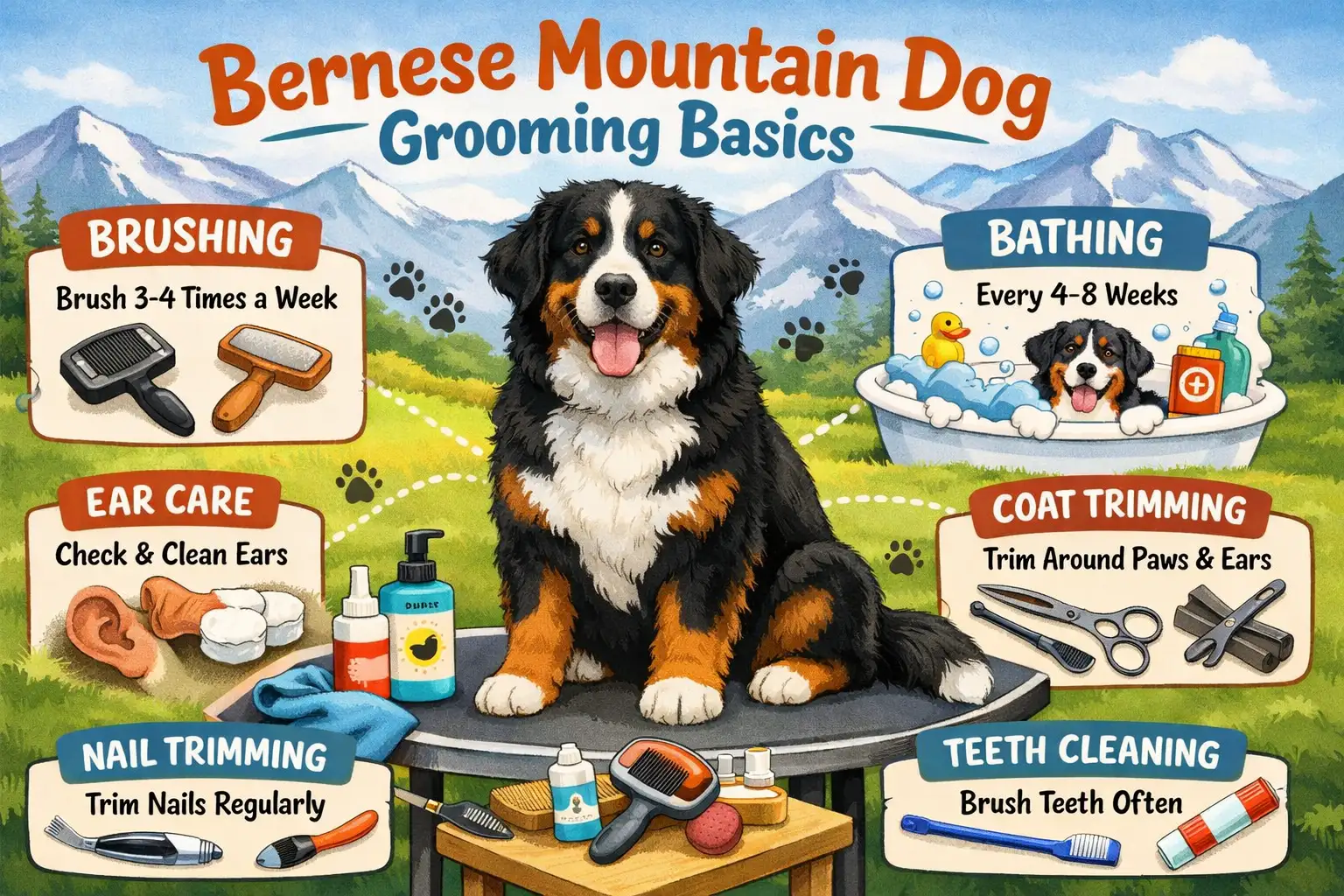
- Grooming routines
Socialization should be positive and controlled. Avoid overwhelming experiences that create fear.
House Training a Bernese Mountain Dog
Most Bernese puppies learn house training with a consistent schedule.
Take your puppy outside:
- After waking up
- After eating
- After play sessions
- Before bedtime
- Every few hours throughout the day
Reward immediately after successful elimination outdoors.
Never punish accidents. Instead, improve supervision and scheduling.
Crate Training
A crate can provide safety, structure, and support for house training.
Make the crate comfortable by adding:
- Soft bedding
- Safe chew toys
- Treat rewards
Introduce the crate gradually and create positive associations.
The crate should never be used as punishment.
Common Bernese Mountain Dog Training Problems
Pulling on the Leash
Cause:
Excitement and physical strength.
Solution:
Reward calm walking and stop whenever pulling begins.
Jumping on People
Cause:
Friendly enthusiasm.
Solution:
Require a sit before greeting people.
Ignoring Commands
Cause:
Distractions exceed training level.
Solution:
Return to an easier environment and rebuild reliability.
Fearfulness
Cause:
Insufficient socialization or overwhelming experiences.
Solution:
Use gradual exposure and reward calm behavior.
Training Regression During Adolescence
Cause:
Normal developmental stage.
Solution:
Remain consistent and continue practicing foundation skills.
Mental Stimulation and Enrichment
Bernese Mountain Dogs need mental exercise as well as physical activity.
Good enrichment options include:
- Puzzle feeders
- Scent games
- Training sessions
- Food-dispensing toys
- Hide-and-seek games
- Basic obedience practice
Mental stimulation often reduces unwanted behaviors caused by boredom.
Exercise and Training Balance
Although Bernese Mountain Dogs enjoy activity, excessive exercise during puppyhood can stress developing joints.
Recommended approach:
| Age | Exercise Guidance |
|---|---|
| Under 6 Months | Short play sessions and walks |
| 6–12 Months | Moderate activity with supervision |
| Adults | Daily walks and structured exercise |
Combine exercise with training for the best results.
Training Tips for Long-Term Success
- Keep sessions short and positive.
- Reward desired behaviors immediately.
- Use consistent commands.
- Avoid harsh corrections.
- Practice daily.
- Train in different environments.
- Be patient during adolescence.
- Focus on relationship building.
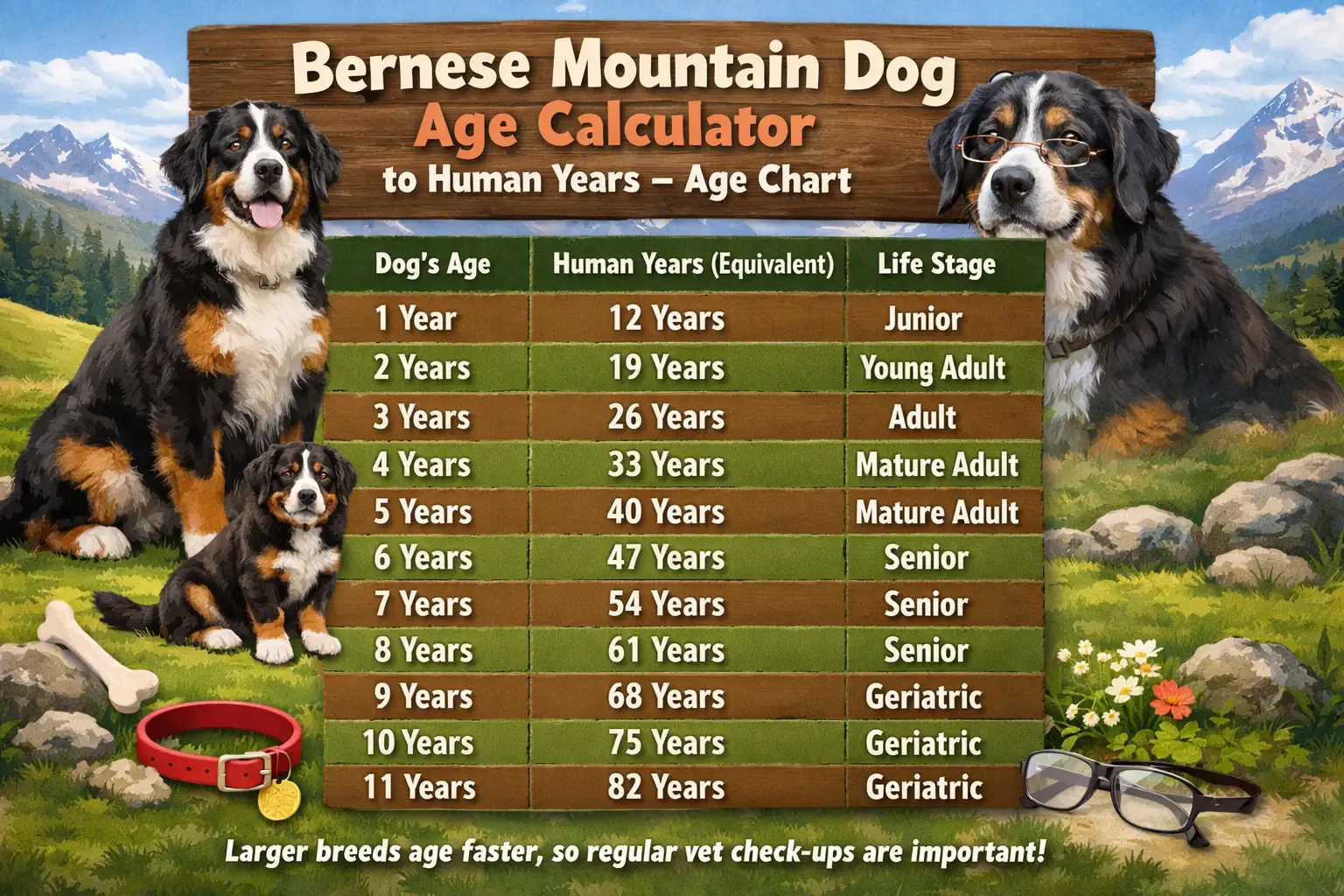
To understand your dog's current life stage, use the Bernese Mountain Dog Dog Age Calculator.
Final Thoughts
Bernese Mountain Dogs thrive when training is based on trust, patience, and positive reinforcement. Their gentle personality and desire to work with their owners make them highly trainable when approached correctly. By starting early, remaining consistent, and understanding their unique temperament, you can raise a well-mannered, confident, and reliable companion that fits comfortably into family life for years to come.

Ata Ur Rehman is the founder of Pet Age in Human Years Calculator, an educational platform that provides age conversion charts and lifespan guides for dogs, cats, birds, and other companion animals. His work focuses on helping pet owners understand how animal ages translate into human years using commonly accepted age conversion formulas and published lifespan averages.
The website compiles breed and species lifespan data from kennel clubs, breed organizations, and general animal lifespan studies to present simple and easy-to-understand guides for pet owners worldwide.
This website was created to centralize animal age conversion charts into one easy reference platform for pet owners.
This article is for general education. For symptoms, medication, diet changes, or health concerns, use a qualified veterinarian who can assess your individual pet.