On this page
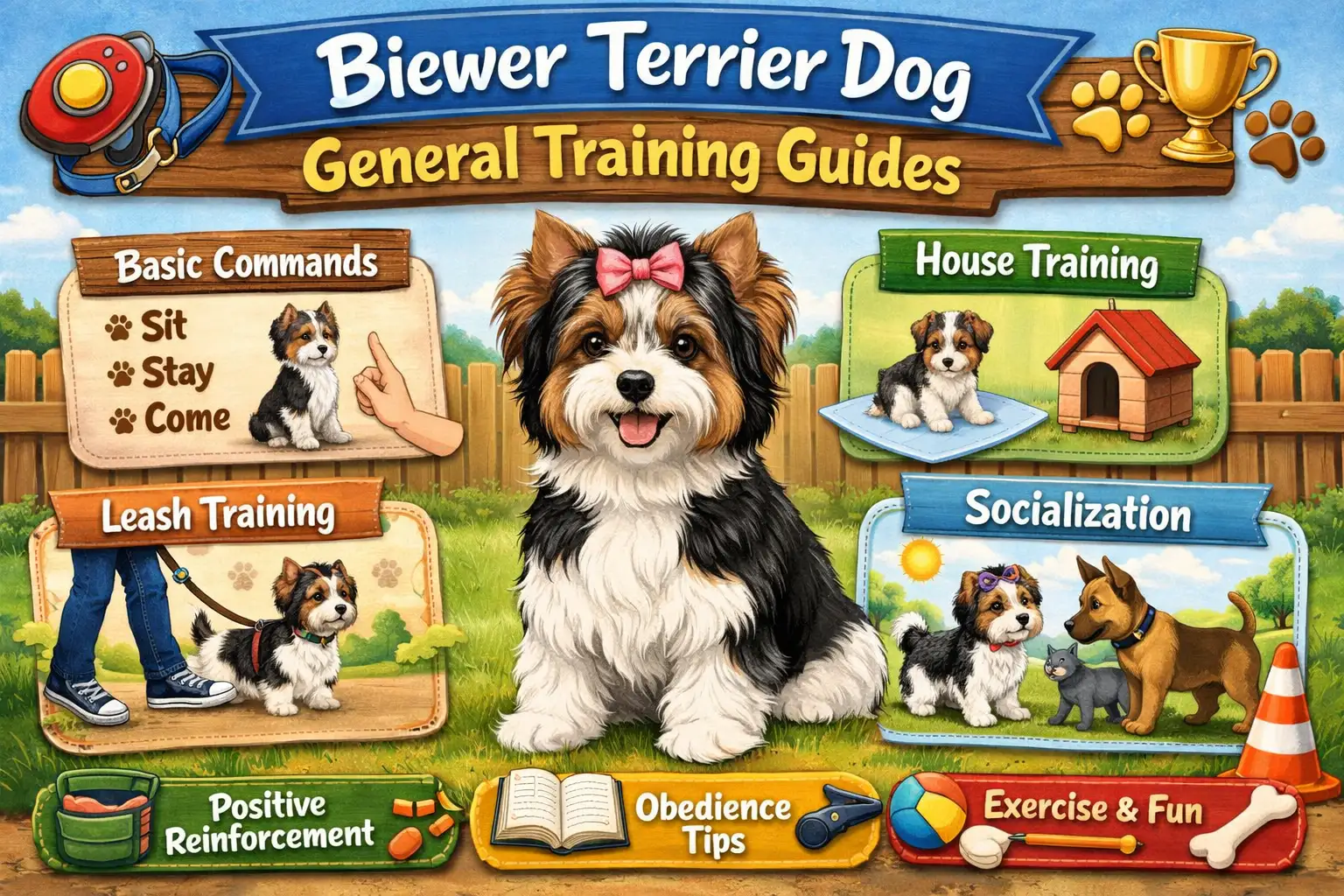
Biewer Terrier training works best when it is calm, consistent, and reward-based. This small, smart, people-focused breed usually learns quickly, but harsh correction, long sessions, or confusing rules can slow progress.
This guide explains how to train a Biewer Terrier puppy or adult dog using simple methods for obedience, potty training, barking, leash walking, crate training, and daily routines.
Biewer Terriers are sensitive dogs. They want to please their owners, but they also need clear direction. The goal is not to be strict. The goal is to build trust, repeat good habits, and make training easy to understand.
Use this guide to learn:
- how to train a Biewer Terrier without force
- how to start Biewer Terrier puppy training
- how to handle potty accidents, barking, and leash pulling
- how training needs change from puppyhood to adulthood
- how to support your dog’s behavior as they age
For age-related care and life-stage planning, you can also use the Biewer Terrier Dog Age Calculator to better understand your dog’s current life stage.
Quick Answer: How Do You Train a Biewer Terrier?
The best way to train a Biewer Terrier is to use short, positive training sessions with treats, praise, clear commands, and a consistent daily routine. Most Biewer Terriers do best with 5 to 10 minute sessions, 2 to 4 times per day.
Start in a quiet place, reward good behavior immediately, and avoid yelling or punishment. Focus first on name response, potty routine, sit, come, leash basics, crate comfort, and calm behavior around people.
Biewer Terrier Training Topics Covered
- Is the Biewer Terrier easy to train?
- Understanding Biewer Terrier behavior
- Best training methods for this breed
- Biewer Terrier puppy training basics
- Daily training routine
- Potty training a Biewer Terrier
- Crate training a Biewer Terrier
- Teaching basic obedience
- Leash and recall training
- Barking training
- Common training problems and fixes
- Training by age and life stage
- Common owner mistakes
- FAQs
Is the Biewer Terrier Easy to Train?
Yes, most Biewer Terriers are easy to train when the training style matches their personality. They are intelligent, affectionate, and eager to stay close to their owners. However, they can also be sensitive, easily distracted, and slow to respond if training feels stressful.
This means training success depends more on how you train than how strict you are. A Biewer Terrier usually responds better to rewards, repetition, calm guidance, and short lessons than to pressure or punishment.
Here is what most owners should expect:
- Biewer Terriers learn quickly with treats, praise, and repetition
- They respond best to calm voices and gentle handling
- They may ignore commands when bored, confused, or overstimulated
- Potty training may take longer because they are small dogs with small bladders
- Harsh correction can make them nervous and reduce trust
Biewer Terriers are not usually stubborn by nature. Most training problems happen because the rules are unclear, the rewards are weak, the session is too long, or the dog is being trained in a distracting environment too soon.
Biewer Terrier Training Traits
| Trait | What It Means for Training |
|---|---|
| Intelligence | Learns commands quickly with repetition |
| Sensitivity | Needs calm, positive training |
| Attention span | Does best with short sessions |
| Motivation | Responds well to food, praise, and play |
| Common challenge | Barking, potty accidents, distraction, and over-attachment |
If training feels slow, it does not mean your Biewer Terrier is bad at learning. It usually means the method, timing, reward, or environment needs adjustment.
Understanding Biewer Terrier Behavior Before Training
Before you start teaching commands, it helps to understand how a Biewer Terrier thinks and reacts. Training works better when you match your approach to the breed’s behavior instead of using a generic dog-training method.
Biewer Terriers are usually:
- very people-focused
- gentle and sensitive
- alert to sounds and movement
- quick to notice routine changes
- motivated by attention and rewards
They learn best when they feel safe and relaxed. Loud voices, sudden movements, or pressure can make them nervous. When a Biewer Terrier feels stressed, learning slows down and avoidance behavior may increase.
Behavior also changes with age. A puppy, young adult, adult, and rescue Biewer Terrier may all need slightly different training approaches.
Puppy vs Adult Biewer Terrier Behavior
| Age Stage | Typical Behavior | What This Means for Training |
|---|---|---|
| Puppy | Curious, playful, easily distracted | Keep sessions short, fun, and reward-based |
| Young adult | More confident and may test limits | Stay consistent with house rules |
| Adult | Calmer and routine-focused | Polish obedience and reduce problem habits |
| Rescue adult | May be anxious or unsure | Build trust first and train slowly |
Most Biewer Terriers work best for small food treats, praise, attention, and short play breaks. They do not respond well to punishment. Instead of learning faster, they may shut down, avoid training, or become more anxious.
Best Way to Train a Biewer Terrier
The best way to train a Biewer Terrier is with positive reinforcement. This means you reward the behavior you want instead of punishing mistakes. This method fits the breed because Biewer Terriers are smart, sensitive, and eager to connect with their owners.
Positive training helps your dog:
- understand what you want faster
- feel safe and confident
- enjoy learning instead of fearing it
- repeat good behavior more often
- trust you during new experiences
Good training is not about being strict. It is about being clear and consistent.
Follow these basic rules:
- reward your dog immediately after the right behavior
- use small, tasty treats or happy praise
- keep your voice calm and friendly
- use the same command words every time
- train in a quiet place before adding distractions
- end each session before your dog gets bored or tired
Effective Training Methods vs What to Avoid
| What Works Well | What to Avoid |
|---|---|
| Treats and praise | Yelling or scolding |
| Short sessions | Long, tiring sessions |
| Calm voice | Angry or loud tone |
| Clear rules | Changing rules often |
| Daily repetition | Training only after problems happen |
| Gentle redirection | Physical punishment |
If your Biewer Terrier makes a mistake, pause and try again. Mistakes are part of learning, especially for puppies. Training should feel like teamwork, not a test.
Biewer Terrier Puppy Training Basics
Biewer Terrier puppy training should start as soon as your puppy comes home. Puppies learn quickly in the early months, but they also get tired, distracted, and overstimulated easily. The goal is to build good habits, not perfection.
Start with simple daily habits:
- name recognition
- potty routine
- gentle handling
- crate comfort
- short leash practice
- calm behavior around people
- coming when called indoors
Keep training very short. For young puppies, 3 to 5 minutes may be enough. As your puppy matures, you can slowly increase sessions to 5 to 10 minutes.
Puppy Training Focus by Age
| Puppy Age | Training Focus | What to Expect |
|---|---|---|
| 8-12 weeks | Name, potty routine, crate comfort, gentle handling | Very short attention span |
| 3-6 months | Sit, come, leash basics, social confidence | Fast learning with easy distractions |
| 6-12 months | Better focus, rule-following, impulse control | Testing limits is normal |
Do not worry if progress feels slow. Puppies learn in small steps, and setbacks are normal. A little training every day works better than one long session once in a while.
Daily Biewer Terrier Training Routine
Biewer Terriers learn best with short, regular training. A simple routine helps your dog understand what is expected and keeps training stress low.
Most Biewer Terriers do well with 2 to 4 short sessions per day, each lasting about 5 to 10 minutes. Puppies may need even shorter sessions.
General training tips:
- train at the same times each day
- keep sessions short and calm
- mix training with play and rest
- practice before meals when treats feel more valuable
- stop before your dog gets tired
Sample Daily Training Schedule
| Time of Day | What to Do | Goal |
|---|---|---|
| Morning | Potty break, name response, sit | Start the day focused |
| Afternoon | Short obedience practice with treats or play | Build learning habits |
| Evening | Calm leash walk, recall, or crate practice | Reinforce good behavior |
Training does not always need to feel formal. You can practice commands during walks, feeding time, grooming, or play. This helps your Biewer Terrier learn in real-life situations.
Biewer Terrier Potty Training
Biewer Terrier potty training is one of the most important early lessons. Small dogs can take longer to house train because they have small bladders and may need more frequent bathroom breaks.
The best approach is a clear routine, close supervision, and immediate praise when your dog goes in the right place.
Take your Biewer Terrier outside or to the correct potty area:
- first thing in the morning
- after meals
- after naps
- after playtime
- before bedtime
- any time they sniff, circle, or seem restless
Reward your dog right away after they potty in the correct place. Do not wait until you are back inside. The reward needs to happen immediately so your Biewer Terrier connects the praise with the right behavior.
Biewer Terrier Potty Training Mistakes to Avoid
- waiting too long between potty breaks
- punishing accidents after they already happened
- giving too much freedom in the house too early
- changing the potty location too often
- not rewarding quickly enough
If accidents continue, reduce your dog’s freedom indoors, increase potty breaks, and return to a predictable schedule. Potty training improves faster when your dog has fewer chances to make mistakes.
Crate Training a Biewer Terrier
Crate training can help a Biewer Terrier feel safe, rest calmly, and build a better potty routine. The crate should never be used as punishment. It should feel like a quiet personal space.
Start slowly. Place soft bedding inside the crate and let your dog explore it with the door open. Add treats, praise, or a favorite toy so the crate feels positive.
Begin with short crate sessions:
- let your dog enter the crate voluntarily
- reward calm behavior inside the crate
- close the door for a few seconds at first
- slowly increase the time as your dog relaxes
- keep the crate in a calm, comfortable area
A Biewer Terrier should not be left in a crate for long periods without breaks. Puppies especially need frequent potty trips, movement, food, water, and social time.
Teaching Basic Obedience to a Biewer Terrier
Basic obedience helps your Biewer Terrier feel safe and confident. These skills also make daily life easier for both you and your dog. Start with simple commands and build slowly.
Focus on these core skills first:
- responding to their name
- sit
- stay
- come
- leave it
- walking calmly on a leash
Use clear words and the same hand signals each time. Say the command once, help your dog succeed, and reward immediately when your dog does the right thing.
Basic Commands for Biewer Terrier Obedience Training
| Command | Why It Matters | Training Tip |
|---|---|---|
| Name response | Builds attention | Reward eye contact quickly |
| Sit | Creates calm behavior | Use before meals and doors |
| Stay | Builds patience | Start with one second |
| Come | Improves safety | Practice indoors first |
| Leave it | Prevents unsafe grabbing | Reward turning away from the item |
| Leash walking | Makes walks easier | Reward calm steps beside you |
Strong obedience skills are built over many small sessions, not in one day.
Leash Training and Recall Training
Leash training is especially important for small dogs. A Biewer Terrier may pull because they are excited, nervous, or trying to follow sounds and movement.
Start indoors or in a quiet yard. Let your dog get used to wearing the leash before expecting a proper walk outside.
For leash training:
- use a comfortable harness instead of pulling on the neck
- reward calm steps beside you
- stop walking when your dog pulls
- restart when the leash relaxes
- practice in quiet places before busy areas
Recall training means teaching your Biewer Terrier to come when called. Begin indoors with very low distractions. Call your dog in a happy voice and reward every response.
Never punish your dog for coming to you, even if they took a long time. Your dog should always feel that coming back to you is safe and rewarding.
Biewer Terrier Barking Training
Biewer Terriers are alert dogs, so barking can become a common training issue. They may bark at doorbells, visitors, noises, other dogs, or when they want attention.
The goal is not to stop all barking. The goal is to teach your dog when to settle and how to respond calmly.
Common reasons for barking include:
- alerting to sounds
- boredom
- fear or nervousness
- attention-seeking
- separation stress
To reduce barking, first identify the cause. A bored dog needs more mental activity. A fearful dog needs confidence-building. An attention-seeking dog needs calm redirection and rewards for quiet behavior.
How to Teach Quiet Behavior
- wait for a brief pause in barking
- say “quiet” in a calm voice
- reward the quiet moment immediately
- repeat in short sessions
- avoid yelling, because it can sound like barking to your dog
If barking happens mostly when your dog is alone, focus on gradual alone-time training and crate comfort instead of only correcting the noise.
Common Biewer Terrier Training Problems and Fixes
Even well-trained Biewer Terriers can have behavior problems. This does not mean you failed. Most issues come from confusion, fear, boredom, or mixed signals from humans.
Small dogs often get different treatment than larger dogs, and this can affect training. If a small dog is carried everywhere, allowed to ignore rules, or comforted every time they react, they may struggle with confidence and self-control.
Common Training Problems and Practical Fixes
| Problem | Likely Cause | What Actually Helps |
|---|---|---|
| Too much barking | Alert nature, boredom, or anxiety | Teach quiet, add mental play, reduce triggers |
| Potty accidents | Small bladder or weak routine | More frequent potty breaks and closer supervision |
| Ignoring commands | Distractions or low reward value | Use better treats and shorter sessions |
| Separation anxiety | Over-attachment or poor alone-time practice | Gradual alone-time training |
| Pulling on leash | Excitement, fear, or lack of leash practice | Slow walks and rewards for calm steps |
| Crate whining | Crate introduced too quickly | Short positive crate sessions and gradual time increases |
Avoid yelling or punishment. These methods can make fear and confusion worse, especially in sensitive dogs like Biewer Terriers.
If a problem keeps happening, go back to basics. Shorter sessions, better rewards, clearer rules, and calm practice usually help more than trying harder.
Training a Biewer Terrier by Age and Life Stage
A Biewer Terrier’s training needs change as they grow. Puppies need habit-building. Adults need consistency and behavior polishing. Senior dogs may need slower sessions, gentler routines, and more patience.
Knowing your dog’s life stage can help you set realistic expectations. You can check your dog’s age stage using the Biewer Terrier Dog Age Calculator.
Training Focus by Life Stage
| Life Stage | Main Training Focus | Best Approach |
|---|---|---|
| Puppy | Potty training, crate comfort, name response | Very short sessions and frequent rewards |
| Young adult | Leash manners, recall, impulse control | Consistent rules and daily practice |
| Adult | Obedience polish and behavior fixes | Routine-based training and calm correction |
| Senior | Maintaining habits and reducing stress | Gentle sessions and comfortable pacing |
Training should always match your dog’s energy, confidence, and health. A young puppy and an older Biewer Terrier should not be trained with the same expectations.
Mistakes Owners Make When Training Biewer Terriers
Many training problems come from small mistakes, not bad dogs. Biewer Terriers are eager to please, but they need clear and steady guidance.
Common mistakes include:
- changing rules often
- training only when there is a problem
- expecting fast results
- carrying the dog everywhere instead of building confidence
- using punishment or yelling
- making training sessions too long
- skipping rewards too soon
- giving too much freedom before potty training is reliable
Inconsistent rules can confuse your dog. For example, letting your Biewer Terrier jump on the couch one day but not the next makes learning harder.
Over-coddling is another issue. Comfort is important, but always stepping in can stop your dog from learning confidence, independence, and self-control.
Good training is about steady practice. Small steps done every day work better than big efforts once in a while.
Helpful Biewer Terrier Resources
Use these related Biewer Terrier guides to support your dog’s care, training, grooming, feeding, and age planning:
- Biewer Terrier Dog Full Guide
- Biewer Terrier Dog Age Calculator
- Biewer Terrier Age Chart and Human Years Guide
- Biewer Terrier Grooming Basics
- Biewer Terrier Nutrition and Feeding Guide
- Biewer Terrier Cost of Ownership Guide
Want to understand your Biewer Terrier’s current life stage? Use the Biewer Terrier Dog Age Calculator to estimate your dog’s age in human years and plan training, care, and routines more realistically.
Biewer Terrier Training FAQs
Are Biewers easy to train?
Yes, Biewers are usually easy to train when lessons are short, positive, and consistent. They are smart and people-focused, but they can become distracted or nervous if training feels harsh or confusing.
How do you potty train a Biewer Terrier puppy?
Take your Biewer Terrier puppy to the potty area after waking, eating, playing, and before bedtime. Reward immediately when they go in the right place. Keep a close routine and limit indoor freedom until accidents decrease.
What is the best training method for a Biewer Terrier?
The best method is positive reinforcement. Use treats, praise, play, and calm repetition to reward the behaviors you want. Avoid yelling or punishment because Biewer Terriers are sensitive dogs.
How long should Biewer Terrier training sessions be?
Most Biewer Terriers do best with 5 to 10 minute sessions, 2 to 4 times per day. Young puppies may need even shorter sessions of only a few minutes.
Is 4 months old too late to train a Biewer Terrier puppy?
No, 4 months old is not too late. A 4-month-old Biewer Terrier puppy can still learn potty habits, basic commands, leash manners, and crate comfort. Consistency matters more than age.
How do I stop my Biewer Terrier from barking too much?
First identify why your dog is barking. Boredom, alert behavior, fear, and attention-seeking need different fixes. Reward quiet moments, teach a calm “quiet” cue, and give your dog enough mental activity.
Can adult Biewer Terriers still be trained?
Yes, adult Biewer Terriers can still be trained. Adults may even focus better than puppies, but they may need extra patience if they already have habits that need to be changed.

Ata Ur Rehman is the founder of Pet Age in Human Years Calculator, an educational platform that provides age conversion charts and lifespan guides for dogs, cats, birds, and other companion animals. His work focuses on helping pet owners understand how animal ages translate into human years using commonly accepted age conversion formulas and published lifespan averages.
The website compiles breed and species lifespan data from kennel clubs, breed organizations, and general animal lifespan studies to present simple and easy-to-understand guides for pet owners worldwide.
This website was created to centralize animal age conversion charts into one easy reference platform for pet owners.
This article is for general education. For symptoms, medication, diet changes, or health concerns, use a qualified veterinarian who can assess your individual pet.