On this page
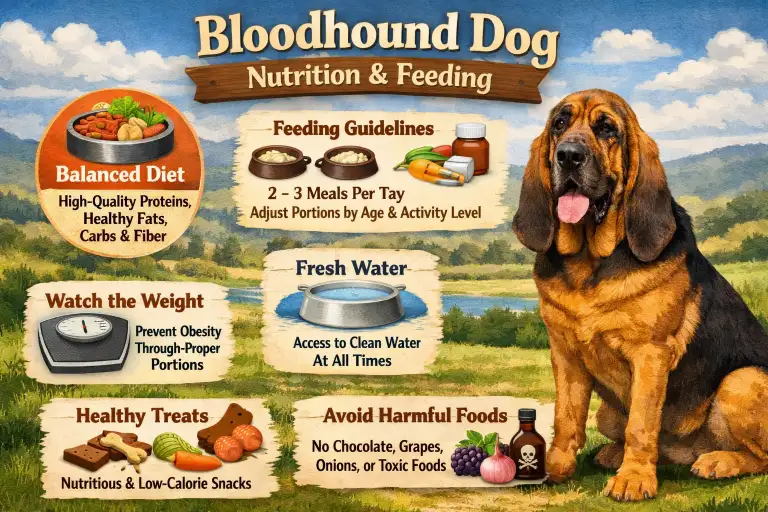
Choosing the right Bloodhound dog food is one of the most important decisions an owner can make for their dog’s long-term health. Bloodhounds are large, powerful scent hounds with heavy bone structure, loose skin, and unique nutritional requirements that differ from many other breeds. What a Bloodhound eats directly affects body weight, joint health, digestion, energy levels, skin condition, and overall quality of life.
While Bloodhounds are known for their exceptional tracking ability and friendly temperament, they are also highly food-motivated dogs. Many owners struggle with portion control because Bloodhounds often appear hungry even when they are receiving adequate nutrition. Overfeeding can quickly lead to obesity, placing additional stress on joints, ligaments, and the cardiovascular system.
Feeding the best food for a Bloodhound is not simply about buying a premium brand. It involves selecting a balanced diet that supports healthy growth, maintains lean muscle, promotes digestive health, and helps prevent common breed-related issues such as weight gain and mobility problems. Puppies, adults, and senior Bloodhounds all have different nutritional needs, making life-stage-appropriate feeding especially important.
This Bloodhound dog food guide explains what Bloodhounds should eat, how much food they need, feeding schedules, puppy feeding recommendations, safe treats, and common feeding mistakes to avoid. Whether you are raising a growing puppy or caring for an aging companion, the goal is to help you make informed feeding decisions that support a healthy and active life.
What Is the Best Food for a Bloodhound?
The best food for a Bloodhound is a complete and balanced large-breed formula designed to support healthy body weight, strong muscles, joint function, and digestive health. Because Bloodhounds can weigh between 80 and 120 pounds or more, their diet should provide high-quality nutrition without excessive calories.
When evaluating Bloodhound dog food, ingredient quality is often more important than marketing claims. A suitable diet should contain real animal protein, moderate fat levels, digestible carbohydrates, and essential vitamins and minerals that support long-term health.
Bloodhounds generally do best on diets that provide:
- High-quality animal protein to maintain muscle mass
- Moderate fat levels for controlled energy intake
- Digestible carbohydrates for sustained energy
- Omega-3 fatty acids for skin, coat, and joint support
- Glucosamine and chondroitin for mobility and joint health
- Balanced calcium and phosphorus levels for healthy bone development
- Controlled calorie density to reduce obesity risk
Large-breed nutrition is especially important during puppyhood. Bloodhound puppies grow rapidly, and excessive calories or improper mineral balance may contribute to orthopedic issues later in life. Feeding a large-breed puppy formula helps support steady, controlled growth.
Adult Bloodhounds benefit from diets that help maintain a healthy weight while supporting their active lifestyle. Senior Bloodhounds often require fewer calories but may benefit from additional joint-support nutrients and highly digestible ingredients.
Recommended Food Types by Life Stage
| Life Stage | Recommended Food Type | Primary Goal |
|---|---|---|
| Bloodhound Puppy | Large-Breed Puppy Formula | Controlled growth and bone development |
| Adult Bloodhound | Large-Breed Adult Formula | Weight maintenance and muscle support |
| Senior Bloodhound | Senior Large-Breed Formula | Joint support and calorie control |
| Overweight Bloodhound | Weight-Management Formula | Fat reduction and healthy weight loss |
What do Bloodhounds eat in practice? Most thrive on high-quality dry kibble formulated for large breeds, although some owners successfully feed a combination of kibble, wet food, or fresh food diets. The ideal choice depends on your dog’s age, activity level, body condition, and individual health needs.
The most effective Bloodhound diet is one that consistently provides balanced nutrition, supports healthy body condition, and can be maintained long-term without overfeeding.
What to Feed a Bloodhound: Nutritional Needs and Food Quality
Feeding a Bloodhound is not about choosing the most expensive dog food or following the latest pet nutrition trends. The goal is to provide a balanced diet that supports healthy body weight, strong muscles, joint function, digestion, and long-term health. Because Bloodhounds are large, heavy-boned dogs that can be prone to weight gain, selecting the right food is just as important as feeding the correct amount.
A healthy Bloodhound diet should provide the nutrients needed to support everyday activity without contributing to unnecessary weight gain. Food quality matters because poor-quality diets often contain excessive fillers, low-quality ingredients, or calorie levels that can make weight management more difficult.
Protein Requirements for Bloodhounds
Protein is one of the most important nutrients in Bloodhound dog food. It helps maintain lean muscle, supports tissue repair, and contributes to overall health. Because Bloodhounds are large dogs, preserving muscle mass is important throughout adulthood and senior years.
Look for foods that use high-quality animal protein sources such as chicken, turkey, beef, lamb, or fish. While protein is essential, extremely high-protein diets are not necessarily better for Bloodhounds that live primarily as family companions. The focus should be on quality rather than excess.
Fat Requirements and Energy Needs
Fat provides concentrated energy and supports skin, coat, and immune health. However, Bloodhounds generally do not require very high-fat diets unless they perform demanding working activities. Excess dietary fat can contribute to obesity, particularly in less active dogs.
Moderate fat levels help maintain energy while supporting healthy weight control. Foods formulated specifically for large breeds often provide an appropriate balance between protein and fat.
Carbohydrates and Fiber for Digestion
Digestible carbohydrates provide steady energy throughout the day, while fiber helps maintain healthy digestion and stool quality. Bloodhounds with sensitive stomachs often perform better on foods that contain moderate fiber and easily digestible ingredients.
Appropriate fiber levels may also help some Bloodhounds feel satisfied between meals, reducing begging behavior and helping owners maintain proper portion control.
Calcium and Phosphorus for Large-Breed Growth
Bloodhound puppies require careful nutritional management during growth. Calcium and phosphorus must remain properly balanced to support healthy bone development. Excessive mineral intake during puppyhood can contribute to skeletal and joint problems in large-breed dogs.
For this reason, Bloodhound puppies should be fed large-breed puppy food rather than standard puppy formulas designed for smaller dogs.
Joint-Support Nutrients for Bloodhounds
Because Bloodhounds carry substantial body weight throughout their lives, nutrients that support mobility can be especially beneficial. Many quality large-breed formulas include ingredients that help maintain joint comfort and function.
Key nutrients commonly found in high-quality Bloodhound dog food include:
- Omega-3 fatty acids for skin, coat, and joint health
- Glucosamine for cartilage support
- Chondroitin for joint maintenance
- Zinc for skin and immune health
- Vitamin E and antioxidants for cellular health
Key Nutritional Targets for Bloodhounds
| Nutrient | General Target | Why It Matters |
|---|---|---|
| Protein | Moderate, animal-based | Supports lean muscle maintenance |
| Fat | Moderate | Provides energy without excess calories |
| Fiber | Moderate | Supports digestion and stool quality |
| Calcium & Phosphorus | Balanced | Supports healthy bone development |
| Omega-3 Fatty Acids | Present | Supports joints, skin, and coat health |
How to Read a Bloodhound Dog Food Label
Understanding dog food labels helps owners make better feeding decisions. Marketing terms often attract attention, but the ingredient list and nutritional information provide more meaningful insights into food quality.
When comparing dog foods, focus on:
- Animal protein listed among the first ingredients
- Life-stage suitability (puppy, adult, or senior)
- Large-breed formulation when available
- Moderate calorie density
- Balanced nutrient profile
Dog Food Label Guide for Bloodhound Owners
| Label Term | Meaning | What Owners Should Know |
|---|---|---|
| Complete and Balanced | Provides essential nutrients | Suitable as a primary diet |
| By-Products | Non-muscle animal ingredients | Quality varies by manufacturer |
| Grain-Free | Contains no grains | Not required for most Bloodhounds |
| Natural | Marketing description | Does not automatically indicate quality |
| Large Breed Formula | Designed for large dogs | Often beneficial for Bloodhounds |
Whether you choose dry kibble, wet food, fresh food, or another feeding approach, consistency and nutritional balance remain the most important factors. The best Bloodhound dog food is one that supports healthy weight, strong joints, good digestion, and overall well-being throughout every stage of life.
Bloodhound Puppy Feeding Chart
Bloodhound puppies experience rapid growth during their first year of life. Proper feeding during this stage helps support healthy bone development, controlled growth, and long-term joint health. Overfeeding a large-breed puppy can place unnecessary stress on developing bones and joints.
Rather than feeding unlimited amounts, owners should follow a structured feeding schedule and monitor body condition regularly.
Bloodhound Puppy Feeding Chart
| Age | Meals Per Day | Feeding Goal |
|---|---|---|
| 8–12 Weeks | 4 Meals | Support early growth and digestion |
| 3–6 Months | 3 Meals | Controlled growth and steady development |
| 6–12 Months | 2–3 Meals | Transition toward adult feeding routine |
| 12+ Months | 2 Meals | Adult maintenance feeding |
Most Bloodhound puppies should remain on a large-breed puppy formula until they reach physical maturity. Transitioning to adult food too early may result in nutritional imbalances during important growth periods.
To understand your dog's current life stage, use the Bloodhound Dog Age Calculator.
For life-stage context, see our Bloodhound age chart.
Frequently Asked Questions About Bloodhound Dog Food
What is the best food for a Bloodhound?
The best food for a Bloodhound is a complete and balanced large-breed formula that provides high-quality animal protein, moderate fat levels, digestible carbohydrates, and nutrients that support joint health. Because Bloodhounds are large dogs that can gain weight easily, calorie control is just as important as ingredient quality.
How much should a Bloodhound eat each day?
Most adult Bloodhounds require between 1,800 and 2,700 calories per day depending on body weight, activity level, age, and overall health. Active working Bloodhounds may require more calories, while seniors and less active dogs often need fewer.
How often should a Bloodhound be fed?
Most adult Bloodhounds do best with two meals per day. Feeding smaller, evenly spaced meals may help support digestion and reduce the risk of stomach discomfort. Puppies typically require three to four meals daily depending on age.
What do Bloodhounds eat besides dog food?
Bloodhounds can safely enjoy certain healthy foods as occasional treats, including cooked chicken, carrots, apples without seeds, pumpkin, green beans, and plain cooked turkey. Treats should not exceed 10% of daily calorie intake.
Can Bloodhounds eat grain-free food?
Some Bloodhounds can eat grain-free food successfully, but grain-free diets are not necessary for most dogs. Unless a veterinarian recommends otherwise, many Bloodhounds do well on diets that include healthy grains.
Are Bloodhounds prone to obesity?
Yes. Bloodhounds are highly food-motivated and can gain weight quickly if portions are not controlled. Regular weight monitoring, measured meals, and appropriate exercise are essential for maintaining a healthy body condition.
What human foods should Bloodhounds avoid?
Bloodhounds should never be given chocolate, grapes, raisins, onions, garlic, xylitol-containing products, alcohol, or foods containing excessive salt or seasoning. These foods can cause serious health problems and may be toxic.
What is the best puppy food for a Bloodhound?
Bloodhound puppies should be fed a high-quality large-breed puppy formula designed to support controlled growth and proper bone development. These diets provide balanced calcium and phosphorus levels that are important for large-breed puppies.
Final Thoughts on Feeding a Bloodhound
Providing the right Bloodhound dog food is one of the most effective ways to support your dog’s long-term health, mobility, and quality of life. Because Bloodhounds are large, powerful dogs with unique nutritional needs, choosing the right food and feeding the correct amount can help prevent many common health issues, including obesity, digestive problems, and joint stress.
A balanced diet should focus on high-quality protein, moderate fat levels, controlled calories, and nutrients that support healthy skin, joints, muscles, and digestion. Equally important is maintaining a consistent feeding routine and monitoring your Bloodhound’s body condition throughout every life stage.
Whether you are raising a Bloodhound puppy, caring for an active adult, or supporting a senior companion, proper nutrition remains one of the most important investments you can make in your dog’s well-being. Small feeding decisions made today can have a significant impact on your Bloodhound’s comfort, mobility, and overall health for years to come.
For additional breed-specific guidance, explore our Bloodhound Age Calculator, Bloodhound Breed Guide, Bloodhound Training Guide, Bloodhound Grooming Guide, and Bloodhound Cost of Ownership resources.

Ata Ur Rehman is the founder of Pet Age in Human Years Calculator, an educational platform that provides age conversion charts and lifespan guides for dogs, cats, birds, and other companion animals. His work focuses on helping pet owners understand how animal ages translate into human years using commonly accepted age conversion formulas and published lifespan averages.
The website compiles breed and species lifespan data from kennel clubs, breed organizations, and general animal lifespan studies to present simple and easy-to-understand guides for pet owners worldwide.
This website was created to centralize animal age conversion charts into one easy reference platform for pet owners.
This article is for general education. For symptoms, medication, diet changes, or health concerns, use a qualified veterinarian who can assess your individual pet.