On this page
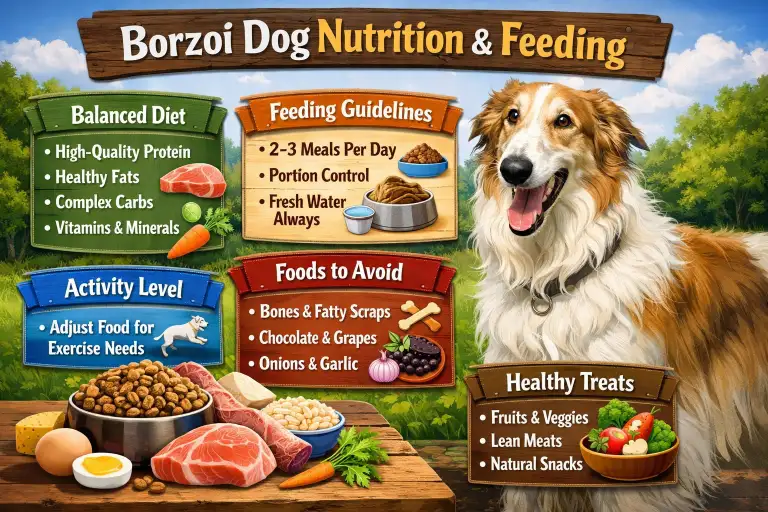
Borzoi are elegant, athletic sighthounds known for their lean build, graceful movement, and calm temperament. While they may look delicate, they have unique nutritional requirements that differ from many other large dog breeds. Feeding a Borzoi isn’t simply about providing enough food—it’s about delivering balanced nutrition that supports muscle maintenance, joint health, digestive wellness, and a healthy body condition throughout every life stage.
Whether you have a growing Borzoi puppy, an active adult, or a senior companion, understanding how much to feed, what foods to choose, and which ingredients to avoid can help your dog thrive for years to come.
This complete Borzoi nutrition and feeding guide explains the best diet choices, recommended feeding schedules, calorie requirements, common feeding challenges, safe human foods, and practical tips for maintaining your Borzoi’s ideal weight.
Understanding a Borzoi’s Nutritional Needs
Borzoi were originally bred to chase game across vast landscapes, requiring explosive speed rather than prolonged endurance. Their metabolism reflects this history. Although they are classified as large dogs, they generally require fewer calories than other breeds of similar size because they spend much of the day resting between short periods of activity.
A healthy Borzoi should have:
- A visible waist when viewed from above
- A tucked abdomen when viewed from the side
- Ribs that are easily felt but not prominently visible
- Lean muscles without excessive body fat
Many owners mistakenly believe their Borzoi is underweight simply because the breed naturally has a slim appearance. Overfeeding to make them appear heavier often leads to digestive issues, unnecessary weight gain, and increased stress on their joints.
Key Nutritional Priorities
| Nutrient | Why It Matters | Recommended Sources |
|---|---|---|
| High-quality protein | Maintains lean muscle mass | Chicken, turkey, lamb, beef, salmon |
| Healthy fats | Supports skin, coat, and energy | Fish oil, chicken fat, flaxseed |
| Complex carbohydrates | Provides digestible energy | Brown rice, oats, sweet potato |
| Fiber | Promotes healthy digestion | Pumpkin, beet pulp, carrots |
| Omega-3 fatty acids | Reduces inflammation and supports joints | Salmon oil, sardines |
| Calcium & phosphorus | Essential for bone development | Balanced commercial diets |
Best Foods for a Borzoi
The best dog food for a Borzoi should be nutritionally complete, highly digestible, and formulated for large breeds. Choose products that list real meat as the first ingredient and avoid diets that rely heavily on inexpensive fillers.
Recommended Ingredients
- Chicken
- Turkey
- Lamb
- Beef
- Salmon
- Whitefish
- Brown rice
- Oats
- Sweet potatoes
- Pumpkin
- Blueberries
- Fish oil
- Glucosamine
- Chondroitin
Ingredients to Limit
- Artificial preservatives
- Artificial colors
- Artificial flavors
- Excessive corn
- Wheat as the primary ingredient
- Soy protein concentrates
- Excessive rendered by-products
- Added sugars
- High-fat table scraps
Comparing Different Diet Types
| Food Type | Benefits | Drawbacks | Best For |
|---|---|---|---|
| Dry kibble | Affordable, convenient, complete nutrition | Lower moisture | Most Borzoi owners |
| Wet food | Highly palatable, increases water intake | More expensive | Picky eaters |
| Fresh cooked meals | Excellent digestibility | Higher cost | Sensitive stomachs |
| Freeze-dried diets | Nutrient dense, easy storage | Expensive | Active dogs |
| Raw diets | Natural texture and protein | Requires careful balancing and food safety | Experienced owners under veterinary guidance |
How Much Should a Borzoi Eat?
Daily food requirements depend on body weight, age, activity level, metabolism, and the calorie density of the food.
| Adult Weight | Low Activity | Moderate Activity | High Activity |
|---|---|---|---|
| 60 lb (27 kg) | 1,200 kcal | 1,400 kcal | 1,650 kcal |
| 70 lb (32 kg) | 1,350 kcal | 1,600 kcal | 1,850 kcal |
| 80 lb (36 kg) | 1,500 kcal | 1,750 kcal | 2,050 kcal |
| 90 lb (41 kg) | 1,650 kcal | 1,950 kcal | 2,250 kcal |
These values are estimates. Adjust portions based on your dog’s body condition rather than appetite alone.
Feeding Schedule by Age
| Life Stage | Meals Per Day |
|---|---|
| 8–12 weeks | 4 meals |
| 3–6 months | 3 meals |
| 6–12 months | 2–3 meals |
| Adult | 2 meals |
| Senior | 2 smaller meals |
Splitting daily food into two meals also helps reduce the risk of stomach discomfort and may be beneficial for deep-chested breeds such as the Borzoi.
Common Borzoi Feeding Problems and Solutions
Even when fed a premium diet, Borzoi can experience feeding challenges because of their naturally sensitive digestive systems and lean body structure. Identifying problems early helps maintain their health and ideal weight.
Picky Eating
Many Borzoi are naturally selective eaters. They may skip an occasional meal, especially during hot weather or after reduced activity. This behavior is often normal if they maintain a healthy weight and energy level.
How to encourage healthy eating:
- Feed meals at the same time every day.
- Remove uneaten food after 20 minutes.
- Avoid frequently changing dog food brands.
- Limit treats between meals.
- Ensure fresh water is always available.
Sensitive Stomach
Loose stools, occasional vomiting, or excessive gas can occur if your Borzoi has digestive sensitivities.
| Possible Cause | Recommended Solution |
|---|---|
| Sudden diet change | Transition to new food over 7–10 days |
| High-fat food | Choose moderate-fat formulas |
| Too many treats | Keep treats below 10% of daily calories |
| Poor-quality ingredients | Select foods with simple ingredient lists |
| Food intolerance | Consult your veterinarian about elimination diets |
Maintaining a Healthy Weight
Because Borzoi naturally have a slim appearance, body condition is more important than the number on the scale.
| Condition | Signs | Recommended Action |
|---|---|---|
| Underweight | Prominent ribs, muscle loss | Increase calories gradually and consult your veterinarian |
| Ideal Weight | Visible waist, ribs easily felt | Maintain current feeding plan |
| Overweight | No waist, fat over ribs | Reduce portions and increase exercise |
Switching Dog Food Safely
Changing foods too quickly often causes digestive upset. Use a gradual transition.
| Days | Old Food | New Food |
|---|---|---|
| 1–2 | 75% | 25% |
| 3–4 | 50% | 50% |
| 5–6 | 25% | 75% |
| Day 7+ | 0% | 100% |
Safe Human Foods for Borzoi
Many human foods can be safely offered in moderation as treats.
| Safe Foods | Foods to Avoid |
|---|---|
| Cooked chicken | Chocolate |
| Cooked turkey | Grapes |
| Pumpkin | Raisins |
| Carrots | Onions |
| Green beans | Garlic |
| Apples (without seeds) | Xylitol |
| Plain rice | Alcohol |
| Plain yogurt | Macadamia nuts |
Always introduce new foods slowly and avoid adding seasonings, butter, or sauces.
Water Requirements
Proper hydration is just as important as proper nutrition.
| Body Weight | Daily Water Intake |
|---|---|
| 60 lb | About 60 oz (1.8 L) |
| 70 lb | About 70 oz (2.1 L) |
| 80 lb | About 80 oz (2.4 L) |
| 90 lb | About 90 oz (2.7 L) |
Dogs that exercise frequently, spend time outdoors in hot weather, or eat primarily dry kibble may require more water.
Frequently Asked Questions
How much should a Borzoi eat each day?
Most adult Borzoi require approximately 1,300–2,000 calories per day depending on their weight, activity level, age, and metabolism. Always adjust portions based on body condition rather than appetite alone.
What is the best food for a Borzoi?
A high-quality commercial dog food formulated for large breeds with real meat as the first ingredient is an excellent choice. Foods containing chicken, turkey, lamb, salmon, brown rice, oats, and healthy fats generally work well.
Can Borzoi eat grain-free diets?
Grain-free diets are not necessary for most Borzoi unless recommended by your veterinarian for a diagnosed food allergy or intolerance. Whole grains often provide valuable nutrients and fiber.
Why is my Borzoi so skinny?
Borzoi naturally have a lean, athletic body. A visible waist and easily felt ribs are normal. If your dog is losing muscle, lacks energy, or loses weight unexpectedly, consult your veterinarian.
How often should I feed an adult Borzoi?
Two balanced meals per day are recommended for most healthy adult Borzoi. Splitting meals can improve digestion and may help reduce stomach discomfort.
Can Borzoi eat raw food?
A properly balanced raw diet can work for some dogs, but it must be nutritionally complete and prepared safely. Because improperly balanced raw diets can lead to nutritional deficiencies and foodborne illness, they should only be fed with veterinary or veterinary nutritionist guidance.
Are Borzoi prone to food allergies?
Some Borzoi develop sensitivities to certain protein sources or ingredients. Common signs include itchy skin, ear infections, chronic loose stools, vomiting, or excessive licking. Your veterinarian can help identify food allergies through an elimination diet.
How many treats can a Borzoi have?
Treats should account for no more than 10% of your dog’s daily calorie intake. Choose healthy, single-ingredient treats whenever possible.
What foods are toxic to Borzoi?
Never feed chocolate, grapes, raisins, onions, garlic, xylitol, alcohol, macadamia nuts, cooked bones, or foods containing excessive salt.
When should I contact my veterinarian?
Seek veterinary advice if your Borzoi refuses food for more than 48 hours, experiences persistent vomiting or diarrhea, loses weight rapidly, drinks excessive amounts of water, or develops significant changes in appetite or behavior.
Final Thoughts
Providing the right nutrition is one of the best ways to support your Borzoi’s long-term health and quality of life. Because this breed naturally has a lean physique and a sensitive digestive system, focus on high-quality protein, balanced fats, easily digestible carbohydrates, and consistent feeding routines rather than simply increasing food quantity.
Regularly monitor your dog’s body condition, adjust portions based on activity level and age, and introduce dietary changes gradually. Combined with routine veterinary care, exercise, and fresh water, a well-balanced diet will help your Borzoi maintain healthy muscles, strong joints, a glossy coat, and the energy needed for an active, happy life.

Ata Ur Rehman is the founder of Pet Age in Human Years Calculator, an educational platform that provides age conversion charts and lifespan guides for dogs, cats, birds, and other companion animals. His work focuses on helping pet owners understand how animal ages translate into human years using commonly accepted age conversion formulas and published lifespan averages.
The website compiles breed and species lifespan data from kennel clubs, breed organizations, and general animal lifespan studies to present simple and easy-to-understand guides for pet owners worldwide.
This website was created to centralize animal age conversion charts into one easy reference platform for pet owners.
This article is for general education. For symptoms, medication, diet changes, or health concerns, use a qualified veterinarian who can assess your individual pet.