On this page
Bull Terriers are intelligent, energetic, and highly people-oriented dogs. They are known for their playful personalities, strong determination, and unique sense of humor. While they can be affectionate family companions, they are also independent thinkers, which means training requires consistency, patience, and positive reinforcement.
Many owners mistake a Bull Terrier’s stubbornness for disobedience. In reality, most Bull Terriers respond well when training is engaging, rewarding, and structured. Harsh corrections often create resistance, while positive reinforcement encourages cooperation and trust.
Common Bull Terrier personality traits include:
- High energy levels
- Strong prey drive
- Playful and sometimes mischievous behavior
- Loyalty toward family members
- Confidence around new environments
- Occasional stubbornness during training
Because of these characteristics, early training and socialization are essential. Teaching boundaries at a young age helps prevent unwanted behaviors such as jumping, pulling on the leash, excessive chewing, and ignoring commands.
Why Bull Terrier Training Is Important
Training provides more than obedience. It helps create a safe and enjoyable relationship between you and your dog.
Benefits of proper Bull Terrier training include:
- Better behavior at home and in public
- Stronger recall and safety outdoors
- Reduced destructive behavior
- Improved confidence around people and pets
- Easier veterinary visits and grooming sessions
- Stronger bond between owner and dog
A well-trained Bull Terrier is easier to manage and more likely to become a calm, confident companion.
Bull Terrier Puppy Training
The best time to start training a Bull Terrier puppy is between 8 and 12 weeks of age. Puppies learn quickly during this period and are highly receptive to new experiences.
Focus on these foundations:
Socialization
Introduce your puppy to:
- Different people
- Friendly dogs
- Household sounds
- Car rides
- New environments
Positive experiences during puppyhood help prevent fear and anxiety later in life.
Name Recognition
Teach your puppy to respond to their name by rewarding eye contact with treats and praise.
House Training
Establish a consistent routine:
- Take your puppy outside after meals
- Take them outside after naps
- Reward successful potty breaks immediately
Consistency is the key to successful house training.
Crate Training
A crate provides a safe place for your puppy and supports house training.
Keep crate sessions positive by:
- Using treats and toys
- Never forcing the puppy inside
- Gradually increasing crate time
Bite Inhibition
Bull Terrier puppies naturally explore with their mouths.
When nipping occurs:
- Stop play immediately
- Redirect to an appropriate chew toy
- Reward calm behavior
Bull Terrier Obedience Training
Every Bull Terrier should learn basic obedience commands.
Sit
Use a treat to guide your dog’s head upward while saying “sit.”
Reward immediately when they sit.
Stay
Start with short durations and gradually increase time and distance.
Always release your dog using a consistent release word.
Come
Reliable recall is one of the most important commands for Bull Terriers.
Practice:
- Indoors first
- In fenced areas
- Around gradually increasing distractions
Always reward successful recalls.
Leave It
This command helps prevent your dog from picking up dangerous items.
Reward your Bull Terrier whenever they choose to ignore the object.
Down
Teaching a relaxed down position promotes calm behavior and impulse control.
Step-by-Step Daily Training Routine
Consistency matters more than long training sessions.
A typical training routine may include:
Morning:
- 10-minute obedience session
- Walk or play session
Afternoon:
- Mental stimulation games
- Recall practice
Evening:
- Leash walking practice
- Short obedience review
Training sessions should remain short and engaging.
Recommended duration:
- Puppies: 5 to 10 minutes
- Adults: 10 to 20 minutes
Leash Training a Bull Terrier
Bull Terriers are strong dogs and can develop pulling habits quickly.
To teach loose-leash walking:
- Start in a quiet environment.
- Reward your dog for walking beside you.
- Stop moving when pulling occurs.
- Resume walking only when the leash becomes loose.
Consistency is essential.
Never reward pulling by continuing to move forward.
Bull Terrier Socialization Training
Proper socialization reduces the risk of fear, anxiety, and reactivity.
Expose your Bull Terrier gradually to:
- Children
- Adults
- Other dogs
- Different environments
- Various sounds and surfaces
Keep experiences positive and avoid overwhelming your dog.
Quality socialization is more important than quantity.
Common Bull Terrier Behavior Problems and Solutions
Jumping on People
Cause:
Excitement and attention-seeking.
Solution:
Ignore jumping and reward calm greetings.
Excessive Chewing
Cause:
Teething, boredom, or lack of exercise.
Solution:
Provide durable chew toys and increase physical activity.
Pulling on the Leash
Cause:
Lack of leash training.
Solution:
Practice loose-leash walking consistently.
Hyperactivity
Cause:
Insufficient mental and physical stimulation.
Solution:
Increase exercise, training, and enrichment activities.
Stubborn Behavior
Cause:
Loss of motivation or inconsistent rules.
Solution:
Use high-value rewards and maintain consistency.
Exercise and Mental Stimulation Requirements
A tired Bull Terrier is easier to train.
Most adult Bull Terriers benefit from:
- 60 to 90 minutes of daily exercise
- Interactive toys
- Training games
- Puzzle feeders
- Structured play sessions
Mental stimulation is just as important as physical exercise.
Dogs that lack enrichment often develop unwanted behaviors.
Common Training Mistakes to Avoid
Many owners unintentionally slow their dog’s progress.
Avoid these mistakes:
- Inconsistent commands
- Long training sessions
- Punishment-based methods
- Lack of socialization
- Insufficient exercise
- Expecting immediate results
Successful training requires patience and repetition.
When to Seek Professional Help
Professional guidance may be beneficial if your Bull Terrier displays:
- Aggression toward people or dogs
- Severe separation anxiety
- Fear-based reactions
- Persistent destructive behavior
- Lack of progress despite consistent training
Addressing problems early often leads to better outcomes.
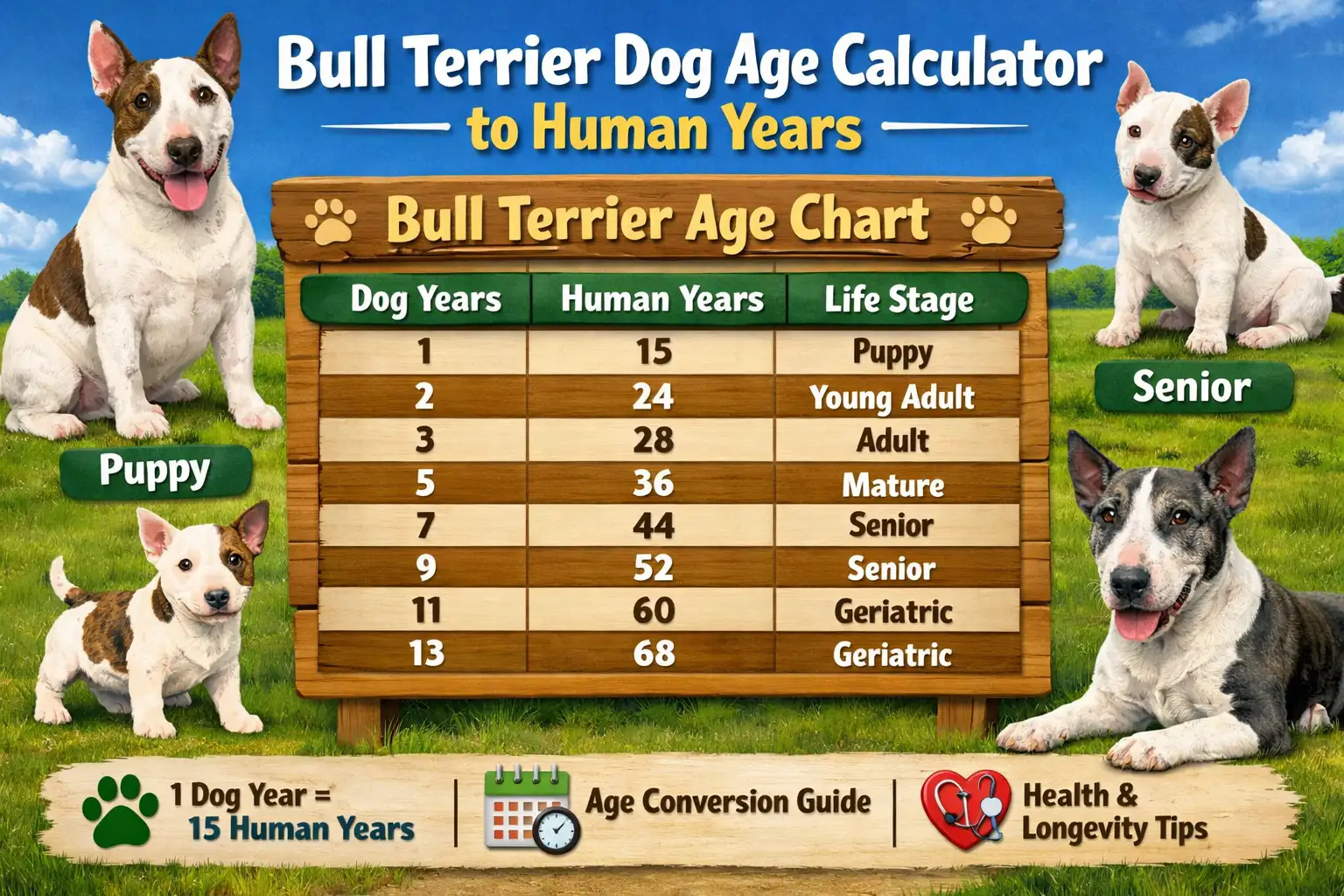
To understand your dog's current life stage, use the Bull Terrier Dog Age Calculator.
Frequently Asked Questions
Are Bull Terriers easy to train?
Bull Terriers are intelligent but independent. They learn quickly when training is consistent, rewarding, and engaging.
What age should I start training my Bull Terrier puppy?
Training should begin as soon as your puppy comes home, typically around 8 weeks of age.
How long does it take to train a Bull Terrier?
Basic obedience may take several weeks, while advanced reliability often requires months of consistent practice.
Do Bull Terriers need professional training?
Not always. Many owners successfully train their Bull Terriers at home. Professional help may be useful for behavioral challenges.
How much exercise does a Bull Terrier need?
Most adult Bull Terriers need between 60 and 90 minutes of exercise daily, along with mental stimulation.
Can older Bull Terriers be trained?
Yes. Adult Bull Terriers can learn new commands and behaviors with patience and consistency.
Why is my Bull Terrier stubborn during training?
Bull Terriers are independent thinkers. Short sessions, clear communication, and valuable rewards usually improve engagement.
What is the best training method for a Bull Terrier?
Positive reinforcement using treats, praise, toys, and consistency is generally the most effective approach.
Final Thoughts
Bull Terrier training requires patience, consistency, and a clear understanding of the breed’s personality. These energetic and intelligent dogs thrive when given structure, exercise, socialization, and positive reinforcement. Whether you are raising a puppy or working with an adult dog, establishing good habits early will lead to a happier and more manageable companion.
Focus on building trust, rewarding desired behaviors, and maintaining a consistent routine. With the right approach, your Bull Terrier can develop into a well-mannered, confident, and loyal family member.

Ata Ur Rehman is the founder of Pet Age in Human Years Calculator, an educational platform that provides age conversion charts and lifespan guides for dogs, cats, birds, and other companion animals. His work focuses on helping pet owners understand how animal ages translate into human years using commonly accepted age conversion formulas and published lifespan averages.
The website compiles breed and species lifespan data from kennel clubs, breed organizations, and general animal lifespan studies to present simple and easy-to-understand guides for pet owners worldwide.
This website was created to centralize animal age conversion charts into one easy reference platform for pet owners.
This article is for general education. For symptoms, medication, diet changes, or health concerns, use a qualified veterinarian who can assess your individual pet.