On this page
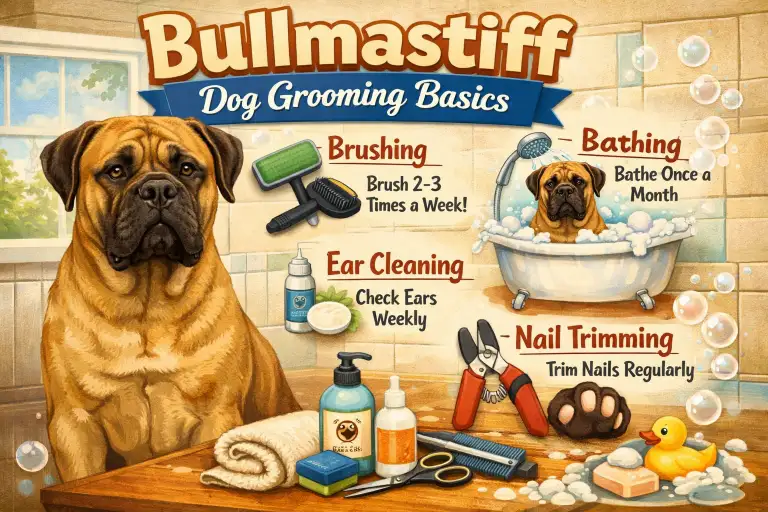
Bullmastiff grooming is an important part of keeping this powerful breed healthy, comfortable, and clean. Although Bullmastiffs have a short coat that does not require complicated styling, they are not completely low-maintenance dogs. Their large size, skin sensitivity, natural oils, shedding habits, and facial folds mean they need a consistent grooming routine.
Many owners ask, “How often should you groom a Bullmastiff?” The answer depends on the dog’s lifestyle, skin condition, and shedding level, but most Bullmastiffs benefit from simple weekly care combined with regular bathing, nail trimming, ear cleaning, and dental care.
A proper Bullmastiff grooming routine helps:
- Reduce shedding around the home
- Control natural dog odor
- Remove dirt and loose hair
- Maintain healthy skin and coat
- Prevent infections and irritation
- Detect health problems early
Unlike breeds with long or curly coats, Bullmastiffs do not need haircuts or complicated grooming sessions. However, because they are large and powerful dogs, starting grooming habits early helps them become comfortable with handling.
Bullmastiff Grooming Requirements at a Glance
| Grooming Task | Recommended Frequency | Why It Matters |
|---|---|---|
| Brushing | 1–2 times per week | Controls shedding and removes dirt |
| Bathing | Every 6–8 weeks | Keeps skin clean and reduces odor |
| Nail trimming | Every 3–4 weeks | Protects joints and walking comfort |
| Ear cleaning | Every 1–2 weeks | Helps prevent ear problems |
| Teeth brushing | 2–3 times per week | Reduces plaque and bad breath |
| Skin fold checks | Weekly | Prevents irritation and odor |
Bullmastiffs are easiest to groom when care is consistent. Short grooming sessions throughout the month are much better than waiting until your dog needs major cleaning.
Bullmastiff Coat Type and Grooming Needs
Bullmastiffs have a short, dense, smooth coat that lies close to the body. Their coat is easy to maintain because it rarely becomes tangled or matted, but many owners are surprised by how much these dogs can shed.
A short coat does not mean a Bullmastiff requires no grooming. Their skin is more exposed, which means problems such as dryness, allergies, irritation, and infections can become noticeable quickly.
Bullmastiff Coat Characteristics
| Coat Feature | What Owners Should Know |
|---|---|
| Short and dense coat | Easy brushing but regular shedding |
| Smooth texture | Does not require trimming |
| Natural skin oils | Helps protect the coat but can create odor |
| Facial and neck folds | Need regular cleaning to prevent irritation |
The goal of grooming a Bullmastiff is not to change their appearance. It is to maintain healthy skin, remove dead hair, and keep them comfortable.
Do Bullmastiffs Shed a Lot?
A common question from owners is, “Do Bullmastiffs shed a lot?”
Bullmastiffs are moderate shedders. They do not shed as heavily as some double-coated breeds, but they lose hair throughout the year. You may notice increased shedding during seasonal changes, especially in spring and autumn.
Regular brushing is the easiest way to manage Bullmastiff shedding.
Bullmastiff Shedding Schedule
| Season | Shedding Level | Grooming Recommendation |
|---|---|---|
| Spring | Moderate to heavy | Brush 2–3 times weekly |
| Summer | Moderate | Weekly brushing |
| Autumn | Moderate to heavy | Increase brushing frequency |
| Winter | Light to moderate | Continue weekly care |
A rubber grooming brush or soft bristle brush works well because Bullmastiffs have short hair and sensitive skin. Harsh brushes can cause discomfort and irritation.
Bullmastiff Skin Care: What Owners Need to Know
Bullmastiff skin care is an important part of grooming because this breed can be prone to sensitive skin and irritation.
Common skin problems may be caused by:
- Allergies
- Dirty skin folds
- Excess moisture
- Harsh shampoos
- Over-bathing
- Poor drying after baths
Because Bullmastiffs have wrinkles and loose skin around areas such as the face and neck, owners should check these areas regularly.
A healthy Bullmastiff coat should feel smooth, clean, and free from strong odors. If your dog develops constant scratching, redness, hair loss, or a bad smell that does not improve with cleaning, professional advice may be needed.
How to Groom a Bullmastiff at Home
Learning how to groom a Bullmastiff at home is easier than many owners expect. The key is creating a simple routine and making grooming a normal part of your dog’s life.
A basic home grooming routine includes:
- Brushing the coat
- Checking the skin
- Cleaning ears
- Trimming nails
- Bathing when needed
- Checking teeth and mouth
Bullmastiffs are large dogs, so calm handling is important. Avoid rushing grooming sessions because a dog that becomes uncomfortable may resist future care.
Bullmastiff Bathing Guide, Grooming Tools, Hygiene Care, Mistakes & FAQs
How Often Should You Bathe a Bullmastiff?
One of the most common questions owners ask is, “How often should you bathe a Bullmastiff?”
Most Bullmastiffs should be bathed every 6–8 weeks, although the schedule can change depending on their lifestyle. Dogs that spend more time outdoors, get dirty frequently, or have skin problems may need more frequent cleaning.
Because Bullmastiffs naturally produce skin oils that help protect their coat, bathing too often can cause dryness, itching, and irritation.
Bullmastiff Bathing Schedule
| Grooming Task | Recommended Schedule | Important Tips |
|---|---|---|
| Regular bath | Every 6–8 weeks | Use gentle dog shampoo |
| Mud or dirt cleaning | As needed | Clean only dirty areas when possible |
| Skin fold cleaning | Weekly | Keep folds dry and clean |
| After outdoor activities | Check coat | Remove dirt and debris |
When bathing your Bullmastiff:
- Use lukewarm water
- Choose a dog-safe shampoo
- Avoid human shampoo
- Rinse completely
- Dry carefully, especially around folds
Leftover shampoo can cause itching, while trapped moisture can contribute to skin irritation and odor.
Step-by-Step Bullmastiff Grooming Routine
A simple Bullmastiff grooming routine does not require expensive equipment. Most owners can maintain their dog’s coat and hygiene at home with a few basic tools.
Step 1: Brush Your Bullmastiff
Brushing should be done once or twice per week.
Benefits of brushing include:
- Removing loose hair
- Reducing shedding around the house
- Spreading natural oils through the coat
- Checking for skin problems
Use gentle movements because Bullmastiff skin can be sensitive.
Step 2: Check Skin and Body Condition
While brushing, check for:
- Red spots
- Dry patches
- Lumps or bumps
- Scratches
- Unusual smells
- Signs of parasites
Regular checks help catch problems before they become serious.
Step 3: Clean Ears
Bullmastiff ears should be checked regularly.
Signs of ear problems include:
- Bad smell
- Excess wax
- Redness
- Head shaking
- Scratching ears
Clean only the outer ear using a dog ear cleaner and soft cloth. Never push cotton swabs deep inside the ear canal.
Step 4: Trim Nails
Nail care is especially important for large breeds like Bullmastiffs.
Long nails can:
- Change the way your dog walks
- Put pressure on joints
- Cause discomfort
- Increase the risk of broken nails
If you hear your Bullmastiff’s nails clicking on hard floors, they may need trimming.
Step 5: Maintain Dental Care
Dental hygiene is often overlooked, but it is an important part of Bullmastiff grooming.
Regular teeth cleaning helps reduce:
- Bad breath
- Plaque buildup
- Gum problems
- Dental disease
Try brushing your Bullmastiff’s teeth several times per week using dog-safe toothpaste.
Best Grooming Tools for Bullmastiffs
Choosing the right grooming tools makes caring for a Bullmastiff easier and more comfortable.
Essential Bullmastiff Grooming Supplies
| Grooming Tool | Purpose | Why It Helps |
|---|---|---|
| Soft bristle brush | Removes loose hair | Gentle on short coats |
| Rubber grooming brush | Controls shedding | Comfortable for sensitive skin |
| Dog shampoo | Cleans skin and coat | Protects natural oils |
| Dog towel | Drying after baths | Prevents trapped moisture |
| Nail clippers or grinder | Nail maintenance | Supports healthy movement |
| Dog ear cleaner | Ear hygiene | Helps prevent buildup |
Avoid using harsh brushes or grooming products designed for other coat types. Bullmastiffs have short coats, so aggressive tools are unnecessary.
Bullmastiff Grooming Mistakes to Avoid
Many grooming problems happen because of small mistakes. Avoiding these common errors can improve your dog’s comfort and health.
Common Bullmastiff Grooming Mistakes
| Mistake | Why It Causes Problems | Better Approach |
|---|---|---|
| Bathing too often | Causes dry skin and itching | Bathe only when needed |
| Using human shampoo | Can irritate dog skin | Use dog-specific products |
| Ignoring nails | Creates walking problems | Trim regularly |
| Skipping brushing | Increases shedding and odor | Brush weekly |
| Leaving skin folds wet | Encourages irritation | Clean and dry carefully |
| Shaving the coat | Removes natural protection | Keep the natural coat |
Do Bullmastiffs Need Professional Grooming?
Bullmastiffs usually do not require frequent professional grooming because their coat is naturally easy to maintain.
However, a professional groomer may help with:
- Difficult nail trimming
- Large dogs that resist bathing
- Heavy shedding periods
- Deep cleaning
- Dogs with grooming anxiety
A veterinarian should be consulted if your Bullmastiff has:
- Persistent itching
- Skin infections
- Hair loss
- Strong unusual odor
- Open sores
Bullmastiff Grooming FAQs
How often should you groom a Bullmastiff?
Most Bullmastiffs should be brushed once or twice per week, bathed every 6–8 weeks, and checked regularly for skin, ear, nail, and dental problems.
Are Bullmastiffs easy to groom?
Yes, Bullmastiffs are relatively easy to groom because they have short coats. However, their large size and skin care needs mean they still require regular attention.
Do Bullmastiffs shed a lot?
Bullmastiffs are moderate shedders. They shed throughout the year, with heavier shedding during seasonal changes. Regular brushing helps control loose hair.
Why does my Bullmastiff smell?
A Bullmastiff may smell because of natural skin oils, dirty skin folds, trapped moisture, ear problems, or infrequent grooming. Regular cleaning can reduce unwanted odor.
Can you shave a Bullmastiff?
No. Bullmastiffs should not be shaved unless recommended by a veterinarian. Their short coat helps protect their skin and regulate body temperature.
How often should I brush my Bullmastiff?
Most Bullmastiffs should be brushed 1–2 times per week. During heavy shedding seasons, brushing more often can help manage loose hair.
What is the best brush for a Bullmastiff?
A soft bristle brush or rubber grooming brush is usually the best choice because it removes loose hair without irritating the skin.
How do you clean a Bullmastiff’s wrinkles?
Clean facial and neck folds with a damp cloth or dog-safe wipe, then dry the area completely. Moisture trapped in folds can cause irritation and odor.
Do Bullmastiffs need their nails trimmed?
Yes. Because Bullmastiffs are heavy dogs, long nails can affect their movement and place extra stress on their joints. Nail trimming is usually needed every 3–4 weeks.
How can I reduce Bullmastiff shedding?
You can reduce shedding by brushing regularly, feeding a balanced diet, maintaining healthy skin, and using appropriate grooming tools.
Final Thoughts on Bullmastiff Grooming
Bullmastiff grooming is simple when done consistently. This breed does not need complicated haircuts or daily grooming sessions, but regular brushing, bathing, nail care, ear cleaning, and skin checks are essential.
A good grooming routine keeps your Bullmastiff looking healthy while also helping prevent skin problems, infections, and discomfort.
The best approach is consistency. A few minutes of grooming each week can make a major difference in your Bullmastiff’s health, comfort, and quality of life

Ata Ur Rehman is the founder of Pet Age in Human Years Calculator, an educational platform that provides age conversion charts and lifespan guides for dogs, cats, birds, and other companion animals. His work focuses on helping pet owners understand how animal ages translate into human years using commonly accepted age conversion formulas and published lifespan averages.
The website compiles breed and species lifespan data from kennel clubs, breed organizations, and general animal lifespan studies to present simple and easy-to-understand guides for pet owners worldwide.
This website was created to centralize animal age conversion charts into one easy reference platform for pet owners.
This article is for general education. For symptoms, medication, diet changes, or health concerns, use a qualified veterinarian who can assess your individual pet.