On this page
Training a Bullmastiff is not about forcing obedience or trying to overpower a large dog. Successful Bullmastiff training is built on trust, consistency, communication, and understanding the natural behavior of this powerful guardian breed.
Many owners searching for how to train a Bullmastiff are dealing with common challenges such as stubborn behavior, ignoring commands, leash pulling, jumping, or excessive protectiveness. Because Bullmastiffs are large, intelligent, and independent dogs, training mistakes can quickly become difficult to manage.
The good news is that Bullmastiffs are highly trainable when the correct methods are used. They are loyal, calm, and eager to protect their family. However, they were not bred to blindly follow commands like some working breeds. Their history as estate guardians means they naturally think before they act.
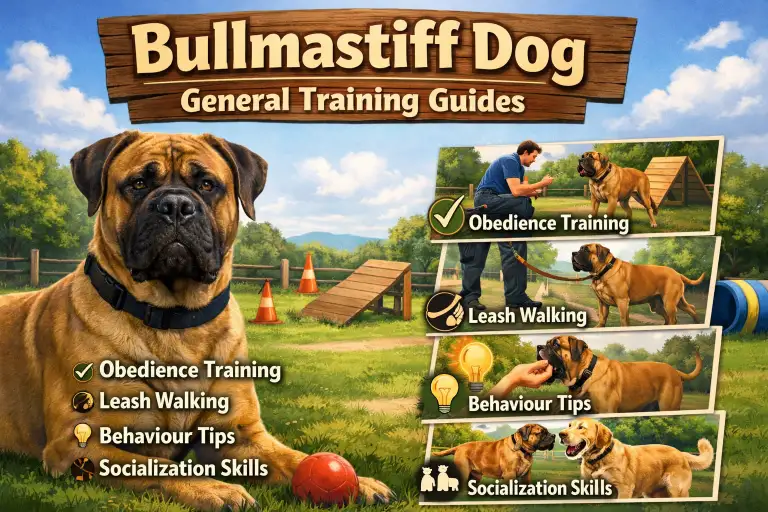
This guide explains the best Bullmastiff training methods for puppies and adults, including obedience training, leash manners, socialization, impulse control, and solving common behavior problems. Whether you are a first-time large dog owner or experienced with powerful breeds, these techniques will help you raise a calm, confident, and well-behaved Bullmastiff.
Are Bullmastiffs Hard to Train?
One of the most common questions owners ask is, “Are Bullmastiffs hard to train?” The answer depends on your training approach. Bullmastiffs are not difficult because they lack intelligence. They are challenging because they are independent thinkers.
A Bullmastiff may understand a command but decide whether following it is necessary. This behavior is often mistaken for stubbornness, but it is actually a result of their natural guardian instincts. They were bred to make decisions independently instead of constantly waiting for human direction.
The best way to train a Bullmastiff is through calm leadership, positive reinforcement, and clear boundaries. Harsh corrections, yelling, or physical punishment usually create resistance and can damage trust between the dog and owner.
Understanding Bullmastiff Temperament Before Training
Before starting obedience training, it is important to understand the Bullmastiff temperament. This breed is known for being calm, loyal, confident, and protective.
Bullmastiffs were originally developed in England to guard large estates and help protect land from poachers. They were valued because they could quietly observe situations, control threats, and act when necessary. These instincts still influence modern Bullmastiff behavior.
A well-trained Bullmastiff is usually:
- Calm and confident around family members
- Loyal and deeply attached to owners
- Protective without unnecessary aggression
- Independent but responsive with proper training
- Patient and gentle with familiar people
However, their protective nature means owners must teach boundaries early. A Bullmastiff should learn that humans make decisions, not the dog. Without proper guidance, some dogs may become overly protective, block visitors, or believe they must control every situation.
When Should You Start Training a Bullmastiff?
The best time to start Bullmastiff puppy training is as soon as your puppy comes home, usually around 8 weeks old. Early training does not mean demanding advanced obedience. Instead, it focuses on building good habits and preventing future problems.
Young Bullmastiff puppies should learn:
- Basic commands like sit, stay, and come
- Accepting handling and grooming
- Walking calmly on a leash
- Respecting household rules
- Positive experiences with people, dogs, and new environments
Training during puppyhood creates a foundation for adulthood. Because Bullmastiffs grow into very large and powerful dogs, teaching manners early is much easier than correcting unwanted behavior later.
Bullmastiff Training Challenges by Age
| Age | Common Training Challenges | Main Training Focus |
|---|---|---|
| 8–16 weeks | House training, biting, learning boundaries | Socialization and basic commands |
| 4–12 months | Testing limits, distractions, leash pulling | Obedience and impulse control |
| 12–24 months | Adolescent stubbornness and regression | Consistency and reinforcement |
| Adult Bullmastiff | Changing existing habits | Structure and reliability |
The Best Training Approach for a Bullmastiff
The most effective Bullmastiff training method combines positive reinforcement, patience, and consistency. This breed responds best when training feels fair and understandable.
Positive reinforcement means rewarding behaviors you want to see more often. Rewards can include:
- Small training treats
- Praise and encouragement
- Toys
- Affection
- Access to something the dog enjoys
The timing of rewards is extremely important. A Bullmastiff needs to understand exactly which behavior earned the reward. Rewarding immediately after the correct action creates a clear connection.
Training sessions should also be short and focused. Bullmastiffs are not designed for endless repetition. Five to fifteen minutes of productive training is usually more effective than a long session that becomes boring.
Bullmastiff Training Rules That Work
| Do | Avoid |
|---|---|
| Use calm and confident communication | Shouting or emotional reactions |
| Reward good behavior immediately | Punishing after the mistake happens |
| Practice every day | Training only when problems appear |
| Use the same commands consistently | Changing rules frequently |
| Set boundaries early | Allowing unwanted habits to develop |
Training a Bullmastiff takes patience, but the results are worth the effort. A properly trained Bullmastiff becomes a calm, dependable companion that listens because it understands expectations—not because it is afraid.
Bullmastiff Obedience Training: Teaching Basic Commands
Bullmastiff obedience training should focus on practical commands that improve safety and communication. Because Bullmastiffs are large and powerful dogs, reliable obedience is important for everyday situations such as walks, visitors, and family interactions.
The most important commands every Bullmastiff should learn include:
- Sit: Helps teach patience and calm behavior.
- Stay: Builds impulse control and prevents rushing.
- Come: Improves safety and recall reliability.
- Leave it: Teaches self-control around distractions.
- Place: Helps your dog settle calmly when guests arrive.
- Heel: Creates better leash manners.
When training these commands, avoid repeating them multiple times. If you say “sit” five times before your dog responds, your Bullmastiff learns that the first command is optional. Say the command once, wait patiently, and reward the correct response.
How to Train a Bullmastiff Puppy
Bullmastiff puppy training should focus on building confidence, manners, and good habits. Puppies learn quickly, but they also develop behaviors based on what owners allow.
Important areas of puppy training include:
- House training and bathroom routines
- Learning not to bite or chew furniture
- Accepting handling and grooming
- Walking politely on a leash
- Meeting new people and environments safely
- Learning calm behavior around children and visitors
Socialization is especially important for Bullmastiffs because of their natural protective instincts. A well-socialized Bullmastiff learns the difference between normal situations and real threats.
Bullmastiff Leash Training: How to Stop Pulling
One of the biggest challenges owners face is Bullmastiff leash training. Because adult Bullmastiffs can weigh more than 100 pounds, pulling is not only frustrating but also difficult to control.
The goal is to teach your Bullmastiff that walking calmly is rewarding. Start in a quiet environment and reward your dog whenever the leash stays loose.
Helpful leash training tips:
- Stop walking when your dog pulls.
- Reward calm walking beside you.
- Practice short walks before longer outings.
- Avoid allowing pulling sometimes and correcting it other times.
- Use patience instead of trying to physically overpower the dog.
A Bullmastiff that learns proper leash manners as a puppy is much easier to manage as an adult.
How to Stop a Bullmastiff From Being Overprotective
Because Bullmastiffs are natural guardians, some owners experience overprotective Bullmastiff behavior. The dog may stand between family members and strangers, bark at visitors, or try to control situations.
Protection is part of the breed, but the owner must teach the dog appropriate boundaries.
To reduce overprotective behavior:
- Reward calm behavior around visitors.
- Teach commands like “place” and “stay.”
- Do not encourage suspicious behavior.
- Expose your dog to different people and environments.
- Remain calm during new situations.
A confident Bullmastiff does not need to make every decision alone. Clear leadership helps the dog relax and trust the owner.
Common Bullmastiff Training Problems and Solutions
| Problem | Why It Happens | Solution |
|---|---|---|
| Bullmastiff ignores commands | Lack of motivation or unclear training | Use better rewards and clearer communication |
| Pulling on leash | Never learned proper walking skills | Practice loose leash walking daily |
| Jumping on people | Large dogs often receive attention for jumping | Reward calm greetings instead |
| Guarding visitors | Strong protective instincts | Teach boundaries and controlled introductions |
| Training regression | Normal adolescent development | Return to basics and stay consistent |
How Long Does It Take to Train a Bullmastiff?
The time required to train a Bullmastiff depends on age, temperament, previous experiences, and consistency. Some dogs learn basic commands within weeks, while reliable obedience may take several months.
Because Bullmastiffs mature slowly, owners should focus on steady improvement rather than quick results. Daily practice, even for a few minutes, creates better long-term behavior.
When Should You Hire a Professional Bullmastiff Trainer?
Many Bullmastiff owners can successfully teach basic obedience at home. However, professional help may be needed when behavior becomes difficult or unsafe.
Consider working with a qualified trainer if your Bullmastiff:
- Shows aggression toward people or animals
- Displays serious fear or anxiety
- Cannot be safely controlled on walks
- Guards food, toys, or family members
- Does not improve despite consistent training
Early professional guidance can prevent small issues from becoming serious behavior problems.
Frequently Asked Questions About Bullmastiff Training
Are Bullmastiffs easy to train?
Bullmastiffs are intelligent but independent, which means they require patience and consistency. They are not always eager to please, but they respond well to calm training methods and positive reinforcement.
What is the best training method for a Bullmastiff?
The best training method for a Bullmastiff is positive reinforcement combined with clear boundaries. Reward-based training builds trust and encourages cooperation without creating fear or resistance.
How do you train a stubborn Bullmastiff?
To train a stubborn Bullmastiff, keep sessions short, use valuable rewards, avoid repeating commands, and remain consistent. What appears to be stubbornness is often independence or confusion.
Can an adult Bullmastiff be trained?
Yes, adult Bullmastiffs can learn new behaviors. Training an older dog may require more patience because existing habits take longer to change, but consistent routines can create excellent results.
How do I stop my Bullmastiff puppy from biting?
Bullmastiff puppies explore the world with their mouths. Redirect biting toward appropriate toys, reward gentle behavior, and avoid encouraging rough play with hands.
How much exercise does a trained Bullmastiff need?
Bullmastiffs need regular daily exercise, but they are not high-energy dogs. Walks, training sessions, and mental stimulation are usually more beneficial than intense physical activity.
Why does my Bullmastiff ignore me outside?
Many Bullmastiffs struggle with distractions outdoors because the environment is more exciting. Practice commands in different locations and gradually increase distractions as your dog improves.
Are Bullmastiffs aggressive dogs?
Bullmastiffs are naturally protective, but a properly trained and socialized Bullmastiff is usually calm and stable. Aggression often results from poor socialization, fear, stress, or unclear boundaries rather than normal breed behavior.
Final Thoughts on Bullmastiff Training
Training a Bullmastiff requires patience, consistency, and an understanding of the breed’s natural instincts. These dogs are not designed to follow commands blindly, but they can become extremely reliable companions when trained correctly.
The key to successful Bullmastiff training is building trust, setting clear rules, and rewarding the behaviors you want to see. With proper guidance, a Bullmastiff can become a calm, obedient, and confident family guardian.

Ata Ur Rehman is the founder of Pet Age in Human Years Calculator, an educational platform that provides age conversion charts and lifespan guides for dogs, cats, birds, and other companion animals. His work focuses on helping pet owners understand how animal ages translate into human years using commonly accepted age conversion formulas and published lifespan averages.
The website compiles breed and species lifespan data from kennel clubs, breed organizations, and general animal lifespan studies to present simple and easy-to-understand guides for pet owners worldwide.
This website was created to centralize animal age conversion charts into one easy reference platform for pet owners.
This article is for general education. For symptoms, medication, diet changes, or health concerns, use a qualified veterinarian who can assess your individual pet.
