On this page
A Cane Corso is one of the largest and most powerful dog breeds, and its diet plays a critical role in supporting healthy growth, muscle development, joint function, and long-term wellness. Unlike smaller breeds, Cane Corsos have unique nutritional requirements because of their large frame, rapid growth during puppyhood, and tendency to develop orthopedic conditions if fed incorrectly.
Choosing the right food isn’t simply about buying a premium dog food or feeding larger portions. The ideal Cane Corso diet should provide balanced nutrition, appropriate calories, controlled calcium levels during growth, and enough high-quality protein to maintain lean muscle without encouraging excessive weight gain.
Whether you’re raising an energetic Cane Corso puppy, maintaining a healthy adult, or caring for a senior dog with changing nutritional needs, understanding how much to feed, how often to feed, and which foods provide the best nutrition will help your dog live a healthier and longer life.
This complete guide explains everything you need to know about feeding a Cane Corso, including nutritional requirements, feeding schedules, recommended food types, portion guidelines, common feeding mistakes, and answers to the most frequently asked questions from Cane Corso owners.
Understanding a Cane Corso’s Nutritional Needs
The Cane Corso was originally developed as a working mastiff capable of guarding livestock, hunting large game, and protecting property. These demanding jobs required exceptional strength, endurance, and muscle mass, all of which depend heavily on proper nutrition.
Unlike many medium-sized breeds, Cane Corsos continue growing until they are around 18 to 24 months old. During this period, their skeleton develops rapidly while muscles gradually mature. Feeding excessive calories or improper mineral levels during this growth stage can contribute to developmental orthopedic diseases such as hip dysplasia, elbow dysplasia, osteochondrosis, and joint instability.
For this reason, balanced nutrition is much more important than simply feeding large amounts of food.
Essential Nutrients for Cane Corsos
| Nutrient | Recommended Range | Why It Matters |
|---|---|---|
| Protein | 22–28% (adult) / 26–30% (puppy) | Supports muscle growth and repair |
| Fat | 12–18% | Provides energy and supports skin health |
| Fiber | 3–6% | Promotes healthy digestion |
| Calcium | Controlled levels | Supports proper bone development |
| Phosphorus | Balanced with calcium | Essential for skeletal health |
| Omega-3 Fatty Acids | EPA & DHA | Supports joints, brain, and skin |
| Glucosamine & Chondroitin | Beneficial | Helps maintain cartilage and mobility |
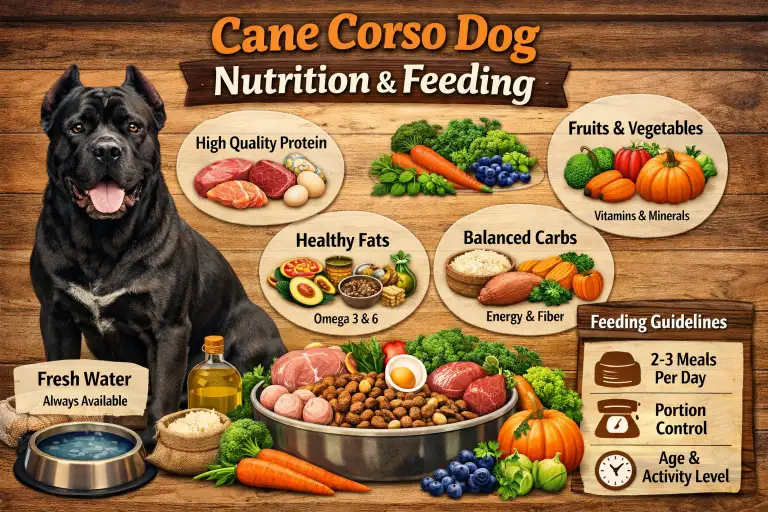
Protein should come primarily from animal sources such as chicken, turkey, beef, lamb, salmon, or fish meal. High-quality animal protein provides the amino acids required for maintaining the Cane Corso’s muscular physique.
Healthy fats are equally important because they provide concentrated energy while supporting skin, coat quality, and immune function.
Calcium deserves special attention. Contrary to popular belief, more calcium does not produce stronger bones. Excess calcium during puppyhood may actually interfere with proper skeletal development.
Best Types of Food for Cane Corsos
There is no single diet that works perfectly for every Cane Corso. The best choice depends on age, activity level, health status, and owner preference.
Comparison of Dog Food Types
| Food Type | Advantages | Disadvantages | Best For |
|---|---|---|---|
| Dry Kibble | Complete nutrition, convenient, affordable | Quality varies | Most owners |
| Wet Food | Highly palatable, extra moisture | More expensive | Picky eaters |
| Fresh Food | Excellent digestibility | Requires refrigeration | Owners seeking minimally processed diets |
| Freeze-Dried | Nutrient-dense | High cost | Premium feeding plans |
| Raw Diet | High meat content | Requires careful formulation and food safety | Experienced owners only |
| Homemade Diet | Full ingredient control | Must be formulated by a veterinary nutritionist | Dogs with medical needs |
Most veterinarians recommend feeding an AAFCO-compliant large-breed formula specifically designed for giant or large-breed dogs. These diets are formulated to provide appropriate calorie density and controlled mineral levels that support steady growth without increasing orthopedic risk.
How to Choose the Best Dog Food
Reading a dog food label is one of the simplest ways to determine quality.
Look for:
- Named animal protein as the first ingredient
- Complete and balanced nutritional statement
- Large-breed life stage formula
- Appropriate protein and fat levels
- Controlled calcium content
- No excessive fillers replacing meat proteins
Avoid selecting food solely because it claims to be “premium,” “natural,” or “high protein.” Marketing claims are less important than the guaranteed analysis and ingredient quality.
Dog Food Label Checklist
| Label Feature | Recommendation |
|---|---|
| First Ingredient | Chicken, beef, lamb, salmon, turkey |
| Protein Source | Clearly identified meat |
| Life Stage | Puppy, Adult, or All Life Stages |
| AAFCO Statement | Present |
| Artificial Colors | Avoid when possible |
| Calcium Level | Appropriate for large breeds |
Grain-Free vs Grain-Inclusive Diets
Many owners believe grain-free diets are healthier, but current veterinary evidence does not support feeding grain-free food unless medically necessary.
Whole grains such as brown rice, oats, barley, and oatmeal provide digestible carbohydrates, fiber, vitamins, and minerals that many Cane Corsos tolerate very well.
Grain-free diets may be appropriate when a veterinarian diagnoses a true grain allergy, although food allergies involving grains are relatively uncommon.
Most Cane Corsos thrive on grain-inclusive diets formulated for large breeds.
How Much Protein Does a Cane Corso Need?
Because Cane Corsos are muscular working dogs, they require higher protein levels than many companion breeds. However, extremely high protein percentages do not automatically produce better muscle development.
The body uses protein for:
- Muscle repair
- Immune function
- Hormone production
- Tissue maintenance
- Healthy skin and coat
Healthy adult Cane Corsos generally perform well on diets containing approximately 22–28% protein, while growing puppies benefit from 26–30% protein provided through balanced large-breed puppy formulas.
Importance of Healthy Fats
Dietary fat provides more than twice as much energy as carbohydrates. Active Cane Corsos rely on healthy fats to fuel daily exercise and maintain ideal body condition.
Good fat sources include:
- Chicken fat
- Salmon oil
- Fish oil
- Flaxseed
- Sunflower oil
Omega-3 fatty acids are particularly valuable because they help reduce inflammation, support joint health, improve skin condition, and contribute to cognitive function.
Vitamins and Minerals
Balanced commercial dog foods already contain appropriate levels of vitamins and minerals. Additional supplementation is usually unnecessary unless recommended by a veterinarian.
Important nutrients include:
- Vitamin A
- Vitamin D
- Vitamin E
- Zinc
- Selenium
- Copper
- Manganese
- Iron
Excess supplementation can sometimes cause nutritional imbalances, particularly in growing large-breed puppies.
Water Requirements
Fresh water should always be available.
An adult Cane Corso typically drinks between 0.5 and 1 ounce of water per pound of body weight each day, although activity level, temperature, and diet influence water intake.
Dogs consuming dry kibble generally require more drinking water than dogs eating canned or fresh diets.
Signs of adequate hydration include:
- Moist gums
- Good skin elasticity
- Normal energy levels
- Pale yellow urine
Ensuring constant access to clean drinking water is just as important as feeding a balanced diet.
Key Takeaways
- Feed a balanced large-breed diet appropriate for your dog’s life stage.
- Prioritize quality animal protein rather than excessive protein percentages.
- Avoid overfeeding, especially during puppyhood.
- Maintain controlled calcium intake for healthy skeletal development.
- Choose complete and balanced foods meeting recognized nutritional standards.
- Monitor body condition instead of relying solely on feeding charts.
- Keep fresh drinking water available at all times.
Frequently Asked Questions
What is the best food for a Cane Corso?
The best food for a Cane Corso is a complete and balanced large-breed dog food made with high-quality animal protein, healthy fats, and controlled calcium levels. Puppies should eat a large-breed puppy formula, while adults should transition to a large-breed adult diet that supports muscle maintenance and joint health.
How much should a Cane Corso eat each day?
The amount depends on your dog’s age, weight, activity level, and the calorie content of the food. Most adult Cane Corsos require between 2,000 and 3,000 calories per day. Always follow your veterinarian’s recommendations and adjust portions based on your dog’s body condition.
How many times a day should a Cane Corso eat?
Cane Corso puppies should eat three to four meals per day until they are around six months old. Adults generally do best with two meals per day, while seniors may benefit from two smaller meals that are easier to digest.
Can a Cane Corso eat raw food?
A properly balanced raw diet can work for some Cane Corsos, but it must provide complete nutrition and be prepared safely to reduce the risk of bacterial contamination. Many veterinarians recommend high-quality commercial diets because they are formulated to meet nutritional standards.
Is grain-free food good for Cane Corsos?
Not necessarily. Most Cane Corsos digest grains well, and grain-inclusive diets can provide valuable nutrients and fiber. Grain-free diets should only be used if your veterinarian confirms a grain allergy or another medical reason for avoiding grains.
Can Cane Corsos eat chicken?
Yes. Cooked chicken is an excellent source of lean protein for most Cane Corsos. However, avoid feeding cooked chicken bones because they can splinter and cause serious injuries.
What human foods are safe for a Cane Corso?
Safe foods include cooked chicken, turkey, lean beef, salmon, pumpkin, carrots, green beans, blueberries, apples without seeds, sweet potatoes, and plain cooked rice. Treat human foods as occasional snacks rather than meal replacements.
What foods should a Cane Corso never eat?
Never feed chocolate, grapes, raisins, onions, garlic, macadamia nuts, xylitol, alcohol, caffeine, cooked bones, raw bread dough, or excessively fatty foods. These foods can cause serious illness or poisoning.
How do I know if my Cane Corso is overweight?
You should be able to feel your dog’s ribs without pressing hard, and there should be a visible waist when viewed from above. If the ribs are difficult to feel or the waist has disappeared, your Cane Corso may be overweight and should have its diet reviewed.
Can I feed my Cane Corso homemade food?
Yes, but homemade diets should be formulated with the help of a veterinary nutritionist to ensure they provide complete and balanced nutrition. Feeding unbalanced homemade meals over time can lead to nutritional deficiencies.
Should I give my Cane Corso supplements?
Most healthy Cane Corsos eating a complete commercial diet do not require supplements. However, some dogs may benefit from omega-3 fatty acids, glucosamine, chondroitin, or probiotics if recommended by a veterinarian.
Why is my Cane Corso always hungry?
Some Cane Corsos naturally have a strong appetite. Constant hunger may also result from rapid growth, high activity levels, boredom, parasites, or certain medical conditions. If your dog seems unusually hungry despite eating enough food, consult your veterinarian.
How often should I change my Cane Corso’s food?
Avoid frequent food changes unless necessary. If you need to switch foods, transition gradually over 7–10 days by slowly increasing the new food while decreasing the old food to minimize digestive upset.
What is the best diet for a Cane Corso puppy?
A large-breed puppy formula is the safest choice because it provides controlled calories, balanced calcium and phosphorus, and the nutrients needed for slow, healthy growth. Avoid overfeeding or adding calcium supplements unless advised by your veterinarian.
Can treats be part of a Cane Corso’s diet?
Yes. Treats can be useful for training and rewarding good behavior, but they should account for no more than 10% of your dog’s daily calorie intake to help prevent unnecessary weight gain.

Ata Ur Rehman is the founder of Pet Age in Human Years Calculator, an educational platform that provides age conversion charts and lifespan guides for dogs, cats, birds, and other companion animals. His work focuses on helping pet owners understand how animal ages translate into human years using commonly accepted age conversion formulas and published lifespan averages.
The website compiles breed and species lifespan data from kennel clubs, breed organizations, and general animal lifespan studies to present simple and easy-to-understand guides for pet owners worldwide.
This website was created to centralize animal age conversion charts into one easy reference platform for pet owners.
This article is for general education. For symptoms, medication, diet changes, or health concerns, use a qualified veterinarian who can assess your individual pet.