On this page
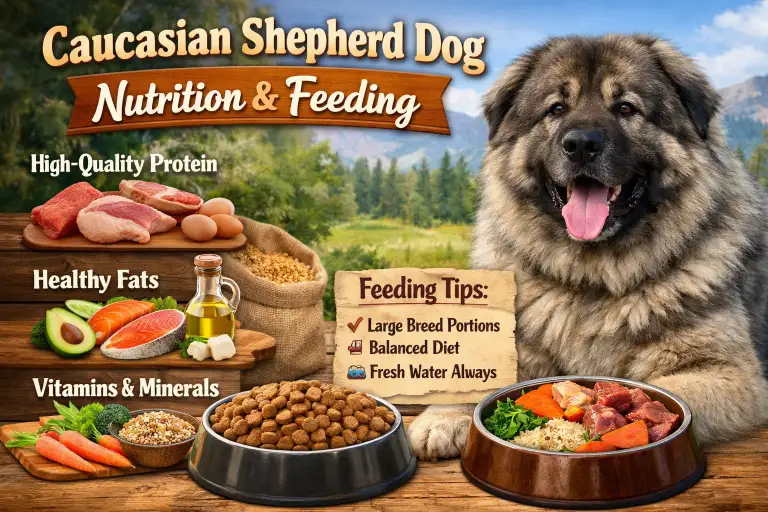
Caucasian Shepherd Dog Nutrition & Feeding Guide
The Caucasian Shepherd Dog is a giant guardian breed that requires carefully planned nutrition because of its slow growth rate, large body size, heavy bone structure, and naturally lower activity level compared with many working breeds. Feeding this breed is not simply about providing more food because of its size. The goal is to provide the correct balance of protein, calories, minerals, and nutrients that support healthy growth, strong joints, ideal body weight, and long-term health.
A proper Caucasian Shepherd Dog diet should consider the dog’s age, weight, activity level, metabolism, and life stage. Puppies require controlled growth nutrition to protect developing bones, adults need portion control to prevent obesity, and senior dogs often need adjustments to maintain muscle and mobility.
This complete Caucasian Shepherd Dog feeding guide explains what to feed, how much food your dog needs, recommended feeding schedules, calorie requirements, best food options, common feeding mistakes, and answers to frequently asked nutrition questions.
Caucasian Shepherd Dog Nutrition & Feeding Guide
The Caucasian Shepherd Dog is a giant guardian breed that requires carefully planned nutrition because of its slow growth rate, large body size, heavy bone structure, and naturally lower activity level compared with many working breeds. Feeding this breed is not simply about providing more food because of its size. The goal is to provide the correct balance of protein, calories, minerals, and nutrients that support healthy growth, strong joints, ideal body weight, and long-term health.
A proper Caucasian Shepherd Dog diet should consider the dog’s age, weight, activity level, metabolism, and life stage. Puppies require controlled growth nutrition to protect developing bones, adults need portion control to prevent obesity, and senior dogs often need adjustments to maintain muscle and mobility.
This complete Caucasian Shepherd Dog feeding guide explains what to feed, how much food your dog needs, recommended feeding schedules, calorie requirements, best food options, common feeding mistakes, and answers to frequently asked nutrition questions.
What Is the Best Diet for a Caucasian Shepherd Dog?
The best diet for a Caucasian Shepherd Dog is a balanced giant-breed formula designed to support slow growth, joint protection, muscle maintenance, and healthy weight management. Because this breed can weigh more than 100 pounds and matures slowly, excessive calories or uncontrolled growth can increase stress on bones and joints. A high-quality diet should provide:
- Moderate high-quality animal protein for muscle development and maintenance
- Controlled fat levels for energy and coat health
- Balanced calcium and phosphorus levels for proper bone development
- Digestible carbohydrates and fiber for stable energy and digestion
- Essential vitamins and minerals for immune and overall health
Unlike smaller breeds, Caucasian Shepherd Dogs do not need unlimited calories. Many adult dogs of this breed spend most of their time guarding property rather than performing intense daily exercise. Overfeeding can quickly lead to unnecessary weight gain, which puts additional pressure on hips, elbows, and other joints.
Caucasian Shepherd Dog Nutritional Requirements
A balanced feeding plan depends on providing the correct amount of every major nutrient. The ideal diet should support strength without encouraging rapid growth or excessive body weight.
| Nutrient | Recommended Range | Purpose |
|---|---|---|
| Protein | 22–28% (dry matter basis) | Supports muscle development, repair, and body maintenance |
| Fat | 10–16% | Provides energy and supports skin and coat health |
| Fiber | 3–6% | Helps digestion and healthy stool quality |
| Calcium | Controlled levels | Supports safe bone development and joint health |
| Phosphorus | Balanced with calcium | Helps maintain proper skeletal structure |
These numbers are general guidelines. Every Caucasian Shepherd has different calorie needs depending on body condition, activity level, age, and health status.
Protein Requirements for Caucasian Shepherd Dogs
Protein plays an important role in maintaining the strong muscular structure of a Caucasian Shepherd Dog. However, more protein does not always mean better health. The ideal protein source should come from high-quality animal ingredients such as:
- Chicken
- Turkey
- Beef
- Lamb
- Fish
- Eggs
Growing puppies especially require balanced protein levels because excessive growth speed can increase the risk of skeletal problems. Giant breeds need steady development rather than rapid size gain.
Fat, Carbohydrates, and Energy Needs
Fat provides concentrated energy and supports healthy skin and coat quality. Caucasian Shepherd Dogs living in colder environments may require slightly higher energy intake, while less active household dogs usually need fewer calories. Carbohydrates are not essential nutrients for dogs, but quality carbohydrate sources can provide useful energy and fiber. Good options may include:
| Carbohydrate Source | Benefit |
|---|---|
| Rice | Easy-to-digest energy source |
| Oats | Provides fiber and steady energy |
| Sweet potato | Provides carbohydrates and nutrients |
| Vegetables | Supports digestion and overall nutrition |
A balanced Caucasian Shepherd diet should focus on nutrient quality rather than extreme high-protein or high-fat formulas.
Calcium and Joint Health for Caucasian Shepherd Dogs
Joint protection is one of the most important parts of feeding this giant breed. Caucasian Shepherd Dogs grow slowly and can continue developing for up to two or three years. Too much calcium or excessive calories during puppy growth may contribute to abnormal bone development and joint stress. Important joint-supporting nutrition includes:
- Controlled calcium intake
- Balanced phosphorus levels
- Healthy body weight maintenance
- Appropriate large-breed puppy food
- Omega fatty acids for inflammation support
The goal is not to make a Caucasian Shepherd puppy grow as large as possible as quickly as possible. The goal is controlled, healthy development.
How to Choose Dog Food for a Caucasian Shepherd Dog
Choosing the right food depends on your dog’s age, health, lifestyle, and your ability to maintain a consistent feeding routine.
| Food Type | Advantages | Things To Consider |
|---|---|---|
| Giant-breed dry kibble | Convenient, balanced, easy portion control | Quality differs between brands |
| Wet food | Improves moisture intake and taste | More expensive for large dogs |
| Fresh cooked food | Highly digestible and customizable | Requires proper nutrient balance |
| Raw diet | Some owners prefer natural feeding approaches | Requires careful planning and hygiene |
| Homemade diet | Complete ingredient control | Easy to create nutritional deficiencies |
For most Caucasian Shepherd owners, a high-quality giant-breed commercial food provides the safest and most practical foundation when it meets complete and balanced nutrition standards.
Caucasian Shepherd Dog Feeding FAQs
What is the best food for a Caucasian Shepherd Dog?
The best food for a Caucasian Shepherd Dog is a complete and balanced giant-breed formula that provides controlled calories, quality protein, moderate fat, and proper mineral balance. Because this breed grows slowly and carries heavy body weight, the ideal diet should support muscle development while protecting joints.
A high-quality large or giant breed dog food is usually the safest choice for most owners because it provides the correct balance of nutrients without encouraging excessive growth or weight gain.
How much should a Caucasian Shepherd Dog eat per day?
Most adult Caucasian Shepherd Dogs need around 1,900 to 3,300 calories per day depending on their body weight, activity level, age, and metabolism. Dogs that mainly guard property and have low daily activity usually need fewer calories than highly active working dogs.
The correct amount should always be adjusted according to body condition. A healthy Caucasian Shepherd should have a visible waist, easily felt ribs, and strong muscle condition without excess fat.
How many times a day should I feed my Caucasian Shepherd Dog?
Adult Caucasian Shepherd Dogs should usually be fed two measured meals per day. Splitting food into morning and evening meals helps with digestion, portion control, and may reduce the risk of stomach problems.
Caucasian Shepherd puppies usually require three meals per day during early growth because smaller, frequent meals help support steady development.
What should I feed a Caucasian Shepherd puppy?
A Caucasian Shepherd puppy should eat a high-quality large or giant breed puppy formula designed for controlled growth. Puppies of this breed grow slowly and should not be pushed to gain size quickly.
The ideal puppy diet should provide:
| Nutrient Focus | Why It Matters |
|---|---|
| Balanced protein | Supports healthy muscle development |
| Controlled calories | Prevents excessive growth speed |
| Balanced calcium and phosphorus | Supports developing bones and joints |
| Omega fatty acids | Supports coat and joint health |
Avoid adding calcium supplements unless recommended by a veterinarian because excess calcium can negatively affect giant breed puppy development.
Can Caucasian Shepherd Dogs eat raw food?
Yes, some Caucasian Shepherd Dogs can eat raw diets, but raw feeding requires careful planning to ensure proper nutrition and safe food handling.
A poorly balanced raw diet may lead to:
- Nutritional deficiencies
- Incorrect calcium and phosphorus levels
- Bacterial contamination risks
- Digestive problems
For many owners, a high-quality giant-breed commercial diet is a safer and easier long-term feeding option.
Is grain-free food good for Caucasian Shepherd Dogs?
Grain-free food is not necessary for most Caucasian Shepherd Dogs. Many dogs digest grains such as rice, oats, and barley without problems.
A grain-free diet should only be considered when there is a specific medical reason or veterinary recommendation. The quality and balance of the overall diet are more important than whether the food contains grains.
How much protein does a Caucasian Shepherd Dog need?
A Caucasian Shepherd Dog generally benefits from moderate high-quality protein levels, often around 22–28% on a dry matter basis depending on age and activity level.
Protein helps maintain strong muscles, but extremely high protein diets are not automatically better. Puppies especially need balanced nutrition rather than excessive protein that may encourage unhealthy growth patterns.
Can Caucasian Shepherd Dogs eat homemade food?
Yes, Caucasian Shepherd Dogs can eat homemade diets, but the meals must be properly balanced. Homemade feeding without proper nutrient planning may create deficiencies in calcium, vitamins, minerals, or essential fatty acids.
If preparing homemade meals, owners should ensure the diet meets the dog’s complete nutritional requirements.
What foods are dangerous for Caucasian Shepherd Dogs?
Several common human foods can be harmful or toxic to Caucasian Shepherd Dogs.
| Food | Risk |
|---|---|
| Chocolate | Toxic and can cause serious health problems |
| Grapes and raisins | Can cause kidney problems |
| Onions and garlic | Can damage red blood cells |
| Xylitol | Can cause dangerous blood sugar changes |
| Cooked bones | May splinter and injure the digestive system |
Avoid feeding table scraps regularly because high-fat human foods can contribute to weight gain and digestive issues.
How do I know if my Caucasian Shepherd is overweight?
A Caucasian Shepherd may be overweight if:
- You cannot easily feel the ribs
- The waistline is difficult to see
- The dog becomes less active
- Movement appears slower or uncomfortable
- There is noticeable fat around the chest and abdomen
Maintaining a healthy weight is especially important for this breed because excess weight increases stress on hips, elbows, and other joints.
Do Caucasian Shepherd Dogs need joint supplements?
Some Caucasian Shepherd Dogs may benefit from joint-support supplements, especially seniors or dogs with mobility issues. However, supplements should not replace proper nutrition, weight control, and appropriate exercise.
Common joint-support ingredients include:
- Glucosamine
- Chondroitin
- Omega-3 fatty acids
- Green-lipped mussel
Consult a veterinarian before adding supplements, especially for puppies.
Can I feed my Caucasian Shepherd once a day?
Feeding a Caucasian Shepherd once daily is generally not recommended. Large meals can increase digestive stress and may increase the risk of stomach-related problems in giant breeds.
Two smaller meals per day are usually a better approach for adult dogs.
Why is my Caucasian Shepherd always hungry?
A Caucasian Shepherd may appear hungry because of habit, activity level, feeding routine, or because treats and meals are not properly balanced.
Before increasing food, check:
- Current body condition
- Daily activity level
- Treat intake
- Food quality and calorie density
A healthy weight is more important than satisfying every request for extra food.
How long should I take to change my Caucasian Shepherd’s food?
Food changes should be gradual. A transition period of around 7–10 days helps reduce digestive problems.
| Days | Old Food | New Food |
|---|---|---|
| Days 1–3 | 75% | 25% |
| Days 4–6 | 50% | 50% |
| Days 7–10 | 25% | 75% |
After the transition period, continue monitoring stool quality, appetite, energy levels, and body weight.
What is the biggest feeding mistake Caucasian Shepherd owners make?
The most common mistake is overfeeding because owners assume a giant dog needs unlimited food. Caucasian Shepherd Dogs need controlled nutrition, not excessive portions.
The healthiest approach is:
- Measure meals accurately
- Choose age-appropriate food
- Maintain ideal body weight
- Adjust portions based on activity
Final Thoughts on Caucasian Shepherd Dog Nutrition
Feeding a Caucasian Shepherd Dog correctly requires balance, consistency, and attention to life stage. This giant guardian breed does not need excessive food; it needs the right nutrition to support healthy growth, strong joints, muscle maintenance, and long-term mobility.
A controlled feeding routine, quality ingredients, regular weight monitoring, and proper portion sizes will help your Caucasian Shepherd maintain the strength and endurance this breed is known for.

Ata Ur Rehman is the founder of Pet Age in Human Years Calculator, an educational platform that provides age conversion charts and lifespan guides for dogs, cats, birds, and other companion animals. His work focuses on helping pet owners understand how animal ages translate into human years using commonly accepted age conversion formulas and published lifespan averages.
The website compiles breed and species lifespan data from kennel clubs, breed organizations, and general animal lifespan studies to present simple and easy-to-understand guides for pet owners worldwide.
This website was created to centralize animal age conversion charts into one easy reference platform for pet owners.
This article is for general education. For symptoms, medication, diet changes, or health concerns, use a qualified veterinarian who can assess your individual pet.